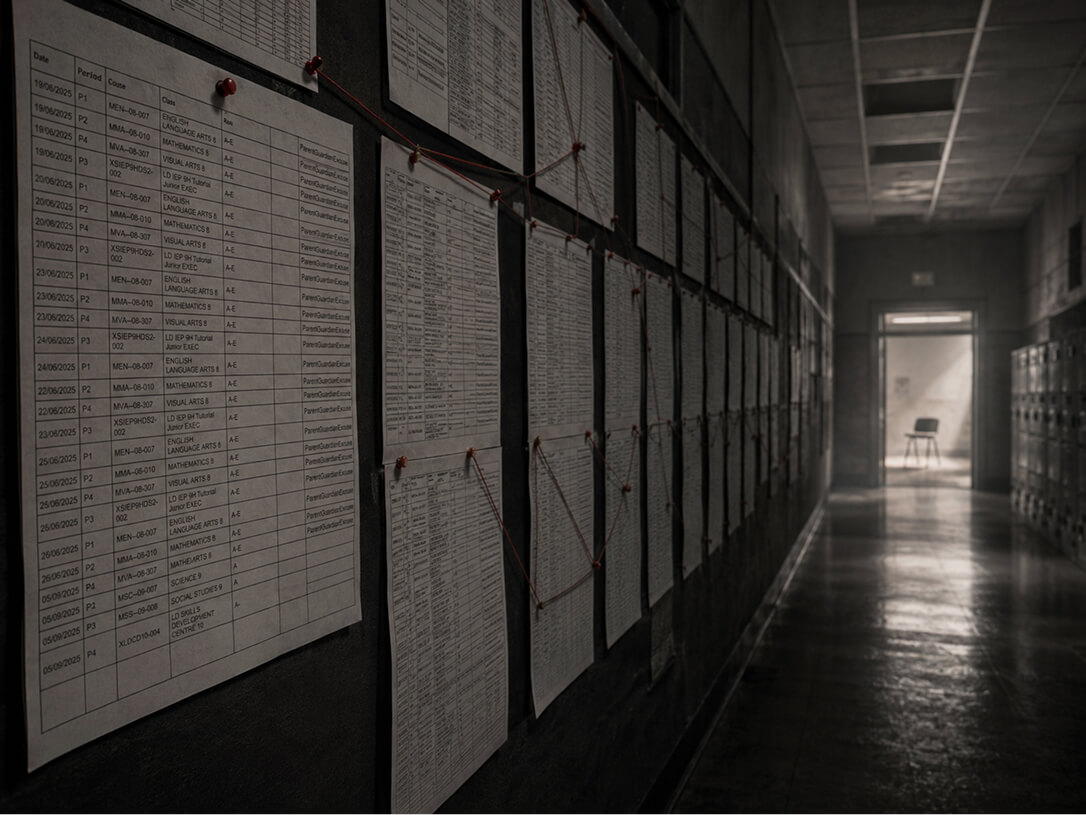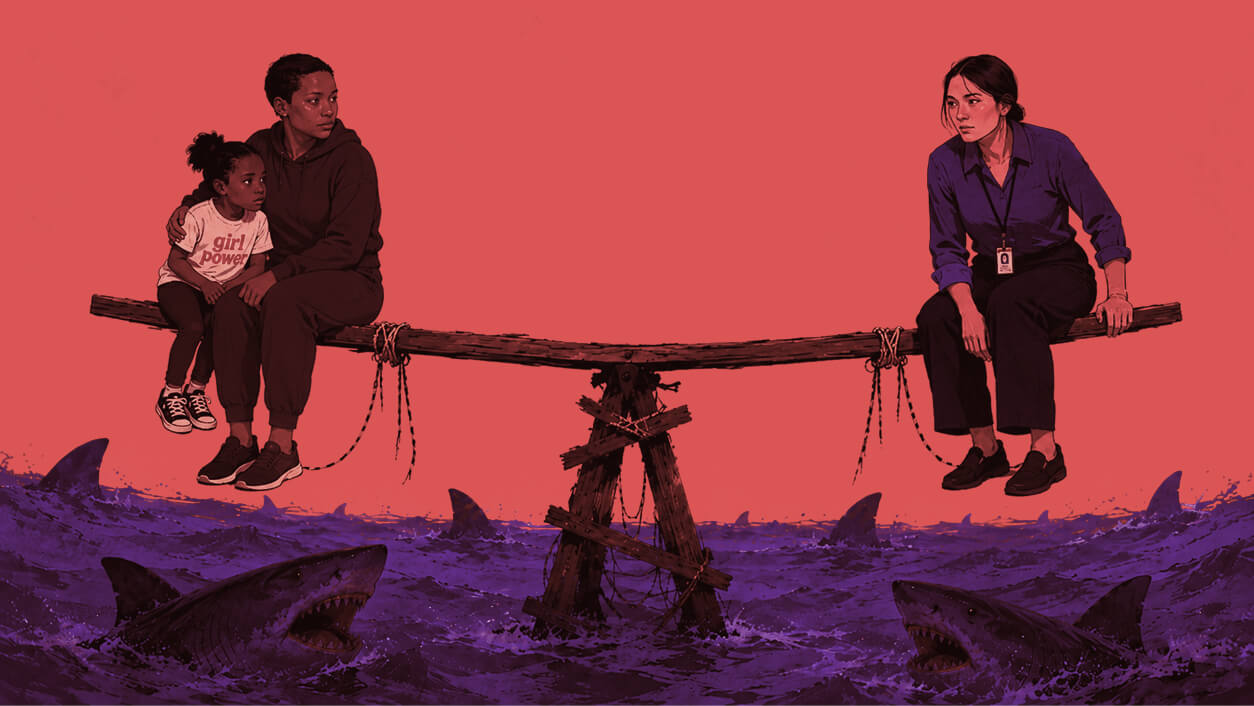
Name the environmental, procedural, or attitudinal factors that are limiting your child’s access to education.
When support isn’t working—or wasn’t offered in the first place—the harm is often framed as an isolated incident. A misunderstanding. A scheduling issue. A communication error. A temporary gap.
But what families live through are not isolated incidents. They are patterns.
Identifying persistent barriers means shifting the focus from symptoms to structures—from what your child did or didn’t do, to what the school continues to deny, ignore, or delay. Showing that unfortunately this isn’t a glitch—it’s the system working as designed.
This is how you build a case for formal complaint: not just that harm happened, but that it keeps happening, and the school had every opportunity to fix it.
-

Grievability and legitimacy in BC Schools
Disabled children are being pushed out of public education—and their families are picking up the pieces. This post examines who is seen as worthy of support, what it costs when systems abandon care, and why the quiet exodus from schools is not a…
How to use this strategy
Start by naming the type of barriers your child is facing. These may be:
- Environmental (e.g. bright lights, loud classrooms, inaccessible washrooms)
- Procedural (e.g. IEPs not followed, delays in assessments, lack of follow-up)
- Attitudinal (e.g. blaming the student, refusing to believe diagnoses, framing behaviour as defiance)
Then, describe how those barriers impact your child:
- “My child was assigned to a class with 28 students despite documented sensory needs and a prior IEP recommending small-group instruction.”
- “The school has failed to implement the IEP accommodations, including access to a quiet space, which has resulted in near-daily shutdowns.”
- “Staff consistently interpret distress behaviours as misconduct, despite clear documentation of emotional regulation challenges.”
Use these examples to build the core of a formal complaint. Your goal is to show that:
- The school was aware of your child’s needs
- The accommodations were not implemented
- The failure was not reasonable or justifiable
- Your child has experienced harm or exclusion as a result
What to include in a complaint
When drafting a complaint to the Human Rights Tribunal, Ministry of Education, or other formal body, your submission should:
- Identify the barriers (environmental, procedural, attitudinal)
- Describe the impact on your child’s access to education
- Reference relevant documentation (IEPs, assessments, meeting notes)
- Name what supports were requested and what was refused or ignored
- Describe how the failures led to exclusion, distress, or lost learning time
- Explain how this amounts to discrimination on the basis of disability
You don’t need to cite legislation perfectly, but you can refer to:
- The BC Human Rights Code (Section 8: Duty to accommodate)
- Ministry guidelines on IEP implementation and learning supports
- School district policies regarding inclusion and equity
This isn’t just a story. It’s a pattern of avoidable exclusion.
What to watch out for
The biggest risk at this stage is self-censorship. Families are often so used to being dismissed or disbelieved that they minimize the harm or soften their language to seem reasonable.
You do not need to sanitize your child’s pain to be taken seriously.
You do not need to make your complaint palatable to people who caused the harm.
You need to be clear, specific, and unapologetic.
You are describing discrimination. That word is allowed.
At the same time, this stage can be re-traumatizing. You’re compiling evidence not just of neglect, but of repeated indifference to your child’s needs. It’s emotionally brutal work. You may feel overwhelmed, ashamed, numb, or furious. That doesn’t mean you’re doing it wrong. That means it was never supposed to get this far.
You are allowed to name the system
You are allowed to say:
“This school has not followed my child’s IEP, and as a result, my child has been repeatedly excluded from learning.”
You are allowed to say:
“The district knew, and did not act.”
You are allowed to say:
“This is not a misunderstanding. This is discrimination.”
And you are allowed to say it with the force of every year, every email, every meltdown, every meeting, every refusal that brought you to this point.
Because the problem isn’t your tone.
It’s the barriers no one else was willing to name.
-

The 123s of advocacy strategy
These strategies are practical steps you can take to help your child access support—whether you’re just starting out or navigating a complex situation.