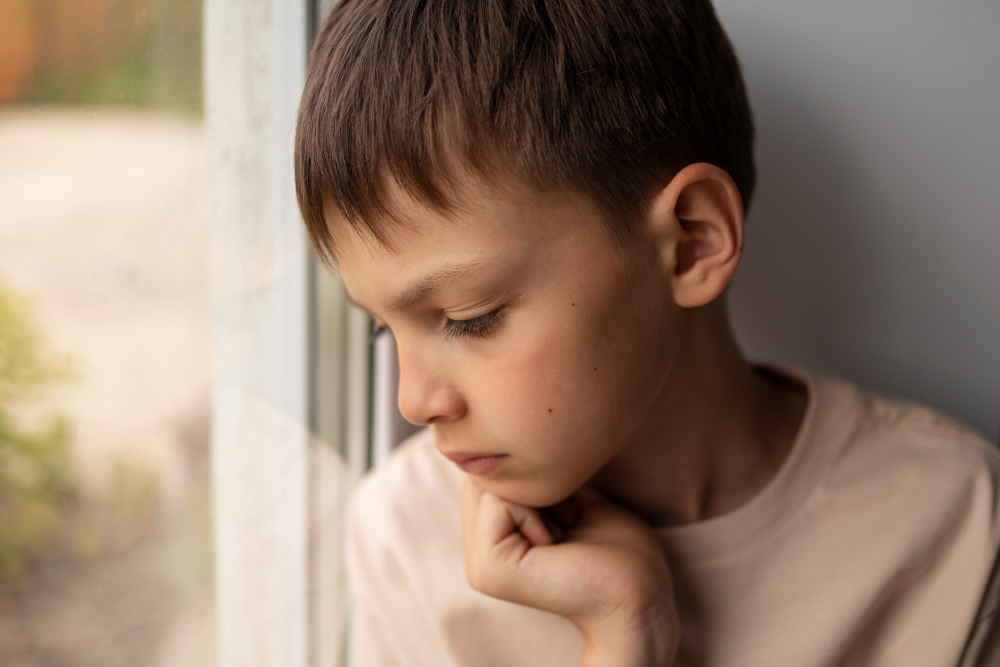
Compliance culture
The school-wide expectation that students conform without question—regardless of their developmental stage, disability, or distress.
-

Not a stick in the mud
When I told another mom recently—someone kind, someone well-meaning, someone whose son used to play with mine back when things were easier—that I was feeling fragile about him being home since March, and that it had all gotten heavier than I expected, she responded gently and said, “Would he like to come over for a…
-
How we change culture: From ashtrays to accountability in BC schools
Once, we smoked in office buildings. Not just on breaks or in private spaces—at desks, in meeting rooms, on airplanes. The haze of other people’s choices was something you had no right to escape. That was just how things were. Until it wasn’t. Now, the idea of someone lighting a cigarette during a staff meeting…
-
Columneetza Junior Secondary (SD27 Cariboo‑Chilcotin): a neurodiversity‑informed conduct critique
Columneetza Junior Secondary School 2024-2025 Code of Conduct affirms a mission of fostering respect, individual growth, and a sense of belonging within both school and community. It names safety, caring, and order as essential conditions for “purposeful learning.” The document outlines rights, responsibilities, and behavioural expectations for students and broader school actors, including parents and…
-
The moral cost of leaving children in fight-or-flight
Robin was eleven the day he fell and came up swinging. It was recess, and something had happened—a misstep, a bump, a collision on uneven ground. His body hit the pavement. And when he rose, disoriented and humiliated, the first thing in his path was his best friend. So he struck him, over and over.…
-
Gaslighted by proxy: how schools grant coercive power to the quietest parent
When one parent advocates and the other undermines, the school almost always aligns with the one who “gets along.” Not because that parent is more informed, more accurate, or more protective—but because they are easier to accommodate. They agree easily. They stay quiet. They don’t write long emails. They rarely attend meetings. They couldn’t draft…
-
Apparently, starving yourself isn’t a serious mental health condition in VSB
There is a kind of harm that unfolds slowly — a hunger that accumulates across weeks and months, tucked beneath the surface of routines and well-meaning systems. My daughter is autistic, has ADHD, and a feeding disorder called ARFID. She eats quietly, cautiously, in ways that make sense to her nervous system. Her paediatrician recommended…
-
What would it really cost to fix the problem?
We talk so much about the cost of inclusion—as if it’s indulgent, optional, something that must be justified—but we rarely talk about the cost of exclusion. And those costs are everywhere: in emergency rooms, in overburdened case files, in classrooms where distress goes unseen. When schools can’t support disabled students, families fall apart trying to…
-
We shouldn’t be enemies
I took my daughter for a manicure this week. She’s graduating from grade 7. A milestone. A moment that felt almost ordinary—slideshow, applause, plastic chairs, nervous grins—and yet there was nothing ordinary about what it took to get there. Vocabulary for what happened Class change She spent seven months of this school year outside the…
-
Galiano Community School (SD64): a neurodiversity-informed policy critique
The 2022–23 Code of Conduct for Galiano Community School is unusually rich in aspirational language. It describes a community of care rooted in mutual respect, emotional development, and responsive teaching. It affirms the BC Human Rights Code, references Positive Behaviour Support, and anchors its behavioural framework in the values of SOLE—Respect and Care for Self, Others,…
-
IEP goals we actually believe in mostly (even though we wish they didn’t exist)
Let’s get this out of the way: we hate IEP goals !!!! If you’re a parent who hears the phrase “IEP goals” and feels your stomach drop, you’re not alone. Most of us have seen goals that are vague, punitive, performative, or downright absurd. Goals that don’t reflect our children. Goals that seem more concerned…
-
Drawn and quartered: Sibling trauma, institutional containment, and the erasure of care for families with multiples
When you are the parent of twins—especially autistic/ADHD twins—you learn very quickly that the education system can’t hold both of them at once. Support is rationed. Attention is rationed. Empathy is rationed. The school system does not say this aloud, of course. It claims to treat every child as an individual. But as soon as…
-
Why sticker charts fail
Sticker charts and other incentive-based systems promise to motivate children through tangible rewards, yet they too often undermine genuine engagement by teaching students to focus on external validation rather than on the inherent value of learning or participation. When a child’s behaviour is redirected toward earning stickers or tokens, the activity becomes a transaction instead…
-
Cariboo–Chilcotin School District (SD27): a neurodiversity-informed policy critique
Cariboo-Chilcotin is one of the most geographically dispersed and demographically complex districts in British Columbia. Spanning small rural towns and remote Indigenous communities—including sites of historic and intergenerational trauma—SD27 faces significant challenges in providing consistent, inclusive, and safe environments for all learners. In June 2024, the Board adopted Policy 390: Safe and Caring School Communities, replacing…
-
Maybe tomorrow: reflections on goal post shifting and the economics of access
There were accommodations on paper and endless lip-service meetings. But none of it happened in the classroom. And every time we did what was asked—another intake, another form, another plan—the goalpost moved again. We weren’t asking for miracles. We were asking to be seen as disabled. And instead, we were told to be more positive,…
-
How narcissism and PDA collide in the wreckage of trust
Some children refuse control because control has always felt like violence. Because control has worn the face of love and left behind a residue of shame. Because adults said, “this is for your own good” while ignoring tears, violating autonomy, and insisting that compliance was safety. For these children, especially those with a PDA profile,…
-
When energy returns: on finding purpose, refusing silence, and recovering from institutional harm
When I could barely rise from the couch, I believed my exhaustion was depression. Now I see it was the cumulative harm of years spent silencing myself in hostile institutions, suppressing truth to protect my neurodivergent children. The body remembers this violence; it registers as a weight on the chest, a fatigue that resists all…
-
Arrow Lakes School District (SD10): a neurodiversity-informed policy critique
The Arrow Lakes School District’s Policy 310, “Expectations for Student Conduct,” presents a succinct framework grounded in the language of safety, mutual respect, and orderly environments. It affirms the importance of rights-based protection against discrimination and sets the expectation that all schools will maintain up-to-date, locally developed codes of conduct. It allows for discretion, acknowledges…
-
The price of being the one who says the hard thing
There is a moment that plays out in a thousand variations—at school pickup, on the playground, during track and field events—when a parent turns to you, warm and casual, and says, “How are things?”, and for the briefest fraction of a second, you forget the rules and answer honestly. You begin to speak—not with rehearsed…
-
Trust undone: how collective punishment breaks the heart of the school
There is a kind of harm we don’t always name. Not bruises. Not bad grades. Not exclusion on paper. It is the slow unravelling of something more fragile—trust. The felt safety between a student and their teacher. The invisible thread between classmates. The quiet assumption that school is a place where fairness lives. Collective punishment…
-
Why school advocacy is a women’s issue
This site exists because public education systems harm children—and then gaslight the people who try to stop it. Those people are not randomly distributed. They are overwhelmingly women. Advocacy is a women’s issue not because women are naturally better at it, or more available, or more nurturing. Advocacy is a women’s issue because institutions depend…