
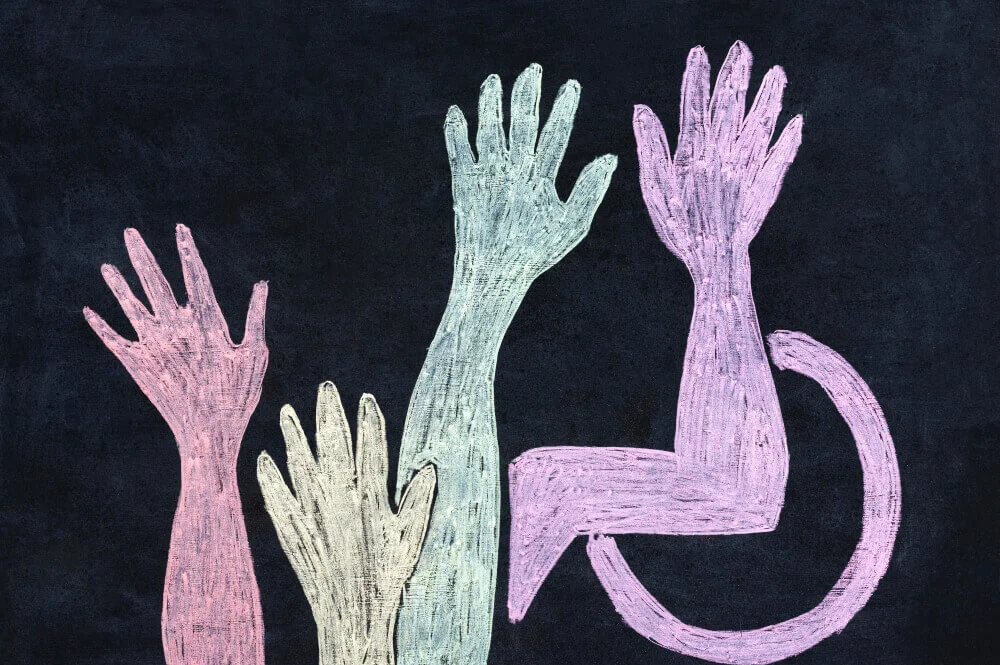
Disability Justice
A movement that centres disabled people—especially those who are Black, Indigenous, racialised, queer, and/or poor—in fighting ableism. Focuses on collective liberation, not assimilation.
-
Beyond blame: reimagining discipline in a trauma-informed world
Collective punishment is neither effective nor ethical. It disciplines the group for the actions of one, eroding trust and reinforcing the very dynamics of power and fear that trauma-informed practice seeks to heal. In its place, we need something older and deeper—an approach to discipline rooted in relationship, regulation, and repair. Indigenous teachings and relational…
-

A landmark case for educational justice in BC
The May 2025 decision from the BC Human Rights Tribunal in Parent obo Student v. BC Ministry of Education and another, 2025 BCHRT 112 carries profound implications for families fighting systemic discrimination in education—particularly those challenging collective punishment, exclusion, and partial-day attendance programs imposed on disabled students. While the complaint against the Ministry was dismissed, the Tribunal…
-

“I didn’t even do anything wrong”: student voices on collective punishment
Collective punishment in schools often silences individual experiences. Yet, platforms like Reddit provide a space where students share their stories candidly. Below are excerpts from various Reddit threads that illuminate the real-world effects of collective punishment.
-
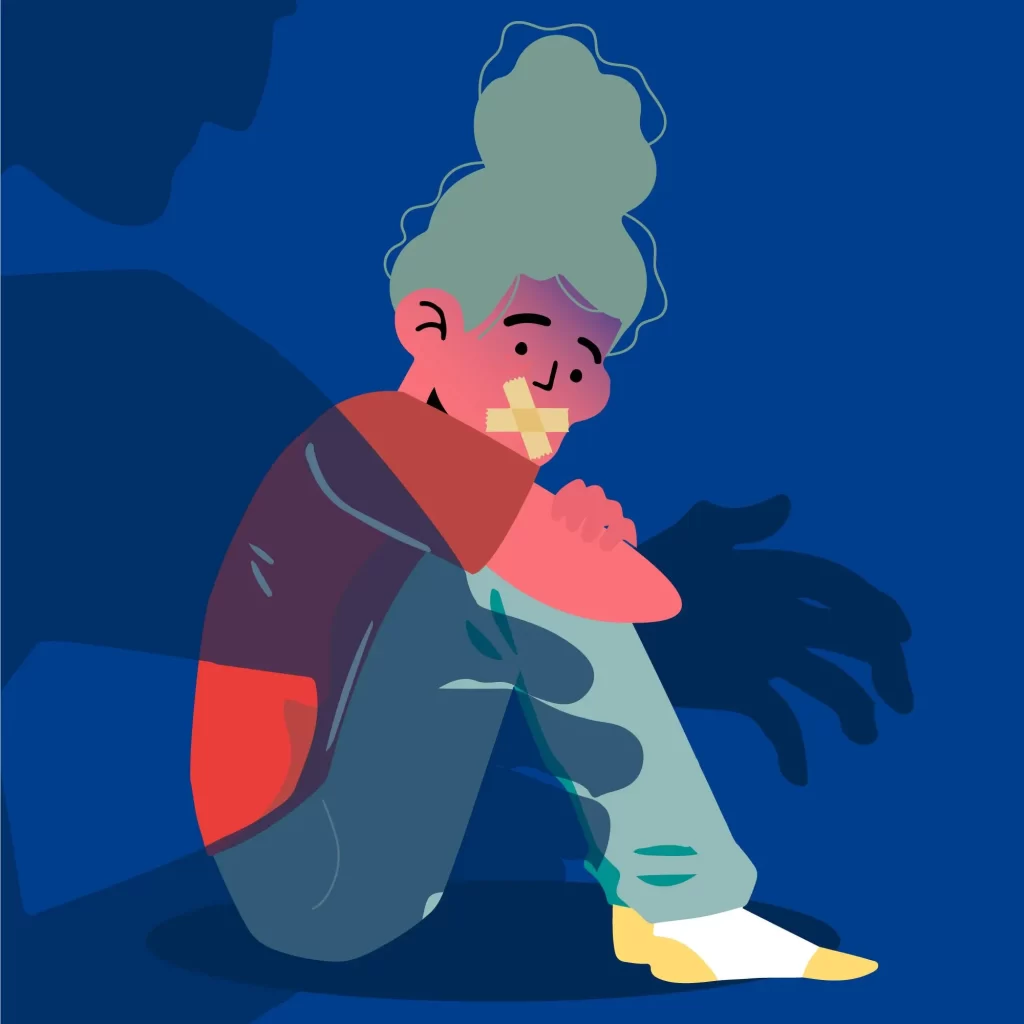
Rethinking accessibility leadership, training, and labour in BC public education
In accessibility work, most transformative insights come directly from disabled people. Lived experience is primary data; manuals and metrics are, at best, secondary literature. In schools, teachers are experts in pedagogy, yet few are trained in disability or neurodivergence. That absence is not incidental—it is engineered, and the consequences are everywhere. The current failure—and promise—of…
-

Comparison of Provincial and Territorial rules on collective punishment in schools
Across Canada, policies on student discipline vary widely—but only one province, Nova Scotia, has taken the decisive step of explicitly banning collective punishment in schools. In April 2025, Nova Scotia revised its Provincial School Code of Conduct Policy to require individualised responses to student behaviour, affirming that group-based discipline is not just ineffective but unjust.…
-

Grievability and legitimacy in BC Schools
Disabled children are being pushed out of public education—and their families are picking up the pieces. This post examines who is seen as worthy of support, what it costs when systems abandon care, and why the quiet exodus from schools is not a choice, but a failure of justice.
-

The politics of politeness: how tone-policing silences parent advocates
When a parent dares to speak plainly about harm—especially when that harm is systemic, ongoing, and inflicted upon a disabled child—they are swiftly met with a familiar response: watch your tone.
-

Balancing budgets by denying disabled kids support
In British Columbia, we are told that the education system is improving. Budgets are rising. Inclusion is a stated priority. And yet, for families whose children require consistent, sustained support—especially those who are disabled or living with complex trauma—the lived experience is defined by absence, delay, and denial. There is a growing chasm between the…
-

Collective punishment in schools: global history and harm
Explore the global history of collective punishment: how it has been defined, justified, resisted, and remembered across cultures and time.
-
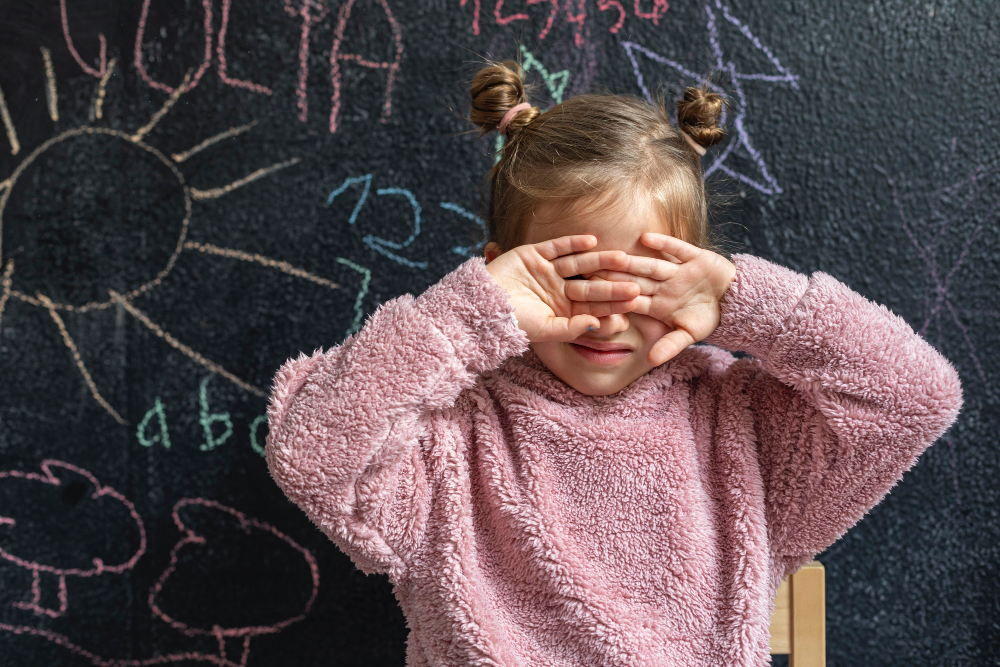
The ABCs of regressive punishment
Discipline in schools is rarely neutral. For neurodivergent students, it often takes the form of quiet harm—masked as structure, delivered as shame. From exclusion and forced apologies to behaviour charts and the denial of recess, regressive punishment practices remain embedded in our classrooms. They don’t teach accountability. They teach fear, isolation, and the high cost…
-
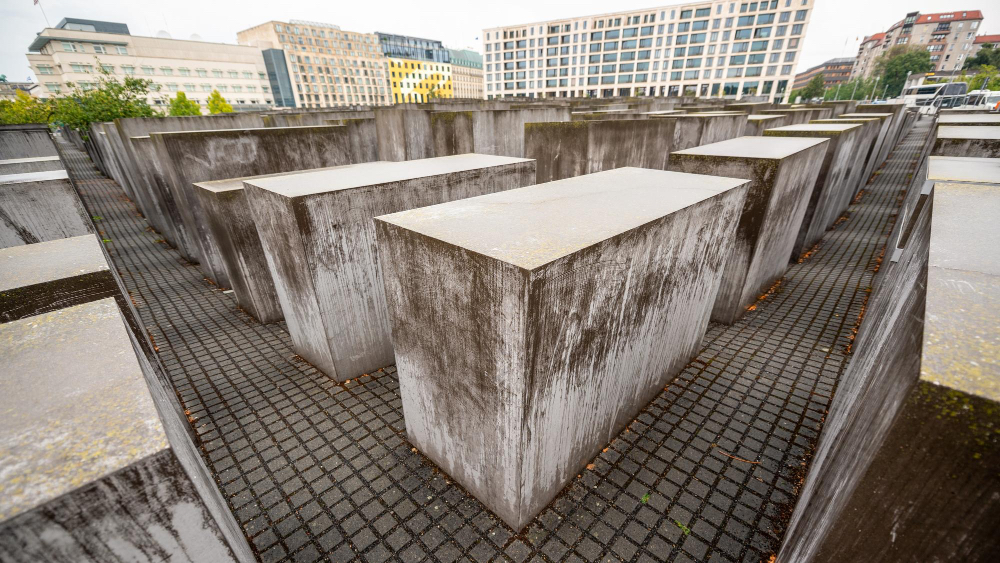
The history of collective punishment
Collective punishment emerged in a time when people were not understood as individuals, but as extensions of the family, the clan, the village. Responsibility was held in common. Honour was shared. So was shame. In such systems, if one person broke a social norm or committed a crime, the entire group was held accountable. Not…
-

Vancouver School District (SD39) district code of conduct: a neurodiversity-informed critique
The Vancouver School Board’s District Student Code of Conduct (AP 350) is an expansive and methodically constructed document. It commits to fostering safe, inclusive, and nurturing schools; it recognises systemic discrimination, promotes restorative practices, and articulates a detailed suspension framework with multiple levels of review. The document outlines procedural guidance for school leaders, provides template…
-

Collective punishment: a focal point of injustice
Collective punishment, the practice of disciplining a whole group for the misdeeds of one or a few, is widely recognised as unjust and counterproductive. Children know it’s wrong Even children intuitively grasp its unfairness. In one famous case, an 11-year-old student in the UK bluntly told her teacher that “collective punishment… is not fair on the…
-

Vernon School District (SD22) progressive discipline and suspension guidelines: a neurodiversity-informed critique
The SD22 progressive discipline and suspension guidelines begin with a clear statement of intent: to maintain a safe, caring, and healthy environment for all members of the school community. They emphasise functional assessment, procedural safeguards, privacy protections under FIPPA, and the possibility of restorative or reparative responses. Formal consequences are structured to follow only when…
-

A neurodiversity-affirming critique of the BC Ministry’s guide to school conduct
The BC Ministry of Education’s guide presents itself as a blueprint for positive school climates. Yet beneath its conciliatory language, it reinforces behavioural conformity and institutional authority over student autonomy. It fails to address the structural and sensory barriers faced by neurodivergent students, and in doing so, undermines its own claims to safety and care.…
-

Building safer schools through restorative justice and neurodiversity-informed practices
When children are dysregulated the response from educators is too often punitive. For neurodivergent students in particular, the cost of these responses is high: shame, trauma, social exclusion, and a deep erosion of trust. But it doesn’t have to be this way. Restorative justice offers a path forward. Not as a one-time circle or a…
-
Dr. A.R. Lord Elementary (VSB SD39): a neurodiversity-informed conduct critique
Dr. A.R. Lord Elementary’s Code of Conduct promises a “safe and supportive environment” on school grounds, on field trips, and during online learning. It embraces the Vancouver School Board’s district-wide conduct framework (AP 350), explicitly affirms the BC Human Rights Code, and applies the values of the school’s P.R.I.D.E. matrix—Purpose, Respect & Responsibility, Integrity, Diversity,…
-

The problem with the appeals process
When something goes wrong at school—when a child is excluded, harmed, or unsupported—families are told to “work it out with the school first.” That sounds reasonable on paper. But in practice, it’s vague, unstructured, and often retraumatising. I’ve gone through the Vancouver School Board (VSB) appeals process more times that I’d wish upon anyone. Here’s…
-

When school discipline undermines trust at home
There’s a problem in our schools. You’ll see it on a child’s face when they come home. You’ll hear it in the way they describe something that left them feeling humiliated, angry, or confused—and often, all three at once. It happens when school staff use discipline strategies that completely contradict the values a student has…
-

On moral injury and collective punishment
I did not want to file a complaint. I still don’t—not in the sense that people imagine, with anger or vengeance or a desire for punishment. What I wanted, what I asked for again and again with patience and clarity and increasing despair, was for the district to acknowledge that collective punishment is not just…