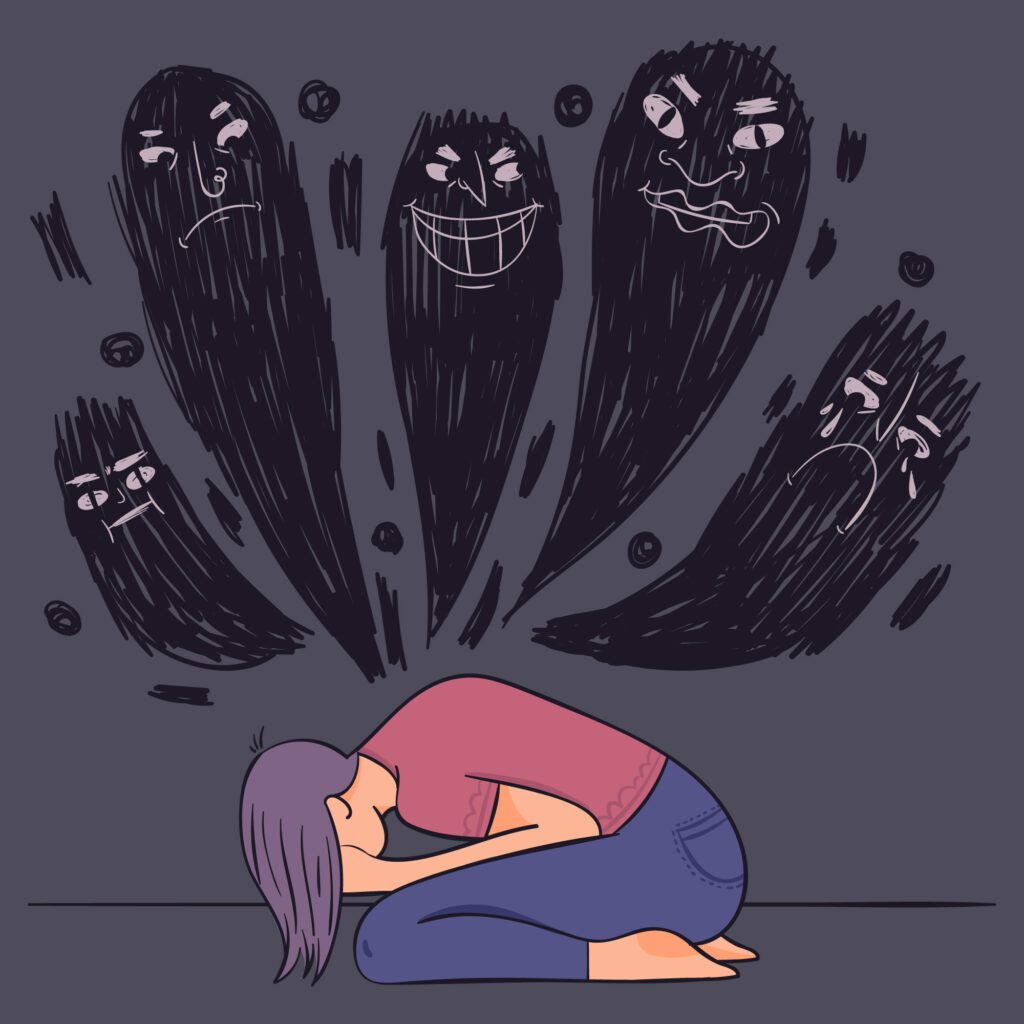
Fight Flight Fawn Freeze
These are the body’s instinctive survival responses—primal reactions to threat that occur faster than thought. In educational settings, they are often misinterpreted as misbehaviour, defiance, attention-seeking, or disengagement. But for many neurodivergent students, these responses are not choices; they are signs of distress in environments that feel unsafe, overwhelming, or hostile to difference.
This tag explores how survival states like fight, flight, fawn, and freeze show up in classrooms, and how they are shaped by trauma, nervous system sensitivity, and repeated experiences of harm. It includes stories of students punished for leaving the room, labelled aggressive for protesting coercion, praised for compliance that masks fear, or overlooked entirely because they shut down instead of acting out.
Understanding these responses is essential to building truly safe schools. When we pathologize the survival response, we punish children for trying to protect themselves. But when we honour it, we begin to ask a better question—not “how do we stop this behaviour?” but “why does this child feel unsafe?”
-

Fight flight fawn freeze: surviving school
There are children who throw chairs when cornered, children who slip quietly out the door or hide behind the portable, children who don’t speak for hours, who go limp, who answer every question with “I don’t know,” and children who nod and smile and say “okay” to everything—until they collapse at home, trembling and broken,…
-
Trust as performance: when schools want deference, not dialogue
One of the most infuriating parts of being gaslit by my children’s elementary school was the repeated suggestion that I simply didn’t trust them enough. That the reason my child was struggling wasn’t because support was missing, or harm had occurred—but because I had failed to signal trust. Failed to pretend everything was fine. As…
-
The moral cost of leaving children in fight-or-flight
Robin was eleven the day he fell and came up swinging. It was recess, and something had happened—a misstep, a bump, a collision on uneven ground. His body hit the pavement. And when he rose, disoriented and humiliated, the first thing in his path was his best friend. So he struck him, over and over.…
-
If I could: A letter to my daughter before another school meeting
If I could catch you before you fall, I would. If I could make them understand—make them see you as you truly are—I would. You are doing so well, in so many ways. If I could make you feel the pride you deserve, the pride I feel when I look at you, I would. But…
-
IEP goals that don’t mean ‘don’t be autistic’
Too many IEPs include goals like “will self-regulate” or “will self-advocate”—goals that sound supportive, but often mean “will not disrupt,” “will not need help,” or “will not act autistic at school.” This post explores how seemingly neutral language can become a tool for erasure, and offers concrete, neurodiversity-affirming alternatives that centre support, access, and dignity—so…
-
Beyond blame: reimagining discipline in a trauma-informed world
Collective punishment is neither effective nor ethical. It disciplines the group for the actions of one, eroding trust and reinforcing the very dynamics of power and fear that trauma-informed practice seeks to heal. In its place, we need something older and deeper—an approach to discipline rooted in relationship, regulation, and repair. Indigenous teachings and relational…
-
Barriers in the Vancouver school system: a parent’s perspective
For families raising neurodivergent children, navigating the school system can feel like surviving a labyrinth built to exhaust you. What should be a place of growth becomes a terrain of harm and dismissal. Beneath the polished language of equity and inclusion lies a set of invisible barricades—attitudinal, communicative, spatial, systemic, and technological—that quietly erode trust…
-
When autistic girls fawn and schools look away
They told her to be polite while she was being harmed. Now they call her difficult for saying no. Jeannie never screamed—never yelled or stormed out or flipped a desk or tore paper into confetti; instead, she froze, and in that freezing, she vanished from their view. No one interrupted the boy when he joked…