
Parent Advocacy
Parents on the frontlines—navigating broken systems to protect and uplift their children.
-
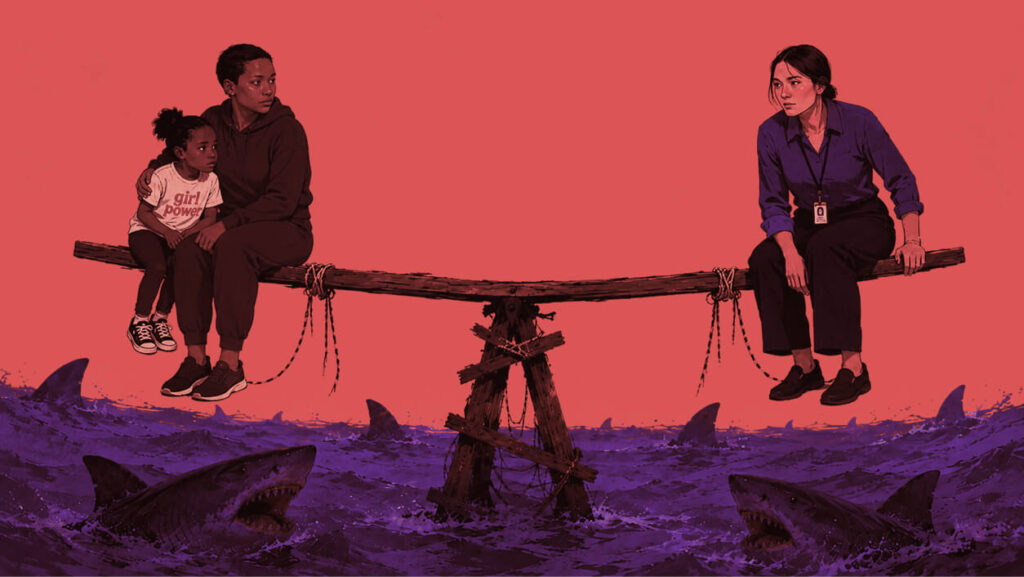
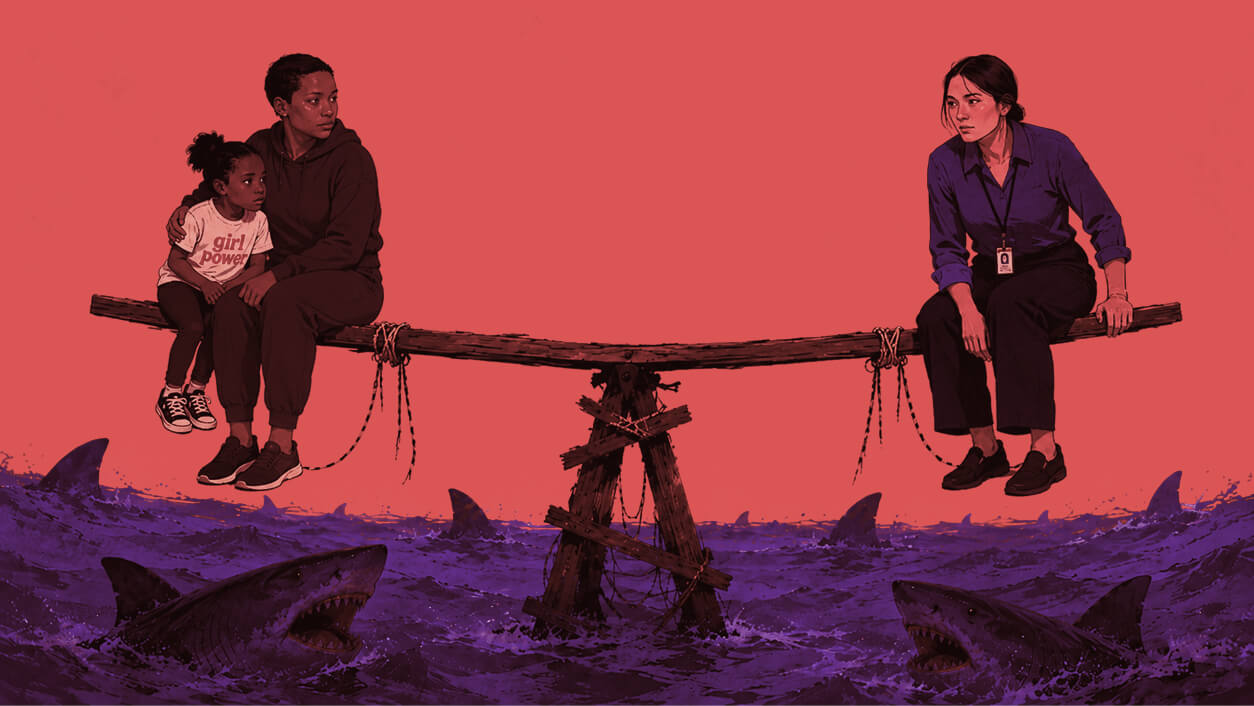
On opposite sides of the same door in BC schools
Families and teachers are describing the same failure from two positions inside it. The system survives by keeping them from recognising each other.
-

Try harder, try different
On the pedagogy of “people are not supports,” the research it misreads, and what happens when an idea is transplanted into a starved system.
-

A summer reading list for education leaders
The Canary Collective went upstream this week, and the gloves came off. In “Delay, Distract, and Deny”, Wren takes the old public-health parable about pulling bodies from a river and turns it into an indictment: while families stand waist-deep in the current keeping disabled children afloat, almost no one walks up the bank to ask who…
-

Be pleasant so others won’t get upset
What a twelve-year mortality study measured, and what it accidentally wrote down: the code of conduct every district hands a mother on her way into the room. You learn it in your hands before you learn it anywhere else. At the table you fold them in your lap, you soften your face into the shape…
-

Too many tongues: how schools turn caregiver testimony into threat
How schools turn caregiver testimony into threat — and why the monstrous advocate is made by the institution that fears her memory.
-

The business process trap
I’m a business analyst by trade, so I naturally wanted to understand how things work in schools, but resist the temptation to let schools draw you in!!! School districts speak a language designed to obscure accountability, using administrative complexity as armour against obligation, converting urgent need into bureaucratic procedure, and replacing immediate legal duty with…
-

25 things you can ask for on your child’s IEP
Individualised Education Plans (IEPs) in BC carry significant weight even though they are not legally binding contracts. Schools have policy obligations to follow them, they serve as evidence in Human Rights Tribunal complaints, and they document what your child needs to access their education. The language matters. The framing matters. What gets written shapes what…
-

Justice and dignity too expensive for BC NDP
In 2018, experts told BC exactly how to fix special education funding. The government has spent five years “consulting” instead. Meanwhile, your child sits in hallways. The 192% problem nobody wants to fund Between 2015 and 2024, autism designations in BC schools exploded by 192%. Total student enrolment? Up just 11.6%. The province knows this. They…
-

When delay becomes policy: British Columbia’s strategic abandonment of disabled students
In 2018, an independent panel reviewed how British Columbia funds kindergarten through grade twelve education and recommended a prevalence model for special education funding, a shift that would allocate resources based on statistical prevalence of disability within the general student population rather than on individual diagnostic designation. The proposal threatened to expose what the existing system carefully…
-

The cost of partial inclusion in schools
I have returned to writing after a long silence—one imposed less by choice than by survival. The move was necessary, a matter of financial gravity after years of lost income entwined with the harm my children endured within an ableist school system. Leaving our home felt like surrendering a life I had fought to sustain,…
-

Parents are responsible for the collapse of discipline ideology at school
The dominant narrative in staff rooms and comment sections insists that discipline has collapsed because parents no longer “back up the school.” This explanation comforts institutions and shames families, yet it misunderstands the architecture that once made discipline appear effective. What is collapsing is not parenting. What is collapsing is the total environment that once…
-

Coerced care, gendered neglect, and the reframing of family collapse
It began with daily incidents that were anything but small. My son repeatedly hugged my daughter against her will, pressing into her space while she pulled away, asking for it to stop. She reported that when she turned to supervision aides for help, they told her it was fine because they were siblings. Staff framed…
-

Human Rights Tribunal complaints are designed to exhaust
There is a silent calculus embedded in every human rights complaint: how much of your energy, your time, your composure, and your life force are you willing to lose in order to gain a largely symbolic victory. For those of us who have faced institutional harm the question is often whether we can survive the…
-

Nobody is going to thank you
Nobody tells you that you can pour every last scrap of yourself into advocacy and still feel your bond with your child begin to strain. There is a familiar story passed among parents—one in which you step in, do a little advocacy, and watch as the pieces fall into place. The children grow, the challenges…
-

The brutal truth about schools weaponising therapy to deny your child’s rights
Schools are weaponising therapy as a gatekeeper to support—forcing parents to “prove” worth through endless interventions while shielding systemic harm. The system is broken, not our children.
-
25 signs that your IEP team is disabling your child
In the space where families gather with school teams to shape a child’s Individual Education Plan, the language often carries more weight than paper can bear, for each phrase can open a door toward inclusion or quietly plant the seeds of exclusion, and the difference lies in whether the plan nourishes capacity or erodes it.…
-

ADHD and autism aren’t phases
We don’t expect a wheelchair user to “earn” the right to walk by graduation. We don’t tell a student with diabetes that the goal is to get off insulin. And yet, in schools across our district, support for autistic and ADHD students is treated like a ladder they’re supposed to climb once and throw away…
-

12 ways to tell when a crisis at school is really a failure of support, supervision, or repair
The hardest moments to navigate are often the ones that happen in seconds—but have been building for months. A single moment can change everything. A shove on the playground. A child running out the door. A sharp word or a sudden slap. To someone looking in from the outside, these moments can seem like they…
-

The orange shirt I folded
I was folding laundry late one night, brain running on the kind of background grief that rarely quiets, when my hand closed around the orange shirt. I moved to set it aside—automatically, instinctively—because I remembered September was coming, school would be starting, and Orange Shirt Day would follow quickly after. That shirt would be needed…
-

Flourishing as an ethical imperative
Like many of you, I caught CBC’s Ideas episode the other day, where philosopher Angie Hobbs spoke about the ancient Greek concept of eudaimonia—a term sometimes translated as happiness or welfare, but more richly understood as human flourishing. In a world flooded by crisis, it may seem indulgent or impractical to contemplate the good life,…