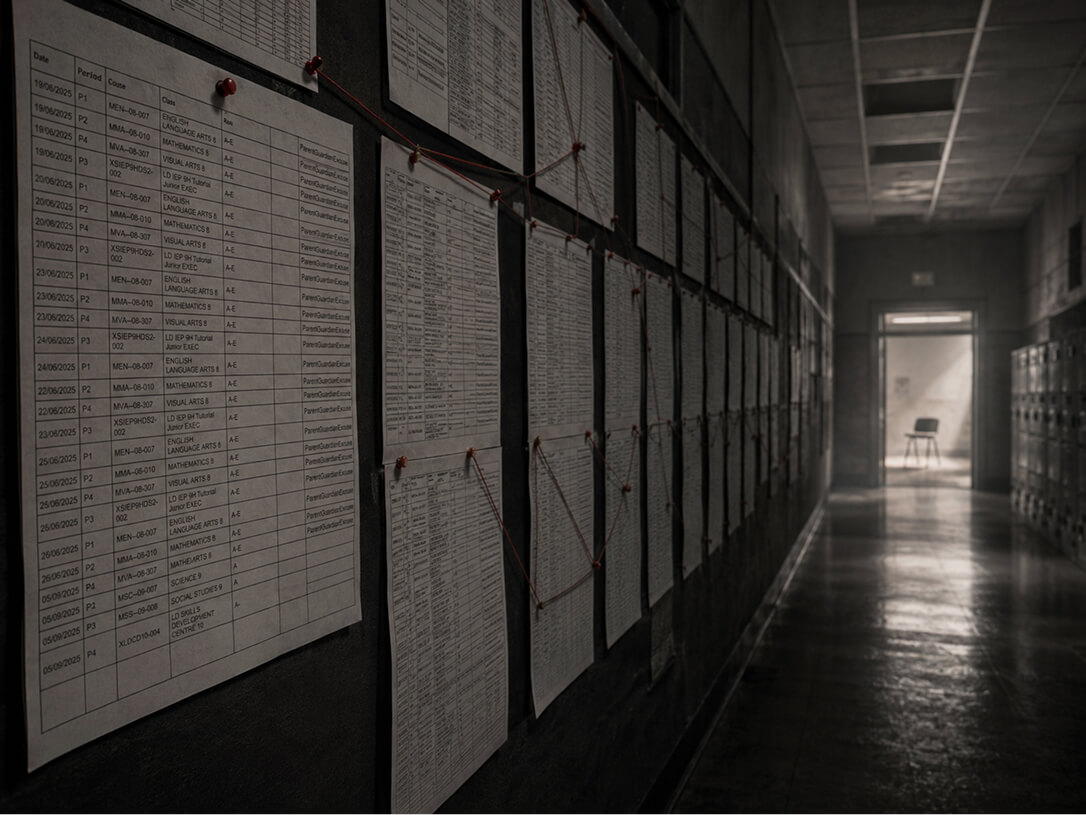
Review what has been offered or denied in the past to build context and show patterns over time.
When you’re preparing for an appeal or advocating at the district level, the strongest tool you have is your record of what already happened. What was requested. What was promised. What was denied. What simply never materialized.
Schools often treat each concern as isolated—each meeting as a fresh start. But for families, these are not isolated events. They’re cumulative patterns. And building a clear history helps shift the conversation from “What’s happening right now?” to “What has been consistently missing?”
How to use this strategy
Start by gathering everything you can find:
- Old IEPs, even if they were never followed
- School-based team minutes
- Emails requesting support
- Notes from phone calls or meetings
- Report cards or suspension letters that reflect challenges
- Any documentation of accommodations that were offered, removed, or delayed
Organize these into a short timeline or summary. You can present it as a letter attachment or summary document that highlights:
- What support was asked for
- When it was asked for
- How the school responded
- Whether it was implemented
- What the outcome was
Then, connect this history to your current request. Show that this isn’t new. It’s unresolved. It’s persistent. And it’s part of a larger access issue.
You might write:
“In reviewing our past communication, it’s clear that we have consistently requested [support] since [date]. While some attempts were made, they have not been sustained or adequate. This history of delay and inconsistency has contributed to [impact on child]. We are requesting [specific action] in accordance with the district’s duty to accommodate.”
Include policy references to strengthen your position
When appealing to the district or preparing for a formal complaint, it helps to cite the exact policy language the district is supposed to follow. Look up:
- The district’s Administrative Procedures (e.g. AP 351: Appeals in Vancouver)
- Ministry of Education policy standards (e.g. timelines for IEP review)
- Human rights language about the duty to accommodate up to undue hardship
You can say:
“According to [District Policy or Procedure name], families are entitled to a written response to formal appeals within [X] school days. As of today, we have not received a decision. We request confirmation that the district is following its established procedures.”
This shifts the conversation from opinion or emotion to procedural compliance—a language the district cannot easily ignore.
What to watch out for
Schools and districts often fail to keep consistent records. When families make FOI requests, they’re often shocked to learn how few notes exist—or that key meetings were never documented. That’s why your records may be more complete than the school’s.
It’s also common for new staff (especially district personnel) to claim they were “not aware” of the history. That’s your opportunity to show them what they should know. When you hand over a clear support timeline and policy reference, you reduce the risk of erasure.
You are allowed to remember
You are allowed to say: “This has been going on for years.”
You are allowed to track the things that didn’t happen.
You are allowed to build a case from your lived experience—even when others have failed to write it down.
-

The 123s of advocacy strategy
These strategies are practical steps you can take to help your child access support—whether you’re just starting out or navigating a complex situation.