Children will soon be going back to school… well, some children.
Stores are already filled with lunch kits, backpacks, and brightly coloured displays of school supplies. Parents are checking whether indoor shoes still fit. Social media will soon fill with first-day photographs: children standing beside front doors, holding signs with their grade and what they want to be when they grow up.
My child is at home in bed.
There will be no first-day photograph. The backpack will stay where it has been all summer. There is no carefully packed lunch, and no anxious excitement about seeing friends and learning about the new teacher. There is only the quiet calculation of how much I can ask of my child today.
Can they get out of bed? Can they eat something? Can they tolerate a shower? Can I mention school without causing panic or shutting down the rest of the day?
This is not an extended summer
When people hear that a child is not attending school, they often imagine a child who has simply decided not to go. They may picture someone staying up late, playing video games, and enjoying freedom from expectations. They may assume the parent has given up, become too accommodating, or failed to establish firm enough boundaries.
My child is not enjoying an extended summer. They are exhausted in a way that sleep does not repair. Their tolerance for ordinary demands has collapsed. Tasks that once happened without discussion can now take hours of preparation, negotiation, and recovery.
School burnout has infiltrated every part of our life. It affects eating, bathing, sleep, movement, conversation, appointments, and relationships. It changes what the whole family can do and where we can go. It requires constant decisions about which demands are necessary and which can wait.
Sometimes getting dressed uses the energy that would have been needed to eat. Sometimes answering one question means there is no capacity left for the next one.
This is not a child rejecting education because learning does not matter to them. This is a child whose body has learned that school is dangerous.
My child once loved learning
My child was intensely curious. They loved facts, complicated ideas, and long conversations about whatever had captured their attention. They wanted to understand how things worked. They noticed patterns adults missed and asked questions adults did not always want to answer.
Learning was not the problem. School gradually became the problem.
It did not happen in one dramatic moment. There was no single meeting, teacher, incident, or decision that explains everything. It happened slowly, through repeated experiences that taught my child that their needs were disruptive and their presence was conditional.
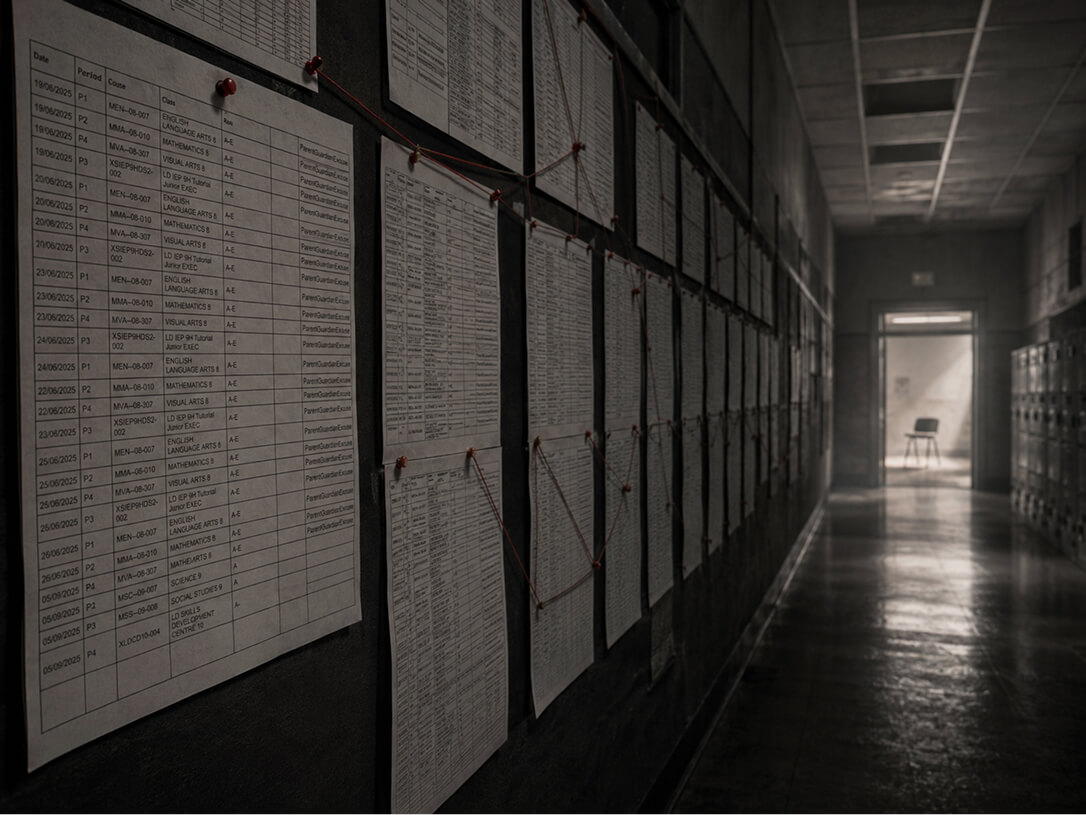
Every September, we started again. Supports that had been discussed, documented, and sometimes successfully used the year before were no longer available. New staff had not been given information. Plans were treated as suggestions. Familiar accommodations became new requests that had to be justified from the beginning.
I explained again. I sent the reports again. I described the warning signs again. I explained what helped when my child was overwhelmed, what made things worse, and what could prevent a situation from escalating.
While the adults discussed whether support was available, appropriate, affordable, or necessary, my child experienced the consequences of its absence.
A support that appears in November does not undo what happened in September. By then, trust may already be gone.
Back to school can mean starting the harm again
For many families, September is described as a fresh start. For us, it became the annual return of uncertainty.
Would the school follow the existing plan? Would my child have access to a trusted adult? Would breaks be available before distress became a crisis? Would staff recognise overload, or interpret it as defiance? Would I receive a phone call an hour after arrival? Would my child be told, directly or indirectly, that everyone else’s access to school depended on their ability to remain quiet and manageable?
Each year, we were asked to be hopeful. Each year, my child was expected to enter the same system before the conditions required for participation were in place.
Hope is not an accessibility plan.
A gradual transition without adequate staffing is not a transition plan. A reduced day without a clear route back is not inclusion. Sending work home is not equivalent access to education. Waiting to see whether a child fails again is not meaningful support.
The process itself produces the outcome. When supports are delayed, attendance becomes unstable. When attendance becomes unstable, the child falls behind. When the child becomes anxious about returning, their distress is reframed as the reason they cannot attend.
Eventually, the school’s inability to include the child is rewritten as the child’s inability to go to school.
Children do not simply fall through the cracks
We often say that children like mine have fallen through the cracks. The phrase makes the outcome sound accidental. It suggests there was a functioning structure with a small, unfortunate gap.
But my child did not fall. They were gradually sorted.
Their inclusion became conditional on how little they needed, how quietly they struggled, and how successfully they could suppress the signs that school was harming them. When they could no longer do that, they became a problem to be managed.
Meetings focused on attendance rather than access. Conversations focused on behaviour rather than distress. The question became how to get my child through the door, not what had happened inside the building that made the door impossible to cross.
Eventually, their absence became normal. The emails slowed down. There were fewer invitations. Their name disappeared from everyday conversations. The school continued without them.
There is no empty chair in the back-to-school photographs. There is no public accounting of the children whose backpacks remain unused, no ceremonial pause for the students who should be returning but cannot, and no collective recognition of what has been lost.
We prefer to imagine they are learning somewhere else. We do not picture them at home in bed.
The school day does not disappear
When a child stops attending school, the need does not disappear. It moves.
The work of regulation, supervision, teaching, planning, feeding, conflict prevention, and crisis response is transferred into the home. It is usually carried by one parent, without training, respite, funding, or institutional support.
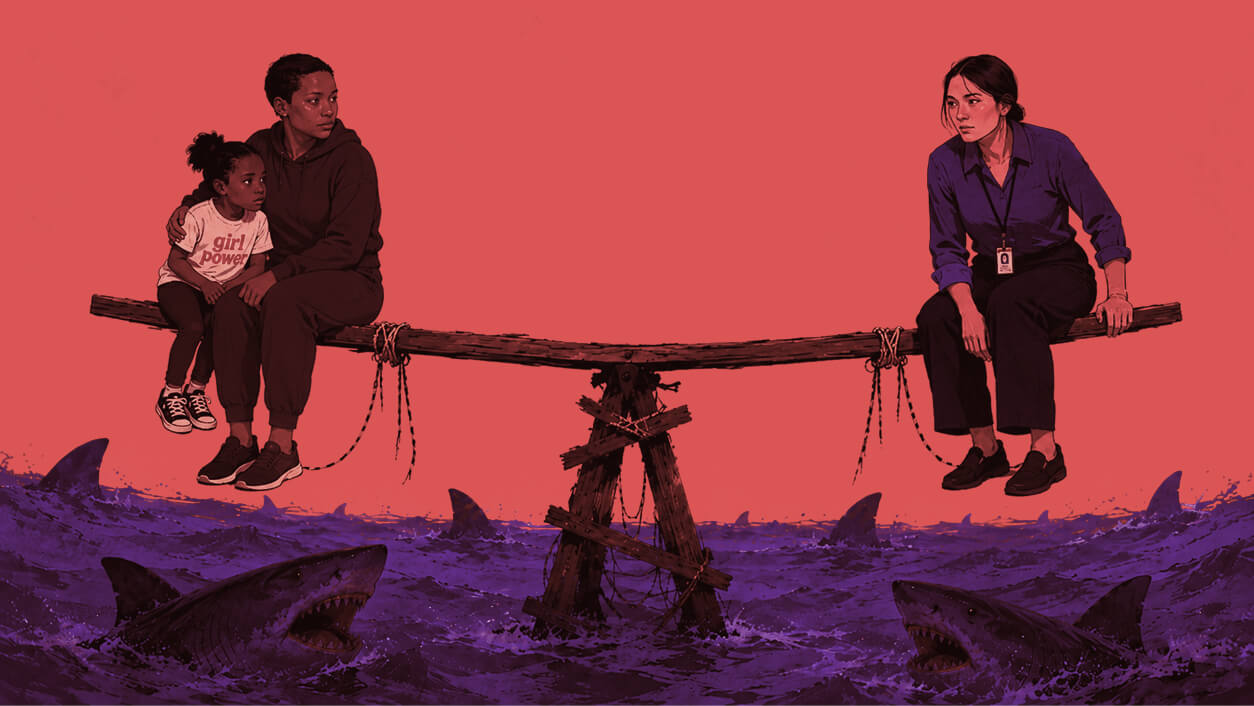
A child may be described as too complex or unsafe for a classroom staffed by trained professionals, yet safe enough to be sent home to one parent alone. The contradiction is rarely acknowledged. Risk becomes intolerable when the institution must absorb it and ordinary when a family must.
The parent is then expected to remain collaborative. We are advised to preserve the relationship, assume good intentions, keep communications brief, and avoid appearing emotional or adversarial.
We learn the choreography. We answer polite questions without describing the reality. We say our child is “taking some time” or that we are “exploring options.” We try not to make other people uncomfortable with the fact that our child has lost access to something their children receive as a matter of course.
We are expected to carry both the harm and the performance that everything is being handled.
My child no longer feels entitled to an education
This may be the part that is hardest to endure. My child does not simply believe school is difficult. They no longer believe they belong there.
They have learned that education is available only if they can tolerate the environment, manage their disability privately, and need no more support than the institution is prepared to provide. They have learned that asking for help creates conflict, that adults can know what they need and still decide not to provide it, and that their distress will be treated as evidence that they do not belong rather than evidence that something must change.
This is deeper than the missed curriculum. The system has altered my child’s understanding of whether they are worthy of teaching, support, and public care.
That is the measure of the damage.
What would make a genuine return possible?
Families are often asked what it would take to get a child back to school. The question is usually framed as though the parent possesses a secret strategy or the child needs the right incentive.
But returning requires more than persuasion. It requires repair.
The school must understand why attendance became impossible and take responsibility for changing those conditions. Support must be ready before the child returns, not promised after another crisis. There must be a written plan, clear responsibilities, meaningful timelines, and regular review.
Rebuilding trust may begin with small, predictable contact with a safe adult. It may require access to a quiet space, flexible scheduling, reliable staffing, communication systems, sensory accommodations, or a different educational environment. Most of all, the child must experience that adults mean what they say.
There must be a plan for education now, not only a plan for attendance later.
A child should not have to prove readiness for school while receiving no meaningful education at home. A parent should not have to indefinitely replace a public system without resources or oversight. Reduced attendance should never become an unexamined holding pattern.
Without timelines, temporary arrangements become permanent. Without accountability, informal resolution becomes abandonment.
The children missing from September
In the coming weeks, there will be many conversations about getting children ready for school. I hope we also talk about whether schools are ready for children.
Are established supports in place on the first day? Have staff read the plans they are responsible for implementing? Is there a response when attendance begins to decline? Does anyone ask whether reduced attendance was initiated by the family or produced by the school’s inability to provide access? Is there a timeline for review? Who is responsible for ensuring that a child at home is still receiving an education?
And where are the children who have already disappeared from the story?
My child is at home in bed. They are not a cautionary tale about screen time, permissive parenting, or children who need firmer expectations. They are a child who loved learning, whose trust was broken slowly and repeatedly by a system that treated access as conditional.
They are still entitled to an education. They are still part of the public school system’s responsibility.
Even if they are missing from the first-day photographs, they must not be allowed to vanish.
-
I only asked for gentleness: on parenting a PDA child in a punishing world
There is a certain kind of child—intuitive, emotionally articulate, wired with a startling perceptiveness about power and tone, about coercion and choice, about the invisible terms of adult authority—whose presence in the classroom becomes, almost immediately, a threat to the institution’s rhythm, a…