In Canada, you can record meetings legally. You only need one person’s consent—and that’s you.
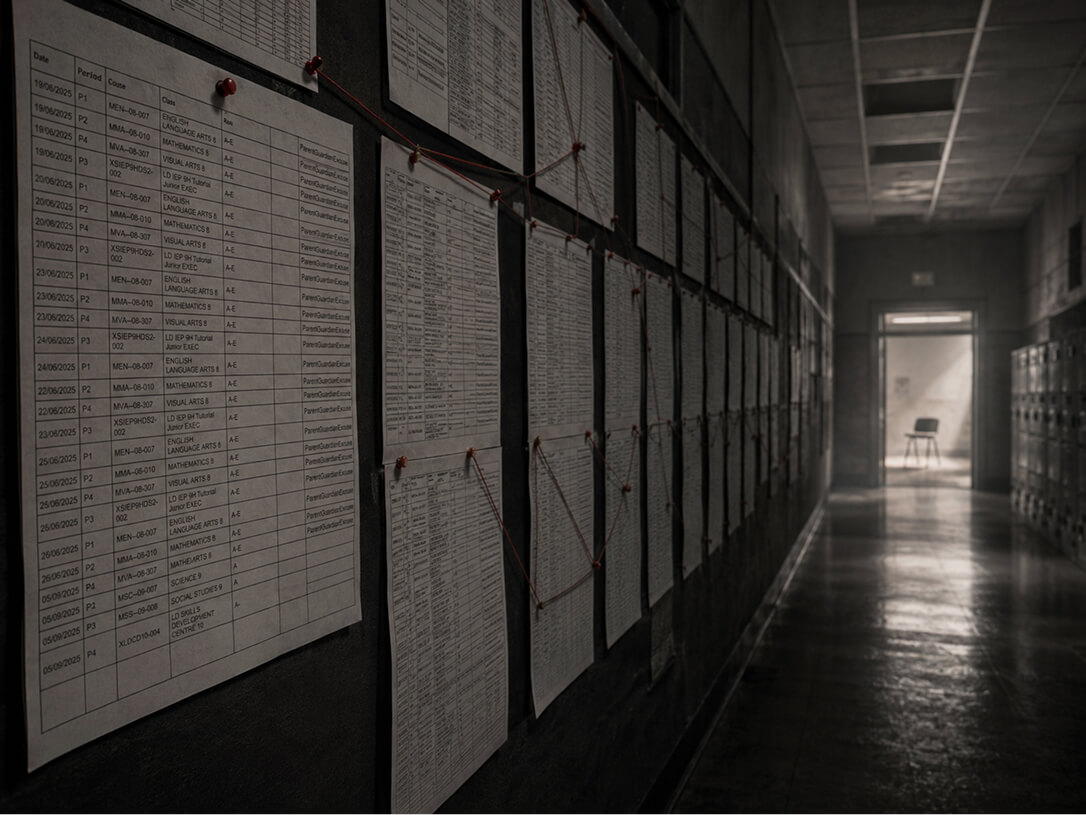
That matters because, in practice, there is often no reliable record of what happens in school meetings. Minutes are sparse. Details disappear. Commitments soften or vanish. When you later request your child’s file, you may find very little there—often just the documents you submitted yourself.
If nothing is written down, nothing is accountable.
A recording gives you something solid to work from. It captures what was said, who said it, and what was agreed. It takes the pressure off your memory and gives you a way to reconstruct the meeting accurately.
Why this matters
School systems carry narrative control by default. They decide what gets documented, how it’s framed, and what is left out. In many cases, the safest institutional position is to record as little as possible.
That leaves families in a gap: important conversations happen, but they don’t reliably exist anywhere afterward.
Your documentation fills that gap.
You’re not supplementing the record—you’re creating it.
When you send a written summary after the meeting, you are establishing the working version of events. It becomes the reference point for what was discussed, what was decided, and what is expected to happen next.
How to capture the meeting
Keep it simple.
Before the meeting, start a recording on your phone using a transcription app. Place it near your speakers if you’re online, or on the table if you’re in person.
A few practical details:
- Phone on silent
- Auto-sharing turned off
- Saved to your personal account
- Clear file name afterward (date + meeting type)
After the meeting, let the transcript process. Then skim it and pull out what matters:
- decisions
- commitments
- timelines
- anything tied to supports, services, or rights
You don’t need a perfect transcript. You need a reliable source to work from.
Turning it into the record
The recording stays with you. The email is what creates the record.
Within a day or two, send a short, clear follow-up. Keep it focused on substance:
“Thank you for meeting. I’ve reviewed my notes and want to confirm the following:
– [decision or support]
– [who is responsible]
– [timeline or next step]
Please let me know if I’ve misunderstood anything.”
That final line matters.
You are putting forward a clear account of what happened and explicitly inviting correction. If something is wrong, this is the moment to say so.
If they respond, the record is refined.
If they don’t, your summary stands.
Over time, these emails accumulate. They become the de facto file of what actually occurred—far more detailed and reliable than anything you are likely to receive through a records request.
Using AI to make this manageable
Transcripts are messy. Let a tool help you extract what you need.
Ask for:
- a bullet-point list of decisions and actions
- clear attribution (who agreed to what)
- removal of filler and repetition
Then edit it yourself. Keep the language plain. Keep the claims tied to what was actually said.
You’re building a clean, defensible record—not a transcript for its own sake.
The core move
Capture the meeting.
Turn it into clear notes.
Send the summary.
You are not waiting for the system to document what happened. You are documenting it yourself—and putting it into circulation in a way that requires response.
That’s how the record gets made.