
Discipline ideology
The latest findings, academic studies, or reports related to collective punishment, education, and behavioural psychology.
-
Teacher Misconduct Case
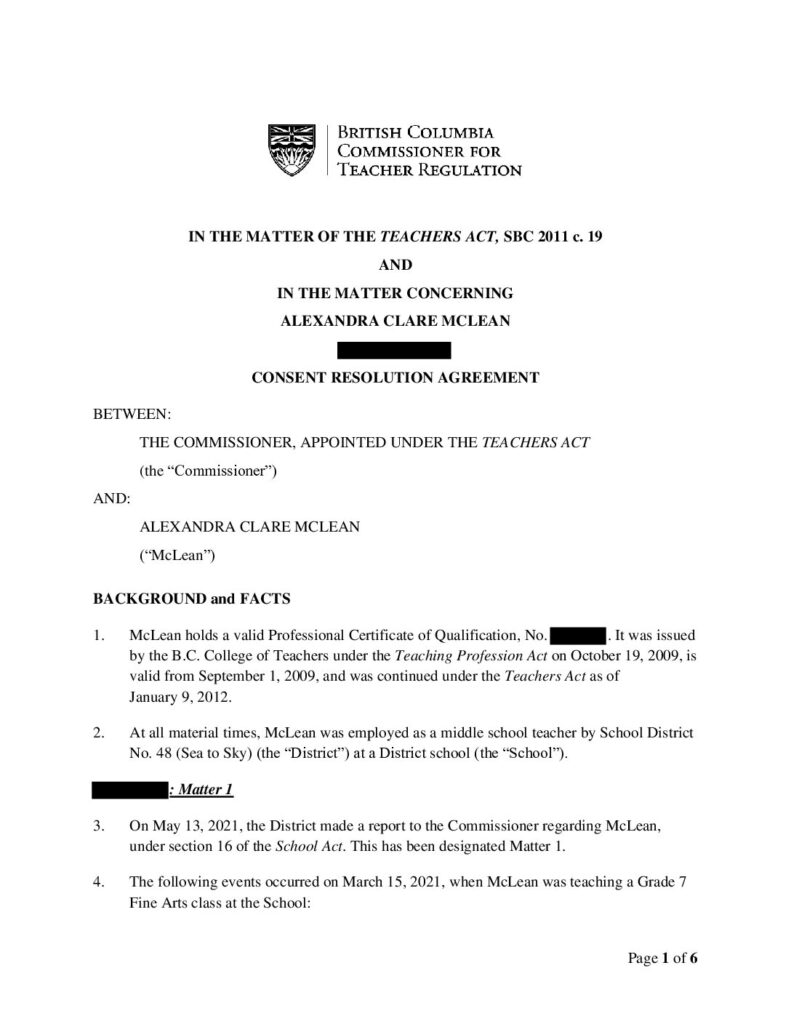
A recent case involving Alexandra Clare McLean, a BC teacher disciplined for yelling, humiliating, and physically handling students, highlights the urgent need for stronger accountability in schools. Despite multiple suspensions, warnings, and training, McLean’s harmful behaviour continued. This case reflects the broader issue of harmful disciplinary tactics like collective punishment. Both create fear, shame, and…
-

The cost of compliance – the foundational critique and case for change
When children are dysregulated, the response from educators is too often punitive. For neurodivergent students in particular, the cost of these responses is high: shame, trauma, social exclusion, and a deep erosion of trust. But it does not have to be this way. Restorative alternatives are not new. They are ancient practices found in many…
-

A teacher’s perspective on collective punishment
In this powerful TikTok video, Mr Trayvon reflects on his own past use of collective punishment in the classroom—and why he no longer believes it serves students. With candour and humility, he acknowledges the harm these practices cause, particularly to children already carrying the weight of trauma, neurodivergence, or social marginalisation. His shift away from…
-

Collective punishment–fair or farce?
The practice of collective punishment in schools sparks strong opinions among educators, parents, and students alike. While some argue it helps maintain control and sends a message about group accountability, critics point out that it unfairly penalizes uninvolved individuals and damages trust within the classroom. This article dives into the debate, exploring: The piece concludes…
-

How children evaluate collective and targeted punishment
A recent study explores how children perceive fairness in different forms of punishment. The research, conducted with children of varying ages, compares their reactions to collective punishment (where an entire group is punished for the actions of a few) versus targeted punishment (where only the individuals responsible face consequences). The findings reveal that children overwhelmingly view collective punishment as…
-

New research highlights the harmful effects of collective punishment on group relations
A study published in Political Psychology examines how collective punishment—punishing an entire group for the actions of a few—impacts intergroup relations. Researchers Mete Sefa Uysal, Sami Çoksan, and Thomas Kessler found that collective punishment: These findings, based on experiments in Turkey and Germany with over 2,000 participants, reveal that collective punishment not only fails to resolve conflicts…
-
Why collective punishment doesn’t work, based on scientific evidence
When we challenge collective punishment, defenders often fall back on one refrain: it works. They say it fosters accountability, motivates group norms, and deters misbehaviour. They claim it teaches responsibility. But what if these assumptions are not only unjust, but false? A peer-reviewed study published in Scientific Reports dismantles this defence. Titled Measuring the efficacy of…
-

Why i started this campaign
As a solution architect and parent of disabled children, I’ve seen the public education system from both sides. What I’ve found is not a system in crisis—it’s a system functioning exactly as designed: rewarding compliance, punishing difference, and quietly discarding those who don’t fit. This post explores how exclusionary practices like collective punishment persist in…