

Discipline ideology
The latest findings, academic studies, or reports related to collective punishment, education, and behavioural psychology.
-

The punishment economy
How collective punishment turns scarcity into compliance The confusing thing about school harm is that it rarely arrives without care. While your child is being excluded, an Educational Assistant is finally assigned. A kind case manager begins sending thoughtful emails. Someone finds a program space you were told did not exist. A teacher sees something…
-
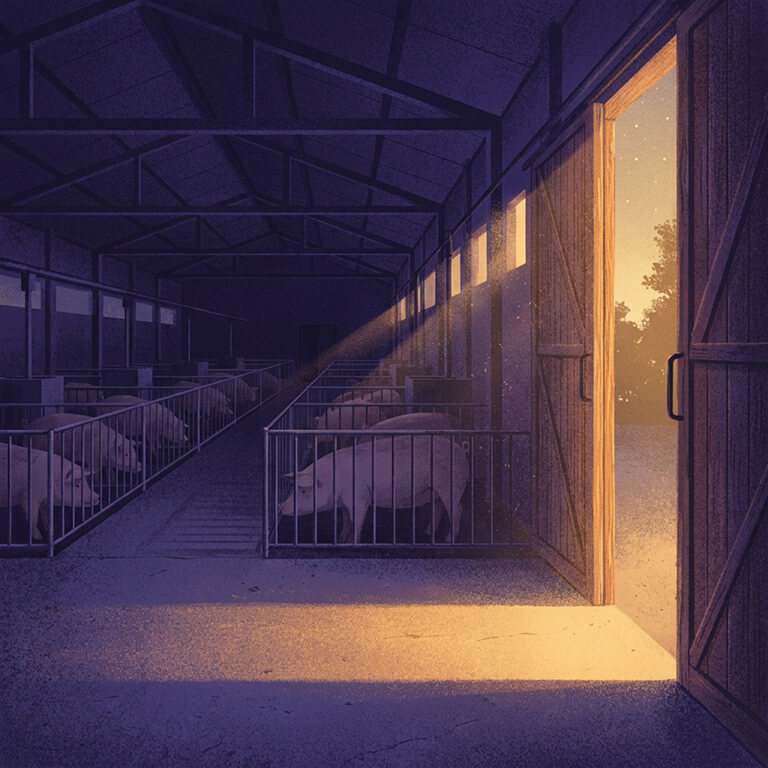
The barn, not the mother
A version of you existed before all this, and she would have been horrified. She would have watched you zip up that backpack, drive them to school, walk them to the door, and she would have known what you were doing: handing your child directly to the building that will hurt them today. Maybe the…
-
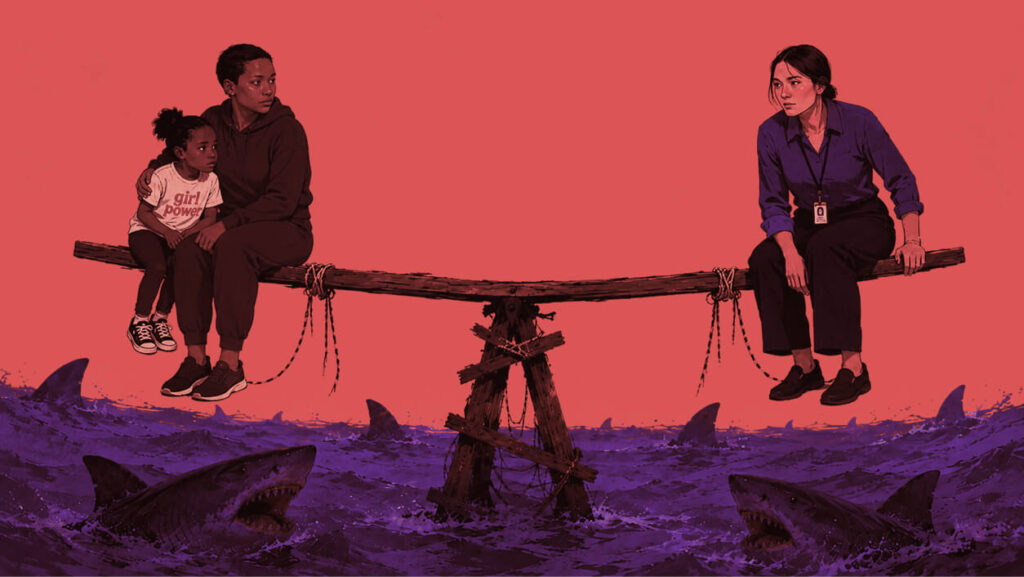
On opposite sides of the same door in BC schools
Families and teachers are describing the same failure from two positions inside it. The system survives by keeping them from recognising each other.
-

A summer reading list for education leaders
The Canary Collective went upstream this week, and the gloves came off. In “Delay, Distract, and Deny”, Wren takes the old public-health parable about pulling bodies from a river and turns it into an indictment: while families stand waist-deep in the current keeping disabled children afloat, almost no one walks up the bank to ask who…
-
I’m a seventh grade failure
Institutional capture refers to the process by which individuals — parents, children, advocates, even dissenting professionals — are absorbed into the operational logic of an institution to the point where they begin reproducing its framework, its language, and its priorities, without necessarily endorsing them or recognising what is happening. It is distinct from agreement. You do…
-
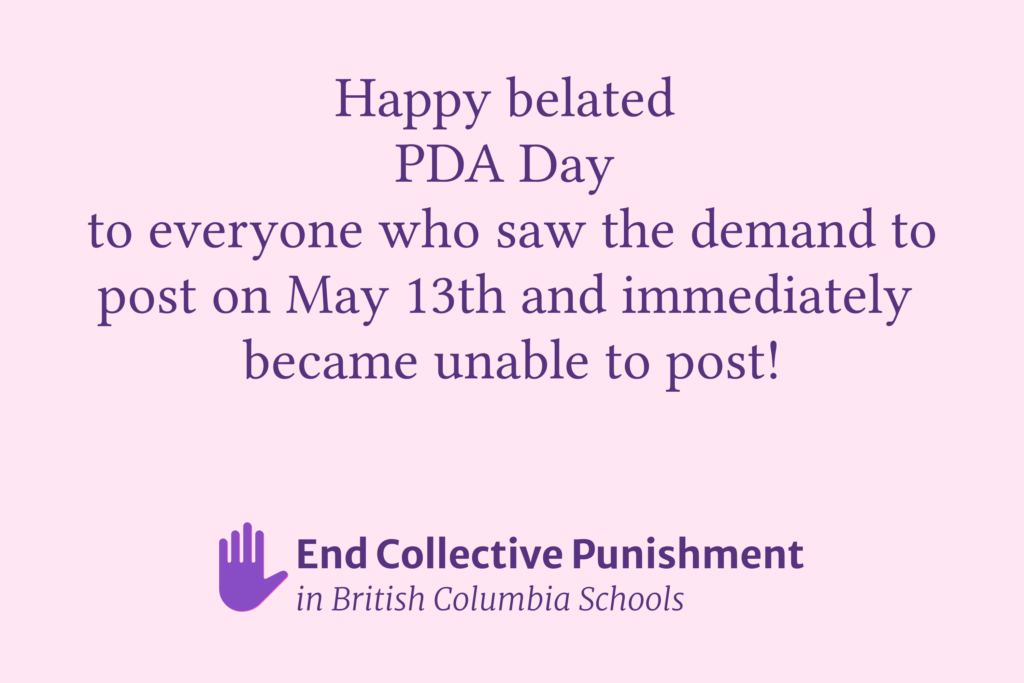
Happy belated PDA Day
I have written about Pathological Demand Avoidance (PDA) quite a bit over the past year, so for PDA Day / PDA Action Week I thought I would do a small review of the themes I keep returning to. It’s not wilful behaviour, usually Schools often read demand avoidance as refusal, manipulation, defiance, escape, or “not…
-
Lies, damned lies, and ABA evidence: a prescription for greed
Imagine being told your child needs a treatment. Then imagine learning that the research used to sell that treatment was written, overwhelmingly, by people who make money from the treatment continuing. Now imagine that most of those researchers said they had no conflict of interest. That is the problem sitting underneath ABA. A new Psychology Today article highlights…
-

Sooke School District (SD62) secondary schools: a neurodiversity-informed policy critique
The Sooke School District secondary code of conduct opens with the steady, reassuring cadence of a district reading its own values back to itself: schools are “places for safe, purposeful learning,” conduct is “a shared responsibility of students, staff, parents / guardians and the broader community,” and every member carries an obligation to “support learning,”…
-
Exclusion tracker: what 6,783 reports are telling us
The numbers arrived quietly, published in an interim report from the National Exclusion Tracker — five months of data collected since the tracker expanded from a BC-only tool to a national one, capturing the experiences of families across eleven provinces and territories. 6,783 reported incidents of exclusion from K–12 education since September. 68% of them…
-
Advocacy is too hard and schools expect too much
The BC Ministry of Education directs families to file complaints through their school district’s K12 system when schools violate policy, deny accommodations, or harm disabled children through exclusionary discipline. The process presents itself as accessible redress, a pathway families can navigate while managing the daily crisis of a child being room cleared, partially scheduled, or…
-

When improvement tolerates death: why schools must stop the line
Education systems insist they are engaged in continuous improvement. They invoke cycles, frameworks, data dashboards, and action plans to demonstrate seriousness and care. But children are killing themselves in every district, every year. Disabled children are being excluded, isolated, placed in hallways, sent home early, or left to deteriorate while plans are written. The question…
-

Ministry regulations on physical restraint and seclusion in BC schools
Physical restraint and seclusion are permitted in British Columbia schools under the Ministry of Education and Childcare guidelines—despite being widely described as last-resort safety measures. When schools restrain or isolate disabled children, districts often cite the Provincial Guidelines on Physical Restraint and Seclusion in School Settings (2015) to claim compliance. Parents are told the intervention…
-

Champlain Heights Annex School (VSB SD39): a neurodiversity-informed conduct critique
Champlain Heights Annex School’s Code of Conduct promises a safe, inclusive, equitable, welcoming, nurturing, and healthy school environment. The document aligns explicitly with Vancouver School Board’s District Student Code of Conduct (AP 350), affirms the BC Human Rights Code, and structures behavioural expectations through a three-level consequence framework extending from classroom redirection to formal suspension.…
-
Discipline outcomes and statistics in BC school districts: what the statistics reveal about institutional protection
Schools are quick to label children as dysregulated when they struggle to process harm, respond slowly under stress, or push back against systems that have failed them. These labels carry consequences. What is less often examined is how institutions respond when they behave in the same way. A note I support parents making complaints when…
-

PBIS and oh, the places you’ll go
Remember that Dr. Seuss book promising unlimited potential? Oh, the places you’ll go! Well, PBIS has places to take your kid too. And you’re not going to like where this journey ends. It started with good intentions (it always does) Schools adopted Positive Behavioural Interventions and Supports to reduce suspensions. To build better communities. To…
-

The cost of saying ‘change costs nothing’
Long before it became common sense, the spherical shape of the Earth was already known. Astronomers, mathematicians, and navigators across multiple ancient cultures—within the Hellenic world, in ancient India, in Islamic scholarship—had measured the Earth’s curvature, calculated its circumference with remarkable accuracy, and built navigational systems that depended on that knowledge. This was not speculative…
-
Collective punishment at Vancouver School Board: when one disabled child’s behaviour closes the playground
On December 20, 2017, my kindergarten child Robin went onto an ice field during recess at his school in Vancouver. Robin loved ice—the sensory experience, the visual shimmer, the way it cracked and moved under small feet. The school had asked all students to stay away from the ice for safety reasons throughout the morning,…
-
A school advocacy vocabulary
What families experience in schools is often described as a series of unfortunate incidents: a meltdown here, a missed accommodation there, a relationship breakdown framed as “complex family dynamics.” But these events are not random, isolated, or accidental. They are patterned. They recur across schools, districts, and provinces. They follow recognisable logics, deploy familiar language,…
-
Manitoba’s “positive behaviour agreements” and BC’s PBIS infrastructure
Jillian Enright identifies the central contradiction in Manitoba Education Minister Tracy Schmidt’s 2025 announcement of “positive, student-centred approaches” grounded in what the province calls positive behaviour agreements: these agreements present themselves as collaborative documents created between students and staff, yet the power imbalance renders genuine collaboration structurally impossible, leaving students to validate pre-determined behavioural expectations…
-

Loss of recess impact on chronic stress levels in elementary children
The Impact of Recess on Chronic Stress Levels in Elementary School Children illuminates the profound violence embedded in recess cancellation as punishment, revealing how schools manufacture chronic physiological harm under the guise of behaviour management. The findings demonstrate that children receiving forty-five minutes of daily recess exhibited hair cortisol concentrations significantly below both pre-pandemic normative…