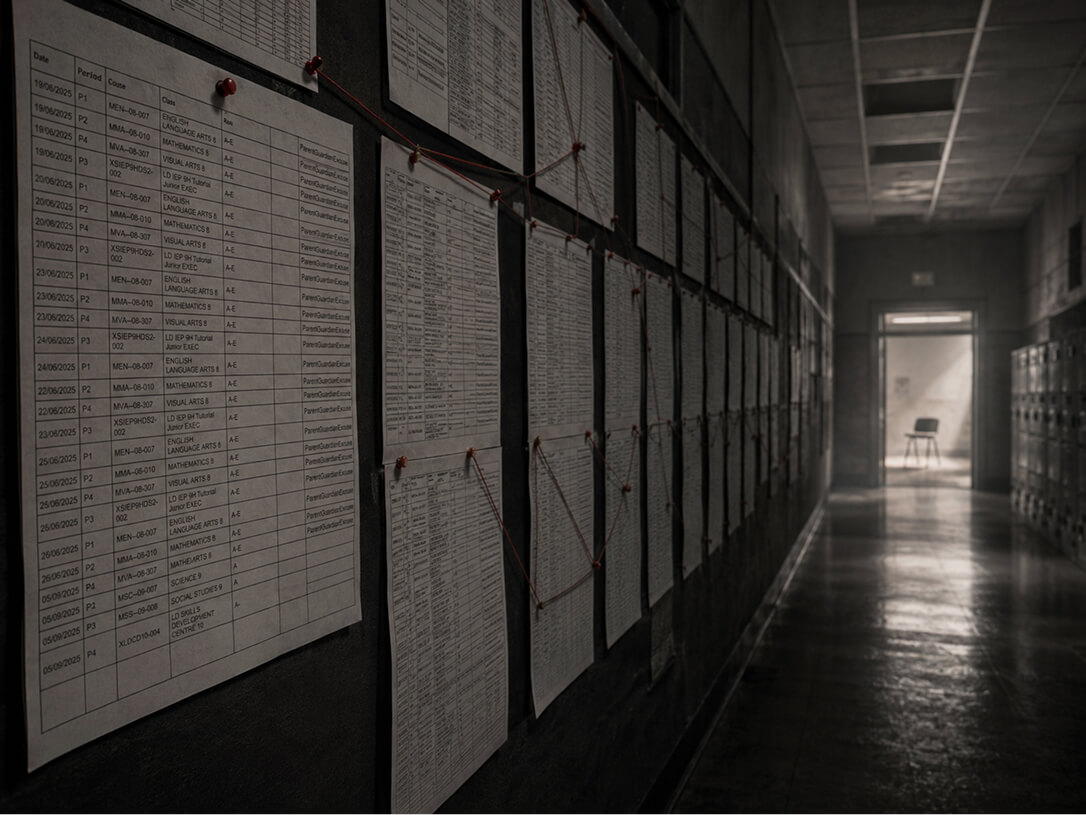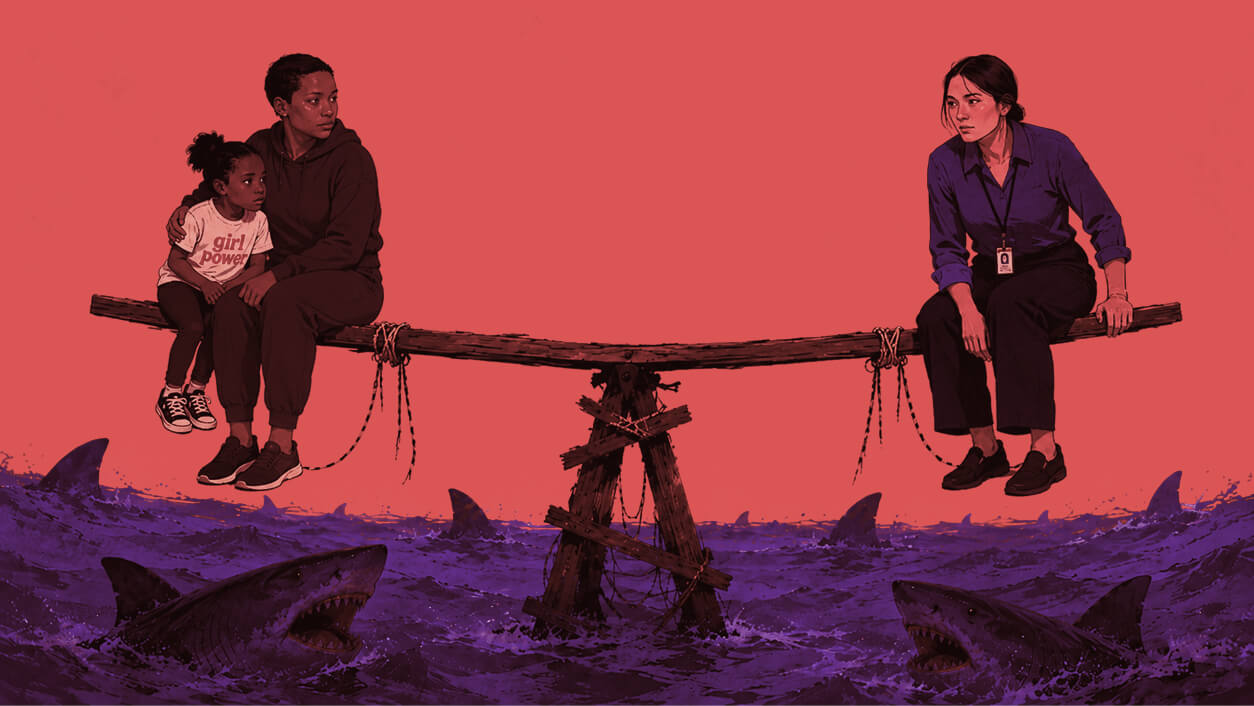
Autistic students (especially girls) often hide (“mask”) their natural behaviours to avoid peer conflict and “fit in” at school. When educators implicitly or explicitly demand this masking – for example by discouraging stimming or forcing conformity – it can amount to a form of discrimination and harm under BC and Canadian law.
This article examines the legal implications: under the BC School Act, the Human Rights Code, Section 15 of the Charter, and case law (notably Moore v. B.C.) students are entitled to meaningful access to education and protection from disability-based discrimination. Pressuring a child to mask can deprive her of that access and harm her psychological integrity, potentially violating human rights and duty-of-care obligations.
We survey relevant statutes and jurisprudence, including negligence and duty of care principles, and analogies to child-protection (coercive practices like disordered-eating). The evidence shows masking causes exhaustion, anxiety and long-term mental-health harm (as documented in research[1][2]).
We outline arguments for and against treating mask-pressure as a rights violation, noting that BC case law is sparse on this specific issue. Remedies may include human-rights complaints, Charter challenges, policy reforms, training for staff, and, where justified, damages. A comparison table summarises legal standards and remedies.
A flowchart illustrates how school demands → masking → harm → legal claims can arise.
Throughout, we prioritize Canadian and BC sources (statutes, cases, studies, advocacy reports) and cite them. Where BC-specific legal authority is lacking, we note gaps and analogize from broader disability rights law.
Definitions and context
Autistic masking (or camouflaging) is the conscious or unconscious suppression of autistic traits (like stimming, eye-avoidance or special interests) to conform to social expectations[2][3].
In practice, masked students might force eye contact, copy peers’ body language, or hide sensory needs. Research shows girls on the spectrum often mask more than boys and are diagnosed later because of it[4][5]. Masking itself is not a protected legal issue, but the requirement to mask – implicit or explicit pressure by educators – can impinge on an autistic child’s right to an inclusive, non-discriminatory education.
Legally, the issue is framed by disability rights and educational law. In B.C., the School Act and Inclusive Education policy guarantee that “all students with disabilities… have equitable access” to learning[6].
The School Act also mandates safe, caring schools (free from bullying and discrimination) and requires Boards to offer IEPs for special needs.
The BC Human Rights Code (s. 8) forbids discrimination on disability in “services, facilities or accommodation customarily available to the public” – a category that courts interpret to include public education[7].
Federally, the Charter’s Section 15 guarantees equality and disability is an analogous ground for discrimination. When a school’s actions deprive an autistic student of equal educational opportunities because of her disability (including requiring harmful masking), legal challenges can arise under the Code, Charter, or in tort (negligence or intentional harm).
Masking harms and prevalence
Extensive evidence shows that masking exacts a heavy psychological toll. Autistic women and girls who mask report severe exhaustion, anxiety, depression and identity conflict[1][8].
In a study of adolescent autistic girls, educators and parents described girls who “mask more in mainstream…just to be with their friends,” then come home “on edge…all exhausted” and at risk of meltdowns[1][2]. Mothers reported their daughters being “very tearful, very anxious and nervous…lots of tummy aches… because she didn’t fit in”[9].
Over the long term, masking led these girls to feel isolated and underachieving: “they deliberately left her out…she wasn’t willing to try again” when included by peers[8]. Academic studies tie such masking to higher rates of mental illness and suicidal ideation in autistic populations.
Relatedly, prevalence data show autism is underdiagnosed in girls; in Canada only about 0.8% of girls 5–17 are diagnosed (vs 3.1% of boys)[5]. This under-recognition is partly due to effective masking. The result is that many autistic girls endure years of unaddressed bullying and stress because no one realized they had a disability requiring accommodation[10][11].
Legal parallels: The harm from masking can be likened to other coercive pressures on vulnerable children.
The demand to suppress one’s autistic identity can be compared coercive practices like forcing an eating-disordered child to diet or demanding a gay child hide their identity – actions that breach a child’s bodily and psychological integrity.
Just a Parent
While legal doctrine for “psychological integrity” is less developed than for physical assault, courts have begun recognizing that severe school bullying or harassment can violate a student’s right to security of the person (e.g. in analogous contexts). At minimum, forcing mask-like behavior is a failure of the school’s duty to protect a child’s well-being.
Legal Frameworks
What follows is an overview of relevant legal framework.
BC School Act and Inclusive Education Policy
The School Act (RSBC 1996, c 412) establishes the right to basic education and imposes duties on Boards. Section 1 of the Act explicitly commits to “fostering the learning and health of students…to the limits of the resources”. Section 6 provides every child a free education, and Section 12 requires schools to provide special education services when needed (via IEPs)[12][13].
School Boards must consult parents about placement and ensure accommodations for disabled students. Courts have interpreted the Act as creating a statutory guarantee to education; in Moore v. BC, for instance, the SCC emphasized that denying adequate special-ed support stripped the child of access to the education all other children have[14]. In this light, if requiring masking effectively denies an autistic student the supports they need (because their difficulties are hidden), it contravenes the Act’s commitment.
The province’s Inclusive Education Policy (2006) similarly affirms that “all students with disabilities…should have equitable access to learning opportunities”[6] and that inclusion is a fundamental principle[15]. This policy reinforces a duty on schools to adjust teaching and environment, not to punish or exclude differences. Pressuring a student to mask could violate this obligation by undermining equitable access (e.g. by making the child silent or absent).
BC Human Rights Code and Section 15 Charter
Under the BC Human Rights Code, education in public schools is considered a “service” to the public. Section 8 prohibits discrimination in services on disability. Case law (guided by Moore v. BC, 2012 SCC 61) applies a two-part test: first, the student must show they were denied meaningful access to education on the basis of their disability (a prima facie case)[16]. If established, the school must show the denial was reasonably justified (e.g. that it accommodated to undue hardship).
Moore itself held that eliminating remedial support for a dyslexic child was discrimination because it prevented him from accessing education normally available to others[14]. By analogy, a masked autistic student who, say, cannot speak up about bullying or take needed sensory breaks may be effectively denied the full educational experience due to her disability. If the school’s demand to mask can be shown to cause that denial, a prima facie case could be made.
Section 15(1) of the Canadian Charter (equality rights) similarly protects against disability discrimination in laws and government actions. While education is provincial, Charter rights apply to provinces through their administration. A Charter s.15 claim would require showing a law or policy (or its implementation) disadvantaged an autistic student on grounds of disability. For example, if a school policy tacitly requires neurotypical behavior (impacting only autistic kids), that could be arguable discrimination. Remedies under Section 15 could include declarations and tailored remedies, though courts are cautious about intruding into education details.
Notably, Moore was a SCC Charter case: although argued under the BC HRC, the SCC also framed it as a breach of equality rights. It confirmed that education is a statutory right and that equivalent access must be provided, comparing disabled vs non-disabled students for purposes of equality[7]. Thus forcing masking (which only autistic students would need to do) could be seen as drawing a distinction based on disability, triggering Section 15 scrutiny.
Duty of care (negligence)
Under common law, schools and teachers owe a duty of care to protect students from reasonably foreseeable harm, including psychological harm from bullying or abuse. If educators actively enforce masking (for example, physically restraining stims or punishing the expression of autistic traits), a claim of negligence or even assault/battery could arise. Foreseeably, such coercion would cause stress and mental injury to an autistic child. Negligence requires showing: a duty (yes), a breach (forcing harmful behavior), causation (masking led to harm), and damages (anxiety, depression). No Canadian case appears to have squarely addressed masking as negligence, but analogous cases on teacher misconduct and bullying (e.g. Odhavji Estate v. Woodhouse, 2003 SCC, about sexual abuse on a school trip) show schools can be held liable for harm caused by school authority or peers under their supervision. If a principal or teacher explicitly says “don’t rock in your chair or I’ll take away recess,” one could argue that is a breach of the duty to safeguard the student’s well-being.
Direct vs. constructive discrimination
Direct discrimination would occur if a school rule explicitly singled out autistic behaviors (for example, a policy banning all non-typical behaviors that only autistic students exhibit). Constructive (indirect) discrimination is likelier: a neutral rule (like requiring students to sit still and be quiet) may disproportionately harm autistic students who need stimming or breaks. Case law recognizes indirect discrimination when neutral policies have an adverse effect on a protected group unless justified. For example, a “no-fidget” policy could be indirectly discriminatory if not adequately justified by safety or pedagogical need. Khan v. UGDSB (Ontario HRTO, 2019) considered whether failure to provide ABA was discrimination; the tribunal applied Moore’s framework. In that case, the rule that all students must manage in the mainstream was not found to violate rights because the school had engaged in extensive accommodations[17]. That illustrates the challenge: a successful claim must show the mask-policy is truly denying access, not simply a difference in approach.
Informed consent and psychological integrity
Children cannot truly consent to suppressing their autism. When a school compels masking, it may violate the child’s right to psychological and sometimes physical integrity. Philosophically, one could argue this touches on “security of the person” under Section 7 of the Charter, especially if the compulsion leads to trauma. While Sec.7 has been applied mainly to government-imposed medical issues, a novel argument could be made that severe psychological coercion by school officials engages liberty/privacy interests. No precedent on point is known in Canada, but analogous U.S. cases under IDEA (Individuals with Disabilities Education Act) sometimes recognize the line between discipline and medical treatment. If forcing a student to mask is akin to “treatment” without consent, a Sec.7 claim might be conceivable.
Child protection analogies
Forcing a child into harmful behaviors raises questions similar to child protection laws. Provincial child welfare statutes (B.C. Child, Family and Community Service Act) consider it neglect or abuse if caregivers cause serious emotional harm. A creative argument is that educators, as mandatory reporters, should intervene when a child suffers harm. If a student’s forced masking leads to extreme self-harm or eating disorders (for instance, using stimulants or other substances to cope), one could analogize to medical neglect. However, existing cases in BC focus on physical abuse; psychological coercion is harder to classify. Still, at minimum, awareness of self-harm risk imposes on the school a heightened responsibility.
Legal arguments for masking pressure as rights violation
- Denial of meaningful sccess: If masking prevents a student from accessing support (e.g. cannot ask for help), it may equate to denial of access. This triggers Moore’s test: even if indirect, the burden to justify falls on the school[16].
- Discrimination: Masking demands target autistic traits, a disability, creating differential effect. Under s.15 and BC Code s.8, this distinction requires justification. If no genuine pedagogical need mandates silencing autistic traits, it may fail justification.
- Failure to accommodate: Schools must accommodate disability (though BC Code has no explicit “reasonable accommodation” phrase, case law imports it). Encouraging/inforcing masking rather than providing alternatives (sensory tools, breaks) could be seen as failing to accommodate.
- Harassment/bullying: On a human-rights front, forcing a child to conform or stigmatising their difference could constitute disability-based harassment. BC Code prohibits harassment/discrimination together. A pattern of singling out autistic behaviour could violate the Code’s standards of respectful treatment.
- Negligence: If a teacher’s pressure foreseeably causes psychological injury (stress, anxiety), that could breach duty of care. Even absent physical force, emotional abuse by authority (sustained harassment to mask) may ground liability.
- Charter – security of person: Severe psychological coercion might engage s.7’s principles of fundamental justice (though untested in Canadian schools, international human rights law recognizes psychological integrity as protected).
- Privacy rights: Masking may involve monitoring and controlling basic behavior (eye contact, movements). Constant surveillance by adults could be argued as an invasion of privacy or autonomy.
Legal arguments against masking pressure as rights violation
- Lack of express policy: Many schools do not have a formal “no-stimming” rule; the pressure to mask is often subtle or social. Proving that the school effectively forced masking may be difficult. The school might argue it was promoting general classroom management (a valid pedagogical goal), not targeting disability.
- Accommodation defence: If the school can show it provided alternative supports (IEP, sensory breaks) and encouraged some self-expression while managing the class, it may claim it accommodated adequately. Human-rights tribunals (like in Khan) often emphasise extensive proactive measures as fulfilling the duty, even if some parent requests are refused[18][19].
- Characterisation as pedagogy: A school might treat masking as a necessary life skill rather than “abuse.” They may contend teaching an autistic child to manage their behaviours is part of education, not an illicit practice.
- Burden on school: Demonstrating undue hardship or lack thereof can be challenging. The school could argue that allowing too much expression disrupts others, claiming a justified reason. If any rational basis exists (safety, order), discrimination claims can fail the second stage.
- Privacy exemption (unlikely): There’s no direct privacy exemption, but schools often have broad discretion in pedagogy. Unless a policy explicitly violates Charter/Code, courts may defer to educational judgment.
Remedies and precedents
| Legal claim / standard | Proof required | Possible remedies | Precedents / notes |
|---|---|---|---|
| BC Human Rights Code (s.8) | Student denied meaningful access to education by disability-based difference in treatment (Moore test)[16]. | Human Rights Tribunal remedies: order accommodation, policy change, compensation for injury/dignity. | Moore v. BC (2012 SCC): Denying special-ed was discrimination[14]; Khan v UGDSB (HRTO, 2019) explained the test[16]. |
| Charter s.15 (equality) | A law / policy (or its application) imposes disadvantage or stigma on the basis of disability. | Declaratory/injunctive relief, possibly awarding damages or costs. | No direct Canadian case on masking, but Moore affirmed equality principle in education context. |
| Negligence (tort) | Duty of care + breach (force/pressure causing harm) + causation + damage. | Damages for mental injury, possibly injunction to stop conduct. | No known Canadian case on forced masking; relevant case: Odhavji Estate v Woodhouse (2003 SCC) (school liability for abuse). |
| Discriminatory harassment | Pattern of conduct targeting disability, causing a poisoned environment. | Human Rights remedy (as above). | Jubran v. AG Canada (SCC): harassment against non-disabled kid mistaken as gay was not discrimination; distinction on perception. Limited guidance for disability. |
| Child abuse / neglect (CFCSA) | Unlikely case law, but theoretical: education authorities neglecting a child’s well-being. | Intervention by child welfare, mandated training/removal. | Child welfare law rarely used in school context; note CFCSA s. 13(5)(g): failure to protect physical safety can be abuse. |
| School Act violation | School Act complaints via Ombudsman or judicial review: e.g. failing to provide safe, inclusive education. | Court-ordered compliance, policy review. | Moore implies statutory right to meaningful edu; School Act itself doesn’t create private cause of action, but non-compliance can be challenged. |
| Administrative law | Did the Board act reasonably in its policies/discipline (non-academic)? | Judicial review, but educational decisions have deference. | Very few cases due to deference and finality of policy decisions. |
Key Precedents: Moore (SCC 2012) is landmark: special-ed denial = discrimination[14]. BC Human Rights cases such as X v. School District No. 5, Student Y by Grandparent, and Student (by Parent) v. School District (2023 BCHRT 237) illustrate the obligation to accommodate and not place the burden on the child[20][21]. No BC case specifically on masking was found, indicating a legal gap.
Flowchart of causation and claims
flowchart LR
A["School action/inaction\n(e.g. policies, teacher discipline)"] --> B["Child feels compelled to mask autism"]
B --> C["Chronic stress, anxiety & school avoidance"]
C --> D["Failure to access needed support/accommodation"]
D --> E["Discrimination or duty-of-care violation"]
E --> F["Legal claims: HRC complaint, Charter remedy, tort suit, system changes"]
This diagram traces how school demands (left) lead to masking pressure (B), which produces psychological and academic harm (C–D), giving rise to potential legal claims (E–F).
Conclusions and gaps
Forcing autistic children to mask can, in principle, violate multiple legal duties. If a student can show that school pressures to conform denied her meaningful educational benefits because of her autism, this would meet the first stage of discrimination law[16]. Pressure that leads to real harm could also trigger negligence or harassment remedies. However, existing case law hasn’t directly confronted masking per se. No reported BC tribunal or court decision specifically holds a school liable for compelling masking. Thus, much will turn on analogies and balancing tests in human-rights hearings. Schools should be wary: Moore teaches that accommodations are a right, and BC tribunals insist on proactive, ongoing efforts to support disabled students[20][16].
Recommendations: To avoid legal liability, BC schools must:
- train staff on autism and masking
- revise discipline/pedagogy to allow autistic behaviours (stims, breaks) as accommodations
- ensure participation with parents and child in IEPs[20][16]
- implement clear anti-discrimination policies. If complaints arise, schools should document all accommodation efforts (as tribunals have emphasized)
Policymakers may consider explicit guidelines clarifying that encouraging authenticity (rather than mask) is the standard of care.