

British Columbia
Each province and territory in Canada has its own public education system, governed by different legislation, policies, and funding structures. While certain patterns—like collective punishment, underfunded inclusion, or inconsistent accommodations—may appear nationwide, the details vary by region. This page brings together posts, policies, and resources relevant to schools and families in BC, offering local insight into national issues.
-
Balancing budgets by denying disabled kids support
In British Columbia, we are told that the education system is improving. Budgets are rising. Inclusion is a stated priority. And yet, for families whose children require consistent, sustained support—especially those who are disabled or living with complex trauma—the lived experience is defined by absence, delay, and denial. There is a growing chasm between the…
-
Collective punishment in schools: global history and harm
Explore the global history of collective punishment: how it has been defined, justified, resisted, and remembered across cultures and time.
-
We did everything right, but we were failed
Introducing Robin’s story and the cost of manufactured scarcity In British Columbia, the promise of public education is being quietly dismantled. Not with headlines, not with declarations—but with slow erosion, strategic omission, and institutional neglect.
-
The ABCs of regressive punishment
Discipline in schools is rarely neutral. For neurodivergent students, it often takes the form of quiet harm—masked as structure, delivered as shame. From exclusion and forced apologies to behaviour charts and the denial of recess, regressive punishment practices remain embedded in our classrooms. They don’t teach accountability. They teach fear, isolation, and the high cost…
-

Petition to end collective punishment in BC Schools
Collective punishment in schools continues in British Columbia, where children are still punished for things they didn’t do—or because others near them did something wrong. Under international law, including Article 33 of the Geneva Conventions, collective punishment is prohibited. It is considered unjust in times of war. But in our schools, it continues under the…
-

Collective punishment: a focal point of injustice
Collective punishment, the practice of disciplining a whole group for the misdeeds of one or a few, is widely recognised as unjust and counterproductive. Children know it’s wrong Even children intuitively grasp its unfairness. In one famous case, an 11-year-old student in the UK bluntly told her teacher that “collective punishment… is not fair on the…
-
How to lodge an education appeal in British Columbia
Filing an appeal in the Vancouver School District is not for the faint of heart. It’s like falling on glass slowly. Emotionally draining by design. But for some families, it is the only path left. I’ve filed several myself. Sometimes, my child got a little more support. Other times, I walked away empty-handed but still…
-
Nova Scotia bans collective punishment
Nova Scotia’s Provincial School Code of Conduct Policy underwent a significant update in April 2025, marking a substantial revision of the previous 2015 policy. The updated policy, set to take effect in September 2025, introduces clearer definitions of unacceptable behaviours, delineates new responsibilities for all school community members, and emphasises support for those affected by…
-
Lawyers over learning: how much is VSB paying Harris & Co
As a parent of two children with learning challenges, I found myself deep in the Vancouver School Board’s appeals process. Early on, I heard officials say our children would be supported with “inclusive” classroom resources. In reality, every step felt like an uphill battle. For example, during our Level 1 appeal meeting the board’s own summary…
-

The slow boil: delayed support and collective punishment
I think a lot about lobsters, wrestled from the sea and placed in cold water that slowly heats—do they wonder if it’s getting hot in there? How do they decide where the line is and begin to panic? Is it a thought or pure instinct? In kindergarten, my son arrived with a history of trauma…
-
School District 48 (Sea to Sky): a neurodiversity-informed policy critique
SD48 conduct decision flow (simplified) ⚠️ Critical analysis ✅ Strengths ❌ Gaps Neurodiversity lens: how the policy holds up Dimension Assessment Notes Disability justice ✅ Partial Equity and accommodation are mandated, but process and supports unspecified Neurodivergent alignment ⚠️ Weak No mention of executive function needs, sensory regulation, impulsivity, masking, or meltdown management Protection from…
-

Help please: call for Indigenous perspectives on collective punishment in BC schools.
We are seeking contributions from Indigenous scholars, knowledge-keepers, writers, parents, educators, and community leaders on discipline, punishment, exclusion, and accountability in British Columbia’s public schools. This project began from a concern that some school discipline practices — including collective punishment, exclusion, surveillance, public shaming, and informal removal — may sit within longer histories of colonial…
-
Shut it down: Why POPARD cannot be trusted to support neurodivergent children
We asked for help.We got a behaviour chart. We invited experts into our child’s life, hoping they would help school staff understand his anxiety, his trauma responses, his fiercely sensitive nervous system. We asked for relational strategies grounded in respect and attunement. We shared research. We named his diagnosis. We explained, in plain terms, what…
-
Timelines matter
Advocating for a child’s right to an education should not feel like an uphill battle! Yet for some families navigating school exclusion across British Columbia, every step of the process can seem designed to delay, deflect, and deny necessary support. When schools fail to meet the needs of students—particularly those with disabilities or diverse learning requirements—families are…
-
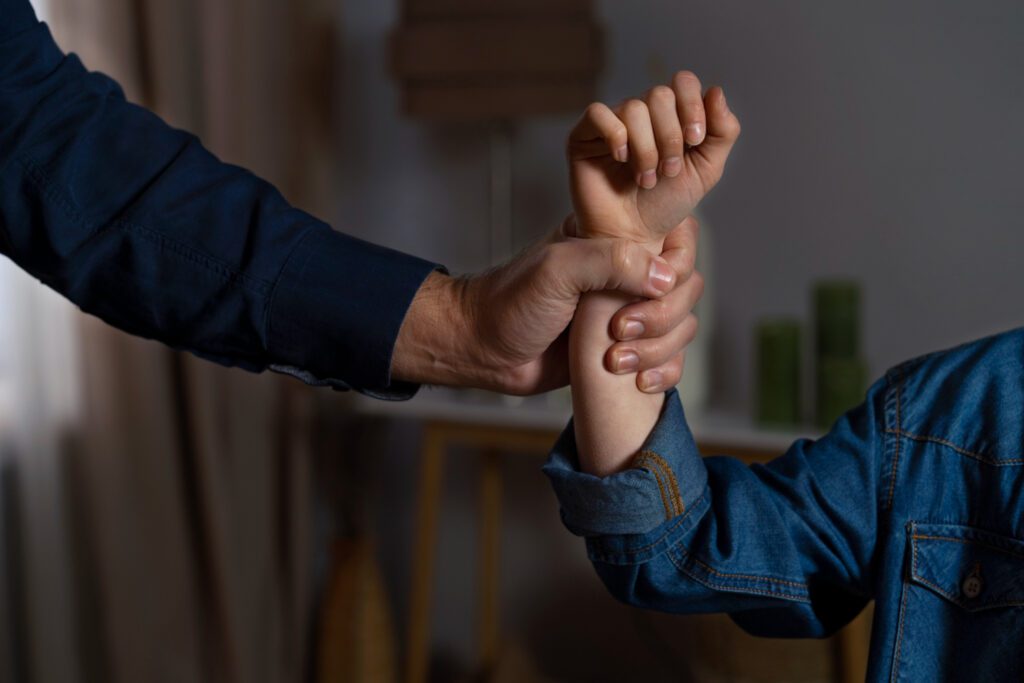
Restraint and isolation in British Columbia schools
Physical restraint and isolation—sometimes termed “seclusion”—remain legally unregulated in British Columbia schools, even as provincial guidelines seek to limit their use to moments of extreme risk. Physical restraint is defined as any method of restricting a student’s freedom of movement to maintain safety, while seclusion involves involuntary confinement in a space from which the student…
-
From corporal punishment to collective harm: why Section 43 still casts a shadow over Canadian schools
Section 43 still permits “reasonable force” in schools. This blog explores how it enables collective punishment and violates children’s rights.
-

Too many left behind
The Representative for Children and Youth (RCY) has released a powerful new report, Too Many Left Behind, highlighting the critical need for better services and support for children and youth with disabilities in British Columbia. According to Representative Jennifer Charlesworth, more than 83,000 young people in B.C. are not receiving adequate care, leaving families at…
-
Why collective punishment doesn’t work, based on scientific evidence
When we challenge collective punishment, defenders often fall back on one refrain: it works. They say it fosters accountability, motivates group norms, and deters misbehaviour. They claim it teaches responsibility. But what if these assumptions are not only unjust, but false? A peer-reviewed study published in Scientific Reports dismantles this defence. Titled Measuring the efficacy of…