

Budget
Budgets are moral documents. Every funding decision reveals whose needs are prioritised, whose suffering is normalised, and whose futures are made negotiable. This tag traces how austerity, underfunding, and strategic omissions shape the daily lives of students and educators in British Columbia. It examines the silent violence of unmet needs—the staffing cuts, the waitlists, the lack of classroom support—and asks how long we are willing to starve a system before we admit that the cost is borne by children.
-

Teachers deserve compensation commensurate with the complexity of their labour
The research confirms what every parent already knows: teaching requires orchestrating dozens of simultaneous human variables inside conditions designed to foreclose success, and the work demands relentless cognitive precision, emotional attunement, and adaptive improvisation across every minute of every day. A classroom contains children processing information at radically different speeds, carrying wildly disparate skill foundations,…
-
Government funding for education fails to keep pace with known needs
The Education and Childcare Estimate Notes 2025 reveal a province experiencing an enormous rise in disability designations while preparing the minister with polished assurances that gesture toward progress, equity, and commitment, and this dual presentation of crisis beneath a veneer of stability creates a document that tells two stories at once: one whispered in the…
-

The thermometer and the furnace: what the Fraser Institute refuses to count
Michael Zwaagstra wants you to believe that British Columbia spent generously on its public schools and received nothing in return, that unions are self-interested actors inflating a crisis for their own benefit, that the real culprits behind declining PISA scores are a progressive curriculum and the absence of high-stakes exams.
-

The false economies of war and schooling
A critique of austerity as a governing principle. This essay argues that Canada’s education and defence systems share a moral and strategic collapse: both confuse restraint with wisdom and endurance with strength. It exposes how underfunding education produces economic waste, social decay, and moral injury across generations.
-

Kelly Gallagher-Mackay on the future of public education
In On Student Absences, Race-Based Data, Private Schools and More, education scholar Kelly Gallagher-Mackay reminds us that public schooling in Canada remains one of the few institutions still striving for equality, even as it strains under chronic absenteeism, inequity, and mental-health collapse. She notes that the share of students missing over ten percent of classes…
-
Capital planning as an equity issue
School construction and renewal determine more than where children learn—they decide who will be welcomed, supported, and given dignity in public education for decades to come. A district’s capital plan is a blueprint for access, and when that plan is delayed, misaligned, or wasteful, the effects cascade into every other area of the system, including…
-
The goodwill ledger: how schools calculate inclusion allotments
Schools in British Columbia keep an invisible ledger—one that tracks not just budgets, but emotions, tone, and perceived worthiness. Families who ask too clearly, too often, or on behalf of more than one child are quickly marked as overdrawn. This essay continues the meditation from Of Sinners and Scapegoats, tracing how goodwill becomes a currency,…
-
A billion-dollar empire and children still in portables
The Vancouver School Board owns 223 properties worth more than $9.5 billion—schools, office lots, apartment units, and even a shopping mall (Postmedia, 2025). And yet every year, we are told there is not enough money to hire enough education assistants. Not enough to renovate a broken bathroom. Not enough to build a school where children…
-

The afterlife of austerity
When public institutions are forced to survive under prolonged austerity, something deeper than budgets begins to break—something in the connective tissue of trust, of care, of the quiet, ordinary belief that systems exist to serve people. The myth of resilience—the comforting story we tell ourselves about teachers with hearts of gold and staff who always…
-

The budget is the behaviour
These responses do not aim for diplomacy. They carry the clarity earned through harm. Most families hold them quietly—unspoken but vivid—because many relationships still require us to perform gratitude after exclusion. These sentences arise from moments when a decision was made to withhold care, to rename harm as misunderstanding, to value budget over belonging—and families…
-
On teachers, trust, and the long unravelling of support
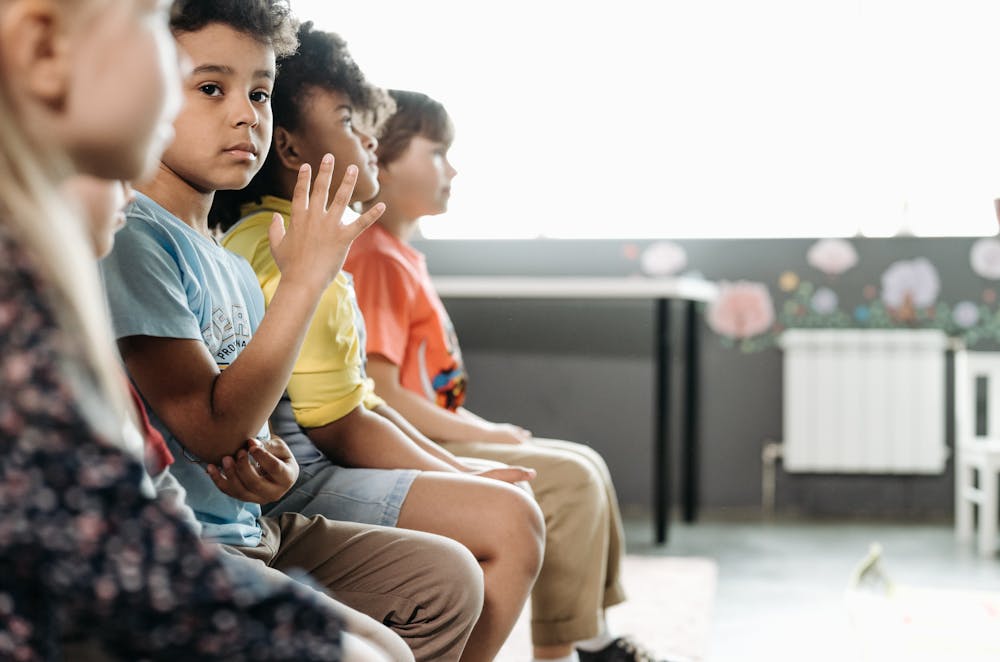
When my children were in kindergarten, they had a teacher who specialised in what I can only describe as an extremely curated performance of niceness—a kind of plasticky, high-fructose charm that made my skin crawl and my muscles tense from the moment I entered the room. Her voice slowed to a sing-song drawl as she…
-
The moral cost of leaving children in fight-or-flight
Robin was eleven the day he fell and came up swinging. It was recess, and something had happened—a misstep, a bump, a collision on uneven ground. His body hit the pavement. And when he rose, disoriented and humiliated, the first thing in his path was his best friend. So he struck him, over and over.…
-

The ABCs of engineered scarcity
A learning module for educators, caregivers, and community members resisting austerity logic in public systems. Engineered scarcity operates like a slow haemorrhage, draining public education of the resources it owes every child while masking that attrition behind soothing administrative dialects; this primer sets out to rupture that façade by naming, in alphabetical precision, the tactics…
-

The scarcity script: how manufactured famine shapes public education
British Columbia’s public schools are not suffering from a natural shortage—they are operating under a system of manufactured scarcity. This blog explores how austerity, rationing logic, and institutional self-preservation create harm for disabled students and their families. Drawing on thinkers like David Graeber, Wendy Brown, Ruth Wilson Gilmore, and Mariana Mazzucato, it reveals how scarcity…
-
Rethinking accessibility leadership, training, and labour in BC public education
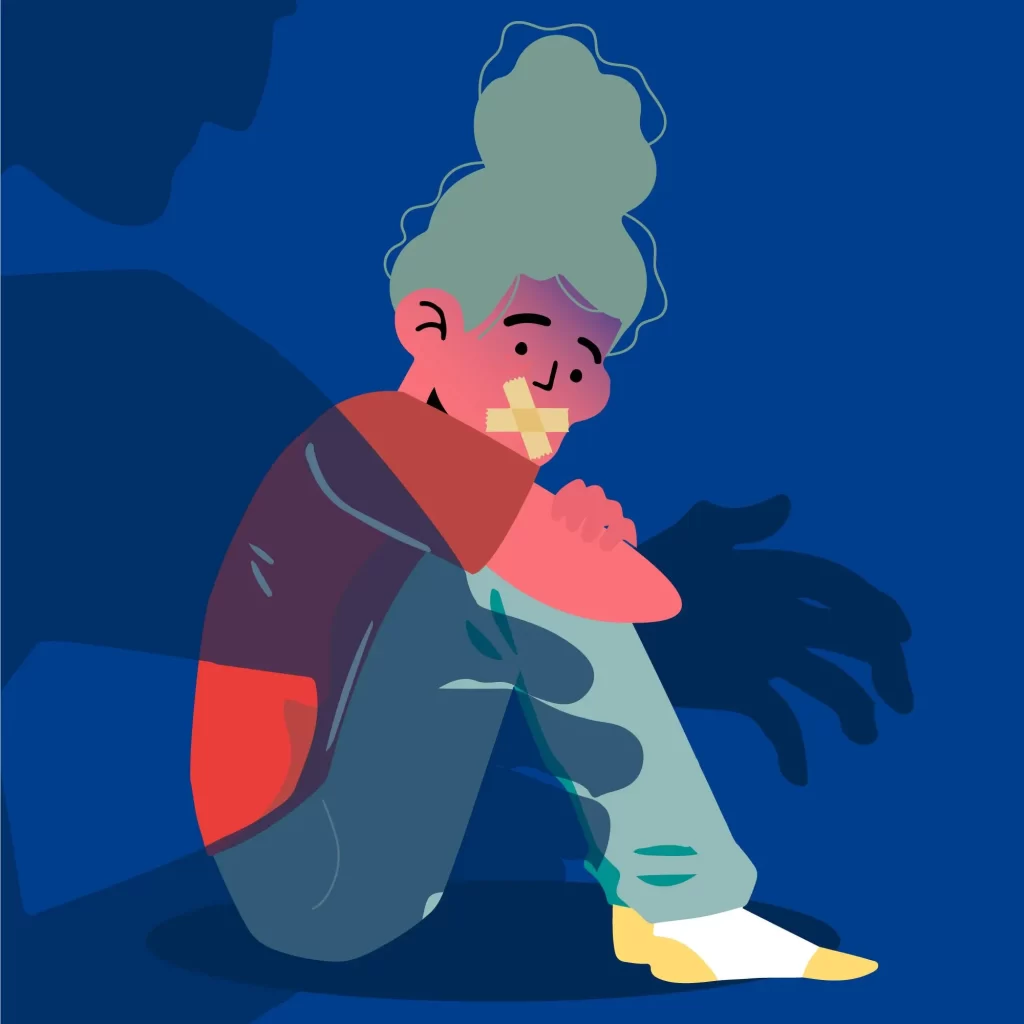
In accessibility work, most transformative insights come directly from disabled people. Lived experience is primary data; manuals and metrics are, at best, secondary literature. In schools, teachers are experts in pedagogy, yet few are trained in disability or neurodivergence. That absence is not incidental—it is engineered, and the consequences are everywhere. The current failure—and promise—of…
-

Balancing budgets by denying disabled kids support
In British Columbia, we are told that the education system is improving. Budgets are rising. Inclusion is a stated priority. And yet, for families whose children require consistent, sustained support—especially those who are disabled or living with complex trauma—the lived experience is defined by absence, delay, and denial. There is a growing chasm between the…
-
How to lodge an education appeal in British Columbia
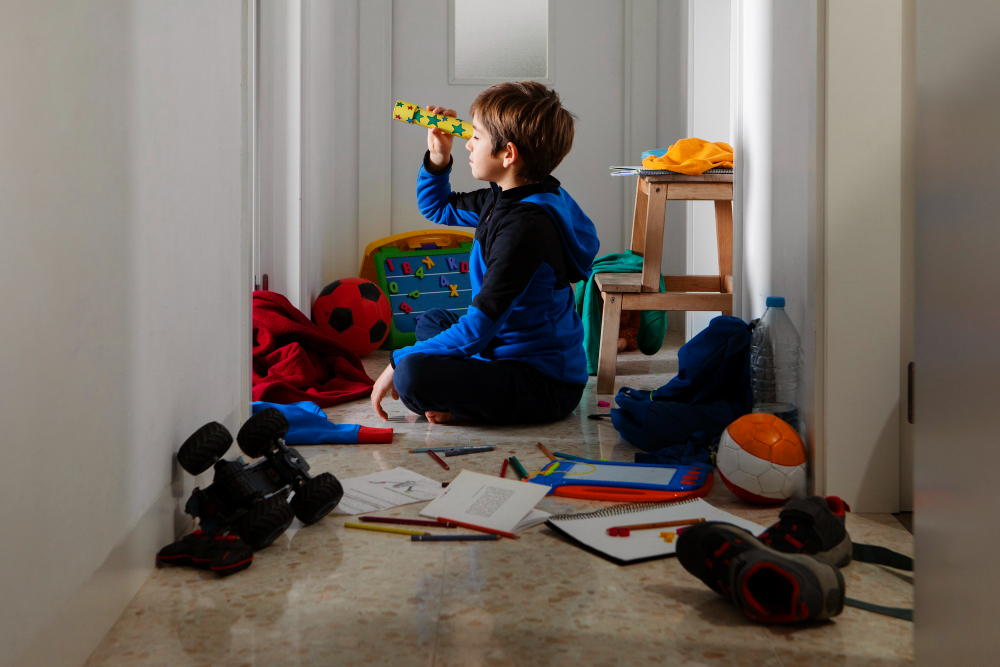
Filing an appeal in the Vancouver School District is not for the faint of heart. It’s like falling on glass slowly. Emotionally draining by design. But for some families, it is the only path left. I’ve filed several myself. Sometimes, my child got a little more support. Other times, I walked away empty-handed but still…
-

Barriers in the Vancouver school system: a parent’s perspective
For families raising neurodivergent children, navigating the school system can feel like surviving a labyrinth built to exhaust you. What should be a place of growth becomes a terrain of harm and dismissal. Beneath the polished language of equity and inclusion lies a set of invisible barricades—attitudinal, communicative, spatial, systemic, and technological—that quietly erode trust…
-

Real leaders lead by example
In May 2025, the Vancouver School Board (VSB) quietly enacted wage cuts that stripped contracted workers—specifically bus drivers and special education attendants—of their living wage top-ups. At the same time, VSB senior leadership quietly accepted significant raises. This decision will result in a 25% wage reduction, with drivers earning $23/hour and attendants only $20/hour [CTV…
-

The slow boil: delayed support and collective punishment
I think a lot about lobsters, wrestled from the sea and placed in cold water that slowly heats—do they wonder if it’s getting hot in there? How do they decide where the line is and begin to panic? Is it a thought or pure instinct? In kindergarten, my son arrived with a history of trauma…