
Budget
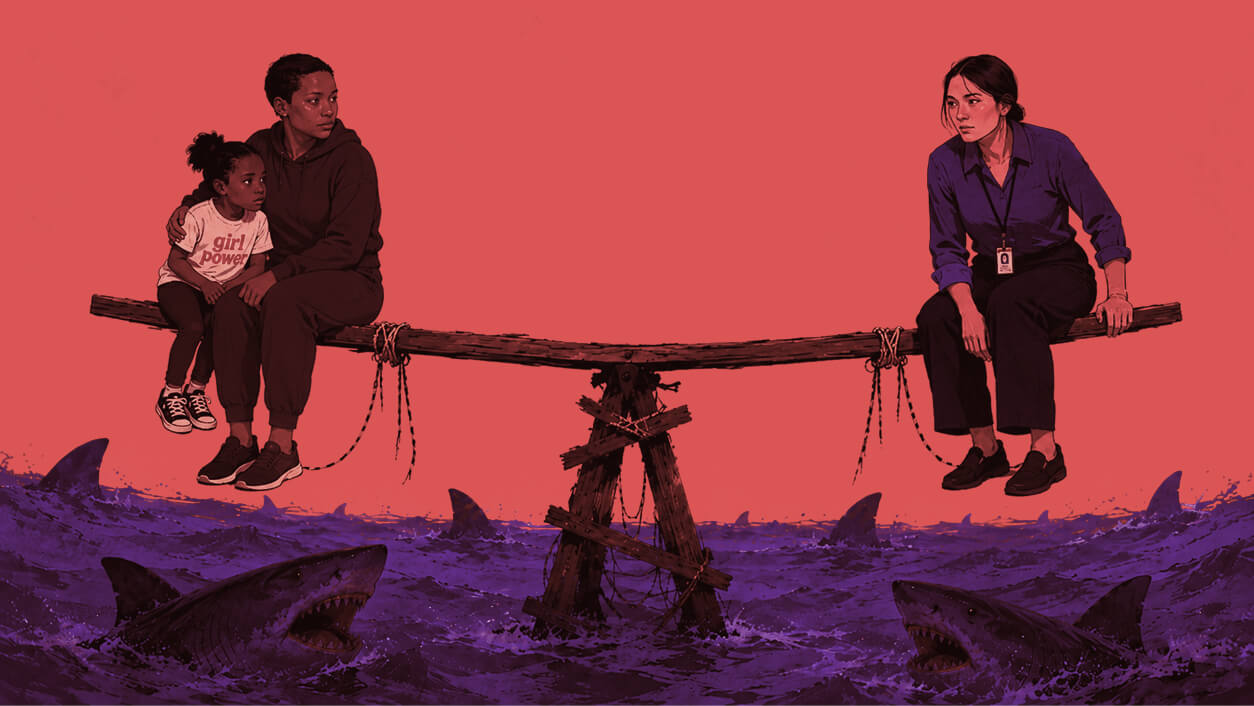
Budgets are moral documents. Every funding decision reveals whose needs are prioritised, whose suffering is normalised, and whose futures are made negotiable. This tag traces how austerity, underfunding, and strategic omissions shape the daily lives of students and educators in British Columbia. It examines the silent violence of unmet needs—the staffing cuts, the waitlists, the lack of classroom support—and asks how long we are willing to starve a system before we admit that the cost is borne by children.
-
On opposite sides of the same door in BC schools
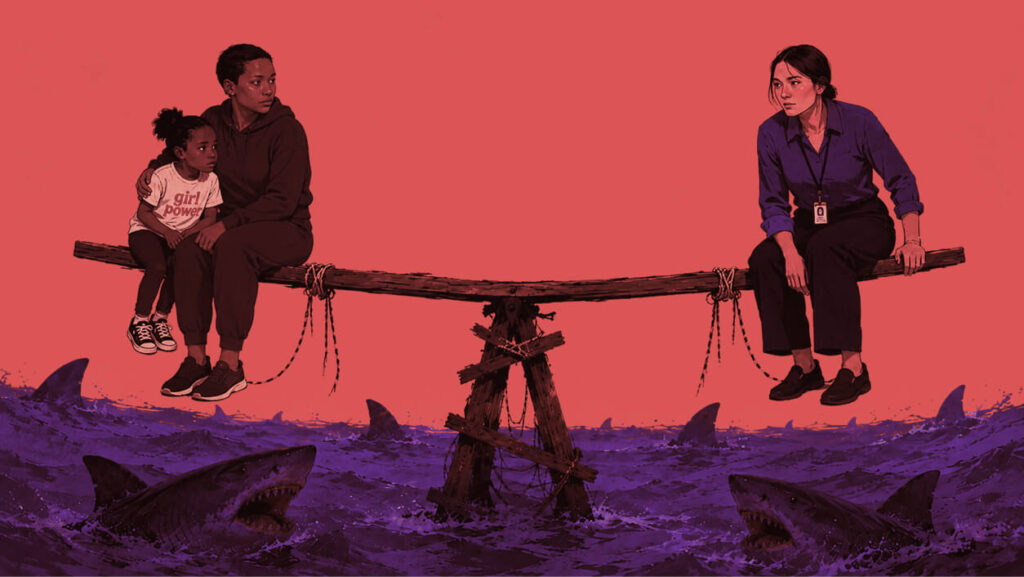
Families and teachers are describing the same failure from two positions inside it. The system survives by keeping them from recognising each other.
-
CBC covers SD8’s elimination of Indigenous Education teachers
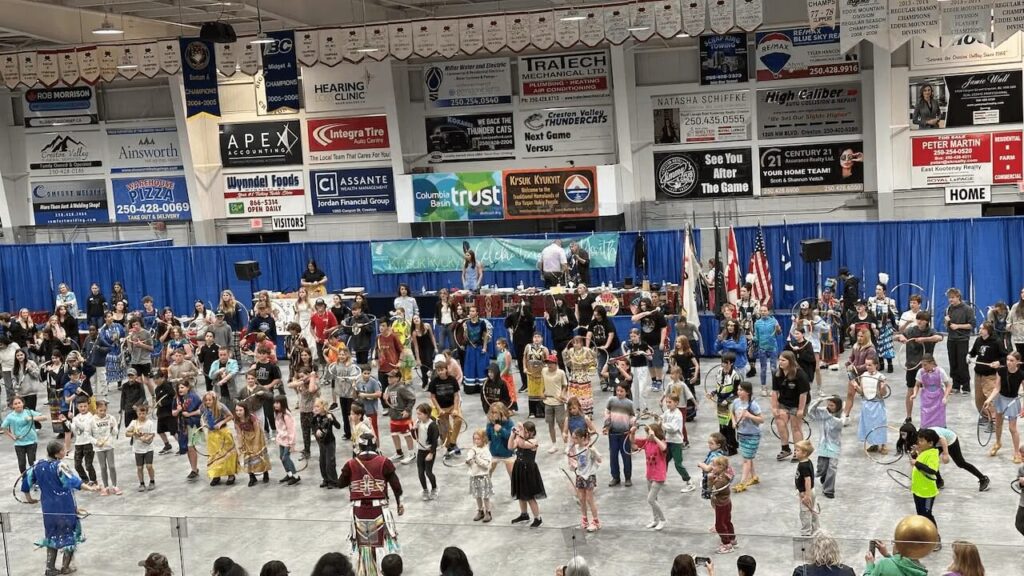
Earlier this week we wrote about School District 8’s decision to cut all Indigenous Education teacher positions from its elementary and middle schools, replacing them with support workers — a role with no instructional authority and no capacity to lead the cultural programming these teachers built over years. CBC’s Amber Wang has now published a…
-
Children are not pawns: disability, private schools, and budget cost-containment
Public money should not be subsidising private advantage while public schools are told to make do with less. That is the clean version of the argument. It is intuitive, politically useful, and often true. When governments claim there is not enough money for education assistants, specialist support, safe buildings, accessible classrooms, or meaningful inclusion, it…
-
The cost of defending scarcity: moral injury and the exhaustion economy
The BC education system spends extraordinary resources defending scarcity while positioning that defence as fiscal responsibility, generating an exhaustion infrastructure that operates across every population the system touches—teachers, families, disabled children, administrators, support staff—all labouring to maintain stories that protect individual dignity within conditions designed to make moral action impossible. A recent analysis on Fund…
-

When one child’s support becomes everyone else’s denial
I bring Robin his meals now. I pour a bath periodically, and coax him in, when too many days have elapsed and a funk has grown pungent from him avoiding the sensory assault or the water on his skin. I manage mess, hygiene, and feeding, even though he is a teenager who should be developing…
-

Newfoundland and Labrador announces $11,000 investment in inclusive education
The provincial government issued a press release celebrating its distribution of $11,000 across eleven schools—$1,000 per institution—framed as demonstrable commitment to safe, caring, and inclusive learning environments. Yes, you read that right: a press release for 11k. The arithmetic speaks plainly: this measly sum, distributed across an entire province’s school system, positioned as evidence of…
-
Where Surrey’s $6.3 million went
I recently reviewed the provincial budget tables and buried within Table 17 (2024/25 Amended Annual Budgeted Operating Expenditures of Program 1.10 Inclusive Education by Object) and Table 26 (2024/25 Actual Operating Expenses of Program 1.10 Inclusive Education by Object) of British Columbia’s 2024/25 operating budget documents lies evidence of what can only be described as…
-

Midwifery and inclusive education: how holistic models become public infrastructure
Midwifery offers something rare in policy discourse: a concrete, recent example of how a holistic, person-centred model of care moved from the margins into stable public funding without diluting its philosophy or abandoning its core practices. The model succeeded because practitioners organised collectively, defined clear boundaries around safe practice, and presented government with a credible,…
-

Scapegoats for austerity: BC education funding excludes disabled children
BC education funding scapegoats disabled children, using collective punishment and performative inclusion to divide parents and maintain austerity.
-

The cost of saying ‘change costs nothing’
Long before it became common sense, the spherical shape of the Earth was already known. Astronomers, mathematicians, and navigators across multiple ancient cultures—within the Hellenic world, in ancient India, in Islamic scholarship—had measured the Earth’s curvature, calculated its circumference with remarkable accuracy, and built navigational systems that depended on that knowledge. This was not speculative…
-

The optimal funding model for inclusive education
Inclusive education does not fail because children are too complex. It fails because funding systems reward denial, privatise enforcement, and treat disability as an exceptional cost rather than a predictable feature of human populations. A functional model already exists. It is not radical. It is aligned with what inclusive education actually requires, rather than with…
-

The question they refused to ask: adequate funding and the architecture of denial in BC schools
Between 2017 and 2020, BC reviewed education funding. The question asked: designation or prevalence? The question refused: what would adequate funding cost?
-
How public schools tax disabled families twice
My son has been home for nine months. The school asks periodically about return timelines, performing care through language. They say they would like to see him back at school. Meanwhile, his nervous system tells a different story: sleep patterns regulating, appetite returning, capacity for joy expanding in direct proportion to distance from their supervision.…
-
When nothing has been decided yet at VSB
Public institutions deploy a phrase when they want parents kept at distance: nothing has been decided yet. The phrase offers a method for keeping scrutiny outside the room where options narrow and preferences harden without public witness. If nothing has been decided, there exists nothing to disclose, nothing requiring consultation, and no legitimate basis for…
-
The equilibrium of refusal: what a decade of legal spending reveals about BC schools
Between 2012 and 2022, British Columbia’s Schools Protection Program spent $4,420,252.58 responding to human rights claims filed against public schools, according to this FOI release. Of that total, $752,525.34 went to indemnity—settlements and compensation paid to claimants. The remaining $3,635,085.21 funded legal defence. The ratio is precise: for every dollar spent remedying harm, the system…
-

What BC spends to avoid accountability
The numbers arrived in a single-page response to a freedom of information request. Between January 2022 and February 2024, British Columbia’s Schools Protection Program—the provincial insurance mechanism that shields school districts from liability—spent $1,340,772.33 responding to discrimination claims filed against public schools. Of that sum, $252,000 went to settlements or indemnity payments across sixteen resolved…
-
The economics of abandonment
When districts exclude children from school, the funding does not follow the child home. The money remains captured within institutional accounts, redirected toward students who attend, while parents absorb the cost of providing education systems are legally required to deliver. I’ve reduced my income multiple times over the years, rarely being able to work full-time…
-

Exhaustion as governance in BC education
The spears came out fast when news broke that Coquitlam School District had spent $38,000 on a professional development retreat at Harrison Hot Springs—sharp, righteous, aimed directly at teachers who dared to spend two days somewhere pleasant while children sat in hallways, while families scrambled to find care for kids sent home at noon because…
-

Justice and dignity too expensive for BC NDP
In 2018, experts told BC exactly how to fix special education funding. The government has spent five years “consulting” instead. Meanwhile, your child sits in hallways. The 192% problem nobody wants to fund Between 2015 and 2024, autism designations in BC schools exploded by 192%. Total student enrolment? Up just 11.6%. The province knows this. They…
-
When delay becomes policy: British Columbia’s strategic abandonment of disabled students
In 2018, an independent panel reviewed how British Columbia funds kindergarten through grade twelve education and recommended a prevalence model for special education funding, a shift that would allocate resources based on statistical prevalence of disability within the general student population rather than on individual diagnostic designation. The proposal threatened to expose what the existing system carefully…