

Duty to accommodate
Duty to accommodate is a legal and ethical obligation, rooted in human rights law, that requires schools to meaningfully adjust policies, practices, and environments so students with disabilities can access education with dignity and equity—not by exception, but by right.
It is a collaborative, ongoing process that demands inquiry, consultation, and facilitation—not just reactive fixes, but proactive design—because inclusion is not a favour and support is not optional when barriers exist.
In British Columbia, this duty is protected under the Human Rights Code and upheld by precedent; it holds that when a student experiences discrimination due to disability, the school must remove those barriers unless doing so would cause undue hardship—a high threshold that includes financial, structural, and safety considerations, but never inconvenience or personal bias.
-
A summer reading list for education leaders
The Canary Collective went upstream this week, and the gloves came off. In “Delay, Distract, and Deny”, Wren takes the old public-health parable about pulling bodies from a river and turns it into an indictment: while families stand waist-deep in the current keeping disabled children afloat, almost no one walks up the bank to ask who…
-

10 unhinged things I did to try to keep my disabled child in school
For every woman who has stayed up until two in the morning reading the Human Rights Code with a highlighter, looking for the sentence that will save her child. For every mother who has rehearsed her opening in the shower, workshopped her tone in the car, changed her shirt three times, taken half a beta…
-

Iatrogenic harm and the parent advocate: how school systems produce disability in the families they fail
The body keeps the account even when the institution refuses to. What the school system produced in the parent who spent years trying to hold it accountable is not caregiver burden — a word that belongs to the person carrying it — but iatrogenic harm: specific, dated, attributable, and fully known to the institutions that…
-

When improvement tolerates death: why schools must stop the line
Education systems insist they are engaged in continuous improvement. They invoke cycles, frameworks, data dashboards, and action plans to demonstrate seriousness and care. But children are killing themselves in every district, every year. Disabled children are being excluded, isolated, placed in hallways, sent home early, or left to deteriorate while plans are written. The question…
-
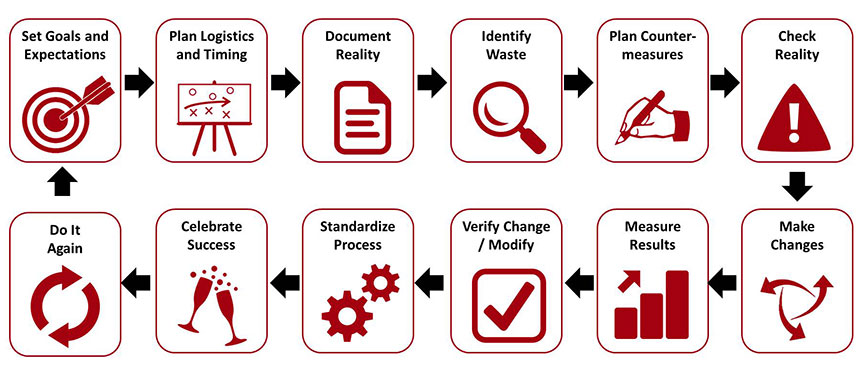
Manufacturing acceptable loss: why parents must resist education’s factory logic
Districts describe their work using the language of continuous improvement, capacity building, resource optimisation, and evidence-based allocation—borrowing terminology from industrial production systems designed to manufacture widgets efficiently, to minimise waste, to maximise throughput, to tolerate predictable defect rates within acceptable margins. This vocabulary reveals the underlying logic: education systems increasingly operate as though children are…
-

Justice and dignity too expensive for BC NDP
In 2018, experts told BC exactly how to fix special education funding. The government has spent five years “consulting” instead. Meanwhile, your child sits in hallways. The 192% problem nobody wants to fund Between 2015 and 2024, autism designations in BC schools exploded by 192%. Total student enrolment? Up just 11.6%. The province knows this. They…
-

When delay becomes policy: British Columbia’s strategic abandonment of disabled students
In 2018, an independent panel reviewed how British Columbia funds kindergarten through grade twelve education and recommended a prevalence model for special education funding, a shift that would allocate resources based on statistical prevalence of disability within the general student population rather than on individual diagnostic designation. The proposal threatened to expose what the existing system carefully…
-

Flourishing as an ethical imperative
Like many of you, I caught CBC’s Ideas episode the other day, where philosopher Angie Hobbs spoke about the ancient Greek concept of eudaimonia—a term sometimes translated as happiness or welfare, but more richly understood as human flourishing. In a world flooded by crisis, it may seem indulgent or impractical to contemplate the good life,…
-

On toxic positivity, rationed support, and the betrayal of collaboration
“At the head of the table is almost always the school principal. Not a neutral facilitator, but a gatekeeper balancing limited resources, district priorities, and political pressures.” That sentence from Canary Collective landed in my body like a gavel. It captured what years of documentation, grief, strategic disillusionment, and moral injury have etched into my…
-

Fierce is fair: when institutional tone policing meets legal obligation
There comes a moment when a parent begins to speak in plain terms, with no softening edge, no accommodating smile, no fear of being perceived as uncooperative. It’s when you realise that you won’t be liked, no matter how hard you try, because your advocacy positions you as inherently unlikable by schools with their current…
-

How public education discriminates against PDA children through performative care
On Thursday, I changed my work calendar, after suffering a nervous breakdown the night before. On Wednesday, I had 7 meetings in one day, stacked with half-hour gaps. Almost every meeting ran long and I held my pee for 4 hours and my dog pooped on the floor. I had things to accomplish and they…