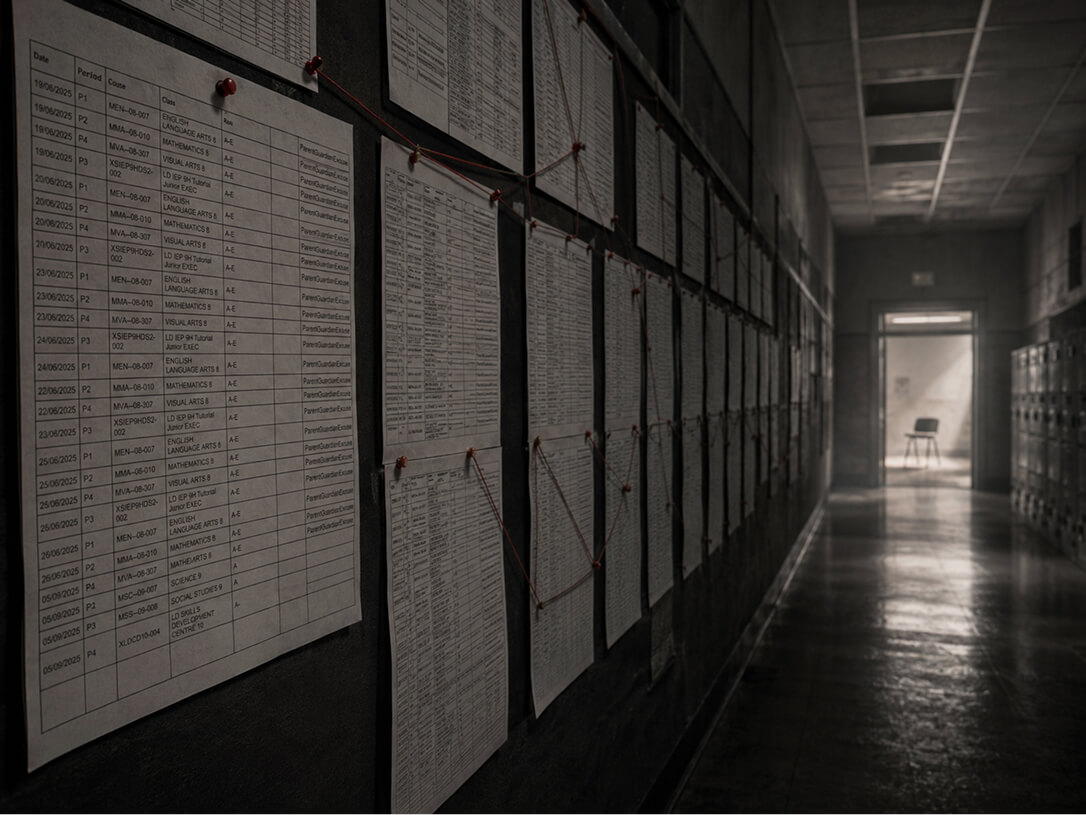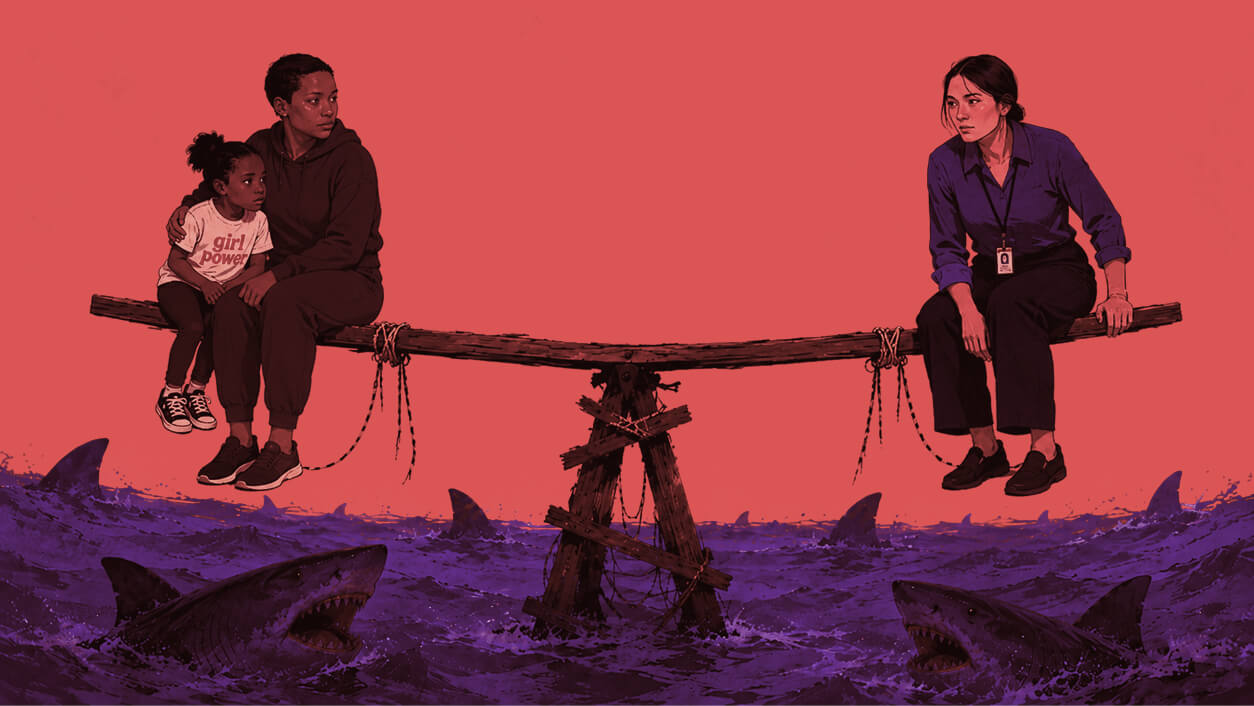
Education systems insist they are engaged in continuous improvement. They invoke cycles, frameworks, data dashboards, and action plans to demonstrate seriousness and care. But children are killing themselves in every district, every year. Disabled children are being excluded, isolated, placed in hallways, sent home early, or left to deteriorate while plans are written. The question is no longer whether improvement is happening; it is whether improvement has become the mechanism through which harm is absorbed.
This essay affirms that when harm is anticipated, distributed, and administratively managed—especially onto disabled children—it ceases to be tragic residue and becomes a governing choice. When improvement processes allow schools to continue operating under conditions that predictably produce despair, self‑harm, and death, improvement itself becomes ethically compromised.
-
Manufacturing acceptable loss: why parents must resist education’s factory logic
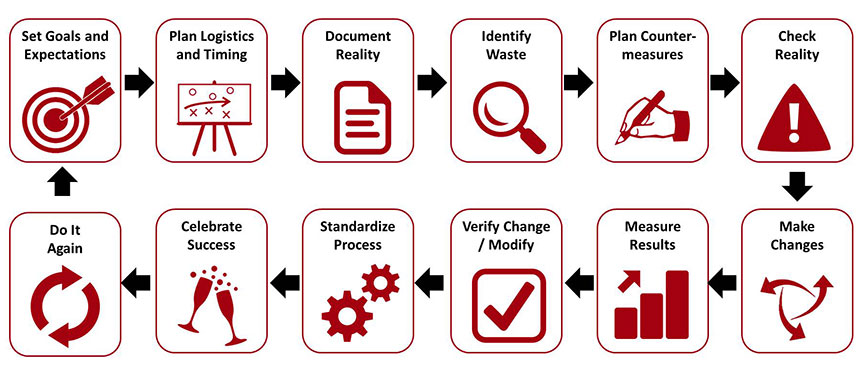
Districts describe their work using the language of continuous improvement, capacity building, resource optimisation, and evidence-based allocation—borrowing terminology from industrial production systems designed to manufacture widgets efficiently, to minimise waste, to maximise throughput, to tolerate predictable defect rates within acceptable margins. This vocabulary reveals the underlying logic: education systems increasingly operate as though children are products moving through an assembly line, as though some proportion of failure is inevitable and acceptable, as though loss can be managed statistically rather than mourned individually, as though scarcity is natural condition rather than manufactured constraint. When parents engage with district business processes, when…
Debility is the daily condition; suicide is the failure mode
Debility theory helps name what schools do well: they wear children down slowly. They erode capacity, narrow futures, and make certain lives harder to sustain. Disabled children learn to endure environments that harm them. Families learn to tolerate diminishing expectations. Staff learn to look away in order to survive their workload.
Debility describes the accumulation. Suicide reveals what that accumulation produces.
When children die by suicide, districts treat it as an interruption—a crisis to be managed, a tragedy to be mourned, a reason for additional counselling or revised monitoring. What they decline to do is treat it as evidence that routine operations have become lethal for some students. Suicide is framed as unforeseeable, even when the same warning signs, populations, and institutional responses repeat year after year.
Debility is the daily condition. Suicide is the failure mode.
The lie of continuous improvement
Improvement frameworks borrowed from manufacturing and quality assurance presume that systems may continue operating while defects are reduced over time. In education, this logic is translated into professional learning plans, phased implementation, and multi‑year timelines.
This is ethically incoherent when the “defects” are children’s lives.
A system that continues operating while some children deteriorate, self‑harm, or die is performing triage, deciding which losses are tolerable in order to preserve institutional stability. The language of realism—limited resources, capacity constraints, no zero‑risk environment—does the moral work of converting foreseeable harm into acceptable loss.
Safety‑critical systems know what schools refuse to admit
In aviation, medicine, and industrial safety, there are conditions under which operations must stop—not because perfection is expected, but because continuing under known danger is unethical.
Repeated classroom evacuations. Children removed from instruction to maintain calm. Hallway placements. Shortened days. Ongoing distress without timely accommodation. Self‑harm ideation. Suicide deaths.
These are stop conditions, not data points.
Any system that treats them as inputs into improvement cycles rather than signals to halt operations has already accepted harm as a cost of doing business.
Stop the line
An ethical improvement process begins with interruption.
When a child is excluded because support is unavailable, the classroom is out of specification. When a child is deteriorating while plans are being developed, the system has failed. When a classroom can function only if one child absorbs the harm, the classroom is unfit to operate.
The first obligation is stabilisation, not improvement.
Immediate accommodation—however inefficient—comes first. Additional staffing and environmental modification come next. Temporary alternatives must preserve full access to instruction and dignity. If stabilisation cannot be achieved, the honest response is to reduce enrolment, redesign the program, or close the classroom.
Keeping the classroom open by sacrificing the same children is sacrifice, not pragmatism.
Root cause analysis without blaming children
Schools routinely perform root cause analyses that quietly locate the problem in the child: too complex, too dysregulated, poor fit, lacking resilience. This is abdication, not analysis.
Legitimate causes are structural: staffing ratios, environmental load, scheduling logic, policy constraints, funding decisions, accountability pressures. If the root cause points back to the child, the analysis has failed.
Capacity truthing
Districts speak of capacity as though it were a natural phenomenon. Capacity is produced by budget choices, staffing decisions, and political priorities.
Ethical improvement requires capacity truthing: stating plainly what level of support is required, what is currently available, and what would be necessary to operate safely. When there is a gap, it must be named as underfunding, not as a child’s excess need.
If a classroom cannot meet its legal and ethical obligations to all enrolled students, it should cease operating as though exclusion were a solution.
Redistribute harm upward
Most improvement processes make life easier for administrators and harder for children. Ethical improvement does the opposite.
Schedules should be disrupted for adults before children are removed. Budgets should be reallocated before students are excluded. Reporting should track qualitative harm, moral distress, and patterns of withdrawal—not just incidents that are easy to count.
If improvement preserves administrative calm and gives them big pay raises, while children deteriorate, it is counterfeit.
Lived experience as leading indicator
Schools dismiss lived experience as anecdotal and elevate quantitative metrics as objective. This inversion is dangerous. Children’s accounts, parent testimony, and staff moral injury are leading indicators of harm. By the time metrics register improvement, the damage may already be done.
Absence of documentation does not equal absence of harm. It often means the system has learned how to look away.
When improvement must surrender autonomy
If harm persists despite intervention, schools should relinquish control. Oversight must escalate beyond educational authorities to human rights bodies, child welfare oversight, and external regulators.
Autonomy is conditional on the ability to keep children safe, not an entitlement.
Improvement after interruption
Only once harm has been stopped can improvement begin. Professional learning, program refinement, and long‑term planning are ethical only after children are stabilised.
Improvement that occurs instead of stopping harm is lethal, not slow.
No tolerable threshold
There is no morally neutral level of child suffering that allows institutions to remain stable. Optimisation does not absolve responsibility. Stability does not equal care.
When disabled children repeatedly absorb institutional failure—when debilitation accumulates predictably in the same bodies, and suicide appears as aberration rather than warning—the system is working as designed.
An ethical society refuses to let harm be quietly concentrated onto the same communities year after year.
The task is not to perfect improvement frameworks. It is to interrupt the administrative calm that allows some children’s suffering to be treated as tolerable variance.
When improvement tolerates death, it is no longer improvement. It is maintenance.
And it must be stopped.
-

Not a stick in the mud
When I told another mom recently—someone kind, someone well-meaning, someone whose son used to play with mine back when things were easier—that I was feeling fragile about him being home since March, and that it had all gotten heavier than I expected, she responded gently and said, “Would he like to come over for a playdate?” Would he want to come over for a playdate? And I froze because it showed me so plainly how invisible the truth has become, even to those who were once close enough to see it if they’d wanted to. She didn’t know. She didn’t…