
Institutional betrayal
A concept developed by psychologist Jennifer Freyd to describe the specific harm that occurs when institutions people depend on for safety, care, or support fail to prevent injury, exploit vulnerability, or respond inadequately to known risks, and then deny, minimise, or reframe that harm in ways that protect the institution rather than those injured. Freyd emphasises that betrayal often takes the form of omission rather than overt abuse—under-staffing, inadequate training, failure to intervene, and refusal to acknowledge harm—combined with institutional responses that shift responsibility onto individuals or families.
In the context of schooling, institutional betrayal helps explain how educational systems produce harm through chronic under-resourcing, exclusionary practices, and reliance on unpaid family and sibling labour, while presenting the resulting distress as pre-existing dysfunction or poor coping. Schools harm students by denying adequate support, permitting boundary violations, and disappearing quiet suffering; they then compound that harm by treating dysregulation, family strain, or sibling conflict as private problems rather than as predictable outcomes of institutional failure. Institutional betrayal names how schools preserve their legitimacy by forgetting the injuries they create—offloading the cost of inadequate support into the home, reframing institutional abandonment as family pathology, and positioning parents and children as the problem to be managed rather than acknowledging systemic responsibility.
-
The paperwork trap: when doing everything right becomes your downfall
When parents follow every rule, cite every policy, and document every meeting in the British Columbia public school system, they are often framed as adversaries, not allies. This essay explores how procedural knowledge becomes a liability, how the IEP process punishes fluency as threat, and why the most thorough advocates are the ones most likely…
-

How do school staff survive while upholding systems that cause harm?
Freyd’s betrayal trauma theory (1996) starts with the idea that trauma is more psychologically destabilising when it comes from someone—or some system—you are dependent on and trust. Abuse by a stranger wounds, but abuse by a parent, partner, or caregiver fractures the psyche at a deeper level because it requires a split: I must ignore what…
-

Maternal grief, public ritual, and the refusal to behave at the IEP table
I have walked into these rooms again and again—across years, with new principals, new case managers, additional complaints filed, subsequent appeals launched, IEPs dusted off and redrafted in the same language that failed last time. The faces change but the ritual remains. Seven professionals already seated, already laughing, already casually shaking off their last meeting…
-
Looking in the mirror is hard: maternal rage and institutional cowardice
I searched for literature that affirms what I know in my body—that maternal rage can be righteous, grounded, and deeply linked to the betrayal of public institutions. But what I found instead was an avalanche of studies examining how maternal anger harms children. The field catalogues the psychological effects of maternal yelling, tracks the correlations…
-

Epistemic silencing of disabled children’s primary caregivers
Epistemic silencing in BC schools discredits mothers’ knowledge, reframes advocacy as aggression, and erases disabled children’s pain, leaving families punished for truth.
-
The unseen wounds of advocacy: caregiver burnout, moral injury, and embodied grief
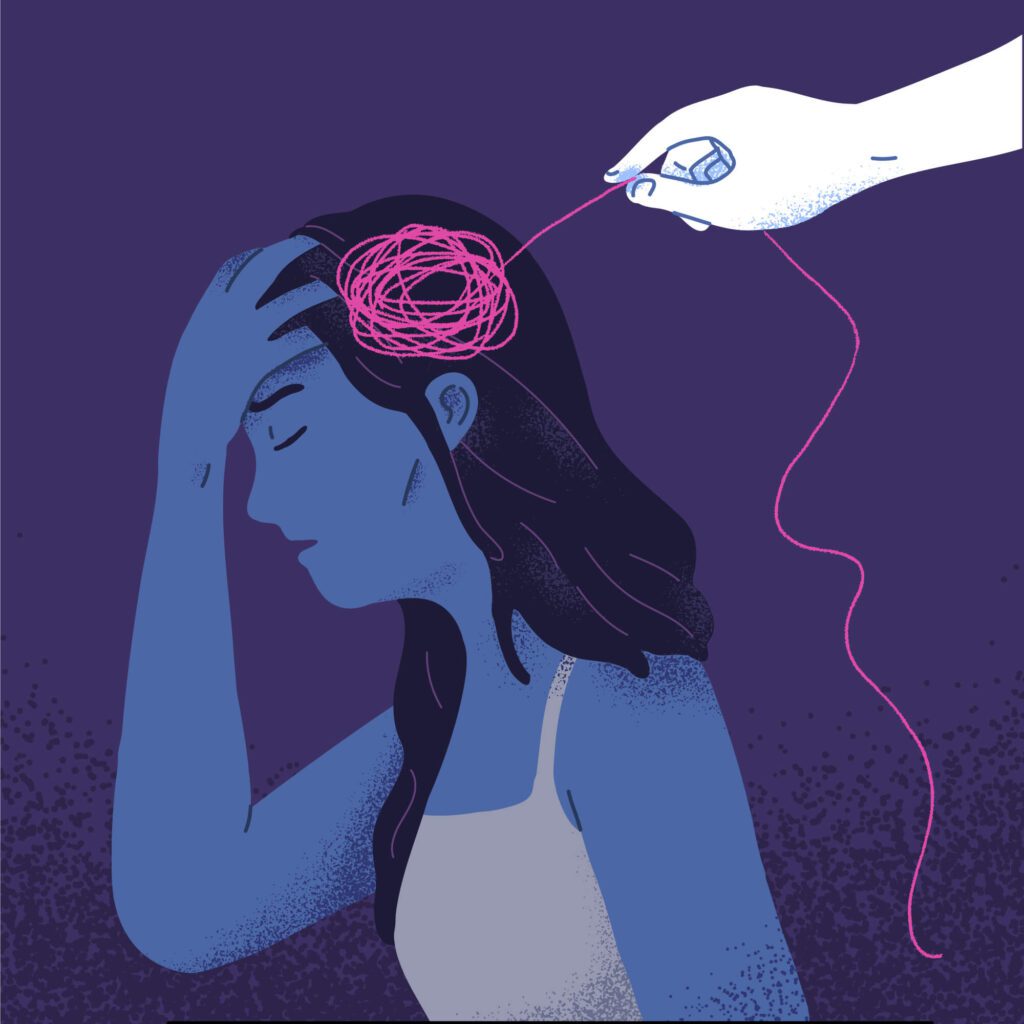
Caregiver burnout in BC schools reflects moral injury and systemic betrayal, as mothers fight exclusion and harm while advocating for disabled children.
-

Why clarity gets punished
I’ve written about documentation, tone policing, gatekeeping, gaslighting, institutional betrayal, and grievability and legitimacy separately, butsometimes it helps to see those pieces in conversation—because together, they reveal something larger. This post draws together the threads of clarity, competence, and credibility, and asks: why do systems recoil when mothers speak plainly about harm? Why does it…
-

What moves you: An invitation to reflect with Sara Ahmed’s Affective Economies
Many Canadians will recognise the Proust Questionnaire, a set of reflective prompts that began as a parlour game, gained literary gravity through Marcel Proust’s poetic answers, and later became a cultural artefact through Bernard Pivot and Vanity Fair. Though Proust did not create the format, his emotionally precise responses gave it an enduring legacy. This…
-
The architecture of exclusion: how schools erase, silence, and wear down families
Schools are supposed to be spaces of inclusion and support—but for many families, especially those raising disabled or neurodivergent children, advocacy is met with a wall of politeness, professionalism, and performative listening that hides a deeper violence: rhetorical control. One of the most common tactics is tone policing: the redirection of attention from a parent’s concern…
-

$10K and an NDA
Would 10K and an NDA make the most excellent name for a country song? I didn’t file a Freedom of Information request to stir conflict — I filed it because nothing made sense, and I needed a clue, any thread at all, to understand what had just happened to my family. I call FOIs the…
-

The path to justice: legal versus public record
The courts may offer compensation, but rarely truth. The legal path demands silence in exchange for settlement. The public path asks you to speak while you’re still bleeding. Neither is easy. But only one builds a record that helps the next family survive.
-

A landmark case for educational justice in BC
The May 2025 decision from the BC Human Rights Tribunal in Parent obo Student v. BC Ministry of Education and another, 2025 BCHRT 112 carries profound implications for families fighting systemic discrimination in education—particularly those challenging collective punishment, exclusion, and partial-day attendance programs imposed on disabled students. While the complaint against the Ministry was dismissed, the Tribunal…
-
Rethinking accessibility leadership, training, and labour in BC public education
In accessibility work, most transformative insights come directly from disabled people. Lived experience is primary data; manuals and metrics are, at best, secondary literature. In schools, teachers are experts in pedagogy, yet few are trained in disability or neurodivergence. That absence is not incidental—it is engineered, and the consequences are everywhere. The current failure—and promise—of…
-

Barriers in the Vancouver school system: a parent’s perspective
For families raising neurodivergent children, navigating the school system can feel like surviving a labyrinth built to exhaust you. What should be a place of growth becomes a terrain of harm and dismissal. Beneath the polished language of equity and inclusion lies a set of invisible barricades—attitudinal, communicative, spatial, systemic, and technological—that quietly erode trust…
-

“Urgent: Third Request” — what to do when schools ignore your emails
You write the email. You name the problem. You describe, in detail, what your child is experiencing and what they need to be able to participate. You’re respectful, clear, and solution-focused. And then—you wait. For many families, especially those raising disabled or neurodivergent children, this scenario is far too familiar. The moment you speak up—especially…
-

Signs your child’s teacher uses collective punishment (and what it does to them)
Your child might not have the language to name what’s happening, might not recognize collective punishment as a specific practice with a specific name, might only know that something at school feels deeply unfair and that their effort no longer seems to matter. Parents often notice the effects before they identify the cause: children who…
-

Protecting children’s dignity and safety in a broken system
We should be able to expect a system where no child sits in wet clothes all day, and no child is changed alone by a single staff member behind closed doors. These are basic, non-negotiable standards for dignity and safety, not optional aspirations. While we can all acknowledge that the system is under immense strain,…
-

Coerced sibling care in public school inclusion
The school saw twins and imagined comfort. What they created instead was coerced care—using my daughter’s body to regulate her brother without consent, without safety, and without repair.
-

Nova Scotia bans collective punishment
Nova Scotia’s Provincial School Code of Conduct Policy underwent a significant update in April 2025, marking a substantial revision of the previous 2015 policy. The updated policy, set to take effect in September 2025, introduces clearer definitions of unacceptable behaviours, delineates new responsibilities for all school community members, and emphasises support for those affected by…
-
Lawyers over learning: how much is VSB paying Harris & Co
As a parent of two children with learning challenges, I found myself deep in the Vancouver School Board’s appeals process. Early on, I heard officials say our children would be supported with “inclusive” classroom resources. In reality, every step felt like an uphill battle. For example, during our Level 1 appeal meeting the board’s own summary…