
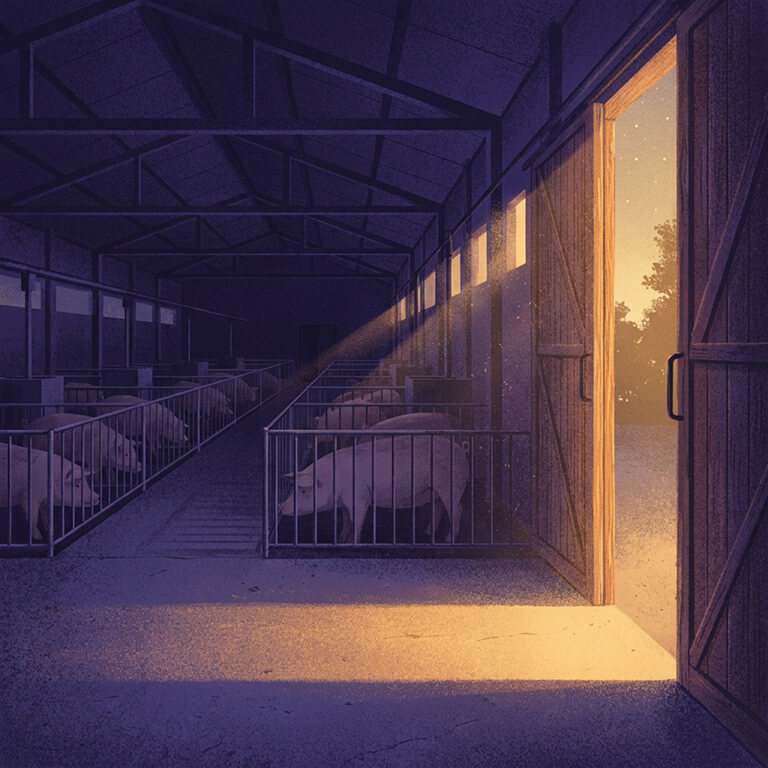
Institutional betrayal
A concept developed by psychologist Jennifer Freyd to describe the specific harm that occurs when institutions people depend on for safety, care, or support fail to prevent injury, exploit vulnerability, or respond inadequately to known risks, and then deny, minimise, or reframe that harm in ways that protect the institution rather than those injured. Freyd emphasises that betrayal often takes the form of omission rather than overt abuse—under-staffing, inadequate training, failure to intervene, and refusal to acknowledge harm—combined with institutional responses that shift responsibility onto individuals or families.
In the context of schooling, institutional betrayal helps explain how educational systems produce harm through chronic under-resourcing, exclusionary practices, and reliance on unpaid family and sibling labour, while presenting the resulting distress as pre-existing dysfunction or poor coping. Schools harm students by denying adequate support, permitting boundary violations, and disappearing quiet suffering; they then compound that harm by treating dysregulation, family strain, or sibling conflict as private problems rather than as predictable outcomes of institutional failure. Institutional betrayal names how schools preserve their legitimacy by forgetting the injuries they create—offloading the cost of inadequate support into the home, reframing institutional abandonment as family pathology, and positioning parents and children as the problem to be managed rather than acknowledging systemic responsibility.
-
The barn, not the mother
A version of you existed before all this, and she would have been horrified. She would have watched you zip up that backpack, drive them to school, walk them to the door, and she would have known what you were doing: handing your child directly to the building that will hurt them today. Maybe the…
-

Happy Mother’s Day, bitches
Mother’s Day for the mothers who are done being good: maternal rage, institutional failure, and why being reasonable was never enough.
-
Exclusion is economically irrational and the hidden costs of refusing accommodation
BC schools spend more money refusing accommodation than providing it. Learn when hiring a lawyer becomes the only fiscally rational choice for your family.
-

When advocacy stops being collaboration
You’re dealing with a school district, and a recognition is starting to settle: advocacy will not going to be easy! Meetings feel uncomfortable in ways you cannot yet fully name. Promises dissolve between conversations. Your child’s needs remain unmet despite repeated requests. Decisions appear to be made elsewhere. Something about the process feels designed to…
-
Navigating school meetings without losing your mind
School meetings occupy a particular kind of hell where institutional power performs collaboration while enacting control, where districts convene parents to discuss their child’s struggles without acknowledging the system produces those struggles through inadequate accommodation, and where the meeting itself functions less as problem-solving forum than as liability management theatre, generating documentation that protects the…
-
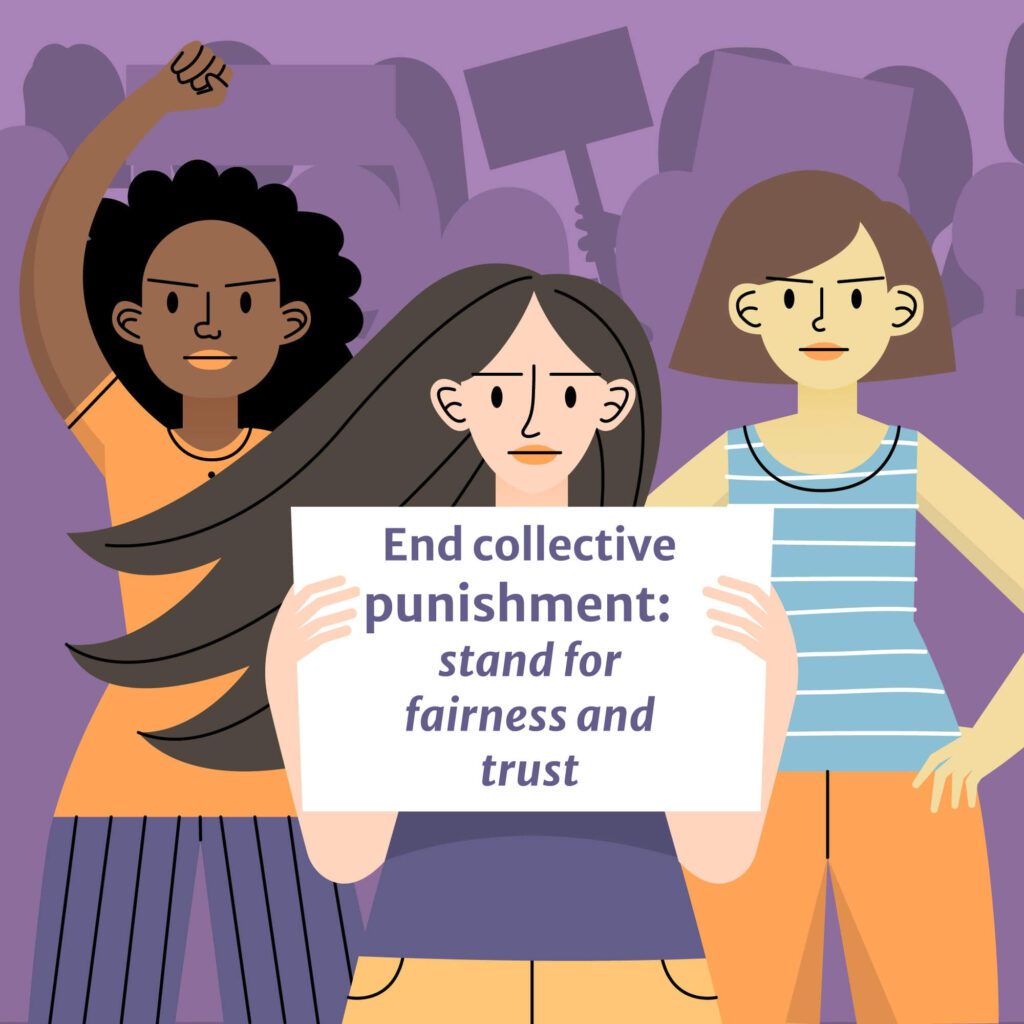
The internet has spoken: collective punishment in schools is wrong
When teachers punish entire classrooms for the actions of one student—when recess disappears because someone talked, when rewards vanish because someone forgot homework, when privileges evaporate because one child disrupted the lesson—students recognise the injustice immediately, and they name it with precision that educators often lack. Across TikTok, Instagram, and Reddit, students, parents, and teachers…
-

POPARD’s PDA doublespeak
I noticed that POPARD is advertising another workshop on Pathological Demand Avoidance (PDA) in April 2026, titled Pathological Demand Avoidance (PDA): What We Know & What We Are Learning. The description is familiar: PDA is framed as a “growing topic of interest,” something “some clinicians and researchers describe” as an autism profile. The language is cautious,…
-

Why the evolving understanding of childhood terrifies systems built on scarcity
Children now arrive at school shaped by homes that honour physiology over performance, autonomy over obedience, and co-regulation over fear, and this shift grows from a decade of relational neuroscience, trauma literacy, sensory understanding, and disability justice that families have absorbed far more quickly than schools, which leaves discipline ideology standing on crumbling ground because…
-
Institutional responses to complaint
I have been reading Sara Ahmed’s Complaint! and it almost feels as though I have been working backwards. I wish I had the insights in this book before my children entered kindergarten. Perhaps, I would have been spared years of confusion, exhaustion, and grief, and perhaps my children would have been spared some of the deepest harms…
-

Advocacy in BC schools: a comprehensive guide for parents
When your child experiences harm in a British Columbia public school—when they are excluded, punished unjustly, denied accommodations, or subjected to practices that violate their dignity—you enter a landscape designed to exhaust rather than resolve, to defer rather than repair, to protect institutional reputation rather than protect children. This guide maps that terrain, naming the…
-

The cancellation
When the principal cancelled the volleyball game, she did more than remove an afternoon of play from a group of eager children, she transformed what should have been a moment of joy and collective affirmation into despair and humiliation, converting what should have been an opportunity to connect and excel as a team into a…
-

Fuck your independence dogma
How schools use ‘self-reliance’ to justify abandoning disabled kids. They told me my daughter needed to build her tolerance for the classroom without support. They waxed endlessly about how she wouldn’t want support in high school—ignoring that my daughter had been very clear that she does, in fact, want support. They said it with that…
-
Why schools use collective punishment to stay in control
Some of our articles speak in a more academic voice, especially when we’re naming systems that silence or harm. This is a sister essay to Collective punishment: how schools displace guilt, erase harm, and preserve the collective, written as a more accessible entry point for readers who are newer to the topic or looking for…
-
Why outspoken mothers face retaliation for advocacy in BC schools
Some of our articles speak in a more academic voice, especially when we are naming systems that silence or harm within BC schools. This is a sister essay to Epistemic silencing of disabled children’s primary caregivers, written as a more accessible entry point for readers who are newer to the topic or looking for clarity…
-
The orange shirt I folded
I was folding laundry late one night, brain running on the kind of background grief that rarely quiets, when my hand closed around the orange shirt. I moved to set it aside—automatically, instinctively—because I remembered September was coming, school would be starting, and Orange Shirt Day would follow quickly after. That shirt would be needed…
-
Flourishing as an ethical imperative
Like many of you, I caught CBC’s Ideas episode the other day, where philosopher Angie Hobbs spoke about the ancient Greek concept of eudaimonia—a term sometimes translated as happiness or welfare, but more richly understood as human flourishing. In a world flooded by crisis, it may seem indulgent or impractical to contemplate the good life,…
-

A thousand cranes, a thousand truths
When I was a little girl, I folded cranes. Hundreds of tiny, meticulous, brightly patterned creatures, each creased into being by the stubborn, lonely determination of a child who could sense that the world was coming undone and wanted, somehow, to hold it together. I folded them from the paper margins of my workbook, from…
-
Coercive proceduralism, bandwidth theft, and the colonisation of neurodivergent childhood
Families of neurodivergent children are often coerced into endless therapy to access school support—yet the harm lies in the institution, not the child. This essay explores how coercive proceduralism and bandwidth theft turn care into compliance, and why rest, not more intervention, may be the most honest path to healing.
-
Procedural policing of pain: what happens if I keen?
Keening—the sad, piercing wails often heard at a funeral for a child—is a human expression, older than the rules we follow or the schools we enter. It is what happens when grief overwhelms language, when memory floods muscle, when there is nothing left but pain. It is not shouting. It is not rage directed at…
-

7 signs your child (or you) is being positioned as the problem to preserve the group
When a parent becomes too precise, too prepared, or too emotionally honest, the school system may cast them—or their child—as the problem. This essay outlines seven signs that scapegoating is being used to preserve group harmony at the cost of justice, with particular attention to how this dynamic unfolds in British Columbia public schools.