

Punitive culture
An institutional mindset that treats mistakes, distress, or difference as problems to punish rather than needs to understand and support.
-

Gaslighted by proxy: how schools grant coercive power to the quietest parent
When one parent advocates and the other undermines, the school almost always aligns with the one who “gets along.” Not because that parent is more informed, more accurate, or more protective—but because they are easier to accommodate. They agree easily. They stay quiet. They don’t write long emails. They rarely attend meetings. They couldn’t draft…
-

Apparently, starving yourself isn’t a serious mental health condition in VSB
There is a kind of harm that unfolds slowly — a hunger that accumulates across weeks and months, tucked beneath the surface of routines and well-meaning systems. My daughter is autistic, has ADHD, and a feeding disorder called ARFID. She eats quietly, cautiously, in ways that make sense to her nervous system. Her paediatrician recommended…
-
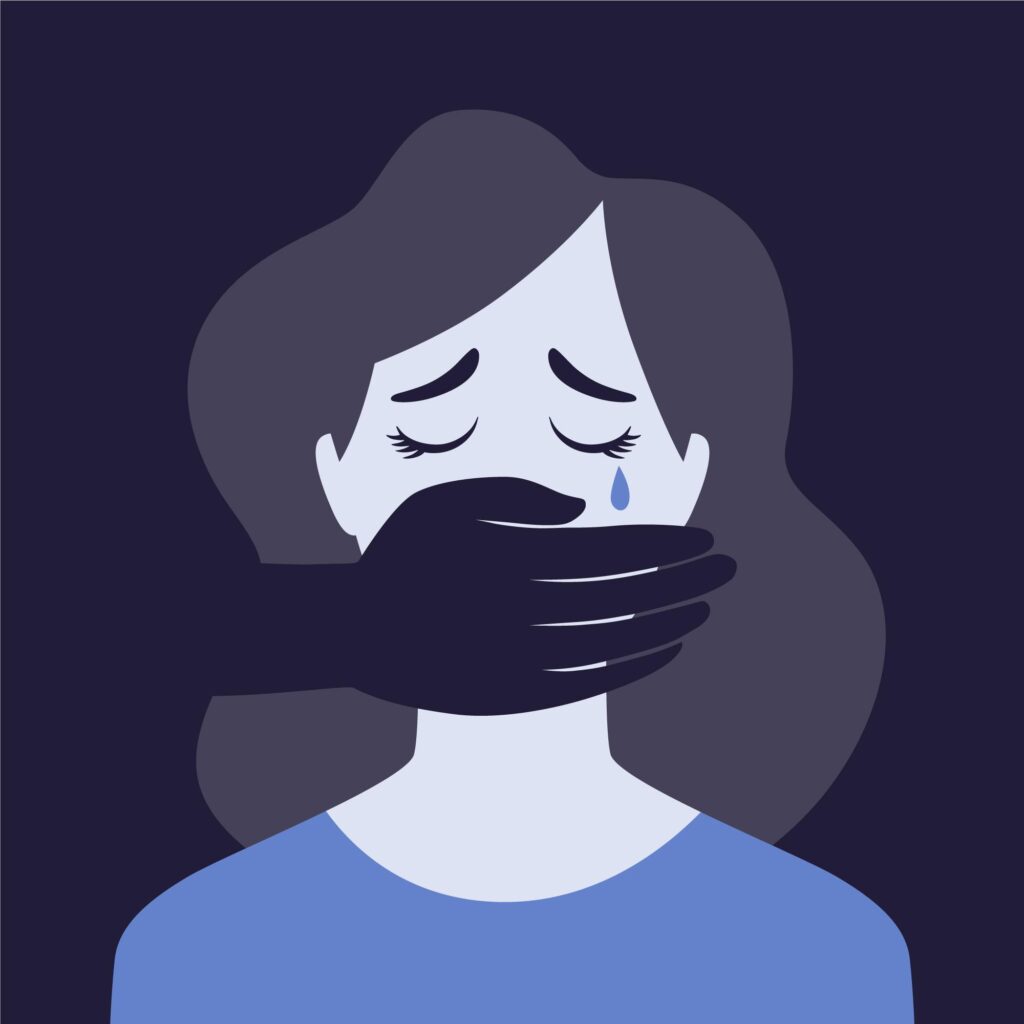
Not sick. Not fine. Not supported. Sexism in Vancouver School Board.
They said she was doing well. They said it with the softness of authority — that practiced tone that suggests neutrality while sidestepping consequence — a tone I’ve come to recognise as institutional, not personal, and absolutely not maternal. They said she was fine because she was quiet. Because she didn’t scream. Because she didn’t…
-

What would it really cost to fix the problem?
We talk so much about the cost of inclusion—as if it’s indulgent, optional, something that must be justified—but we rarely talk about the cost of exclusion. And those costs are everywhere: in emergency rooms, in overburdened case files, in classrooms where distress goes unseen. When schools can’t support disabled students, families fall apart trying to…
-

The poison of silence: on complicity, healing, and speaking the truth
I had so much pain stuck in my chest and throat. Cancelled screams. Unsaid truths. Every meeting where I stayed quiet, every time I swallowed my words to seem reasonable, every time I hoped that portraying myself a certain way might stop my children from being harmed—those moments didn’t disappear. They got stuck. I stopped…
-

Galiano Community School (SD64): a neurodiversity-informed policy critique
The 2022–23 Code of Conduct for Galiano Community School is unusually rich in aspirational language. It describes a community of care rooted in mutual respect, emotional development, and responsive teaching. It affirms the BC Human Rights Code, references Positive Behaviour Support, and anchors its behavioural framework in the values of SOLE—Respect and Care for Self, Others,…
-

IEP goals we actually believe in mostly (even though we wish they didn’t exist)
Let’s get this out of the way: we hate IEP goals !!!! If you’re a parent who hears the phrase “IEP goals” and feels your stomach drop, you’re not alone. Most of us have seen goals that are vague, punitive, performative, or downright absurd. Goals that don’t reflect our children. Goals that seem more concerned…
-

IEP goals that don’t mean ‘don’t be autistic’
Too many IEPs include goals like “will self-regulate” or “will self-advocate”—goals that sound supportive, but often mean “will not disrupt,” “will not need help,” or “will not act autistic at school.” This post explores how seemingly neutral language can become a tool for erasure, and offers concrete, neurodiversity-affirming alternatives that centre support, access, and dignity—so…
-

Not everyone gets a slideshow
He should have been graduating too, but he isn’t. After years of support that never arrived, of being punished for distress instead of helped through it, my son left school quietly—while the world carried on with its ceremonies, its slideshows, its celebrations of children who were never forced to disappear in order to survive.
-

Cariboo–Chilcotin School District (SD27): a neurodiversity-informed policy critique
Cariboo-Chilcotin is one of the most geographically dispersed and demographically complex districts in British Columbia. Spanning small rural towns and remote Indigenous communities—including sites of historic and intergenerational trauma—SD27 faces significant challenges in providing consistent, inclusive, and safe environments for all learners. In June 2024, the Board adopted Policy 390: Safe and Caring School Communities, replacing…
-
Maybe tomorrow: reflections on goal post shifting and the economics of access
There were accommodations on paper and endless lip-service meetings. But none of it happened in the classroom. And every time we did what was asked—another intake, another form, another plan—the goalpost moved again. We weren’t asking for miracles. We were asking to be seen as disabled. And instead, we were told to be more positive,…
-
Revoking recess as a form of collective punishment
Rules intended for safety become instruments of collective punishment when they erase unstructured play from the school day, compounding distress for children who rely on movement, predictability and sensory regulation. this post examines the disproportionate impact on neurodivergent learners and proposes targeted interventions that preserve every child’s right to play and learn.
-

“Too much”: on allergy, autism, and the systemic erasure of care
There is a quiet solidarity among parents whose children are considered too much for school. Some of us carry medical kits. Others carry binders of psychological assessments. But all of us carry the same invisible burden: a system that treats our children’s needs as optional—and our vigilance as overreaction. This is the story of two…
-

When energy returns: on finding purpose, refusing silence, and recovering from institutional harm
When I could barely rise from the couch, I believed my exhaustion was depression. Now I see it was the cumulative harm of years spent silencing myself in hostile institutions, suppressing truth to protect my neurodivergent children. The body remembers this violence; it registers as a weight on the chest, a fatigue that resists all…
-

Arrow Lakes School District (SD10): a neurodiversity-informed policy critique
The Arrow Lakes School District’s Policy 310, “Expectations for Student Conduct,” presents a succinct framework grounded in the language of safety, mutual respect, and orderly environments. It affirms the importance of rights-based protection against discrimination and sets the expectation that all schools will maintain up-to-date, locally developed codes of conduct. It allows for discretion, acknowledges…
-

The price of being the one who says the hard thing
There is a moment that plays out in a thousand variations—at school pickup, on the playground, during track and field events—when a parent turns to you, warm and casual, and says, “How are things?”, and for the briefest fraction of a second, you forget the rules and answer honestly. You begin to speak—not with rehearsed…
-

Inviting collaboration on repairing trust after collective punishment
A practical guide for educators seeking to repair harm after using collective punishment. If you’ve used collective punishment—like taking away recess from an entire class, cancelling an activity because one student was dysregulated, or using peer pressure to enforce compliance—you’re not alone. These practices are still common in Canadian classrooms. But they cause real and…
-
Sir Richard McBride Annex (SD39): a neurodiversity-informed policy critique
Sir Richard McBride Annex’s Code of Conduct, reviewed June 19, 2024, commits to fostering a “safe and inclusive place for all,” aligning with the VSB District Code (AP 350). It affirms the BC Human Rights Code, outlines community-wide expectations, and recognizes that “special considerations may apply to students with special/diverse needs” when they “are unable to comply… due to having…
-

Grievability and legitimacy in BC Schools
Disabled children are being pushed out of public education—and their families are picking up the pieces. This post examines who is seen as worthy of support, what it costs when systems abandon care, and why the quiet exodus from schools is not a choice, but a failure of justice.
-

Balancing budgets by denying disabled kids support
In British Columbia, we are told that the education system is improving. Budgets are rising. Inclusion is a stated priority. And yet, for families whose children require consistent, sustained support—especially those who are disabled or living with complex trauma—the lived experience is defined by absence, delay, and denial. There is a growing chasm between the…