
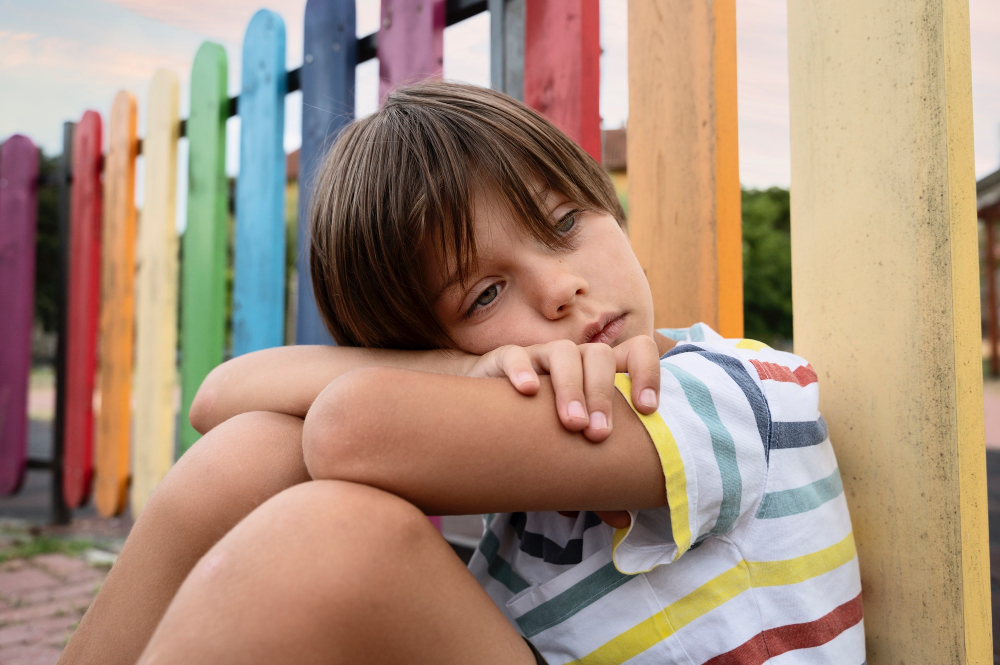
Scapegoating
The process through which institutions sacrifice specific individuals or groups to preserve systems and deflect accountability for structural failures. In education contexts, scapegoating operates through two overlapping mechanisms: (1) Economic scapegoating (Dillbary & Miceli, 2023): Schools position disabled children as “sinners”—rule violators creating problems—while non-disabled peers become “scapegoats”—innocent parties punished for disabled children’s behaviour through collective sanctions like closed playgrounds or cancelled activities. This engineers peer and parent resentment that attributes system dysfunction to disabled children rather than to institutional choices or funding inadequacy, outsourcing behavioural management to social pressure while obscuring schools’ role creating the connection between individual behaviour and group deprivation. (2) Institutional scapegoating (Sara Ahmed): Organisations preserve themselves by sacrificing individuals who threaten smooth operation or who expose institutional problems. Rather than addressing structural failures—inadequate funding, refused accommodations, hostile environments—institutions position disabled children as the problem requiring management or removal. The person revealing institutional harm becomes framed as causing that harm, redirecting attention from systems to individuals while maintaining institutional stability. In BC schools, disabled children function as scapegoats for provincial austerity—absorbing blame for education system failures that actually originate from funding inadequacy, impossible staffing ratios, and infrastructure design. This prevents political pressure for adequate provincial investment, as parents organize to exclude disabled children or resignedly accept resource scarcity rather than demanding funding reform.
-
The fallout of regressive discipline: from community trust to mental health
In schools across British Columbia and beyond, discipline often unfolds not as a considered intervention tailored to individual needs, but as a blunt, collective act that seeks to restore order quickly by suspending joy or opportunity for all. The cancellation of recess, the revocation of a field trip, the withholding of an earned privilege—all for…
-
When the bell rings but the doors stay shut: why withholding recess is a breach of children’s rights
Few topics ignite as much debate as the cancellation of recess. Threads often begin with a frustrated parent describing how an entire class lost recess because of one student’s behaviour, or a teacher recounting the expectation to withhold outdoor play for incomplete work. Commenters share stories of children sitting silently at their desks while watching…
-
The orange shirt I folded
I was folding laundry late one night, brain running on the kind of background grief that rarely quiets, when my hand closed around the orange shirt. I moved to set it aside—automatically, instinctively—because I remembered September was coming, school would be starting, and Orange Shirt Day would follow quickly after. That shirt would be needed…
-

7 signs your child (or you) is being positioned as the problem to preserve the group
When a parent becomes too precise, too prepared, or too emotionally honest, the school system may cast them—or their child—as the problem. This essay outlines seven signs that scapegoating is being used to preserve group harmony at the cost of justice, with particular attention to how this dynamic unfolds in British Columbia public schools.
-
The paperwork trap: when doing everything right becomes your downfall
When parents follow every rule, cite every policy, and document every meeting in the British Columbia public school system, they are often framed as adversaries, not allies. This essay explores how procedural knowledge becomes a liability, how the IEP process punishes fluency as threat, and why the most thorough advocates are the ones most likely…
-

The compliance economy
In their article Of Sinners and Scapegoats: The Economics of Collective Punishment, J. Shahar Dillbary and Thomas J. Miceli argue that collective punishment emerges not merely as a failure of precision or fairness, but as a deliberate mechanism for preserving internal group cohesion. The scapegoat, must be non-random, visible, and different, and their suffering must be…
-
The goodwill ledger: how schools calculate inclusion allotments
Schools in British Columbia keep an invisible ledger—one that tracks not just budgets, but emotions, tone, and perceived worthiness. Families who ask too clearly, too often, or on behalf of more than one child are quickly marked as overdrawn. This essay continues the meditation from Of Sinners and Scapegoats, tracing how goodwill becomes a currency,…
-

Collective punishment: how schools displace guilt, erase harm, and preserve the collective
One of the things that was so traumatising about the collective punishment that was callously perpetrated against my daughter was the light and evasive tone of the principal. She said that the punishment had to be “swift.” I frequently wondered about the choice to psychologically wound disabled children while treating the infliction of that wound…
-
One-pager about collective punishment
If you are a teacher, a classroom assistant, a support worker, or even a school leader who still spends time in rooms with students, then you already understand how hard it is to manage a group when things begin to fall apart. You know the claustrophobic tension of a lesson unravelling before it begins. You…
-
Collective punishment in schools: How humiliation undermines emotional safety and learning
In classrooms around the world, students are sometimes punished for the misbehavior of others. One student breaks a rule, and the entire class loses a privilege. This practice – known as collective punishment – persists even though it is broadly recognised as unjust. In fact, collective punishment is explicitly banned under Article 33 of the Geneva Conventions…
-

The history of this website
What began as one mother’s refusal to accept the institutional cruelty of collective punishment has grown into a vast, strategic, and emotionally searing archive—a living infrastructure of truth-telling and resistance, built from grief, fuelled by clarity, and shared in solidarity with every family navigating harm inside a system that punishes children for being disabled.
-

We shouldn’t be enemies
I took my daughter for a manicure this week. She’s graduating from grade 7. A milestone. A moment that felt almost ordinary—slideshow, applause, plastic chairs, nervous grins—and yet there was nothing ordinary about what it took to get there. Vocabulary for what happened Class change She spent seven months of this school year outside the…
-
Trust undone: how collective punishment breaks the heart of the school
There is a kind of harm we don’t always name. Not bruises. Not bad grades. Not exclusion on paper. It is the slow unravelling of something more fragile—trust. The felt safety between a student and their teacher. The invisible thread between classmates. The quiet assumption that school is a place where fairness lives. Collective punishment…
-
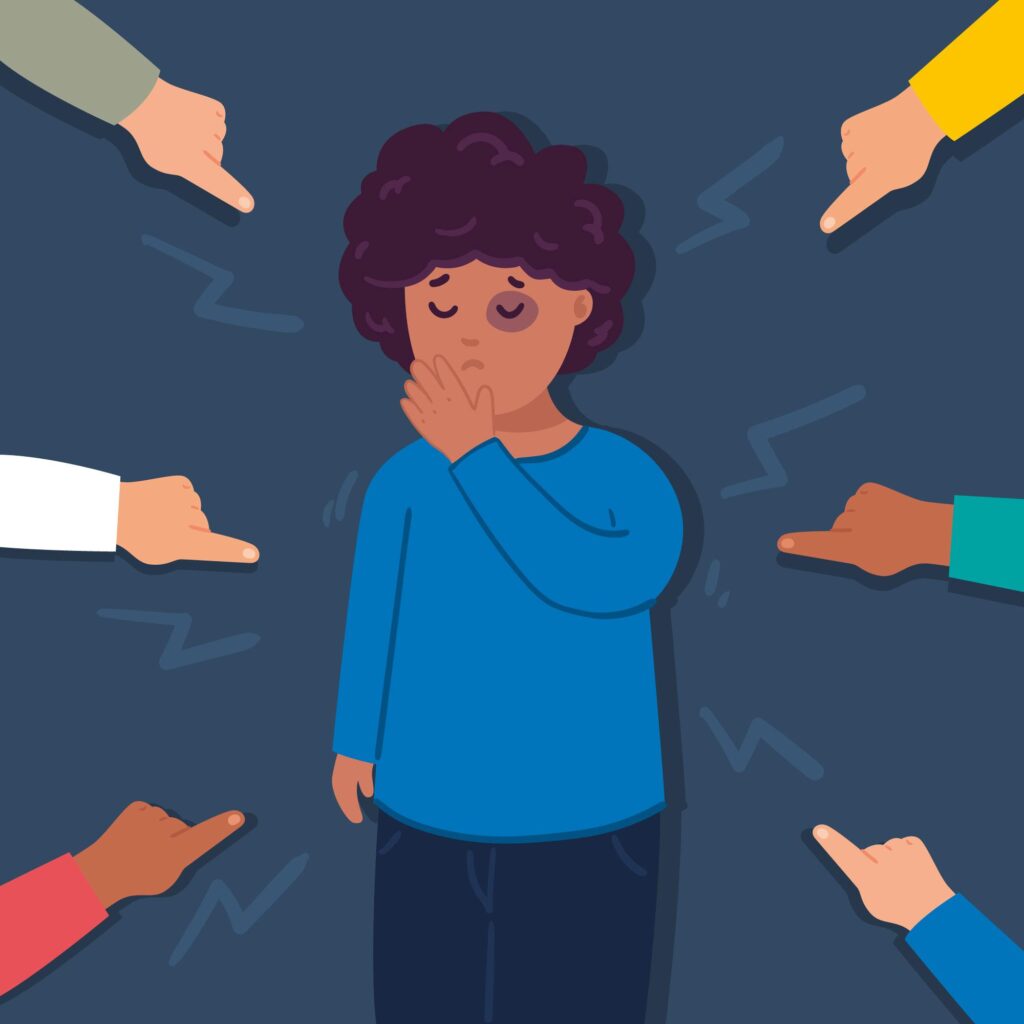
The children were made to punish the children
In Canada’s residential schools, older children were instructed to punish the younger ones—to hit them, isolate them, report them for infractions defined by an institution that sought to erase who they were. The adults gave the orders. The children were conscripted to carry them out. This was not incidental. It was structural. It was framed…
-
“I didn’t even do anything wrong”: student voices on collective punishment
Collective punishment in schools often silences individual experiences. Yet, platforms like Reddit provide a space where students share their stories candidly. Below are excerpts from various Reddit threads that illuminate the real-world effects of collective punishment.
-
Collective punishment in schools: global history and harm
Explore the global history of collective punishment: how it has been defined, justified, resisted, and remembered across cultures and time.
-
Signs your child’s teacher uses collective punishment (and what it does to them)
Your child might not have the language to name what’s happening, might not recognize collective punishment as a specific practice with a specific name, might only know that something at school feels deeply unfair and that their effort no longer seems to matter. Parents often notice the effects before they identify the cause: children who…
-

On moral injury and collective punishment
I did not want to file a complaint. I still don’t—not in the sense that people imagine, with anger or vengeance or a desire for punishment. What I wanted, what I asked for again and again with patience and clarity and increasing despair, was for the district to acknowledge that collective punishment is not just…
-
From corporal punishment to collective harm: why Section 43 still casts a shadow over Canadian schools
Section 43 still permits “reasonable force” in schools. This blog explores how it enables collective punishment and violates children’s rights.