

Scapegoating
The process through which institutions sacrifice specific individuals or groups to preserve systems and deflect accountability for structural failures. In education contexts, scapegoating operates through two overlapping mechanisms: (1) Economic scapegoating (Dillbary & Miceli, 2023): Schools position disabled children as “sinners”—rule violators creating problems—while non-disabled peers become “scapegoats”—innocent parties punished for disabled children’s behaviour through collective sanctions like closed playgrounds or cancelled activities. This engineers peer and parent resentment that attributes system dysfunction to disabled children rather than to institutional choices or funding inadequacy, outsourcing behavioural management to social pressure while obscuring schools’ role creating the connection between individual behaviour and group deprivation. (2) Institutional scapegoating (Sara Ahmed): Organisations preserve themselves by sacrificing individuals who threaten smooth operation or who expose institutional problems. Rather than addressing structural failures—inadequate funding, refused accommodations, hostile environments—institutions position disabled children as the problem requiring management or removal. The person revealing institutional harm becomes framed as causing that harm, redirecting attention from systems to individuals while maintaining institutional stability. In BC schools, disabled children function as scapegoats for provincial austerity—absorbing blame for education system failures that actually originate from funding inadequacy, impossible staffing ratios, and infrastructure design. This prevents political pressure for adequate provincial investment, as parents organize to exclude disabled children or resignedly accept resource scarcity rather than demanding funding reform.
-
The system we navigate is a one-way ticket to involuntary care
You think you are attending meetings. You think you are asking for support. You think you are building a case for your child. You are building a case. Just not the one you think. You enter as a credible narrator You arrive with timelines, with emails, with documentation so meticulous it could pass peer review…
-
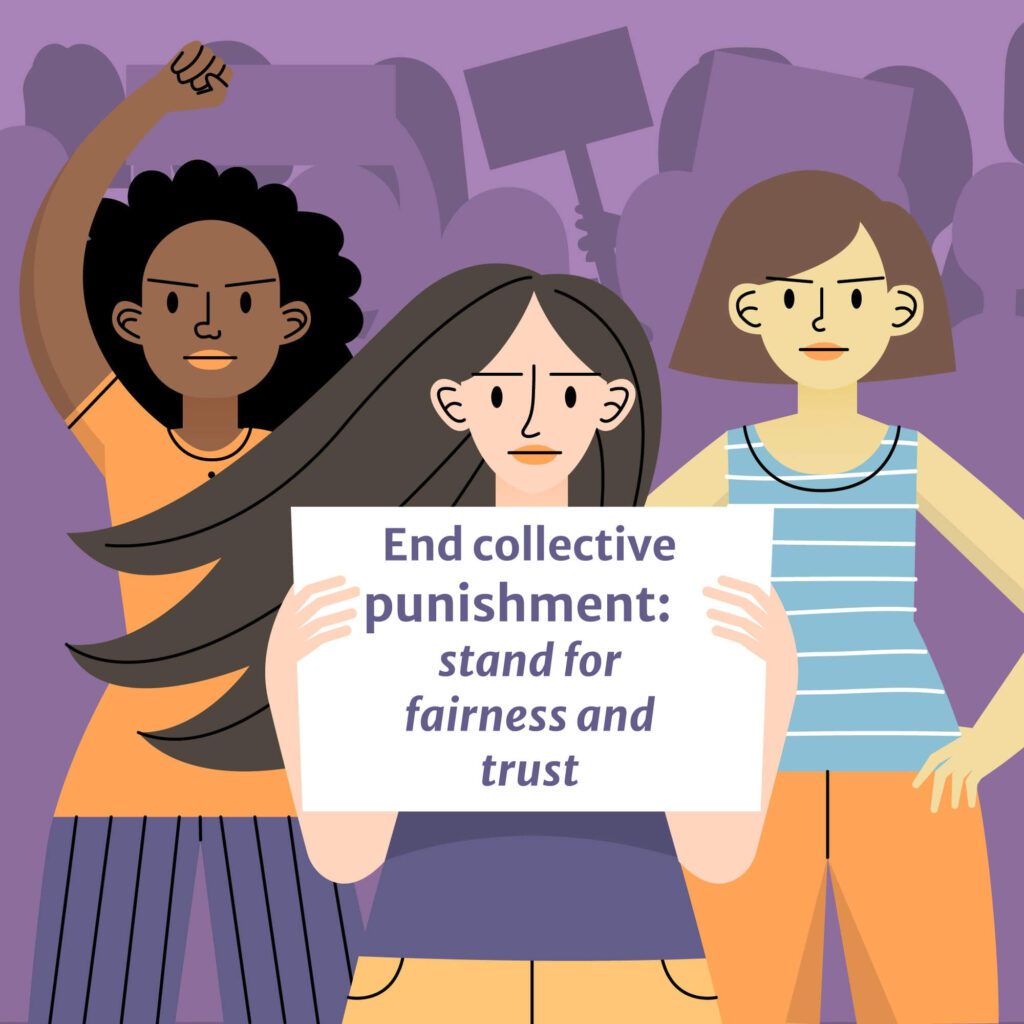
The internet has spoken: collective punishment in schools is wrong
When teachers punish entire classrooms for the actions of one student—when recess disappears because someone talked, when rewards vanish because someone forgot homework, when privileges evaporate because one child disrupted the lesson—students recognise the injustice immediately, and they name it with precision that educators often lack. Across TikTok, Instagram, and Reddit, students, parents, and teachers…
-

Loss of recess impact on chronic stress levels in elementary children
The Impact of Recess on Chronic Stress Levels in Elementary School Children illuminates the profound violence embedded in recess cancellation as punishment, revealing how schools manufacture chronic physiological harm under the guise of behaviour management. The findings demonstrate that children receiving forty-five minutes of daily recess exhibited hair cortisol concentrations significantly below both pre-pandemic normative…
-

How collective punishment turns provincial funding failure into disabled children’s “behavioural failure”
Many years ago, my kindergarten child Robin went onto an ice field during recess. Robin was seeking sensory input—the visual shimmer, the cracking sound, the tactile feedback their nervous system required. The school had told students to avoid the ice for safety reasons. Robin’s support worker redirected them repeatedly; Robin kept returning. Eventually the principal…
-
The principal’s casualness reveals authorisation to harm
When a principal cancelled my daughter’s volleyball game with bureaucratic ease, her comfort while causing harm revealed systematic institutional authorisation.
-
From trauma to topology: the grotesque work of quantifying institutional denial
When institutional harm accumulates in childhood—in objects confiscated, spaces denied, bodies excluded—the evidence lives first in memory and affect. The saucer eyes of a humiliated or frightened child. The sting in the sobs of a child who just wants to be with her friends at the volleyball game. The physical weight of a garbage bag…
-

A multi-lens analysis of accommodation denial in BC Schools
When the school handed me a garbage bag filled with jackets at the end of the year, it was evidence of a failed executive function accommodation. When I was handed a box containing hundreds of dollars of fidgets, it was evidence of a regulation accommodation that had been denied. There’s a lot of reasons an…
-
Material witness: objects and architecture in the exclusion of disabled children
When schools perform inclusion while enacting exclusion, the evidence accumulates in objects and spaces, in the material culture of neurodivergent childhood, in the things that were meant to help but became instruments of control, in the architecture that promised safety but delivered abandonment. These are the objects that witnessed what happened to my children in…
-
Neural evidence exposes the steep cost of sacrificing vulnerable children to punitive myths
Neural evidence from Altered Neural Responses to Punishment Learning in Conduct Disorder offers a precise account of how punitive school discipline collides with the neurodevelopmental profiles of vulnerable children, because the study shows that punishment learning relies on the anterior insula’s capacity to transform discomfort into behavioural adjustment, and this capacity expresses irregular patterns in the children…
-

How do we get out of this mess?
British Columbia’s education system is breaking, and Surrey’s classroom evacuations—along with the rushed creation of the Classroom Clear Tracker—show how close we stand to systemic failure. Desperate times create desperate actions, and the crisis unfolding in public education pushes people into hurried choices shaped by urgency, fear, and the belief that any action feels better…
-
The Cowichan case, land-title hysteria, and the unfinished work of justice in public education
I have been reflecting on the public reaction to the Cowichan case findings, and the deeper I look, the more I notice similar patterns emerging across conversations about reconciliation and disability justice in public schools: the tendency to get stuck in the T part of “Truth and Reconciliation” and to only have the T be…
-

What the BC government wants us to see: data and public education
Governments build their authority through the quiet choreography of information, and educational systems refine this practice into a disciplined structure where the presence of data becomes a symbol of competence while the absence of certain measurements becomes a strategy that protects institutional dignity, and across decades of policy and public communication the pattern of what…
-

What they say when you leave the meeting
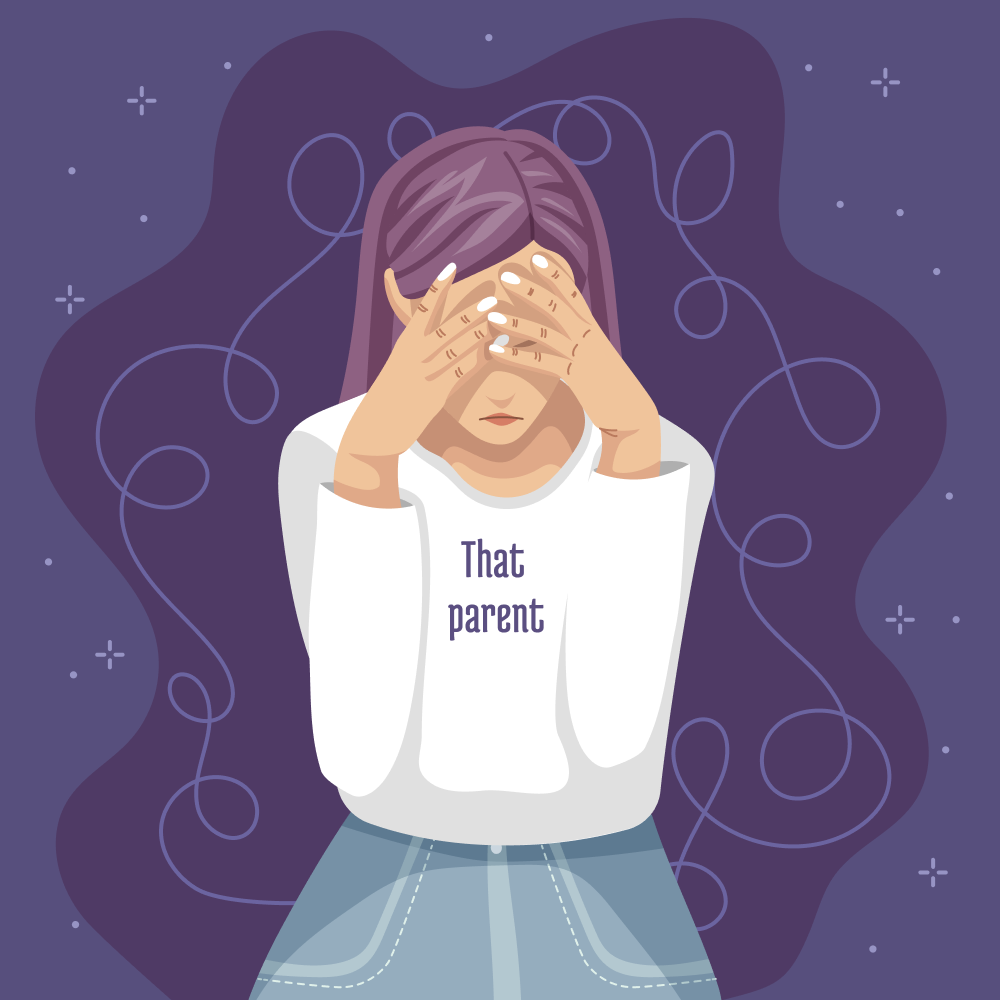
Canary Collective’s piece The Apple Doesn’t Fall Far from the Tree: What’s Said About Parents After They Leave the Room tells what often happens after parents leave a school meeting. The talk shifts away from the child and turns toward the parents. People start guessing what is “wrong” at home instead of asking what the…
-
A primer on truth for youth
If you’d told me last year that a man would feel emboldened to stand up in the UN and call the UN special rapporteur a witch and accuse her of trying to ‘curse Israel with lies and hatred’ I would have Googled to see if it was fake news! But then with the second presidency…
-

Raised inside the broken home of public education
Every society tells itself that public schools are good homes for children. We picture safety, fairness, and care distributed through the hallways like sunlight. Yet affection without protection becomes a kind of gaslight, and the insistence that everyone inside means well becomes a substitute for justice. We praise the intention instead of confronting the injury.…
-

Parents are responsible for the collapse of discipline ideology at school
The dominant narrative in staff rooms and comment sections insists that discipline has collapsed because parents no longer “back up the school.” This explanation comforts institutions and shames families, yet it misunderstands the architecture that once made discipline appear effective. What is collapsing is not parenting. What is collapsing is the total environment that once…
-

The cancellation
When the principal cancelled the volleyball game, she did more than remove an afternoon of play from a group of eager children, she transformed what should have been a moment of joy and collective affirmation into despair and humiliation, converting what should have been an opportunity to connect and excel as a team into a…
-

This isn’t a unique case, is it?
My children’s father said in a meeting: “Surely you’ve dealt with this before and you have a solution? This isn’t a unique case, is it?” The question hung in the air, simple and devastating, exposing in one breath the entire pretence on which school leadership rests. The question matters because it cuts through bureaucratic delay…
-
The children don’t see autism, they see meanness
How schools weaponise ableism through gendered care expectations. Harm amplified by systemic ableism The principal once told me, almost as an aside, that the children “don’t see autism, they see meanness.” It was meant as an explanation, but to me it landed as an indictment of a school culture—to let that ableist misunderstanding stand unchallenged.…
-

Human Rights Tribunal complaints are designed to exhaust
There is a silent calculus embedded in every human rights complaint: how much of your energy, your time, your composure, and your life force are you willing to lose in order to gain a largely symbolic victory. For those of us who have faced institutional harm the question is often whether we can survive the…