During Covid, the world learned what disabled families already knew: that it is possible to scream into a system and hear nothing come back.
I remember the emails sent into school inboxes that returned only auto-replies, the meetings cancelled and rescheduled into oblivion, the sense that your child’s suffering was happening in a sealed room where no one could witness it and therefore no one was required to respond. I remember the way the isolation just kept going, week after week, the calendar emptying and refilling with the same unresolved crises, and the creeping realisation that the silence was not a failure of communication but its intended architecture. The system was not broken. The system was working exactly as designed: absorbing distress, deferring action, producing no record that anything had gone wrong.
For most people, that feeling ended when lockdowns lifted. For families like mine, it did not end. It has never ended. The silence preceded Covid by years, and it continued after the world reopened, because the isolation we experienced was never a consequence of a pandemic. It was a consequence of a bureaucracy that treats disabled children’s suffering as an administrative inconvenience best managed through non-documentation, non-response, and the slow attrition of parental capacity.
I know this because I have the file.
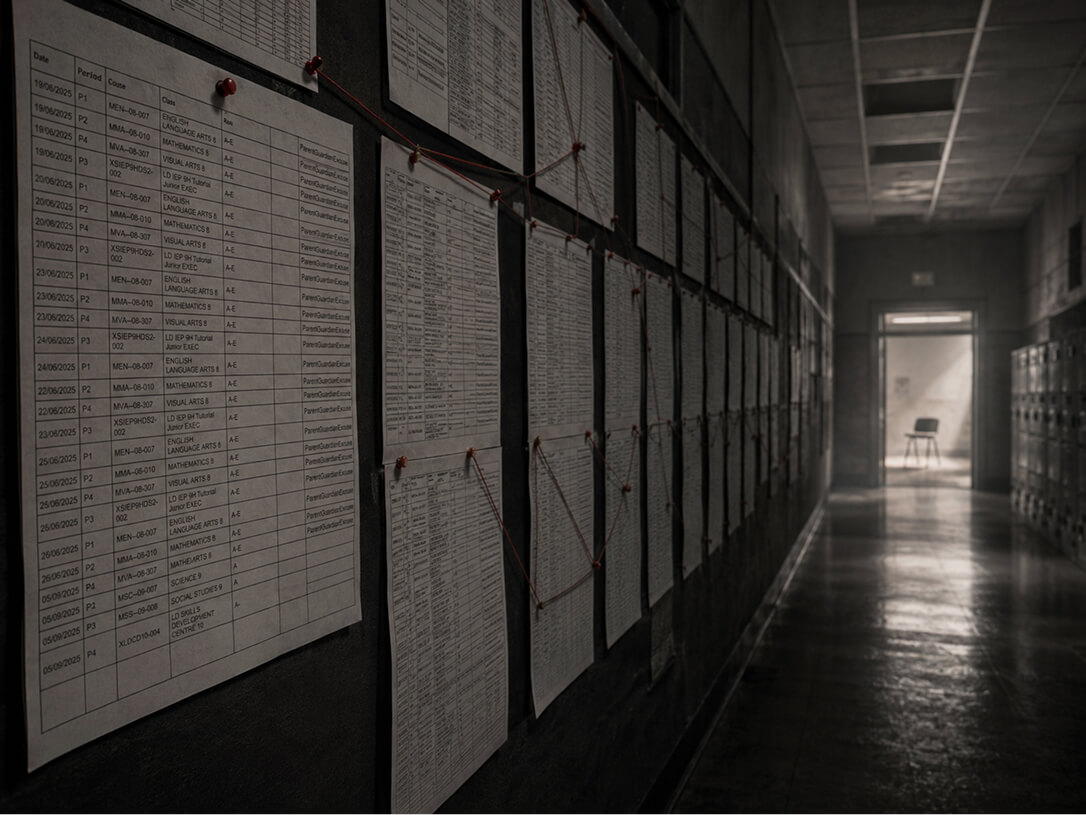
In 2023, I filed a Freedom of Information request with the School Board for all records pertaining to my two children over a multi-year period at their elementary school. Both are autistic. Both had designations. Both had IEPs. Both had histories of crisis, accommodation failure, and unmet support needs that spanned nearly every year of their enrolment. I expected the file to be large. I expected it to contain documentation I had never seen — internal emails, incident reports, safety assessments, the institutional paper trail that should accumulate when a child is hurt, dysregulated, unsupervised, or harmed on school grounds dozens of times over eight years.
The file arrived and it was long. I read it with a feeling I can only describe as vertigo — the disorientation of recognising your own handwriting in a document that was supposed to reveal what the institution had been doing behind the scenes. Because the file was not what I expected. The file was me.
The vast majority of the correspondence was mine. Long, detailed, emotionally exhausting emails — explaining my son’s neurology, reframing his behaviour as communication, proposing accommodation strategies, asking where the staff were when the incident happened, asking why I was learning about a violent episode from another parent rather than the school, asking for the same things I had asked for the previous year and the year before that. My emails ran hundreds of words. The school’s responses, when they existed, were brief: scheduling confirmations, one-line acknowledgements, forwarding notes with no commentary. The asymmetry was visible on every page. I had been doing the institution’s accountability work for it, for free, for years, and when the file came back through FOI, it was like receiving my own labour returned to me as evidence of their absence.
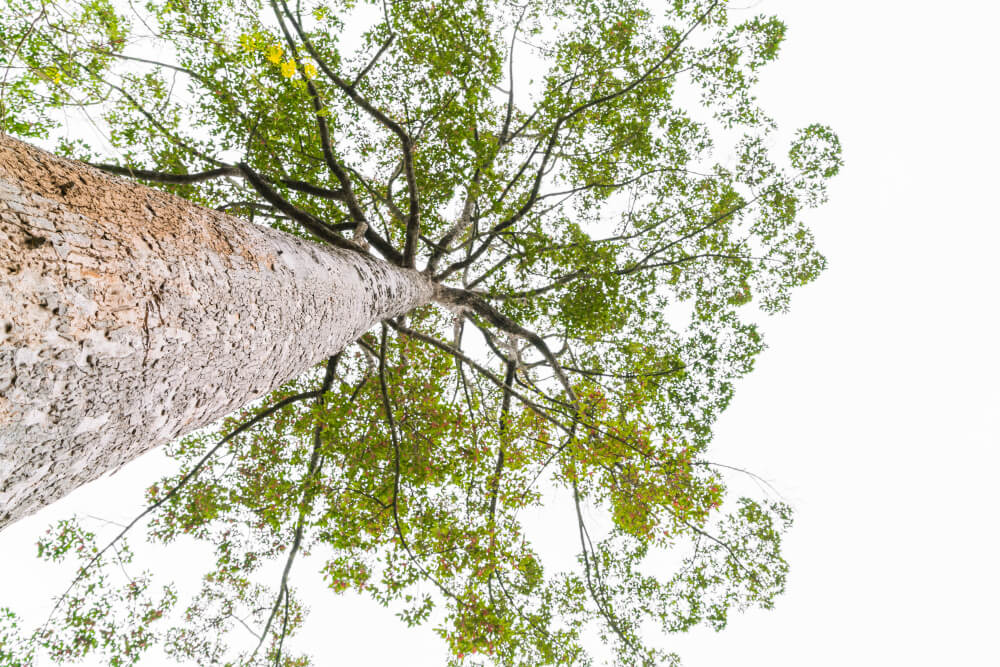
If a tree falls in the forest and no one is around to hear it, does it make a sound?
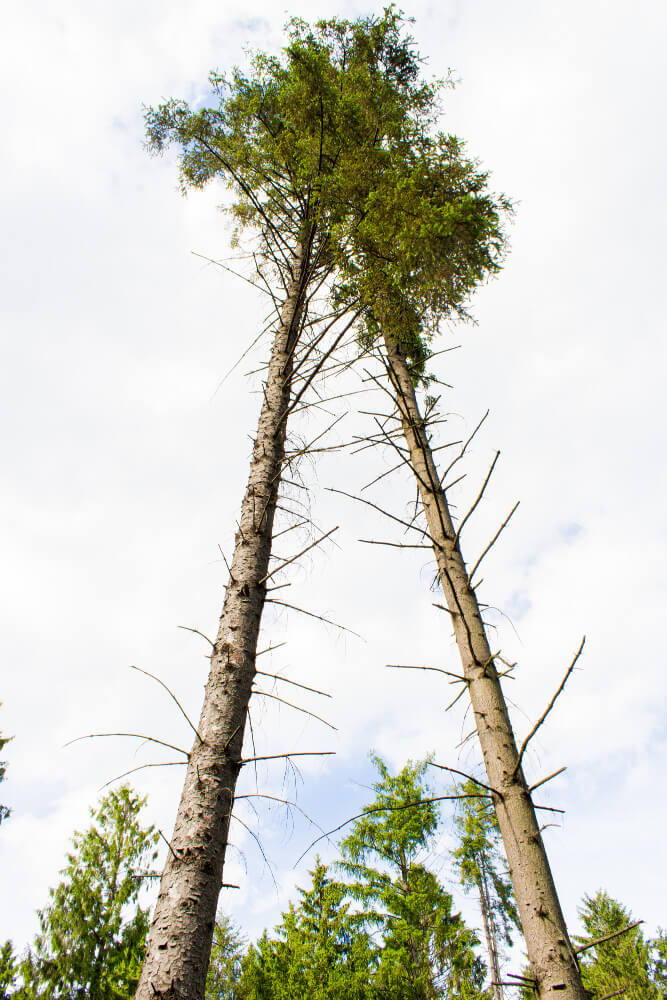
My son climbed trees. Thirty feet into the air, repeatedly, during recess and lunch — the times he was supposed to have one-to-one support, the times when a dedicated support assistant was supposed to be present specifically because unstructured social time was the highest-risk period of his day. He climbed because he was dysregulated. He climbed because the playground was overwhelming and no one had offered him an exit before the overwhelm became unbearable. He climbed because, for a kid with a Pathological Demand Avoidance profile, the impulse to escape is not defiance — it is survival, and when every lateral exit is blocked by adults issuing demands and peers issuing provocations, the only direction left is up.
Other children shouted at him from the base of the tree. Staff shouted at him to come down. The scene repeated itself . It was known. It was observed. Multiple adults were present for at least some of these episodes.
In the FOI responsive records, there is not one incident report. There is not one safety report. There is not one WCB filing. There is no documentation, anywhere in the responsive records, that a child in a designated support category, with a documented history of dysregulation, repeatedly climbed thirty feet into the air with no fall protection while supposedly receiving one-to-one support during every break. The institution’s contribution to the record is a single brief email from a teacher noting “some escalation” in Robin’s “behaviour during recess and lunch where he has been climbing the trees outside.” A child at mortal risk, narrated as a behaviour update. The tree fell. No one recorded the sound.
I wrote the record. I wrote the email explaining that Robin was likely dissociating before the climbing began, that the climbing was his attempt to find a place to self-regulate, that I was less worried about the danger from climbing than the danger to others from preventing it without offering him an alternative — because if exiting is not possible, fighting is inevitable. I wrote the de-escalation logic. I wrote the disability literacy that the school should have possessed and practised without my intervention. And when the FOI file came back, my analysis was the only documentation of those episodes that existed.
If a parent sends an email into an institution and receives no substantive response, was the email received?
If a child is hurt on school grounds and no incident report is filed, was the child hurt?
The Covid metaphor is not a metaphor. It is a structural parallel. During the pandemic, millions of people experienced what it feels like to exist inside a system that acknowledges your presence but not your suffering — to be technically enrolled, technically served, technically accounted for, while the lived reality of your days bears no resemblance to the institutional narrative. Parents sat in homes with children who were falling apart, sending messages to schools that sent back nothing, or sent back cheerful updates about resilience and community, while the child in the next room had stopped eating or speaking or leaving their bed.
That was temporary, for most families. For many families with disabled children, it is permanent. The isolation is not circumstantial; it is structural. It is built into the architecture of a system that treats parental advocacy as a nuisance, accommodation as a concession, and documentation as a liability.
The silence is not an accident. It is a strategy.
And the FOI file — the file that should contain the institution’s account of what happened to your child — is the proof, because the silence is visible in the record itself: the forms that were created but never filled, the behaviour logs that were assigned as goals and never populated with data, the meetings that were scheduled and minuted but produced no change, the incident reports that were never written because writing them would have created exactly the kind of accountability trail the system is structured to avoid.
I found, in my son’s file, a document from the district’s Urgent Intervention Plan process. One of the four stated goals for the newly assigned support worker was “data collection for Aggressive/Serious Behaviour log.” Eight days after she started, the progress note read: “no data available for the aggressive/serious behaviour log so far.” The log was created as a goal. The goal was documented in a form. The form was filed. The log itself was never populated. The institution documented its intention to document, and then the documentation stopped. The scaffolding was built. And yet the scaffolding — the UIP, the meeting minutes, the Tier recommendations, the referral forms — could be pointed to, if anyone ever asked, as evidence that processes were in place.
My daughter has a diagnosed learning disability in mathematics. When she receives specialised instruction — small group pullouts with adapted teaching strategies — she thrives. She can be ahead of her peers. The school’s own documentation records, in the institution’s own hand, that small group work in math is successful for her.
I found, in the FOI file, an internal email from her teacher to two colleagues and the principal. The teacher had received my request for math support. She replied to me that she had no additional support available in the classroom. Then, the same evening, she emailed her colleagues to ask whether my daughter could join the existing small group for math — and noted, explicitly, that she had not mentioned the small group to me because she wanted to check with them first.
The institution knew the support existed. It knew the support worked. It documented both facts. And it conducted the conversation about whether my child would be allowed to access it behind a wall I was not permitted to see. The gatekeeping was so normalised it did not even register as gatekeeping; it read as professional courtesy, a teacher checking with colleagues before making a commitment. But the effect was information asymmetry at its most intimate: other people had access to a version of my child’s educational options that I — her parent, her advocate, the person legally entitled to participate in decisions about her learning — was excluded from.
And then the accommodation was withdrawn. We were told the school “just doesn’t do pull outs anymore” The support that worked, that was documented as working, that the school’s own records confirmed was successful — was framed not as a decision about my child but as a policy change, a structural fact rather than an individual denial. No one decided my daughter should lose the support. It simply ceased to be available. The agency vanished. And the paper trail for that decision — who made it, when, on what basis, with what consideration of her diagnosed learning disability and her legal right to accommodation — almost certainly does not exist, because framing the withdrawal as policy rather than decision meant no individual documentation was required.
If a tree falls and no one records it, the institution can say: we have no record of a tree falling.
I have been thinking about what it means to be the only archive of your own child’s suffering.
During Covid, people kept journals. They posted on social media. They made bread. They documented their isolation because it felt unbearable to live through something enormous and have no record that it happened. The documentation was a form of self-preservation — proof that the days were real, that the grief was real, that the particular quality of a Tuesday afternoon in lockdown, with a child who had not spoken in three days and a school that had not called, was not something you invented or exaggerated but something that actually occurred in the actual world.
I did the same thing, for years, before anyone had heard of Covid. I emailed compulsively. I documented everything — every meeting, every phone call, every incident, every accommodation request, every failure to respond. I did this because the institution was not doing it, and I understood, instinctively and then with increasing analytical clarity, that if I did not write it down, it would not exist. The school would not record the tree climbing as a crisis because recording it would require acknowledging that a child in their care, who was supposed to be supervised, was repeatedly at mortal risk. The school would not file incident reports for biting episodes because filing them would create a pattern that pointed toward systemic failure rather than individual behaviour. The school would not document the withdrawal of my daughter’s math support because documenting it would make visible a decision that was easier to implement as an invisible policy shift.
So I became the archive. I became the person who wrote the long emails that received the short replies, who documented the meetings that produced no change, who built the only record of what happened to my children at that school over eight years. And when the FOI file arrived, I read through it expecting to find the institution’s version of events and instead found my own words echoing back at me. If a tree falls…
The file is not my whole life. My whole life is in my heart and in my children and in the relationships I have fought to sustain through all of it. But the file is the evidence of something that should concern every parent, every educator, and every person who believes that public institutions owe a duty of care to the children they serve: it is possible for a child to be hurt, repeatedly, over years, in a system that is supposed to protect them, and for the institutional record to contain almost nothing.
-

The truth shall set us free: healing from institutional violence in BC public schools
Healing doesn’t begin with massages or mindset shifts. It begins with telling the truth about what was done to us—about what it means to watch your child collapse under institutional betrayal, to be praised for your composure while they take away his lifeline.…