
Gaslighting
The institutional pastime of reversing cause and effect. Gaslighting, in this project, refers to the way schools and support systems invert responsibility—telling families their distress is overreaction, their trauma is misinterpretation, and their child’s collapse is an individual failing. It is the coordinated strategy of denying harm while demanding decorum. This tag collects writing on the scripts, tactics, and bureaucratic tools used to discredit those who remember too well.
-
Changes to Designation Checklists
There is a lot of discussion right now about B.C.’s new inclusive education funding checklists. Some of that discussion is useful. The forms have changed. Some requirements that were previously buried in the Ministry manual are now printed directly on the checklists. That may change how consistently districts document what they are doing. But families…
-
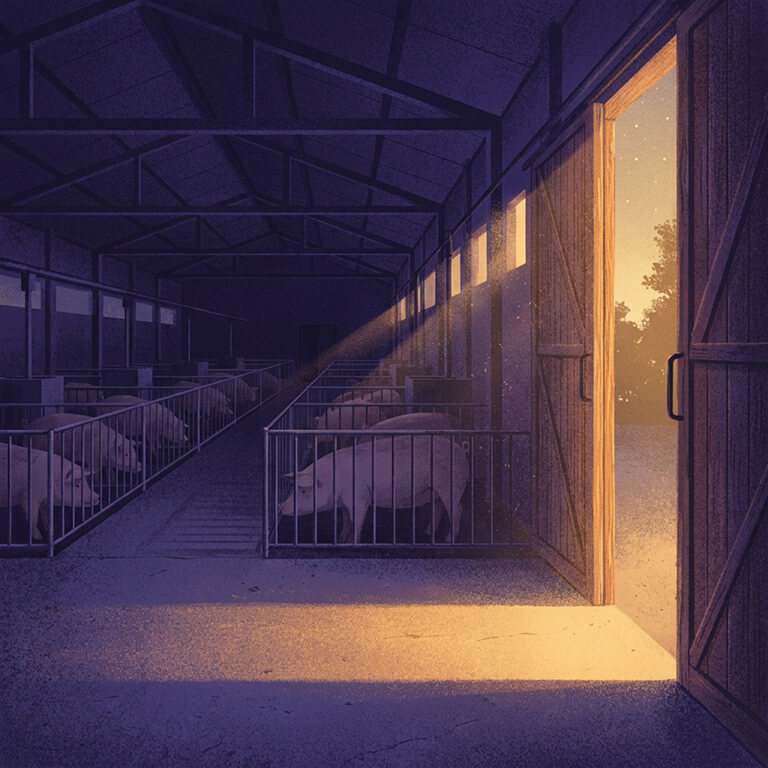
The barn, not the mother
A version of you existed before all this, and she would have been horrified. She would have watched you zip up that backpack, drive them to school, walk them to the door, and she would have known what you were doing: handing your child directly to the building that will hurt them today. Maybe the…
-
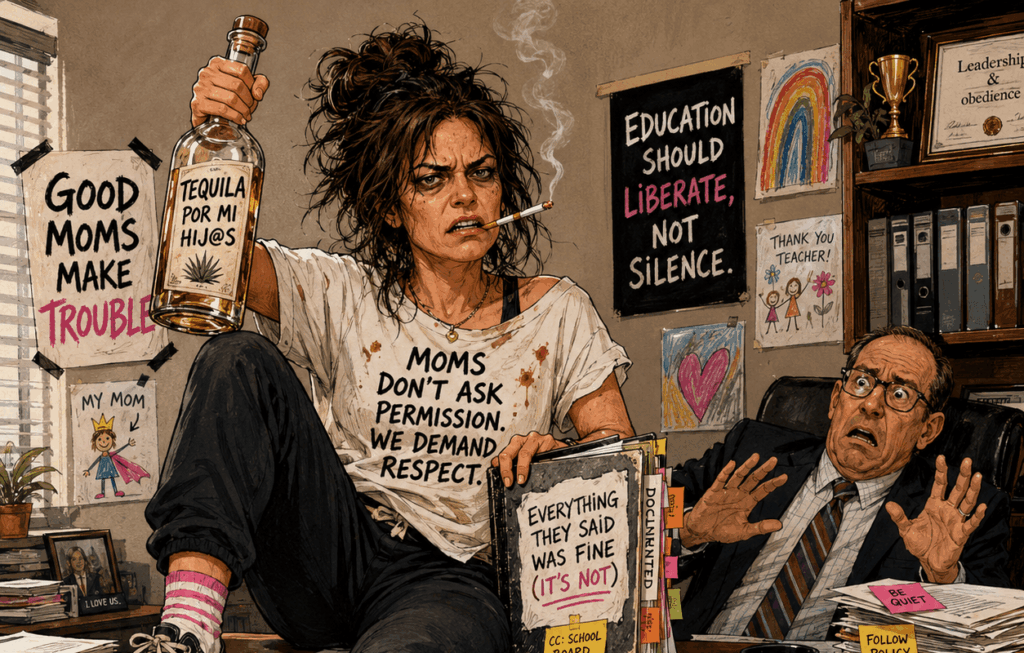
Happy Mother’s Day, bitches
Mother’s Day for the mothers who are done being good: maternal rage, institutional failure, and why being reasonable was never enough.
-

If a tree falls
During Covid, the world learned what disabled families already knew: that it is possible to scream into a system and hear nothing come back. I remember the emails sent into school inboxes that returned only auto-replies, the meetings cancelled and rescheduled into oblivion, the sense that your child’s suffering was happening in a sealed room…
-

The system we navigate is a one-way ticket to involuntary care
You think you are attending meetings. You think you are asking for support. You think you are building a case for your child. You are building a case. Just not the one you think. You enter as a credible narrator You arrive with timelines, with emails, with documentation so meticulous it could pass peer review…
-
Exclusion is economically irrational and the hidden costs of refusing accommodation
BC schools spend more money refusing accommodation than providing it. Learn when hiring a lawyer becomes the only fiscally rational choice for your family.
-

POPARD’s PDA doublespeak
I noticed that POPARD is advertising another workshop on Pathological Demand Avoidance (PDA) in April 2026, titled Pathological Demand Avoidance (PDA): What We Know & What We Are Learning. The description is familiar: PDA is framed as a “growing topic of interest,” something “some clinicians and researchers describe” as an autism profile. The language is cautious,…
-

Why the evolving understanding of childhood terrifies systems built on scarcity
Children now arrive at school shaped by homes that honour physiology over performance, autonomy over obedience, and co-regulation over fear, and this shift grows from a decade of relational neuroscience, trauma literacy, sensory understanding, and disability justice that families have absorbed far more quickly than schools, which leaves discipline ideology standing on crumbling ground because…
-

Bootcamp for mothers: how to send your disabled child to school
Each year around Remembrance Day, I find myself thinking about what it means to live inside a culture that trains endurance as its highest virtue. Across this series, I have been writing about how the language of war has infiltrated the spaces that claim to protect children. In genocide and the classroom examined how distress becomes procedural; The…
-

Fuck your independence dogma
How schools use ‘self-reliance’ to justify abandoning disabled kids. They told me my daughter needed to build her tolerance for the classroom without support. They waxed endlessly about how she wouldn’t want support in high school—ignoring that my daughter had been very clear that she does, in fact, want support. They said it with that…
-
The children don’t see autism, they see meanness
How schools weaponise ableism through gendered care expectations. Harm amplified by systemic ableism The principal once told me, almost as an aside, that the children “don’t see autism, they see meanness.” It was meant as an explanation, but to me it landed as an indictment of a school culture—to let that ableist misunderstanding stand unchallenged.…
-
Why outspoken mothers face retaliation for advocacy in BC schools
Some of our articles speak in a more academic voice, especially when we are naming systems that silence or harm within BC schools. This is a sister essay to Epistemic silencing of disabled children’s primary caregivers, written as a more accessible entry point for readers who are newer to the topic or looking for clarity…
-
Flourishing as an ethical imperative
Like many of you, I caught CBC’s Ideas episode the other day, where philosopher Angie Hobbs spoke about the ancient Greek concept of eudaimonia—a term sometimes translated as happiness or welfare, but more richly understood as human flourishing. In a world flooded by crisis, it may seem indulgent or impractical to contemplate the good life,…
-

7 signs your child (or you) is being positioned as the problem to preserve the group
When a parent becomes too precise, too prepared, or too emotionally honest, the school system may cast them—or their child—as the problem. This essay outlines seven signs that scapegoating is being used to preserve group harmony at the cost of justice, with particular attention to how this dynamic unfolds in British Columbia public schools.
-

The truth shall set us free: healing from institutional violence in BC public schools
Healing doesn’t begin with massages or mindset shifts. It begins with telling the truth about what was done to us—about what it means to watch your child collapse under institutional betrayal, to be praised for your composure while they take away his lifeline. The system demands civility while delivering harm. This essay is a witness…
-

How do school staff survive while upholding systems that cause harm?
Freyd’s betrayal trauma theory (1996) starts with the idea that trauma is more psychologically destabilising when it comes from someone—or some system—you are dependent on and trust. Abuse by a stranger wounds, but abuse by a parent, partner, or caregiver fractures the psyche at a deeper level because it requires a split: I must ignore what…
-

Maternal grief, public ritual, and the refusal to behave at the IEP table
I have walked into these rooms again and again—across years, with new principals, new case managers, additional complaints filed, subsequent appeals launched, IEPs dusted off and redrafted in the same language that failed last time. The faces change but the ritual remains. Seven professionals already seated, already laughing, already casually shaking off their last meeting…
-
Looking in the mirror is hard: maternal rage and institutional cowardice
I searched for literature that affirms what I know in my body—that maternal rage can be righteous, grounded, and deeply linked to the betrayal of public institutions. But what I found instead was an avalanche of studies examining how maternal anger harms children. The field catalogues the psychological effects of maternal yelling, tracks the correlations…
-

Epistemic silencing of disabled children’s primary caregivers
Epistemic silencing in BC schools discredits mothers’ knowledge, reframes advocacy as aggression, and erases disabled children’s pain, leaving families punished for truth.
-

My neighbour asked if I wanted to talk to her friend who is a social worker
It was meant as kindness, like she’d mistaken my roaming the neighbourhood bawling as some sort of cry for help instead of just my typical state as I sift through the details of ten years of institutional harm. I weep because I feel pain and I’ve had to trap it inside and I’m fucking done…