

Family Experience
Personal stories from families about the impact of collective punishment.
-

When back to school means staying in bed
Children will soon be going back to school… well, some children. Stores are already filled with lunch kits, backpacks, and brightly coloured displays of school supplies. Parents are checking whether indoor shoes still fit. Social media will soon fill with first-day photographs: children standing beside front doors, holding signs with their grade and what they…
-
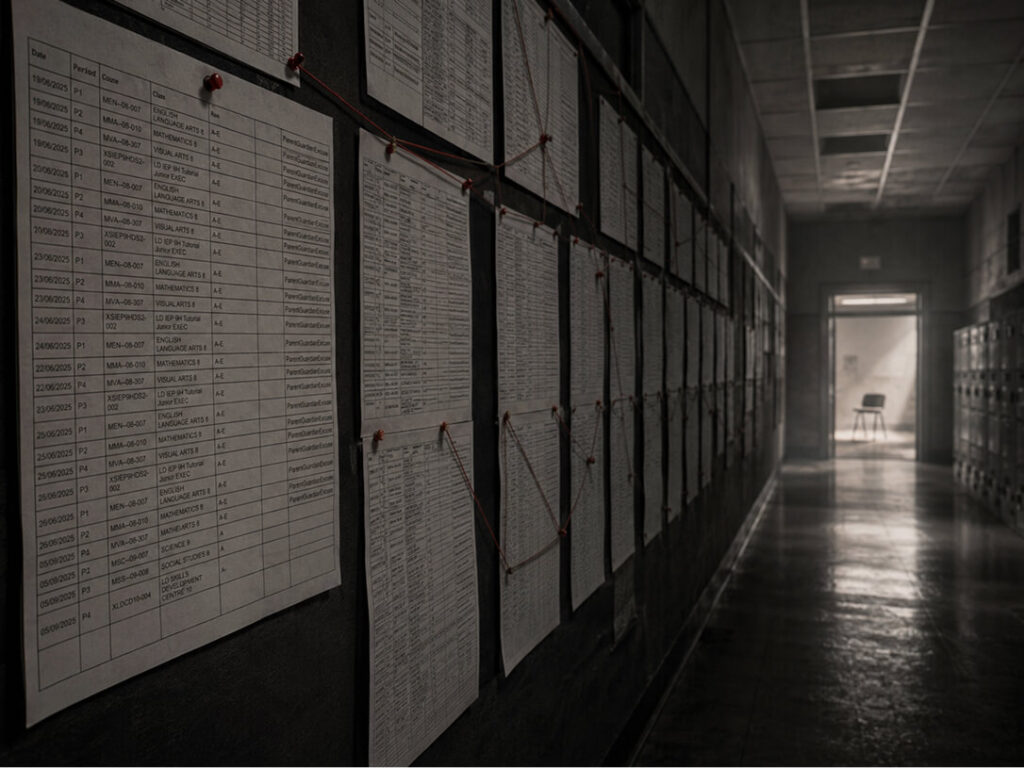
Parent Guardian Excuse: no excuse for exclusion in BC schools
The reason column in my son’s permanent record is mostly blank. When a reason survives, it’s ParentGuardianExcuse.
-

Too many tongues: how schools turn caregiver testimony into threat
How schools turn caregiver testimony into threat — and why the monstrous advocate is made by the institution that fears her memory.
-

CBC covers SD8’s elimination of Indigenous Education teachers
Earlier this week we wrote about School District 8’s decision to cut all Indigenous Education teacher positions from its elementary and middle schools, replacing them with support workers — a role with no instructional authority and no capacity to lead the cultural programming these teachers built over years. CBC’s Amber Wang has now published a…
-

I’m a seventh grade failure
Institutional capture refers to the process by which individuals — parents, children, advocates, even dissenting professionals — are absorbed into the operational logic of an institution to the point where they begin reproducing its framework, its language, and its priorities, without necessarily endorsing them or recognising what is happening. It is distinct from agreement. You do…
-
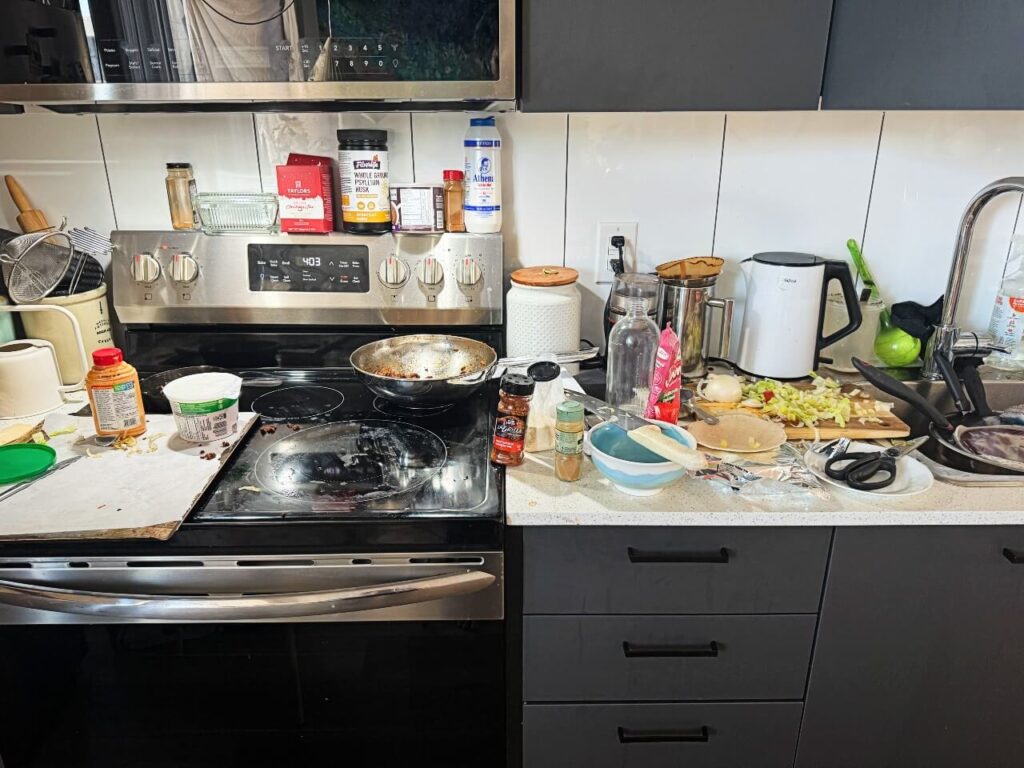
Half a load behind: a postscript for Mother’s Day
Falling behind has arithmetic, legible only to those who have lived it. You were doing exactly what you always do — the same volume, the same effort, the same sustained output — but the baseline shifted, and “the same” no longer covered both the present and the correction. The deficit compounds because returning to zero…
-

Happy Mother’s Day, bitches
Mother’s Day for the mothers who are done being good: maternal rage, institutional failure, and why being reasonable was never enough.
-

The BC NDP is balancing the budget on mothers’ backs
For years, families have been told that schools are inclusive, that supports are needs-based, that ministries are working together, and that children will not be left behind—a cascade of institutional reassurance designed to function as substitute for material reality, the kind of language Sara Ahmed describes as non-performative, words that announce commitment precisely because they…
-

My Ollie is missing a lot of school
My Ollie has barely left his room since he came home exhausted from school one day last spring. He slept twenty-three hours a day for months. He barely spoke for months and had difficulty with basic hygiene. School chronically withdrew the supports he needed and pushed him to mask and comply until his nervous system…
-

The most reasonable parent
On the impossible calibration mothers perform when advocacy collides with coercive control A child loses access to education. A mother loses trust in her own perception. A family fractures along lines the institution helped deepen. Yet everyone acted reasonably. The harm that accumulates inside families and institutions often looks benign in isolation. The people involved…
-

If a tree falls
During Covid, the world learned what disabled families already knew: that it is possible to scream into a system and hear nothing come back. I remember the emails sent into school inboxes that returned only auto-replies, the meetings cancelled and rescheduled into oblivion, the sense that your child’s suffering was happening in a sealed room…
-
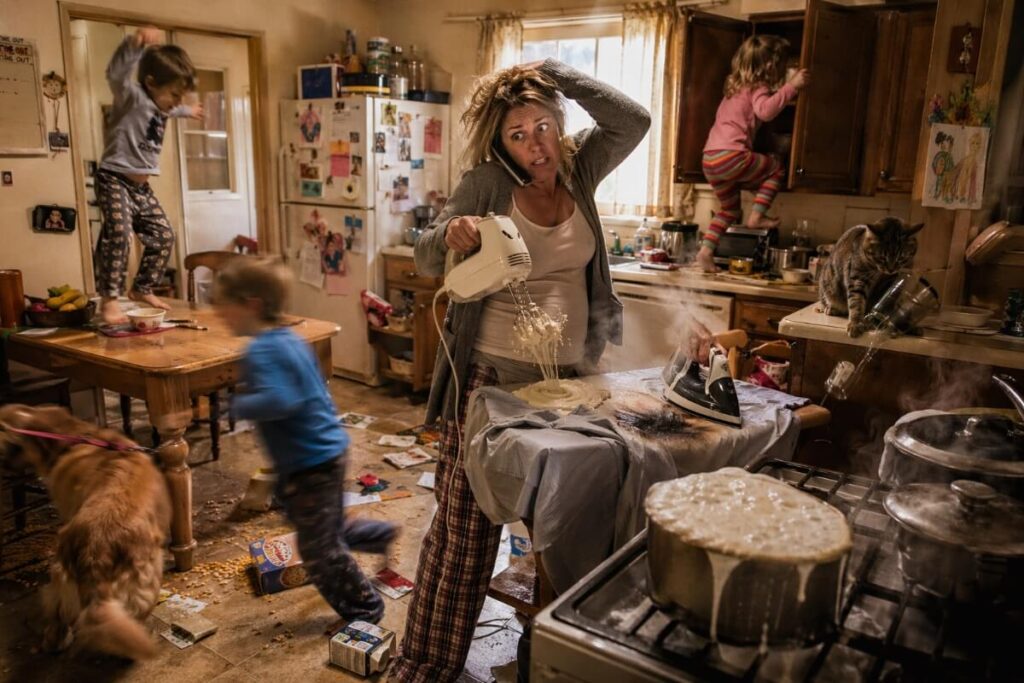
10 unhinged things I did to try to keep my disabled child in school
For every woman who has stayed up until two in the morning reading the Human Rights Code with a highlighter, looking for the sentence that will save her child. For every mother who has rehearsed her opening in the shower, workshopped her tone in the car, changed her shirt three times, taken half a beta…
-

Your accommodations, too
You arrive at the IEP meeting already tired. You have been awake since five, rehearsing the three sentences you practised last night; you put on something other than sweatpants, to look the part; you have swallowed the coffee that makes the morning bearable at the cost of the indigestion and tremor in your hands, which…
-

Slack off and succeed — the grey rock method for institutional advocacy
Schools feed on your emotional participation. Grey rock is the refusal to be raw material. Stop justifying. Stay flat. Reclaim your evenings.
-
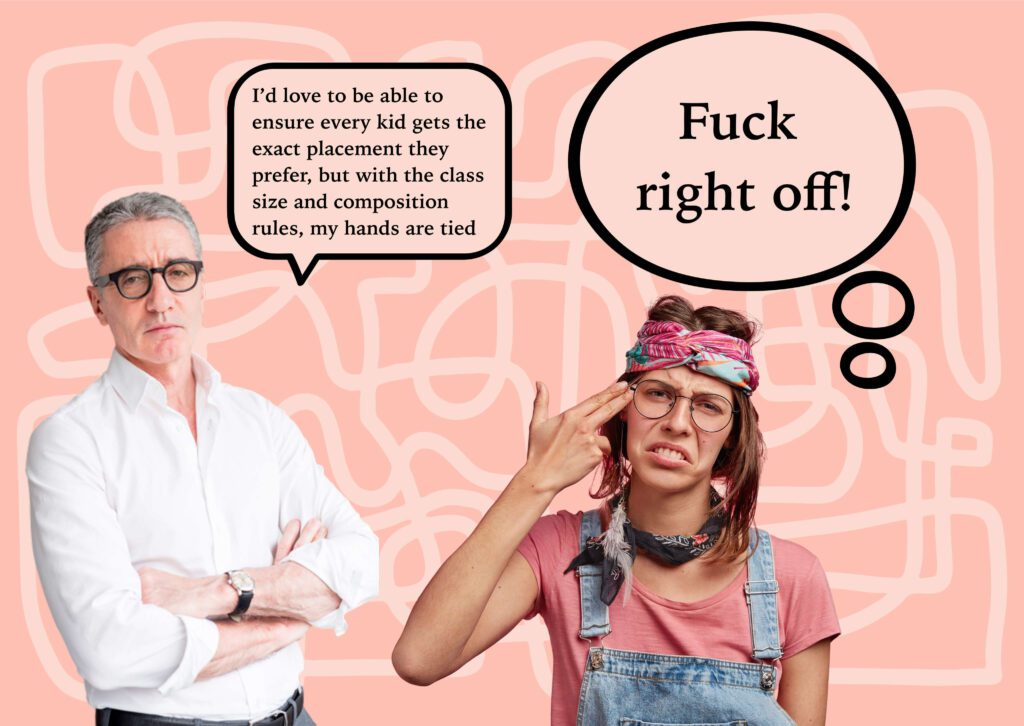
The verification trap — oops, your business process is showing
Imagine a teacher calls to ask how your child is engaging at school. You take a breath and begin: last night I made dinner — here is what I used, how long it took, why the sauce was more difficult than expected, and why my child didn’t eat it. The teacher would be bewildered. What does…
-

Iatrogenic harm and the parent advocate: how school systems produce disability in the families they fail
The body keeps the account even when the institution refuses to. What the school system produced in the parent who spent years trying to hold it accountable is not caregiver burden — a word that belongs to the person carrying it — but iatrogenic harm: specific, dated, attributable, and fully known to the institutions that…
-

The system we navigate is a one-way ticket to involuntary care
You think you are attending meetings. You think you are asking for support. You think you are building a case for your child. You are building a case. Just not the one you think. You enter as a credible narrator You arrive with timelines, with emails, with documentation so meticulous it could pass peer review…
-

Advocacy is too hard and schools expect too much
The BC Ministry of Education directs families to file complaints through their school district’s K12 system when schools violate policy, deny accommodations, or harm disabled children through exclusionary discipline. The process presents itself as accessible redress, a pathway families can navigate while managing the daily crisis of a child being room cleared, partially scheduled, or…
-

What 8 years of advocacy took from our family
I advocate because I love my children and I want them to be well. Because I know the accommodations they require are entirely tenable, requiring only modest shifts in how adults think and respond. Because it is unbearable to watch them be slowly debilitated by a system that insists their needs are excessive and their…
-

When one child’s support becomes everyone else’s denial
I bring Robin his meals now. I pour a bath periodically, and coax him in, when too many days have elapsed and a funk has grown pungent from him avoiding the sensory assault or the water on his skin. I manage mess, hygiene, and feeding, even though he is a teenager who should be developing…