

Collective Punishment
Discipline strategies that penalise whole groups for the actions of one or a few, including lost recess, public shaming, and group rewards.
-
A multi-lens analysis of accommodation denial in BC Schools
When the school handed me a garbage bag filled with jackets at the end of the year, it was evidence of a failed executive function accommodation. When I was handed a box containing hundreds of dollars of fidgets, it was evidence of a regulation accommodation that had been denied. There’s a lot of reasons an…
-

Material witness: objects and architecture in the exclusion of disabled children
When schools perform inclusion while enacting exclusion, the evidence accumulates in objects and spaces, in the material culture of neurodivergent childhood, in the things that were meant to help but became instruments of control, in the architecture that promised safety but delivered abandonment. These are the objects that witnessed what happened to my children in…
-
The affective architecture of room clears
Room clears should be rare. In adequately resourced classrooms with sufficient staffing, with educational assistants trained in co-regulation, with adults who understand that compliance is not wellness and frozen silence is not calm, most crises could be prevented or held without architectural intervention. But British Columbia schools operate under manufactured scarcity, austerity politics disguised as…
-

Justice and dignity too expensive for BC NDP
In 2018, experts told BC exactly how to fix special education funding. The government has spent five years “consulting” instead. Meanwhile, your child sits in hallways. The 192% problem nobody wants to fund Between 2015 and 2024, autism designations in BC schools exploded by 192%. Total student enrolment? Up just 11.6%. The province knows this. They…
-
When delay becomes policy: British Columbia’s strategic abandonment of disabled students
In 2018, an independent panel reviewed how British Columbia funds kindergarten through grade twelve education and recommended a prevalence model for special education funding, a shift that would allocate resources based on statistical prevalence of disability within the general student population rather than on individual diagnostic designation. The proposal threatened to expose what the existing system carefully…
-

Pacific Heights Elementary School (SD36): a neurodiversity-informed policy critique
The Pacific Heights Elementary Code of Conduct positions the school as a community of “learners (curiosity, humility, engagement, wonder, delight, creativity, collaboration, passion)” and emphasises “care for self, others, and the environment,” framing positive relationships as “foundational to learning.” This aspirational preface signals a relational ethos. Yet the operational sections reveal a blend of restorative…
-
North Surrey Secondary (SD36): a neurodiversity-informed policy critique
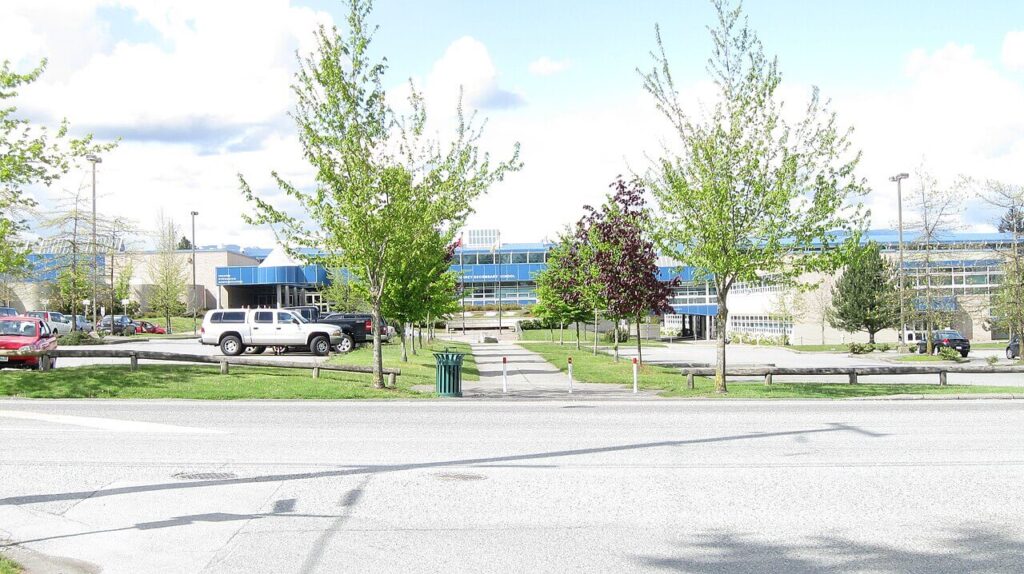
North Surrey Secondary’s 2024–25 Parent/Student Handbook presents itself as a practical guide to daily school operations, but its conduct code reveals a disciplinary framework anchored in behavioural control, punctuality, and compliance. Its language reflects a pre-neuroscience understanding of student behaviour, one that frames regulation as obedience, distress as misconduct, and support as conditional upon conformity.…
-
Neural evidence exposes the steep cost of sacrificing vulnerable children to punitive myths
Neural evidence from Altered Neural Responses to Punishment Learning in Conduct Disorder offers a precise account of how punitive school discipline collides with the neurodevelopmental profiles of vulnerable children, because the study shows that punishment learning relies on the anterior insula’s capacity to transform discomfort into behavioural adjustment, and this capacity expresses irregular patterns in the children…
-
Punishment is not a good learning tool
In Altered Neural Responses to Punishment Learning in Conduct Disorder, researchers examined how young people learn from punishment and reward using fMRI and computational modelling, and the findings show that punishment-based approaches produce weak and unreliable learning signals in a significant subset of youth. The study followed 174 young people (ages 9–18) who completed a…
-
The Cowichan case, land-title hysteria, and the unfinished work of justice in public education
I have been reflecting on the public reaction to the Cowichan case findings, and the deeper I look, the more I notice similar patterns emerging across conversations about reconciliation and disability justice in public schools: the tendency to get stuck in the T part of “Truth and Reconciliation” and to only have the T be…
-

Collective punishment in war and school
Every empire writes its morality through the safety of the bodies of children. Whether on the battlefield or in the classroom.
-

PTSD and moral injury in war and the classroom
An analysis of how bureaucratic obedience erodes conscience. Drawing on moral injury research from military and healthcare contexts, this essay reframes teacher burnout as institutional betrayal. It shows how educators are trained to suppress empathy and how that suppression mirrors the psychic injuries of combat.
-

In genocide and the classroom: the routinising of distress
A meditation on how institutions train people to ignore suffering—how desensitisation, scarcity, and forced optimism erode empathy and make harm seem ordinary.
-
A primer on truth for youth
If you’d told me last year that a man would feel emboldened to stand up in the UN and call the UN special rapporteur a witch and accuse her of trying to ‘curse Israel with lies and hatred’ I would have Googled to see if it was fake news! But then with the second presidency…
-

The cancellation
When the principal cancelled the volleyball game, she did more than remove an afternoon of play from a group of eager children, she transformed what should have been a moment of joy and collective affirmation into despair and humiliation, converting what should have been an opportunity to connect and excel as a team into a…
-
The fallout of regressive discipline: from community trust to mental health
In schools across British Columbia and beyond, discipline often unfolds not as a considered intervention tailored to individual needs, but as a blunt, collective act that seeks to restore order quickly by suspending joy or opportunity for all. The cancellation of recess, the revocation of a field trip, the withholding of an earned privilege—all for…
-

12 ways to tell when a crisis at school is really a failure of support, supervision, or repair
The hardest moments to navigate are often the ones that happen in seconds—but have been building for months. A single moment can change everything. A shove on the playground. A child running out the door. A sharp word or a sudden slap. To someone looking in from the outside, these moments can seem like they…
-

Why do teachers punish the whole class for one student?
Collective punishment is when a group is made to face the same consequence because of the actions of one person or a small number of people. In school, this can mean the entire class loses recess, an activity is cancelled, or privileges are taken away because of something one student did. The rules are applied…
-
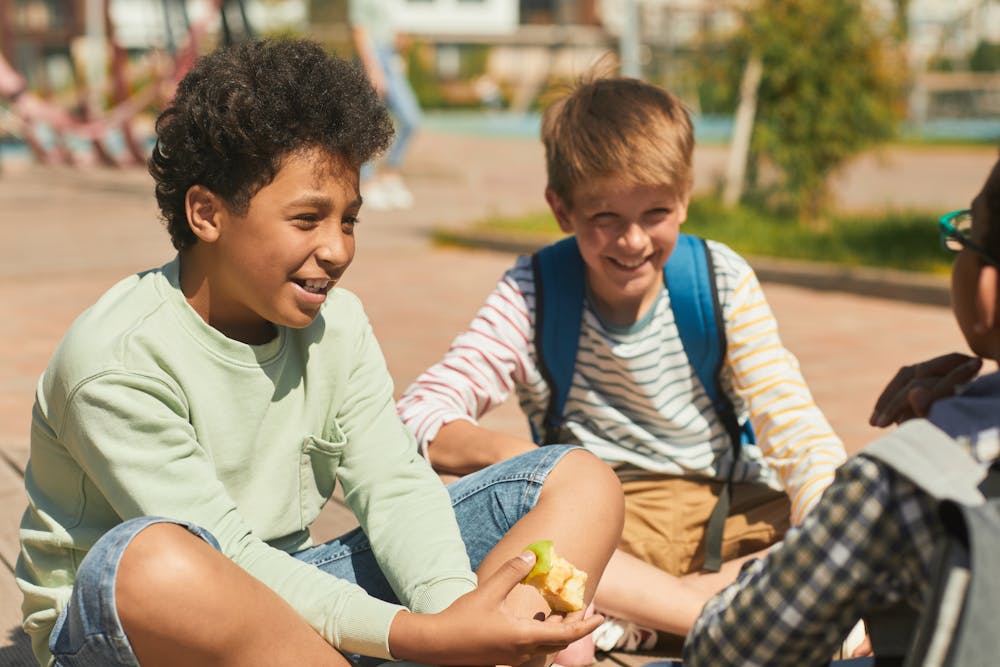
When the bell rings but the doors stay shut: why withholding recess is a breach of children’s rights
Few topics ignite as much debate as the cancellation of recess. Threads often begin with a frustrated parent describing how an entire class lost recess because of one student’s behaviour, or a teacher recounting the expectation to withhold outdoor play for incomplete work. Commenters share stories of children sitting silently at their desks while watching…
-

Why schools use collective punishment to stay in control
Some of our articles speak in a more academic voice, especially when we’re naming systems that silence or harm. This is a sister essay to Collective punishment: how schools displace guilt, erase harm, and preserve the collective, written as a more accessible entry point for readers who are newer to the topic or looking for…