

Child Abuse
How neglect, violence, and systemic cruelty manifest within educational settings, tracing the continuum from classroom humiliation to institutional betrayal.
-
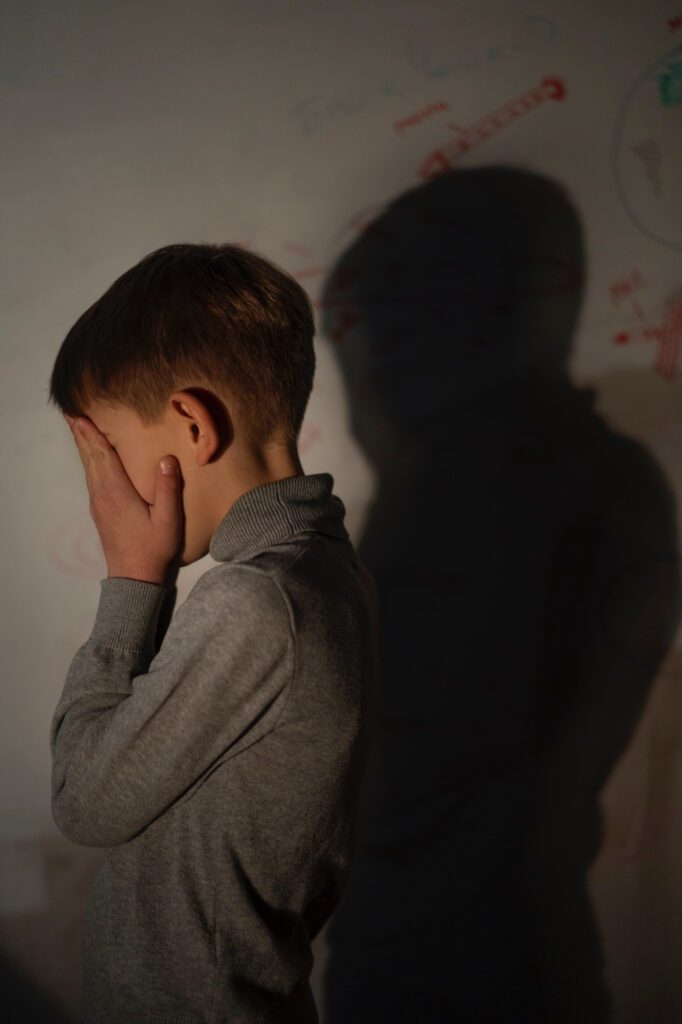
The days my children cried, and I told them it would be okay
When your trust has already been broken—by people who were supposed to care for you, protect you, believe you—every new betrayal lands like confirmation. I didn’t come to school meetings as a blank slate. I came with a trauma history. So when they dismissed my child’s needs, ignored the signs, or punished their distress, it…
-

Reconciliation demands that we put collective punishment aside
Collective punishment in residential schools did more than punish children—it shattered the bonds between parents and children. For many parents who survived, the fear, shame, and trauma they endured complicated their ability to nurture trust in their own parenting. Emotional disconnection and disrupted parenting Adults who attended residential schools often struggle to form secure attachments…
-

Data tracking in the residential school system
The Canadian Residential School system (circa 1870s–1990s) was a network of church-run boarding schools funded by the government to forcibly assimilate Indigenous children. In theory, such a large system might have been guided by careful data collection – tracking student health, education outcomes, and well-being. In reality, government officials prioritized ideological goals and cost-saving “optics” over…
-
A toxic classroom exposes punitive culture
An administrative investigation at Montreal’s Bedford Elementary uncovered a culture of intimidation where teachers used yelling, humiliation, and sending students to stand in hallways—sometimes for days—as disciplinary youtube.com+2montreal.citynews.ca+2montreal.citynews.ca+2. The Quebec Education Minister suspended 11 teachers linked to psychological and physical mistreatment, highlighting a systemic reliance on group-based punishment, rather than supporting individual accountability. Bernard Drainville, the…
-

From corporal punishment to collective harm: why Section 43 still casts a shadow over Canadian schools
Section 43 still permits “reasonable force” in schools. This blog explores how it enables collective punishment and violates children’s rights.
-

The cost of compliance – the foundational critique and case for change
When children are dysregulated, the response from educators is too often punitive. For neurodivergent students in particular, the cost of these responses is high: shame, trauma, social exclusion, and a deep erosion of trust. But it does not have to be this way. Restorative alternatives are not new. They are ancient practices found in many…