
Child Abuse
How neglect, violence, and systemic cruelty manifest within educational settings, tracing the continuum from classroom humiliation to institutional betrayal.
-
Exclusion is economically irrational and the hidden costs of refusing accommodation
BC schools spend more money refusing accommodation than providing it. Learn when hiring a lawyer becomes the only fiscally rational choice for your family.
-
What 8 years of advocacy took from our family
I advocate because I love my children and I want them to be well. Because I know the accommodations they require are entirely tenable, requiring only modest shifts in how adults think and respond. Because it is unbearable to watch them be slowly debilitated by a system that insists their needs are excessive and their…
-
Ministry regulations on physical restraint and seclusion in BC schools
Physical restraint and seclusion are permitted in British Columbia schools under the Ministry of Education and Childcare guidelines—despite being widely described as last-resort safety measures. When schools restrain or isolate disabled children, districts often cite the Provincial Guidelines on Physical Restraint and Seclusion in School Settings (2015) to claim compliance. Parents are told the intervention…
-
The return of functioning labels: How austerity turns advocacy into competition
A parent recently posted about profound autism, describing the experience of having her son’s reality erased when people say that “profound autism” doesn’t exist. Her frustration is legitimate—parents of children with intensive, lifelong support needs face profound institutional abandonment, and “profound autism” names a reality that deserves recognition and resources. But her post also illustrates…
-

B.C. teacher who pushed elementary school student gets 1-day suspension
“A B.C. teacher who pushed an elementary school student she believed had insulted her mother has agreed to a one-day suspension and remedial education. Jeven Kaur Gill agreed to the punishment in a consent resolution agreement with B.C.’s Commissioner for Teacher Regulation last month, which was published on the commissioner’s website Tuesday.” CTV News The…
-
Your child’s teacher crossed a line. The school shrugged. Now what?
Every time my phone lights up with a call or email from the school, my stomach drops. I brace automatically: Is it another subtle threat? Another criticism of my parenting disguised as “concern”? Another make-work task to “fix” a problem they created? After years of this, I’ve learned to navigate school communication in a state…
-
Counting crisis: data, distrust, and the false choice between safety and inclusion
Across British Columbia, the launch of Surrey DPAC’s Room Clear Tracker has ignited a storm of debate among parents, educators, and disability advocates. Some view it as a necessary step toward transparency; others fear it will reinforce stigma or justify segregation. Beneath the surface of this argument runs a deeper fracture—between those who seek safety…
-

In genocide and the classroom: the routinising of distress
A meditation on how institutions train people to ignore suffering—how desensitisation, scarcity, and forced optimism erode empathy and make harm seem ordinary.
-
When righteousness and safety diverge
Every parent who becomes an advocate stands at the threshold between justice and protection. We enter the arena to make things better, yet the fight itself can wound the very children whose pain brought us here. There is always a moment—quiet, terrible—when the pursuit of systemic change begins to scrape against the body of a…
-
Raised inside the broken home of public education
Every society tells itself that public schools are good homes for children. We picture safety, fairness, and care distributed through the hallways like sunlight. Yet affection without protection becomes a kind of gaslight, and the insistence that everyone inside means well becomes a substitute for justice. We praise the intention instead of confronting the injury.…
-
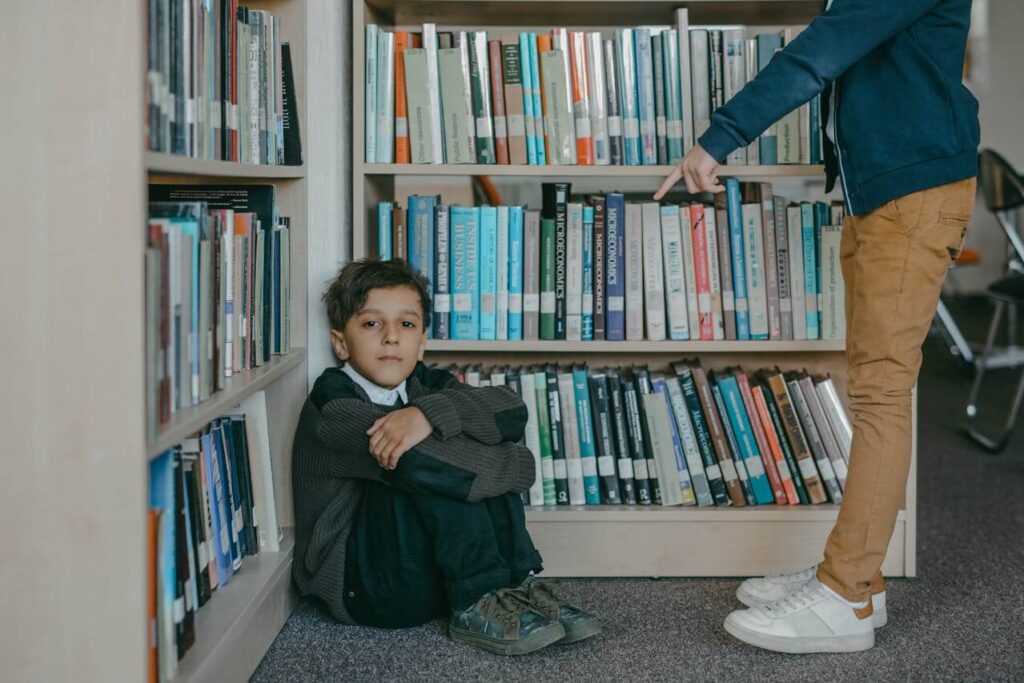
When schools say a child went from “zero to sixty”
Let’s rip the mask off this polite, professional charade: when schools say a child went from “zero to sixty,” they are lying to protect themselves. They are covering for the adults who ignored every warning, missed every signal, and left a child to be harassed, baited, and humiliated until their nervous system screamed for survival.…
-

A one-day suspension for this?
According to the consent resolution agreement published by the BC Commissioner for Teacher Regulation, secondary school teacher Todd Erin Graham engaged in multiple forms of misconduct over the 2022–23 school year. These included racially and culturally demeaning comments to an Indigenous student, public disparagement of a diverse learner, inappropriate physical contact with female students, unsolicited…
-
Institutional gaslighting of caregivers
You refuse to forget, because forgetting would mean abandoning your child’s reality—and you have already watched too many adults do that with a straight face and a professional tone. You refuse to downplay what has happened, because the harm is not theoretical—it lives in your child’s nervous system, in her school avoidance, in her refusal…
-
What replaced the strap in Canadian schools?
They took the strap away—or at least, they removed the physical instrument, the leather loop of institutional discipline that had once been the sanctioned mechanism of control in classrooms across the country. Even if we never felt it on our own skin, we knew what it meant; we had heard the sound of it slapped…
-
Punished for bed wetting
I’ve woken up in the middle of the night to help my children when they’ve wet the bed—perhaps after a bad dream or too much water before bedtime. I remember helping them change their clothes, stripping the bed, telling them gently: it’s okay. It happens. It’s a small moment that reminds me what care looks…
-
When harm comes from those entrusted to protect
The May 2025 consent resolution involving B.C. principal Pehgee Aranas offers a sobering reminder of the work that remains to make education safe, equitable, and trustworthy for all children—especially those from communities that have been historically harmed by the very institutions meant to support them. When a young First Nations student was physically punished by…
-
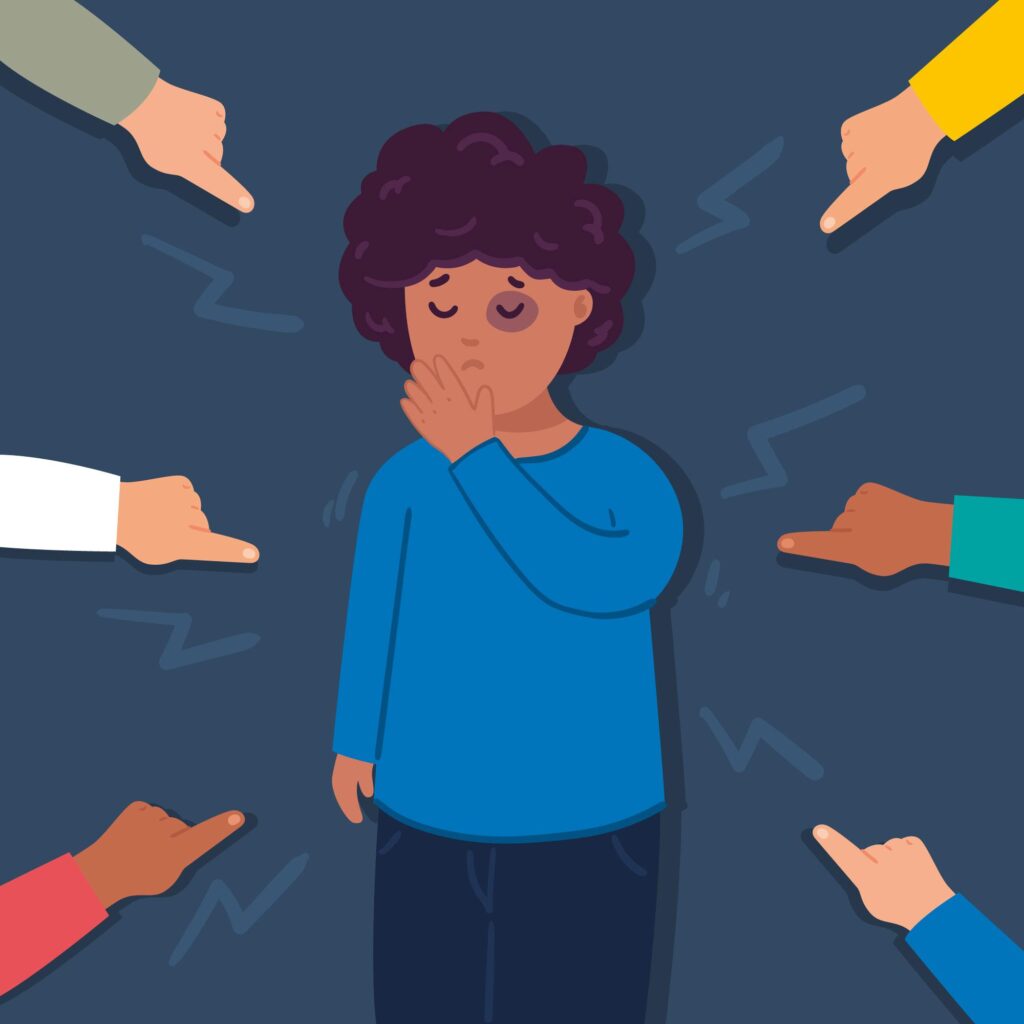
The children were made to punish the children
In Canada’s residential schools, older children were instructed to punish the younger ones—to hit them, isolate them, report them for infractions defined by an institution that sought to erase who they were. The adults gave the orders. The children were conscripted to carry them out. This was not incidental. It was structural. It was framed…
-
Collective punishment in schools: global history and harm
Explore the global history of collective punishment: how it has been defined, justified, resisted, and remembered across cultures and time.
-

Yukon schools under scrutiny for using restraint and seclusion on students with disabilities
The Yukon government says it is working to make schools safer after families raised serious concerns about the use of restraint and seclusion—particularly involving students with disabilities. Education Minister Jeanie McLean acknowledged that these practices have caused harm and stated that a review is underway to develop clearer policies and alternatives grounded in trauma-informed approaches.…
-
Coerced sibling care in public school inclusion
The school saw twins and imagined comfort. What they created instead was coerced care—using my daughter’s body to regulate her brother without consent, without safety, and without repair.