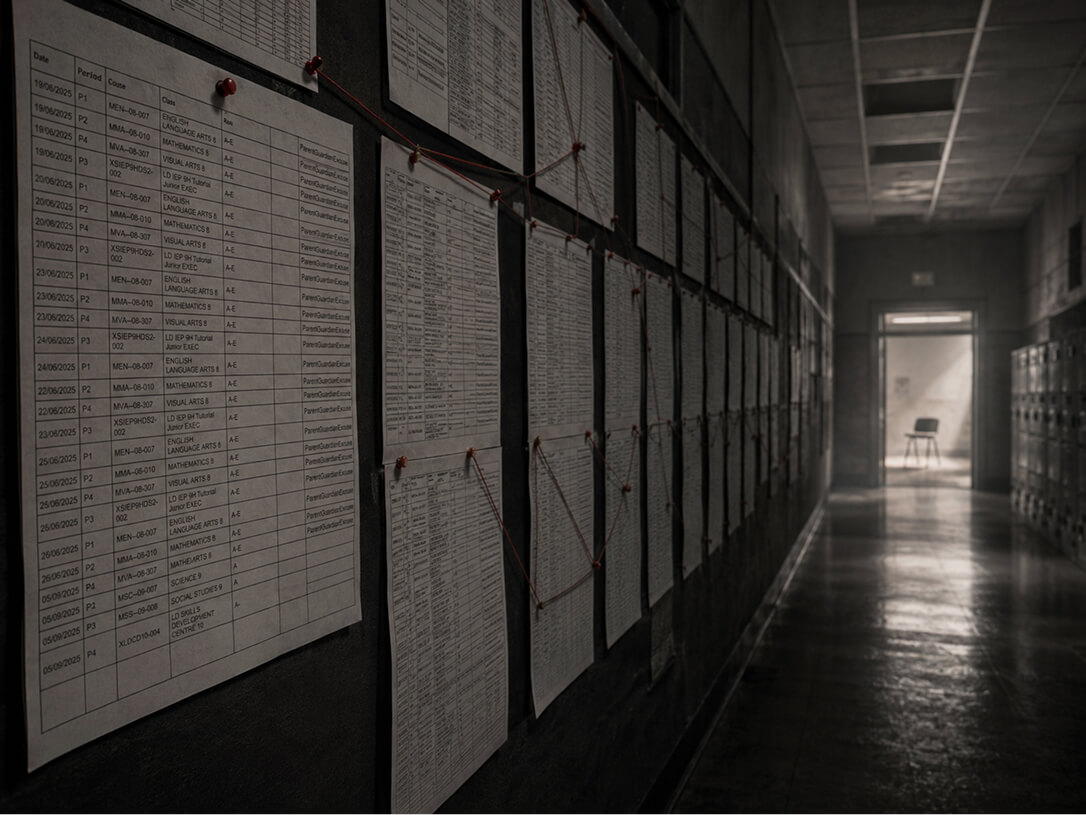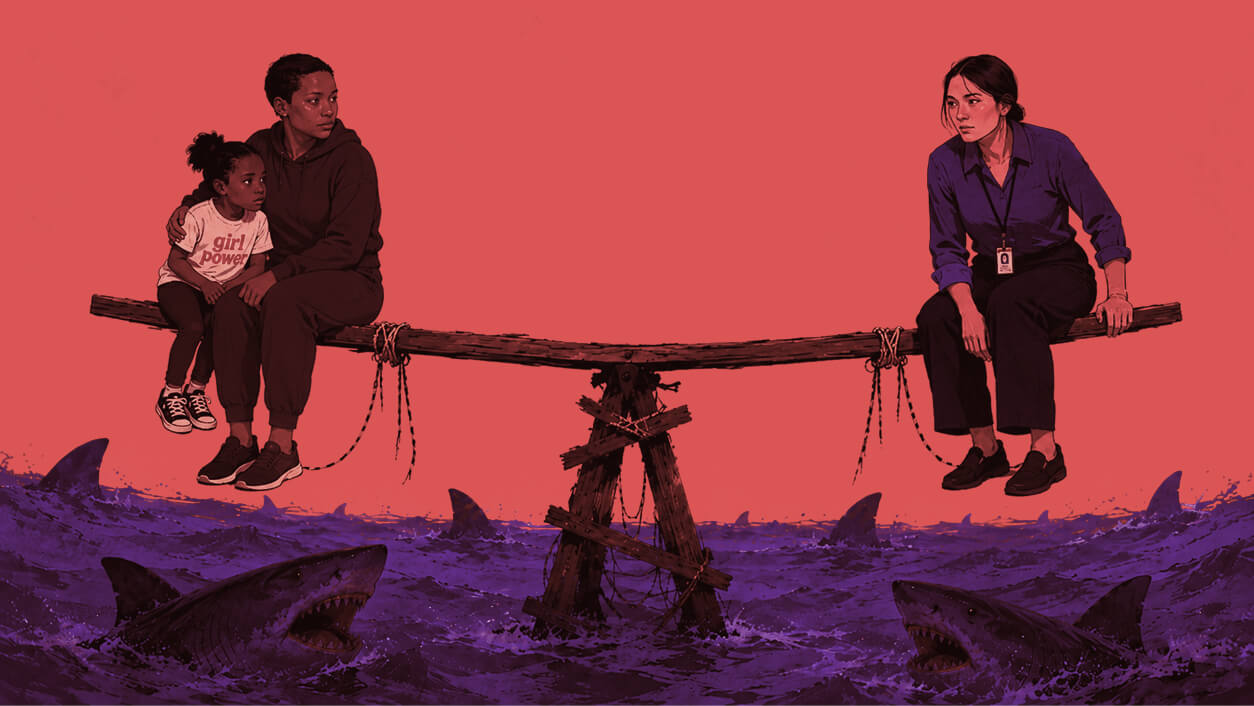
The Canadian Residential School system (circa 1870s–1990s) was a network of church-run boarding schools funded by the government to forcibly assimilate Indigenous children. In theory, such a large system might have been guided by careful data collection – tracking student health, education outcomes, and well-being. In reality, government officials prioritized ideological goals and cost-saving “optics” over data that could have improved or even saved lives. Records were often poorly kept, suppressed, or destroyed when inconvenien ten.wikipedia.org waynekspear.com. This research explores how residential schools managed (or mismanaged) data, and how historical failures in data tracking are being addressed today – especially in British Columbia’s public education context – to avoid repeating past atrocities.
Record-keeping in residential Sschools
Administratively, residential schools did generate many records, but these were fragmented across government and church archives. Examples of record types include:
- Enrolment & Attendance – Schools kept registers of student admissions and discharges, often submitting attendance numbers to Indian Affairs for funding. Census records even listed student populations and staff at some schools canada.ca. However, these data were used mainly to calculate per-student grants, not to monitor student welfare.
- Health & Mortality Reports – Some medical inspections and incident reports were filed, but reporting was inconsistent. There was no centralised system to track illnesses or deaths across all schools. Crucially, many deaths went officially unrecorded or were under-reporteden.wikipedia.org.
- Operational and Financial Records – The Department of Indian Affairs received reports on school operations (e.g. building conditions, supplies, budgets). These went into federal archives (Record Group 10), but financial data often trumped human data. For instance, funding was tied to enrollment counts, incentivizing schools to keep beds full even if children were very young or gravely illen.wikipedia.org.
Overall, data collection existed in a piecemeal fashion, aimed more at administration and enforcing assimilation than at safeguarding children. Critical metrics (like academic progress, health status, or even survival) were poorly tracked and seldom acted upon.
Missing data on student welfare
One of the starkest failures of data management was in tracking student deaths and health outcomes. The Truth and Reconciliation Commission (TRC) found that the actual number of children who died at residential schools is unknown because of inconsistent reporting by school officials and the deliberate destruction of records as per government retention policies en.wikipedia.org. Many schools had cemeteries on site, yet there was a “pattern of poor record keeping” – officials neglected to keep reliable lists of how many children died or where they were buried en.wikipedia.org. As a result, thousands of Indigenous families were never even told what happened to children who failed to come home. Justice Murray Sinclair (TRC Chair) noted his “big surprise” on learning how many children died and that information of their deaths was not communicated back to their families en.wikipedia.org.
Official records vastly under-report the deaths and abuses in the system. A 2021 analysis noted that published government and church records “recorded fewer cases of death and violence compared to the actual experiences”yellowheadinstitute.org. Many deaths simply went unrecorded in school ledgers. Even today, the National Centre for Truth and Reconciliation (NCTR) has confirmed 3,200 child deaths from records, yet estimates the true number to be well over 6,000 (and possibly several times higher) once missing records and unmarked graves are fully investigated aptnnews.ca en.wikipedia.org.
Sometimes data was not just neglected but actively suppressed. For example, when outbreaks of tuberculosis and malnutrition led to alarming death rates, these facts were not made public by authorities at the time. In 1907, Dr. Peter Bryce, the Department of Indian Affairs’ own Chief Medical Officer, reported that between 1894 and 1908 some Western Canada schools had mortality rates of 30–60% – meaning in some schools nearly half the students died within five years en.wikipedia.org. Bryce wrote, “we have created a situation so dangerous to health that I was often surprised that the results were not even worse than they have been shown statistically to be.” en.wikipedia.org His data shocked officials, but the government buried his report. Those statistics only became public in 1922 when Bryce, no longer in government employ, published them himself in a pamphlet titled “The Story of a National Crime.”en.wikipedia.org In short, vital data on student health was available but intentionally withheld from Canadians for years – a stark example of data taking a backseat to optics.
Ideology and optics vs. data
The residential school system was driven by an assimilationist ideology – often articulated as the desire to solve the “Indian problem” by absorbing Indigenous peoples into non-Indigenous society. This ideology overrode evidence of harm. Government and church officials were far more concerned with optics and cost efficiency than with acting on data that pointed to serious problems. Several historical examples illustrate this:
- Duncan Campbell Scott’s directive (1910): Scott, who led the Department of Indian Affairs, knew of the high death rates in the schools. Yet he explicitly refused to change course. In a 1910 letter he acknowledged the tragic mortality, “But this alone does not justify a change in the policy of this Department, which is geared towards a final solution of our Indian Problem.” waynekspear.com In other words, no amount of bad data would compel policy reform, since the goal was eliminating the “Indian problem” by any means. waynekspear.com This chilling statement shows how blatantly ideology trumped evidence – even mass child deaths were deemed acceptable “collateral damage” in pursuit of assimilation.
- Annual reports and positive Spin: Yearly Indian Affairs reports consistently painted the residential schools as a benevolent success, emphasising enrollment growth or religious instruction, while ignoring quantitative evidence of poor outcomes. As one historian notes, those who ran the system “knew much, much more about [the harms] than today’s apologists” – yet “when they declared the system a wise and benevolent success, math had nothing to do with it.” waynekspear.com The emphasis was on optics: promoting any “good news” (e.g. a cohort of students baptized or a farm program at a school) and omitting statistics on malnutrition, abuse, or failure to educate.
- Underfunding and “per capita” funding: Data was available that showed how under-resourced the schools were, but financial ideology (doing it cheaply) prevailed. In 1891 the government shifted to a per-capita grantfunding model – a flat amount per student – and repeatedly cut budgets in following decades en.wikipedia.org en.wikipedia.org. This created incentives to overcrowd schools with insufficient food and care. By 1937 the grant was only $180 per student annually, while at the same time the government was spending 3–5 times that amount on non-Indigenous boarding schools or reformatories en.wikipedia.org. Officials in charge knew such funding was grossly inadequate – a Canadian child-welfare organisation in the 1930s warned that Canada was paying barely 58% of the minimum cost of a “well-run institution” for children en.wikipedia.org. Yet Indian Affairs refused to increase funds. A telling example comes from British Columbia: BC’s Indian Superintendent, Arthur W. Vowell, responded to an agent’s plea for hiring qualified teachers by flatly stating that would require more money and Ottawa would not “entertain requests for increased grants to Indian schools.” en.wikipedia.org In short, even when data showed that chronic underfunding was harming children’s education and health, the department’s policy was to deny and deflect rather than adjust budgets. Education quality suffered severely as a result en.wikipedia.org. Schools often had to make do with unqualified staff, meager rations, and unsafe facilities – conditions which internal reports and data made clear but were largely ignored for decades.
In summary, the government’s approach to data in the residential school era was to collect what was convenient (enrolment numbers, basic finances) and disregard or hide what was inconvenient (death rates, abuse, failure to educate). The ultimate priority was maintaining the assimilation program’s reputation and low cost, even as evidence mounted that it was catastrophic for Indigenous children.
Modern efforts to recover lost data
It wasn’t until the 1990s and 2000s – as survivors spoke out and lawsuits forced acknowledgment – that a concerted effort to aggregate and analyse residential school data began. The 2007 Indian Residential Schools Settlement Agreement led to the creation of the Truth and Reconciliation Commission (TRC), which had a mandate to document the history and legacy of the schools www2.gov.bc.ca. A core part of the TRC’s work (2008–2015) was collecting all available records from government archives and churches to create a comprehensive historical record www2.gov.bc.ca. This was an enormous data-gathering project in itself. Millions of pages of documents – from school admission ledgers to church correspondence – were eventually obtained and now reside with the National Centre for Truth and Reconciliation (NCTR) www2.gov.bc.ca.
Despite this effort, significant gaps remain. The TRC’s final report noted that not all records were acquired; some agencies (especially some Catholic orders and government departments) initially refused full cooperation yellowheadinstitute.org. The TRC had to sue the federal government at one point to release documents, and only a court order in 2013 forced the disclosure of many previously withheld files aptnnews.ca. Even so, by the time of the TRC’s 2015 report, it acknowledged that its National Student Death Register was incomplete due to delays and missing dataaptnnews.ca. The federal government under Stephen Harper had even denied the TRC extra funding in 2009 to investigate missing children, hampering early research into burial sites aptnnews.ca. This shows that even in the 2000s, political considerations still interfered with fully transparent data gathering, particularly around the most painful truths.
Following the TRC, specific Calls to Action (CTA) were made to improve records and data related to residential schools. CTAs #71–76 urge the government and other institutions to locate and disclose all records of children who died, to fund the NCTR’s ongoing work of maintaining a death registry, and to create an online registry of cemeteries with plot mapsyellowheadinstitute.org. CTA #77 calls upon archival institutions across Canada (provincial, municipal, church archives, etc.) to identify and transfer copies of all relevant records to the NCTR www2.gov.bc.ca. These measures are essentially about rebuilding the data foundation that was neglected or hidden in the past, so that families and communities can know the truth.
Progress on these fronts is ongoing. In 2021, after the discovery of unmarked graves in Kamloops (BC) made global news, there was mounting pressure on the Catholic Church and others to release any remaining documents. Advocates point out it is not a question of if all records will be released but when, given the public outcryyellowheadinstitute.org. By 2023, a Canadian Senate committee released a report titled “Missing Records, Missing Children”, highlighting that Indigenous peoples still face many barriers in accessing residential school records newsriver.animikii.com. The report noted frustrating delays and a lack of clear information on where specific records are kept, which can prevent survivors or families from finding their own histories newsriver.animikii.com. It made 11 recommendations, including fully funding Indigenous-led initiatives to locate and curate records, and re-iterated the principle that Indigenous communities should have ownership and control of data about their own families (the OCAP principle) newsriver.animikii.com. As Senator Brian Francis said, “It is unacceptable that Indigenous peoples continue to encounter so many barriers to accessing records related to the lives and deaths of our children at Indian Residential Schools. Canada has a duty to…ensure we have complete and timely access to all relevant records.” newsriver.animikii.com This reflects a dramatic shift in values: where once data was hoarded or destroyed to protect the system, now the focus is on making data open and accessible to honour truth and reconciliation.
On the ground in BC and elsewhere, institutions are trying to navigate the chaotic legacy of historical record-keeping. The Indian Residential School History and Dialogue Centre (IRSHDC) at UBC, for instance, helps survivors request information. Archivists there describe a challenging landscape: many records are “very poorly described” in archives and not digitised, meaning staff must manually sift through boxes of paper or reels of microfilm with minimal finding aids news.ubc.ca. In some cases, records that one might expect to find simply don’t exist: operational files might never have been archived or were lost entirely – e.g. a document in a local superintendent’s office that was never forwarded to Ottawa and later discarded news.ubc.ca. Every missing file is a piece of data about a child or a family that is gone forever. This underscores that the legacy of data neglect is not just a bureaucratic issue; it has real human consequences in terms of unresolved grief and historical uncertainty.
On a positive note, the intensive efforts since the TRC have yielded a much clearer picture of the residential school system. Where the government once managed data in a scattershot, secretive way, now a centralized repository (NCTR) exists to preserve and analyse these records. Researchers and Indigenous communities are leveraging technology – from databases to ground-penetrating radar – to fill in the blanks that records failed to cover yellowheadinstitute.org yellowheadinstitute.org. The fact that Canadians today widely acknowledge the thousands of children who died (something once fiercely denied) is in large part due to this new approach to data: treating it as something to be shared in service of truth, rather than controlled for image management.
Data and the “school-to-prison pipeline” in BC Today
The “school-to-prison pipeline” is a term that refers to how failures in the education system, especially for marginalised groups, contribute to high rates of incarceration. In British Columbia, as across Canada, Indigenous people remain dramatically overrepresented in negative social statistics, from lower graduation rates to higher incarceration rates. The concern is that if these outcomes are ignored or data not properly tracked, it echoes the past pattern of neglect – whereas using data wisely could help prevent ongoing systemic harm.
Notably, BC’s government today does track and publicly report many such statistics, a practice that reflects lessons learned from the residential school legacy. For example, in BC’s justice system, it is openly acknowledged that Indigenous adults make up about 6% of the province’s population but 36% of those in custody (jail), as well as 28% of offenders under community supervision www2.gov.bc.ca. This stark disparity speaks to systemic issues – the very sort of troubling metric that a past government might have swept under the rug. Instead, BC publishes it and has committed to strategies to reduce this overrepresentation www2.gov.bc.cawww2.gov.bc.ca. The provincial Corrections Branch explicitly ties its reforms to the TRC Calls to Action and the need to address intergenerational trauma from residential schools www2.gov.bc.ca www2.gov.bc.ca. In short, the data is being used as a spotlight to ensure the province can be held accountable for closing these gaps.
In the public education system, data is similarly collected on Indigenous student outcomes. Historically, one could argue that the residential schools deliberately avoided measuring genuine educational success – after all, most students left without functional literacy or job skills, a fact that was well known but not quantified or admitted in reports en.wikipedia.org en.wikipedia.org. Today, by contrast, BC’s Ministry of Education tracks graduation rates, academic achievement, and other indicators for Indigenous students in the provincial schools. This data has been crucial in recognising the “achievement gap” and driving initiatives to close it. For instance, as of 2021, around 72% of Indigenous students in BC completed high school within six years, up from ~66% a few years earlier news.gov.bc.ca. While this is an improvement, it still lags behind the completion rate for non-Indigenous students, and the government openly acknowledges the gap and aims to eliminate it. School districts celebrate increases in Indigenous grad rates and set specific targets for improvementacademica.caacademica.ca, indicating a data-driven commitment to progress.
Beyond academics, data reveals ongoing systemic biases that can feed a school-to-prison pipeline. A striking statistic from a BC report noted that Indigenous students are identified as having “severe behavioural disorders” 3.5 times more often than the general student populationbriarpatchmagazine.com. This suggests that Indigenous children are far more likely to be viewed through a punitive lens in schools, which can lead to suspensions, expulsions, or streams that limit opportunities – effectively starting the pipeline to negative outcomes. By collecting and publicizing such data, stakeholders and advocates can question why these disparities exist (e.g. is it racism? lack of support services? cultural bias in assessments?) and push for changes in practice. For example, BC has been exploring reforms like restorative discipline practices and more Indigenous content and support in schools to address these very issues. The key is that unlike in the residential school era, these problems are less likely to be denied outright because the data makes them visible.
It is fair to say that no government in Canada today wants to be accused of perpetuating “another genocide” via systems like education or child welfare. The legacy of residential schools – now well documented – serves as a cautionary tale. In response, governments are increasingly investing in data and transparency as tools of accountability. British Columbia, for one, has established initiatives like the BC Residential School Response Fund to support First Nations in identifying unmarked graves and documenting school siteswww2.gov.bc.ca. Part of that work involves archival research and gathering community knowledge – essentially, finally doing the data collection that never happened properly decades agowww2.gov.bc.ca. Additionally, BC has Indigenous-led education committees and is guided by the principles of the United Nations Declaration on the Rights of Indigenous Peoples (UNDRIP), which include Indigenous rights to control data about themselves. All these steps indicate a recognition that good data – fully and honestly collected – is now seen as crucial to preventing and redressing harm, rather than something to be feared.
Conclusion
The way data was managed in the residential school system offers an illuminating – if tragic – lesson in governance. For over a century, Canadian officials largely prioritized ideology, image, and cost containment over truthful record-keeping and outcome measurement. The result was that countless Indigenous children’s deaths and suffering went officially unacknowledged, and opportunities to intervene or improve the system were missed. This suppression and neglect of data not only exacerbated the harm at the time, but it also left a painful legacy of unanswered questions that we are still striving to answer today.
In recent years, through efforts like the TRC and Indigenous-led research, there has been a powerful shift toward unearthing and honoring the truth captured in records and data. What was once scattered and obscured is slowly being consolidated into an accurate historical narrative – from the thousands of known child fatalitiesaptnnews.ca to the personal school files survivors can now access with help from archivesnews.ubc.canews.ubc.ca. This reclamation of data is a form of justice and healing. It empowers Indigenous communities to tell their own stories with the evidence that was long denied to them.
Moreover, governments today, particularly in places like BC, are more careful to use data as a guide for policy rather than a tool for propaganda. There is public tracking of Indigenous educational outcomes, health indicators, and incarceration rates, which creates pressure to address inequities rather than ignore themwww2.gov.bc.cabriarpatchmagazine.com. The very fact we talk about a “school-to-prison pipeline” in statistical terms is a sign of progress – it means we are measuring the problem, which is the first step to solving it. That said, the work is far from complete. Much of the residential school record is still being pieced together, and in contemporary systems, data alone doesn’t guarantee action. It must be coupled with political will and, critically, with Indigenous leadership in interpreting and using that datayellowheadinstitute.org.
In essence, the story of data in residential schools is a cautionary tale of how not to manage information when human lives are at stake. Its hopeful epilogue is being written now: through a commitment to truth, reconciliation, and evidence-based change, Canada aims to ensure that never again will an abusive system be allowed to hide behind faulty record-keeping or willful blindness to facts. Transparency and honest data are now recognized as tools of empowerment for those who were once voiceless, helping to guard against history repeating itself.
Sources:
- Truth and Reconciliation Commission of Canada, Final Report (2015) – Missing Children and Records en.wikipedia.org en.wikipedia.org
- Ushnish Sengupta, “Residential School Records and Data Governance,” Yellowhead Institute (Oct. 7, 2021) yellowheadinstitute.org yellowheadinstitute.org
- Wayne K. Spear, The Debate About Indian Residential Schools Misses the Point (2018) – quoting D.C. Scott (1910) waynekspear.com waynekspear.com
- Library and Archives Canada, Research Guide to Indian Residential School Records – on sources of enrollment datacanada.ca
- Wikipedia, “Canadian Indian residential school system” – funding and mortality statistics (with archival references)en.wikipedia.orgen.wikipedia.org
- APTN News (Jorge Barrera), “Harper government obstructed search for children who died in residential schools: TRC” (Dec 15, 2015) aptnnews.ca aptnnews.ca
- Animikii News River, “Missing Records, Missing Children” summary (Oct 2025)newsriver.animikii.com newsriver.animikii.com
- UBC News (Amei-lee Laboucan), “Supporting Survivors’ access to Residential School records” (Apr 9, 2024)news.ubc.ca news.ubc.ca
- Province of BC, Residential School Response (Sep 23, 2025)www2.gov.bc.cawww2.gov.bc.ca
- Briarpatch Magazine, “Pipeline to Prison” (2013) – on education and incarceration links briarpatchmagazine.com
- Province of BC, BC Corrections and Indigenous Justice (Nov 19, 2024)www2.gov.bc.ca www2.gov.bc.ca.