

Collective Punishment
Collective punishment refers to the disciplinary practice of penalising a group for the actions of one or a few individuals—often enacted in classrooms as withheld privileges, cancelled activities, or public reprimands directed at entire cohorts. Though rarely named in policy, it remains a common method of behaviour management in Canadian schools. This tag interrogates collective punishment as both a pedagogical failure and a moral harm, tracing its psychological, legal, and systemic dimensions. It includes student testimonies, parent advocacy, policy critiques, and international parallels—connecting the emotional toll of everyday discipline to deeper questions of justice, accountability, and the ethical use of power in education.
-
Petition to end collective punishment in BC Schools
Collective punishment in schools continues in British Columbia, where children are still punished for things they didn’t do—or because others near them did something wrong. Under international law, including Article 33 of the Geneva Conventions, collective punishment is prohibited. It is considered unjust in times of war. But in our schools, it continues under the…
-
The history of collective punishment
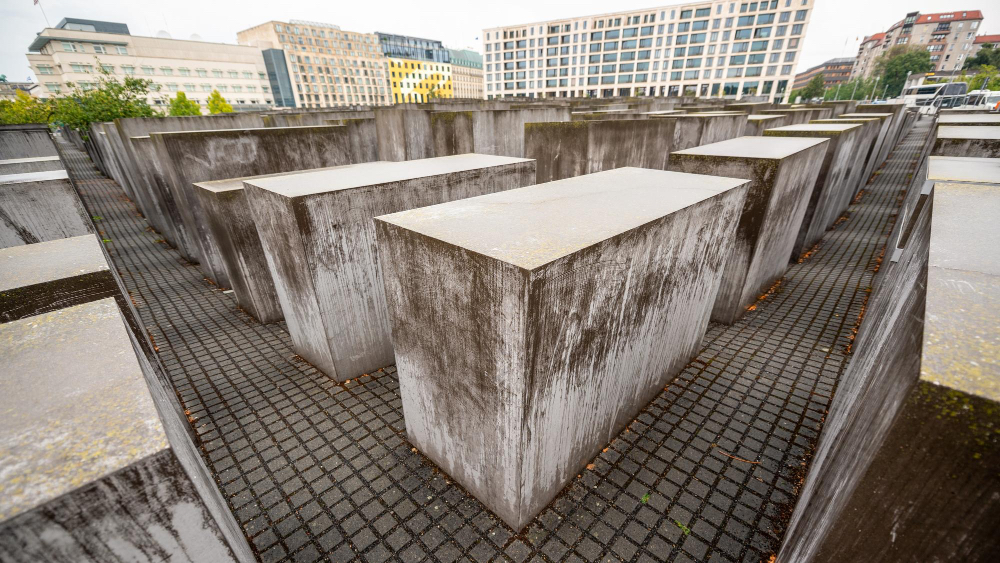
Collective punishment emerged in a time when people were not understood as individuals, but as extensions of the family, the clan, the village. Responsibility was held in common. Honour was shared. So was shame. In such systems, if one person broke a social norm or committed a crime, the entire group was held accountable. Not…
-

Vancouver School District (SD39) district code of conduct: a neurodiversity-informed critique
The Vancouver School Board’s District Student Code of Conduct (AP 350) is an expansive and methodically constructed document. It commits to fostering safe, inclusive, and nurturing schools; it recognises systemic discrimination, promotes restorative practices, and articulates a detailed suspension framework with multiple levels of review. The document outlines procedural guidance for school leaders, provides template…
-

Collective punishment: a focal point of injustice
Collective punishment, the practice of disciplining a whole group for the misdeeds of one or a few, is widely recognised as unjust and counterproductive. Children know it’s wrong Even children intuitively grasp its unfairness. In one famous case, an 11-year-old student in the UK bluntly told her teacher that “collective punishment… is not fair on the…
-

Vernon School District (SD22) progressive discipline and suspension guidelines: a neurodiversity-informed critique
The SD22 progressive discipline and suspension guidelines begin with a clear statement of intent: to maintain a safe, caring, and healthy environment for all members of the school community. They emphasise functional assessment, procedural safeguards, privacy protections under FIPPA, and the possibility of restorative or reparative responses. Formal consequences are structured to follow only when…
-

A neurodiversity-affirming critique of the BC Ministry’s guide to school conduct
The BC Ministry of Education’s guide presents itself as a blueprint for positive school climates. Yet beneath its conciliatory language, it reinforces behavioural conformity and institutional authority over student autonomy. It fails to address the structural and sensory barriers faced by neurodivergent students, and in doing so, undermines its own claims to safety and care.…
-

Neurodiversity-affirming IEP goals that build accountability and reduce burnout
When classrooms become overwhelmed, the strain doesn’t just fall on adults—it radiates through the entire learning environment. Neurodivergent students, in particular, often act as emotional barometers—canaries in the classroom. They feel the tension, chaos, and unpredictability more acutely than their peers. When co-regulation breaks down, or when expectations are unclear, these students are often the…
-

Building safer schools through restorative justice and neurodiversity-informed practices
When children are dysregulated the response from educators is too often punitive. For neurodivergent students in particular, the cost of these responses is high: shame, trauma, social exclusion, and a deep erosion of trust. But it doesn’t have to be this way. Restorative justice offers a path forward. Not as a one-time circle or a…
-

Yukon schools under scrutiny for using restraint and seclusion on students with disabilities
The Yukon government says it is working to make schools safer after families raised serious concerns about the use of restraint and seclusion—particularly involving students with disabilities. Education Minister Jeanie McLean acknowledged that these practices have caused harm and stated that a review is underway to develop clearer policies and alternatives grounded in trauma-informed approaches.…
-
How to lodge an education appeal in British Columbia
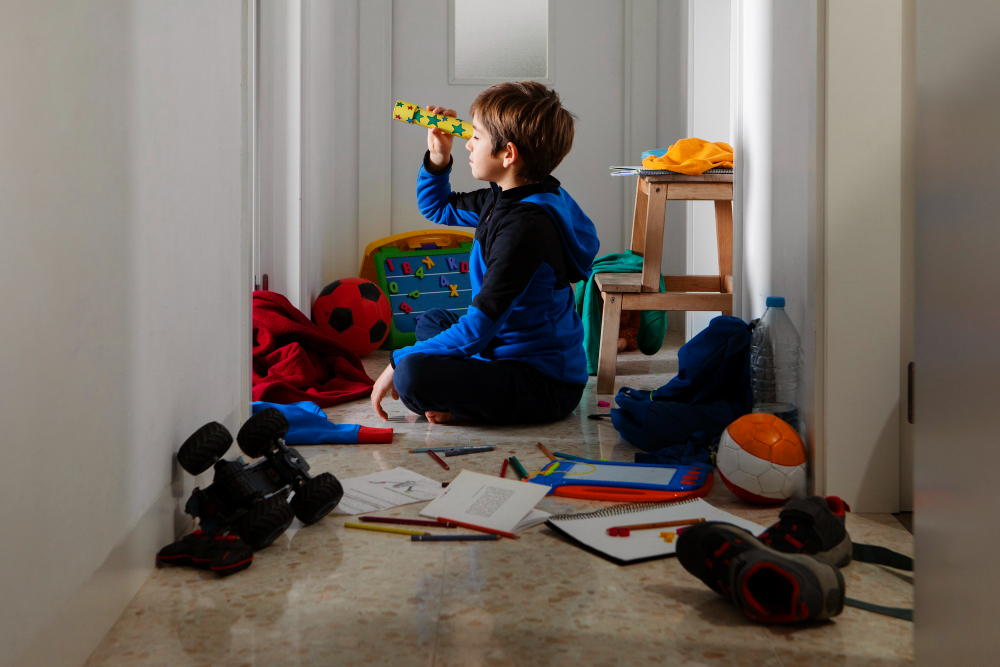
Filing an appeal in the Vancouver School District is not for the faint of heart. It’s like falling on glass slowly. Emotionally draining by design. But for some families, it is the only path left. I’ve filed several myself. Sometimes, my child got a little more support. Other times, I walked away empty-handed but still…
-

Barriers in the Vancouver school system: a parent’s perspective
For families raising neurodivergent children, navigating the school system can feel like surviving a labyrinth built to exhaust you. What should be a place of growth becomes a terrain of harm and dismissal. Beneath the polished language of equity and inclusion lies a set of invisible barricades—attitudinal, communicative, spatial, systemic, and technological—that quietly erode trust…
-

“Urgent: Third Request” — what to do when schools ignore your emails
You write the email. You name the problem. You describe, in detail, what your child is experiencing and what they need to be able to participate. You’re respectful, clear, and solution-focused. And then—you wait. For many families, especially those raising disabled or neurodivergent children, this scenario is far too familiar. The moment you speak up—especially…
-

Real leaders lead by example
In May 2025, the Vancouver School Board (VSB) quietly enacted wage cuts that stripped contracted workers—specifically bus drivers and special education attendants—of their living wage top-ups. At the same time, VSB senior leadership quietly accepted significant raises. This decision will result in a 25% wage reduction, with drivers earning $23/hour and attendants only $20/hour [CTV…
-

Signs your child’s teacher uses collective punishment (and what it does to them)
Your child might not have the language to name what’s happening, might not recognize collective punishment as a specific practice with a specific name, might only know that something at school feels deeply unfair and that their effort no longer seems to matter. Parents often notice the effects before they identify the cause: children who…
-
Dr. A.R. Lord Elementary (VSB SD39): a neurodiversity-informed conduct critique
Dr. A.R. Lord Elementary’s Code of Conduct promises a “safe and supportive environment” on school grounds, on field trips, and during online learning. It embraces the Vancouver School Board’s district-wide conduct framework (AP 350), explicitly affirms the BC Human Rights Code, and applies the values of the school’s P.R.I.D.E. matrix—Purpose, Respect & Responsibility, Integrity, Diversity,…
-

When they call distress the baseline
When a principal told me, “his baseline is dysregulated,” I realised how far we had drifted from care. This was not a description. It was a dismissal. Distress had become so familiar in the classroom that it was no longer seen as a signal—but as who he was. But my child is not born of…
-

Protecting children’s dignity and safety in a broken system
We should be able to expect a system where no child sits in wet clothes all day, and no child is changed alone by a single staff member behind closed doors. These are basic, non-negotiable standards for dignity and safety, not optional aspirations. While we can all acknowledge that the system is under immense strain,…
-

Nova Scotia bans collective punishment
Nova Scotia’s Provincial School Code of Conduct Policy underwent a significant update in April 2025, marking a substantial revision of the previous 2015 policy. The updated policy, set to take effect in September 2025, introduces clearer definitions of unacceptable behaviours, delineates new responsibilities for all school community members, and emphasises support for those affected by…
-

When fairness fractures: A response to “Collective Punishment in Schools” by Serene Leeyc
A recent article by Serene Leeyc, titled Collective Punishment in Schools: Fairness or Fostering Division?, offers a welcome and accessible overview of collective punishment in school settings—a practice that, while common, remains shockingly under-examined in public discourse. The piece attempts to understand the teacher’s dilemma, surveys common classroom scenarios, and suggests positive alternatives like restorative justice…
-
Fighting for transparency via FOI requests
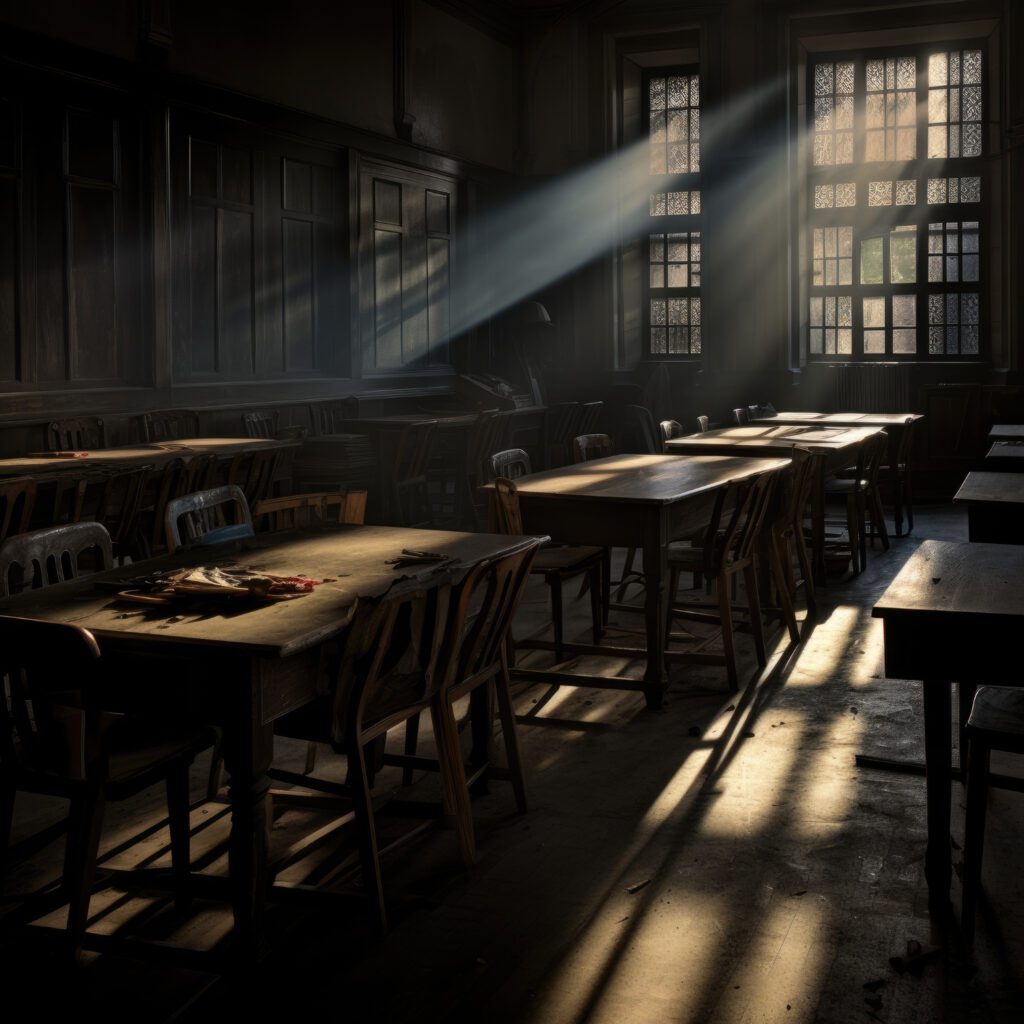
For parents of disabled children, the struggle for transparency often feels like fishing in murky waters, straining for glimpses of the truth beneath a bureaucratic surface designed to obscure, rather than reveal. It was this feeling that drove me to file a Freedom of Information (FOI) request for records pertaining to my children at their…