

Compliance over care
When school responses prioritise a child’s outward compliance instead of their well-being. A family’s concern about distress is reframed as disruptive to classroom order.
-
The compliance economy
In their article Of Sinners and Scapegoats: The Economics of Collective Punishment, J. Shahar Dillbary and Thomas J. Miceli argue that collective punishment emerges not merely as a failure of precision or fairness, but as a deliberate mechanism for preserving internal group cohesion. The scapegoat, must be non-random, visible, and different, and their suffering must be…
-
The threat of clarity: women who know too much
Why confident, justice-oriented women are punished in public systems The woman who knew too much She is articulate, principled, professional, and polished—measured in her cadence, practiced in her facilitation , and fully aware of the power her clarity holds. She enters each room equipped with documents, timelines, policies, and annotated proof of harm, accompanied not…
-

Collective punishment: how schools displace guilt, erase harm, and preserve the collective
One of the things that was so traumatising about the collective punishment that was callously perpetrated against my daughter was the light and evasive tone of the principal. She said that the punishment had to be “swift.” I frequently wondered about the choice to psychologically wound disabled children while treating the infliction of that wound…
-

Why we keep returning to collective punishment
This site is about collective punishment, so naturally we have to write about it on a fairly regular basis and it’s become an interesting experience of returning again and again. Every time we write about collective punishment, it feels like tracing a wound the system keeps trying to call a scar—something old, something resolved, something…
-

Cultural bias and collective punishment: why school systems resist feedback
Across cultures and institutions, punishment is often mischaracterised as a neutral or corrective act—something that emerges in response to wrongdoing, rather than something shaped by norms, loyalties, and group dynamics. But when we look closely at how people learn to punish (and more importantly, whom they choose to punish), a very different picture emerges—one that…
-

Epistemic silencing of disabled children’s primary caregivers
Epistemic silencing in BC schools discredits mothers’ knowledge, reframes advocacy as aggression, and erases disabled children’s pain, leaving families punished for truth.
-
Post-COVID rise of blended classrooms in BC elementary schools
In British Columbia’s elementary schools, multi-grade or “blended” classes (where students from different grade levels learn together) have become more prevalent in the post-COVID period. Educators report that shifting enrolment patterns and funding pressures after the pandemic have led schools to organise more combined-grade classes than before www2.gov.bc.ca. The increase in split classes is largely driven…
-
How schools weaponise growth against disabled students
In the architecture of public education, few concepts are more universally praised—or more fatally misunderstood—than independence. Cloaked in progressive language about agency, resilience, and growth, the independence mandate is often wielded less as a vision for liberation than as a strategy of withdrawal. For disabled students, particularly those who have learned to endure, mask, or…
-
Shattered pathways of parent advocacy in BC’s public schools
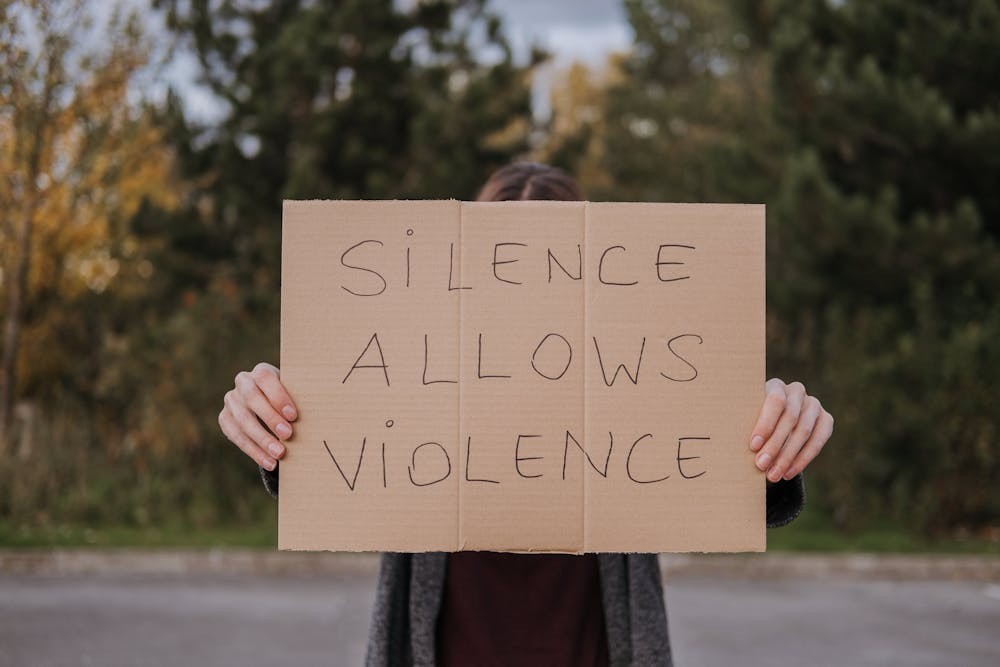
It’s time to riot in the streets. We have tried everything else and our children are still being hurt. The existing systems of appeal and escalation are ineffective, more focused on preserving the institution than delivering justice. It’s time to end the engineered scarcity in our public education system. The maze of ineffective complaint avenues…
-

Confident Parents, Thriving Kids—unless you’re autistic
Why school systems should reject behaviourist programs disguised as mental health support. Our daughter was melting down almost every day after school. She would cling to me at drop-off like she was drowning—like she had to hold onto me or she would lose herself, unable to breathe, unable to bear it. She was already telling…
-
Compliance discourse vs. disability justice in BC’s education system
Official VSB documents reveal an emphasis on student compliance and disciplinary consequences, with little mention of disability accommodations. For example, the VSB’s District Code of Conduct underscores “a fair and consistent range of consequences, including suspension and change in educational programming, for student misconduct” media.vsb.bc.ca. The Code enumerates expected student behaviours and infractions (e.g. attending regularly,…
-
Shining a legal light on advocacy conversations
How to speak from a foundation of human rights while staying grounded in care. Firm, quietly defiant responses for families navigating school denial, delay, or deflection—centred on Kim Block’s Summer Series on the duty to accommodate. Each tip translates legal obligation into everyday language, illuminating the difference between disagreement and discrimination.
-

What looks like a reward is often a repair
When a child returns from the office with gummy worms or a cartoon, it may look like a reward—but often, it is a repair. In a system built on scarcity, the smallest gesture of care is mistaken for indulgence. This essay reframes the narrative around “rewarding bad behaviour” to reveal what is actually happening beneath…
-

What moves you: An invitation to reflect with Sara Ahmed’s Affective Economies
Many Canadians will recognise the Proust Questionnaire, a set of reflective prompts that began as a parlour game, gained literary gravity through Marcel Proust’s poetic answers, and later became a cultural artefact through Bernard Pivot and Vanity Fair. Though Proust did not create the format, his emotionally precise responses gave it an enduring legacy. This…
-

Non-coercive, trauma-informed alternatives to PBS/ABA in BC schools
Positive Behaviour Support (PBS) and Applied Behaviour Analysis (ABA) are behaviourist approaches widely used in schools to manage student behaviour. However, a growing chorus of neurodivergent advocates, educators, and researchers highlight that these methods often prioritise compliance and “normalising” behaviour over student well-being rcpsych.ac.uk. By focusing on making neurodivergent children appear neurotypical (meeting neuronormative standards), traditional PBS/ABA can…
-

15 red flags your child’s school is running the playbook on you
How to spot coercive proceduralism before it drains your energy, your trust, and your child’s future. You may have been advocating for your child for months—attending meetings, responding to emails, following every process they set out—yet the accommodations you discussed never seem to appear in the classroom. You might notice your child’s struggles at school…
-
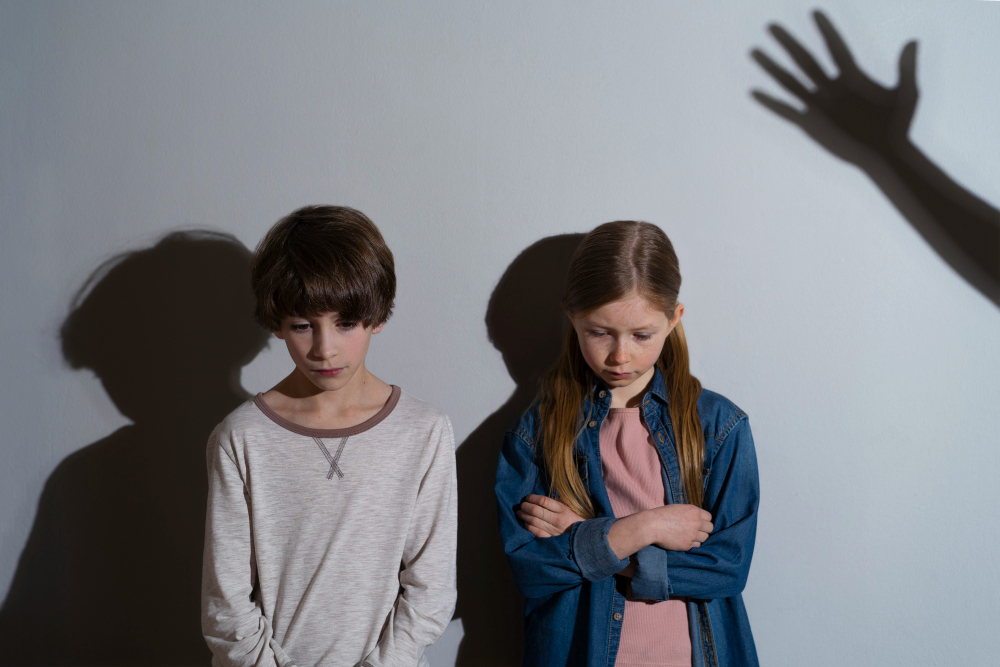
Collective punishment in schools: How humiliation undermines emotional safety and learning
In classrooms around the world, students are sometimes punished for the misbehavior of others. One student breaks a rule, and the entire class loses a privilege. This practice – known as collective punishment – persists even though it is broadly recognised as unjust. In fact, collective punishment is explicitly banned under Article 33 of the Geneva Conventions…
-

The right amount of agony in BC schools
After watching my children endure eight years of institutional failure, eight years of exclusion disguised as discipline and support withheld under the language of inclusion, I have come to several conclusions. Certain forms of suffering—like being agonised inside—do not draw support because they do not disrupt the adult’s flow, do not demand intervention with noise…
-

The collective punishment of delayed care
There is a particular cruelty in delayed care, of watching a child falter for weeks or months while teams gather data, debate thresholds, and cite process. It is the cruelty of waiting for collapse before responding, of constructing intervention around crisis instead of prevention. And when the child finally does break, when their distress spills…
-

On masking and self regulation
One of the most surprising and disorienting lessons I’ve learned—through parenting neurodivergent twins, through surviving the school system alongside them, and through slowly unmasking myself—was this: You can’t fake regulation You cannot breathe slowly enough, sit still enough, or smile warmly enough to convince a child you are calm when your nervous system is in…