

Compliance over care
When school responses prioritise a child’s outward compliance instead of their well-being. A family’s concern about distress is reframed as disruptive to classroom order.
-

Condition 15: the ethical teacher and the collapse of collective punishment in BC schools
In Milgram’s experiment, 65 percent of people kept shocking a stranger on command. In the variation no one teaches — two authorities, one of them saying stop — the number fell to zero. One dissenting voice in the room stops the cruelty.
-

I’m a seventh grade failure
Institutional capture refers to the process by which individuals — parents, children, advocates, even dissenting professionals — are absorbed into the operational logic of an institution to the point where they begin reproducing its framework, its language, and its priorities, without necessarily endorsing them or recognising what is happening. It is distinct from agreement. You do…
-
Happy belated PDA Day
I have written about Pathological Demand Avoidance (PDA) quite a bit over the past year, so for PDA Day / PDA Action Week I thought I would do a small review of the themes I keep returning to. It’s not wilful behaviour, usually Schools often read demand avoidance as refusal, manipulation, defiance, escape, or “not…
-

Lies, damned lies, and ABA evidence: a prescription for greed
Imagine being told your child needs a treatment. Then imagine learning that the research used to sell that treatment was written, overwhelmingly, by people who make money from the treatment continuing. Now imagine that most of those researchers said they had no conflict of interest. That is the problem sitting underneath ABA. A new Psychology Today article highlights…
-

The compliance trap: why IEP goals fail PDA students
Every IEP written for a PDA student begins with the same quiet betrayal. The team gathers — parents, teacher, learning support, maybe an administrator — and the goals are drafted in language that sounds like care: manage responsibilities with support, self-advocate before becoming overwhelmed, organise materials and meet deadlines. The phrases are familiar because they…
-

My Ollie is missing a lot of school
My Ollie has barely left his room since he came home exhausted from school one day last spring. He slept twenty-three hours a day for months. He barely spoke for months and had difficulty with basic hygiene. School chronically withdrew the supports he needed and pushed him to mask and comply until his nervous system…
-

BC schools are failing disabled students: an absence analysis
This analysis is based on a provincial FOI request to the BC Ministry of Education, file ECC-2025-52461, which was shared recently, bc BCEdAccess. The data covers absence rates, absence reasons, enrolment, and mid-year exits for BC public school students, broken down by inclusive education designation, across the 2022/23 and 2023/24 school years. This analysis focuses on…
-
The verification trap — oops, your business process is showing
Imagine a teacher calls to ask how your child is engaging at school. You take a breath and begin: last night I made dinner — here is what I used, how long it took, why the sauce was more difficult than expected, and why my child didn’t eat it. The teacher would be bewildered. What does…
-

Sooke School District (SD62) secondary schools: a neurodiversity-informed policy critique
The Sooke School District secondary code of conduct opens with the steady, reassuring cadence of a district reading its own values back to itself: schools are “places for safe, purposeful learning,” conduct is “a shared responsibility of students, staff, parents / guardians and the broader community,” and every member carries an obligation to “support learning,”…
-

When the complaint becomes the problem
The Canary Collective has published a piece Risk Assessment and Liability Management: The Hidden Function of Complaints that describes the process by which a parent raising legitimate concerns about their child’s education is transformed, through careful documentation and strategic delay, into a risk to be managed rather than a voice to be heard. The article…
-

Meltdown monster: how exclusion makes bullying worse
I often think back to the school principal telling me that when kids see my son, they don’t see an autistic child, they just see a child being mean. When a disabled child melts down at school—after sensory overload, social stress, academic pressure, and chronic misattunement—schools rarely ask what led up to the crisis. Instead,…
-

When one child’s support becomes everyone else’s denial
I bring Robin his meals now. I pour a bath periodically, and coax him in, when too many days have elapsed and a funk has grown pungent from him avoiding the sensory assault or the water on his skin. I manage mess, hygiene, and feeding, even though he is a teenager who should be developing…
-

When improvement tolerates death: why schools must stop the line
Education systems insist they are engaged in continuous improvement. They invoke cycles, frameworks, data dashboards, and action plans to demonstrate seriousness and care. But children are killing themselves in every district, every year. Disabled children are being excluded, isolated, placed in hallways, sent home early, or left to deteriorate while plans are written. The question…
-

The dishwasher, the hard drive, and what counts as progress when your child survives school
My son unloaded the dishwasher today without being asked. This is the first chore I can remember him doing of his own accord since he was a toddler—before school taught him that compliance means danger, before demand avoidance became the fortress protecting what remained of his autonomy, before each day required such total depletion that…
-
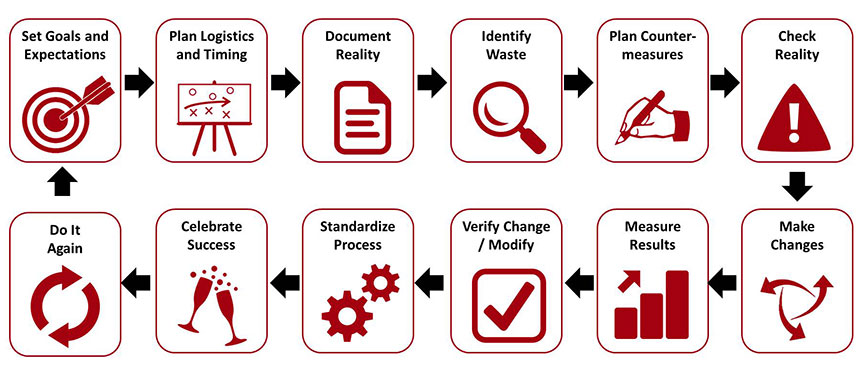
Manufacturing acceptable loss: why parents must resist education’s factory logic
Districts describe their work using the language of continuous improvement, capacity building, resource optimisation, and evidence-based allocation—borrowing terminology from industrial production systems designed to manufacture widgets efficiently, to minimise waste, to maximise throughput, to tolerate predictable defect rates within acceptable margins. This vocabulary reveals the underlying logic: education systems increasingly operate as though children are…
-

Ministry regulations on physical restraint and seclusion in BC schools
Physical restraint and seclusion are permitted in British Columbia schools under the Ministry of Education and Childcare guidelines—despite being widely described as last-resort safety measures. When schools restrain or isolate disabled children, districts often cite the Provincial Guidelines on Physical Restraint and Seclusion in School Settings (2015) to claim compliance. Parents are told the intervention…
-

Inclusive schooling solutions
I have spent years documenting institutional harm. Documentation feels natural to me, perhaps because my professional background as solution architect and business analyst. Professionally, I’m used to solving problems, but in education, not having classroom experience, I feel very clear that I can say what works for my kid, but I can’t say what works…
-

Where Surrey’s $6.3 million went
I recently reviewed the provincial budget tables and buried within Table 17 (2024/25 Amended Annual Budgeted Operating Expenditures of Program 1.10 Inclusive Education by Object) and Table 26 (2024/25 Actual Operating Expenses of Program 1.10 Inclusive Education by Object) of British Columbia’s 2024/25 operating budget documents lies evidence of what can only be described as…
-

Champlain Heights Annex School (VSB SD39): a neurodiversity-informed conduct critique
Champlain Heights Annex School’s Code of Conduct promises a safe, inclusive, equitable, welcoming, nurturing, and healthy school environment. The document aligns explicitly with Vancouver School Board’s District Student Code of Conduct (AP 350), affirms the BC Human Rights Code, and structures behavioural expectations through a three-level consequence framework extending from classroom redirection to formal suspension.…
-
What districts refuse to count, they refuse to see
Canary Collective makes explicit what current FESL reporting renders invisible: the exclusionary practices that shape access to learning but disappear from accountability structures because districts are not required to document them publicly.