

Dignity
In Canadian human rights law, dignity refers to the inherent worth of every person and their entitlement to be treated with respect, regardless of their characteristics, abilities, or circumstances. It includes recognising a person’s autonomy, individuality, and equal standing in society. Dignity is a foundational human rights principle, although a violation of dignity alone does not necessarily establish unlawful discrimination.
The Supreme Court of Canada’s decision in Law v. Canada (Minister of Employment and Immigration), [1999] 1 SCR 497, particularly paragraph 53 explains human dignity in terms of self-respect, self-worth, physical and psychological integrity, empowerment, and being treated as a full member of society.
-

Parents are responsible for the collapse of discipline ideology at school
The dominant narrative in staff rooms and comment sections insists that discipline has collapsed because parents no longer “back up the school.” This explanation comforts institutions and shames families, yet it misunderstands the architecture that once made discipline appear effective. What is collapsing is not parenting. What is collapsing is the total environment that once…
-

Advocacy in BC schools: a comprehensive guide for parents
When your child experiences harm in a British Columbia public school—when they are excluded, punished unjustly, denied accommodations, or subjected to practices that violate their dignity—you enter a landscape designed to exhaust rather than resolve, to defer rather than repair, to protect institutional reputation rather than protect children. This guide maps that terrain, naming the…
-
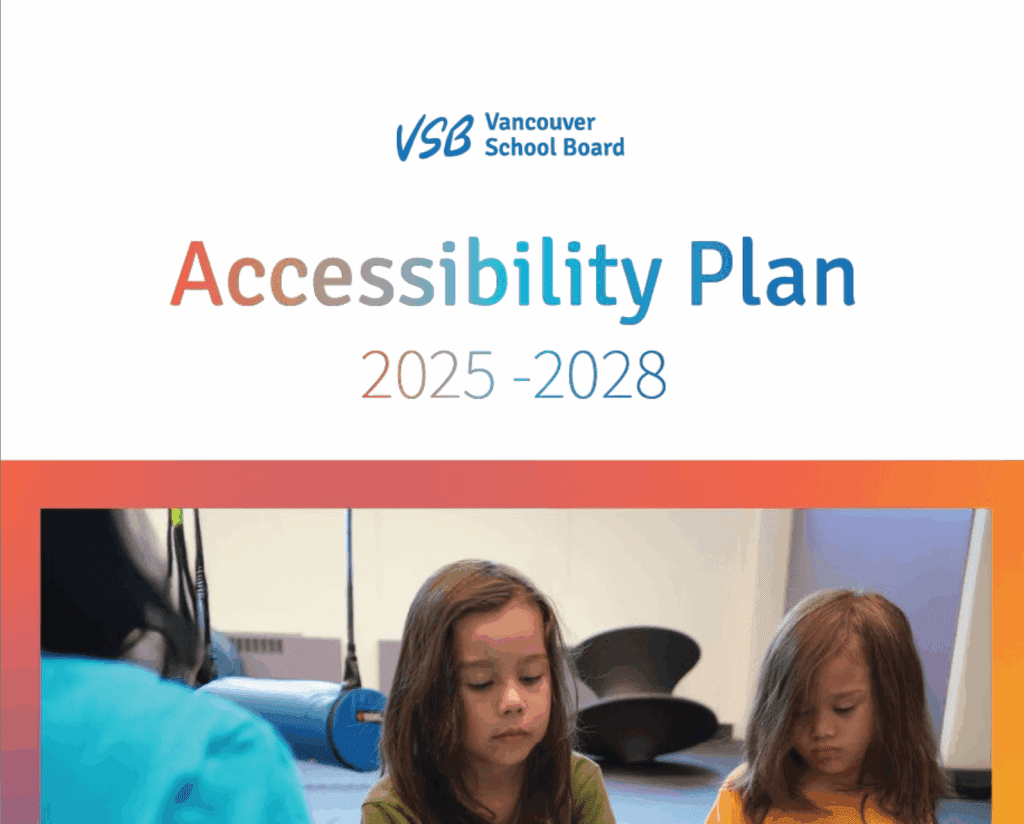
Side-by-side comparison of the VSB plan and a meaningful accessibility plan
The Vancouver School Board has released an accessibility plan that presents itself as a generous gesture toward inclusion, offering aspirational statements about equity, belonging, and shared responsibility, yet the document carries a softness that obscures the lived gravity of disabled students’ experiences and the profound emotional labour that families expend while navigating systems shaped by…
-

Serpentine Heights Elementary (SD36): a neurodiversity-informed policy critique
Serpentine Heights presents its Code of Conduct as an affirmation of safety, inclusion, and communal care. The opening commitments describe a school that values belonging, co-constructed routines, and dignity for every learner, offering a vision of education rooted in relational safety and shared citizenship (p. 1) . This framing gestures toward a caring culture, one…
-
Capital planning as an equity issue
School construction and renewal determine more than where children learn—they decide who will be welcomed, supported, and given dignity in public education for decades to come. A district’s capital plan is a blueprint for access, and when that plan is delayed, misaligned, or wasteful, the effects cascade into every other area of the system, including…
-

The legal playbook every parent needs
When your child’s education is on the line, every conversation with a school team feels like walking a tightrope: you want collaboration, but you also carry the weight of knowing that human rights are not polite suggestions — they are legal obligations owed to your child. And here’s the truth: the minute you bring up the Human…
-

PTSD, big reactions, and school’s responsibility for care
The presence of PTSD—whether diagnosed formally or manifesting in trauma-linked behaviours—does nothing to diminish a student’s legal right to safety, dignity, and education. Schools are bound by law to provide accommodations and proactive support to every student, including those whose distress may surface as loud, sudden, or intense reactions. PTSD can be the direct result…
-

Flourishing as an ethical imperative
Like many of you, I caught CBC’s Ideas episode the other day, where philosopher Angie Hobbs spoke about the ancient Greek concept of eudaimonia—a term sometimes translated as happiness or welfare, but more richly understood as human flourishing. In a world flooded by crisis, it may seem indulgent or impractical to contemplate the good life,…
-

The goodwill ledger: how schools calculate inclusion allotments
Schools in British Columbia keep an invisible ledger—one that tracks not just budgets, but emotions, tone, and perceived worthiness. Families who ask too clearly, too often, or on behalf of more than one child are quickly marked as overdrawn. This essay continues the meditation from Of Sinners and Scapegoats, tracing how goodwill becomes a currency,…
-

How do school staff survive while upholding systems that cause harm?
Freyd’s betrayal trauma theory (1996) starts with the idea that trauma is more psychologically destabilising when it comes from someone—or some system—you are dependent on and trust. Abuse by a stranger wounds, but abuse by a parent, partner, or caregiver fractures the psyche at a deeper level because it requires a split: I must ignore what…
-

Maternal grief, public ritual, and the refusal to behave at the IEP table
I have walked into these rooms again and again—across years, with new principals, new case managers, additional complaints filed, subsequent appeals launched, IEPs dusted off and redrafted in the same language that failed last time. The faces change but the ritual remains. Seven professionals already seated, already laughing, already casually shaking off their last meeting…
-
Post-COVID rise of blended classrooms in BC elementary schools
In British Columbia’s elementary schools, multi-grade or “blended” classes (where students from different grade levels learn together) have become more prevalent in the post-COVID period. Educators report that shifting enrolment patterns and funding pressures after the pandemic have led schools to organise more combined-grade classes than before www2.gov.bc.ca. The increase in split classes is largely driven…
-

Joy is rationed for disabled kids in school
When disabled children are excluded from field trips, they are being punished for their needs. These joyful, formative experiences become conditional—offered only to those who mask well, follow rules, and cause no disruption. In British Columbia, this widespread practice violates both law and conscience. Inclusion that ends when the bus departs is not inclusion at…
-
A billion-dollar empire and children still in portables
The Vancouver School Board owns 223 properties worth more than $9.5 billion—schools, office lots, apartment units, and even a shopping mall (Postmedia, 2025). And yet every year, we are told there is not enough money to hire enough education assistants. Not enough to renovate a broken bathroom. Not enough to build a school where children…
-

How schools plan to fail autistic girls while pretending to support them
In January 2025, my daughter’s school closed her Urgent Intervention Plan with a calm, administrative gesture that belied the violence of what had taken place—not only in the school hallways, but in the documentation itself. It came wrapped in phrases like gradual re-entry, verbal reinforcement, and classroom reintegration, but what it really contained was a careful distortion of…
-

Vancouver School Board’s Urgent Intervention Process – purpose, process, and controversy
The Urgent Intervention Process (UIP) – formerly known as the Multi-Interdisciplinary Support Team (MIST) – is a Vancouver School Board (VSB) initiative designed to provide rapid support for schools dealing with students with extremely challenging behaviours or acute needs. The program was expanded in the mid-2010s as part of VSB’s special education support model, with the stated goal…
-

The unseen wounds of advocacy: caregiver burnout, moral injury, and embodied grief
Caregiver burnout in BC schools reflects moral injury and systemic betrayal, as mothers fight exclusion and harm while advocating for disabled children.
-
Compliance discourse vs. disability justice in BC’s education system
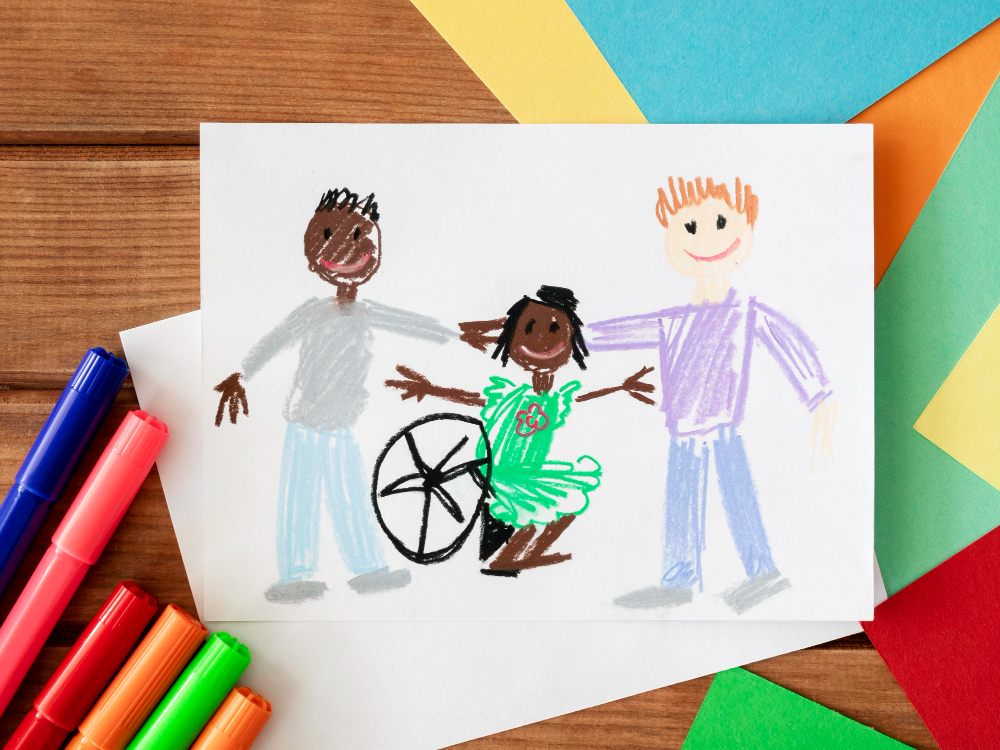
Official VSB documents reveal an emphasis on student compliance and disciplinary consequences, with little mention of disability accommodations. For example, the VSB’s District Code of Conduct underscores “a fair and consistent range of consequences, including suspension and change in educational programming, for student misconduct” media.vsb.bc.ca. The Code enumerates expected student behaviours and infractions (e.g. attending regularly,…
-
Shining a legal light on advocacy conversations
How to speak from a foundation of human rights while staying grounded in care. Firm, quietly defiant responses for families navigating school denial, delay, or deflection—centred on Kim Block’s Summer Series on the duty to accommodate. Each tip translates legal obligation into everyday language, illuminating the difference between disagreement and discrimination.
-

Against our will: When ‘support’ becomes institutionalised coercion
I said no. I said it plainly, early, repeatedly. I said it in writing, I said it on the phone, I said it from a place of trembling grief and exhausted clarity. I said it as a mother who had already tried everything. I said it after describing the diagnostic framework, after explaining what worked,…