
Dignity
In Canadian human rights law, dignity refers to the inherent worth of every person and their entitlement to be treated with respect, regardless of their characteristics, abilities, or circumstances. It includes recognising a person’s autonomy, individuality, and equal standing in society. Dignity is a foundational human rights principle, although a violation of dignity alone does not necessarily establish unlawful discrimination.
The Supreme Court of Canada’s decision in Law v. Canada (Minister of Employment and Immigration), [1999] 1 SCR 497, particularly paragraph 53 explains human dignity in terms of self-respect, self-worth, physical and psychological integrity, empowerment, and being treated as a full member of society.
-
When collective punishment becomes disability discrimination
Can a school discriminate against a disabled student by punishing the entire class? The answer may depend on whose behaviour triggered the punishment, how the consequences were imposed, and the impact on the student. Imagine: In both situations, the teacher may believe they are reinforcing expectations or encouraging collective responsibility. The formal consequence applies to…
-
On opposite sides of the same door in BC schools
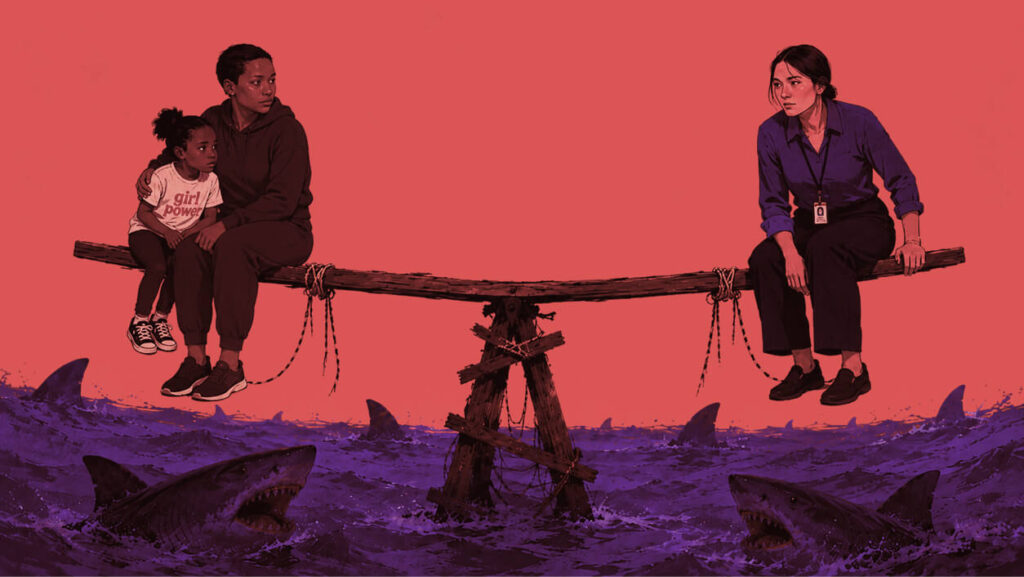
Families and teachers are describing the same failure from two positions inside it. The system survives by keeping them from recognising each other.
-
Bad medicine: ABA is a poison in the bloodstream of public education
The evidence is no longer merely emerging. It is converging. A national study of privately insured autistic youth in the United States matched 17,120 autistic children and youth who received applied behaviour analysis with 17,120 autistic children and youth who did not. The study found that ABA receipt was associated with 30% higher odds of mental…
-

Masking and Human Rights law in BC
Autistic students (especially girls) often hide (“mask”) their natural behaviours to avoid peer conflict and “fit in” at school. When educators implicitly or explicitly demand this masking – for example by discouraging stimming or forcing conformity – it can amount to a form of discrimination and harm under BC and Canadian law. This article examines…
-

The cost of defending scarcity: moral injury and the exhaustion economy
The BC education system spends extraordinary resources defending scarcity while positioning that defence as fiscal responsibility, generating an exhaustion infrastructure that operates across every population the system touches—teachers, families, disabled children, administrators, support staff—all labouring to maintain stories that protect individual dignity within conditions designed to make moral action impossible. A recent analysis on Fund…
-

What 8 years of advocacy took from our family
I advocate because I love my children and I want them to be well. Because I know the accommodations they require are entirely tenable, requiring only modest shifts in how adults think and respond. Because it is unbearable to watch them be slowly debilitated by a system that insists their needs are excessive and their…
-

When improvement tolerates death: why schools must stop the line
Education systems insist they are engaged in continuous improvement. They invoke cycles, frameworks, data dashboards, and action plans to demonstrate seriousness and care. But children are killing themselves in every district, every year. Disabled children are being excluded, isolated, placed in hallways, sent home early, or left to deteriorate while plans are written. The question…
-

How BC education policy discourse positions institutional refusal as neutral fact
This is a methodological critique examining how dominant policy analysis systematically erases the institutional practices that produce educational exclusion while appearing rigorous, neutral, and evidence-based. Understanding this analytical apparatus matters because it shapes what counts as legitimate evidence in meetings, what research administrators cite to justify program decisions, and what policy recommendations achieve political traction.…
-

Champlain Heights Annex School (VSB SD39): a neurodiversity-informed conduct critique
Champlain Heights Annex School’s Code of Conduct promises a safe, inclusive, equitable, welcoming, nurturing, and healthy school environment. The document aligns explicitly with Vancouver School Board’s District Student Code of Conduct (AP 350), affirms the BC Human Rights Code, and structures behavioural expectations through a three-level consequence framework extending from classroom redirection to formal suspension.…
-

PBIS and oh, the places you’ll go
Remember that Dr. Seuss book promising unlimited potential? Oh, the places you’ll go! Well, PBIS has places to take your kid too. And you’re not going to like where this journey ends. It started with good intentions (it always does) Schools adopted Positive Behavioural Interventions and Supports to reduce suspensions. To build better communities. To…
-

Education assistants and the infrastructure of exclusion
Between 2014 and 2023, education assistants in British Columbia filed more than four times as many violence-related injury reports with WorkSafeBC than teachers, a disproportion that exposes the material reality of who absorbs classroom harm where support has been systematically withdrawn. According to WorkSafeBC data referenced in Want to Improve Schools? Education Assistants Have Ideas, teaching assistants…
-

25 things you can ask for on your child’s IEP
Individualised Education Plans (IEPs) in BC carry significant weight even though they are not legally binding contracts. Schools have policy obligations to follow them, they serve as evidence in Human Rights Tribunal complaints, and they document what your child needs to access their education. The language matters. The framing matters. What gets written shapes what…
-

The cost of saying ‘change costs nothing’
Long before it became common sense, the spherical shape of the Earth was already known. Astronomers, mathematicians, and navigators across multiple ancient cultures—within the Hellenic world, in ancient India, in Islamic scholarship—had measured the Earth’s curvature, calculated its circumference with remarkable accuracy, and built navigational systems that depended on that knowledge. This was not speculative…
-

When evidence changes nothing: what 2,842 families reveal about institutional refusal
The International Council of Multiple Birth Organisations published a study in 2020 examining school placement decisions for twins and higher-order multiples across eighteen countries, surveying 2,842 families whose children had attended school for at least one year. The findings confirm what families of multiples already know from lived experience: schools operate placement policies that prioritise…
-
A school advocacy vocabulary
What families experience in schools is often described as a series of unfortunate incidents: a meltdown here, a missed accommodation there, a relationship breakdown framed as “complex family dynamics.” But these events are not random, isolated, or accidental. They are patterned. They recur across schools, districts, and provinces. They follow recognisable logics, deploy familiar language,…
-

The good twin, the bad twin, and the system that needed both
Before school taught them roles, they played tea party—taking turns serving and being served. Seven years later, I can’t say with certainty whether one would fetch the fire extinguisher if the other caught flame.
-

When children write the rules
The teacher’s letter arrives home with careful reassurances about fairness, dignity, and professional expertise, yet embedded within its polite paragraphs sits a fundamental contradiction: the rules governing this seventh-grade classroom emerged from the crowdsourced preferences of twelve-year-old children rather than from pedagogical research or developmental understanding. Ah yes, the wisdom of crowds—particularly effective when the…
-

POPARD’s PDA doublespeak
I noticed that POPARD is advertising another workshop on Pathological Demand Avoidance (PDA) in April 2026, titled Pathological Demand Avoidance (PDA): What We Know & What We Are Learning. The description is familiar: PDA is framed as a “growing topic of interest,” something “some clinicians and researchers describe” as an autism profile. The language is cautious,…
-
The material costs of educational harm
My son no longer attends school. He no longer wants anything the education system offers. He has taught himself programming, navigates Linux with expertise that exceeds my own knowledge, learns alone in his room because learning with others became too expensive to survive. The district asks affectionately how he is, suggests I login to their…
-

VSB’s FESL report: the aesthetics of performative accessibility
An analysis of how VSB’s FESL report performs inclusion through language and process while avoiding measurement, accountability, and material change.