
Dignity
In Canadian human rights law, dignity refers to the inherent worth of every person and their entitlement to be treated with respect, regardless of their characteristics, abilities, or circumstances. It includes recognising a person’s autonomy, individuality, and equal standing in society. Dignity is a foundational human rights principle, although a violation of dignity alone does not necessarily establish unlawful discrimination.
The Supreme Court of Canada’s decision in Law v. Canada (Minister of Employment and Immigration), [1999] 1 SCR 497, particularly paragraph 53 explains human dignity in terms of self-respect, self-worth, physical and psychological integrity, empowerment, and being treated as a full member of society.
-
The equilibrium of refusal: what a decade of legal spending reveals about BC schools
Between 2012 and 2022, British Columbia’s Schools Protection Program spent $4,420,252.58 responding to human rights claims filed against public schools, according to this FOI release. Of that total, $752,525.34 went to indemnity—settlements and compensation paid to claimants. The remaining $3,635,085.21 funded legal defence. The ratio is precise: for every dollar spent remedying harm, the system…
-

The principal’s casualness reveals authorisation to harm
When a principal cancelled my daughter’s volleyball game with bureaucratic ease, her comfort while causing harm revealed systematic institutional authorisation.
-

Exhaustion as governance in BC education
The spears came out fast when news broke that Coquitlam School District had spent $38,000 on a professional development retreat at Harrison Hot Springs—sharp, righteous, aimed directly at teachers who dared to spend two days somewhere pleasant while children sat in hallways, while families scrambled to find care for kids sent home at noon because…
-

Justice and dignity too expensive for BC NDP
In 2018, experts told BC exactly how to fix special education funding. The government has spent five years “consulting” instead. Meanwhile, your child sits in hallways. The 192% problem nobody wants to fund Between 2015 and 2024, autism designations in BC schools exploded by 192%. Total student enrolment? Up just 11.6%. The province knows this. They…
-
VSB’s accessibility plan: more marketing than meaningful change
The Vancouver School Board has released its Accessibility Plan for 2025–2028, a document that positions itself as a forward-looking commitment to equity, belonging, and barrier removal, offering warm assurances about inclusion while presenting a polished institutional narrative that feels carefully tuned for public confidence rather than rooted in the depth of community experience. Families who…
-

Children as witnesses in institutional spaces
Children do not match the institutional fantasy of the perfect witness. Schools expect crisp chronology, tidy sequencing, and emotion-free narration. What children offer is perception—sharp, immediate, and grounded in the sensory truth of what happened. I learned this when my daughter was still in elementary school, when a playground supervisor grabbed her arm, twisted it…
-

Positive behavioural interventions and supports: a behaviourist rebrand
Positive behavioural interventions and supports circulates through British Columbia’s public schools with a gentle, polished confidence, offering administrators the comfort of matrices and fidelity tools, offering families soothing language about positivity and predictability, and presenting itself as an enlightened evolution of schoolwide discipline, yet what I see each time I study its structure is the…
-
What research says about school conduct codes and disabled students
This explainer summarises what a small but influential group of scholars have shown about school discipline policies, student codes of conduct, and how these frameworks disproportionately harm disabled and neurodivergent students. It draws especially on the work of Catherine K. Voulgarides, Russell J. Skiba, Daniel J. Losen, David Osher, and Edward Fergus. Where possible, citations…
-
Rocky Mountain School District (SD) inclusion education update
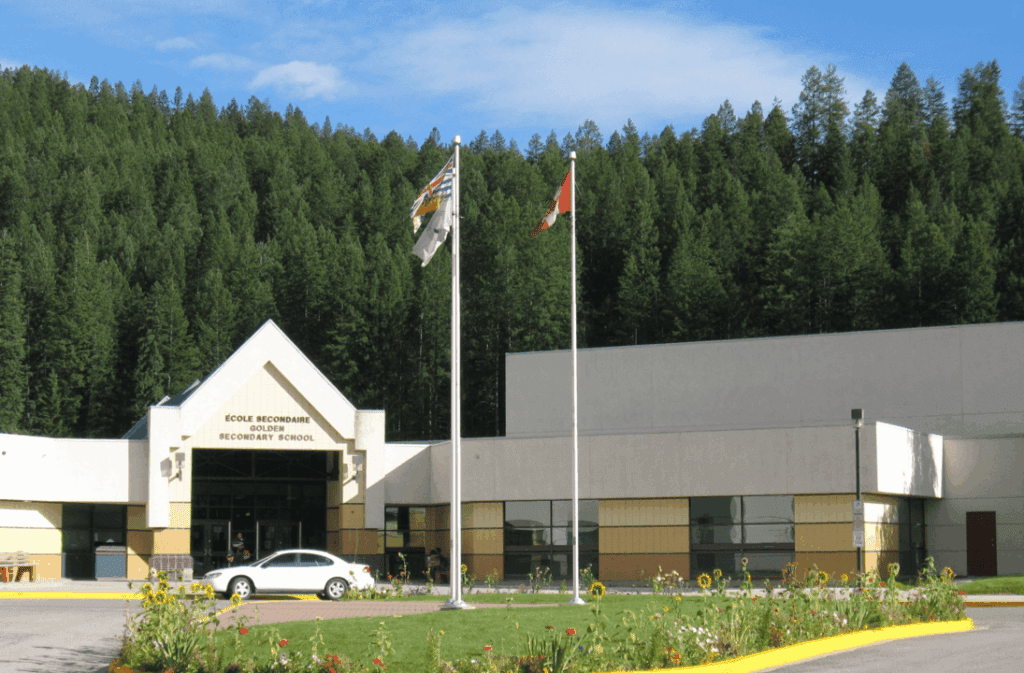
I found an update in the October 14, 2025 board meeting package, starting on page 45. The update opens by outlining the provincial model so trustees and families understand the constraints shaping services. BC uses a model created more than twenty years ago, which places most learning support funding into the general per-student allocation. Only…
-

Why the evolving understanding of childhood terrifies systems built on scarcity
Children now arrive at school shaped by homes that honour physiology over performance, autonomy over obedience, and co-regulation over fear, and this shift grows from a decade of relational neuroscience, trauma literacy, sensory understanding, and disability justice that families have absorbed far more quickly than schools, which leaves discipline ideology standing on crumbling ground because…
-
How do we get out of this mess?
British Columbia’s education system is breaking, and Surrey’s classroom evacuations—along with the rushed creation of the Classroom Clear Tracker—show how close we stand to systemic failure. Desperate times create desperate actions, and the crisis unfolding in public education pushes people into hurried choices shaped by urgency, fear, and the belief that any action feels better…
-
The Cowichan case, land-title hysteria, and the unfinished work of justice in public education
I have been reflecting on the public reaction to the Cowichan case findings, and the deeper I look, the more I notice similar patterns emerging across conversations about reconciliation and disability justice in public schools: the tendency to get stuck in the T part of “Truth and Reconciliation” and to only have the T be…
-

What the BC government wants us to see: data and public education
Governments build their authority through the quiet choreography of information, and educational systems refine this practice into a disciplined structure where the presence of data becomes a symbol of competence while the absence of certain measurements becomes a strategy that protects institutional dignity, and across decades of policy and public communication the pattern of what…
-

The role of infighting in maintaining scarcity, hierarchies, and exclusion
This piece is unfinished, but it feels necessary. I am still learning how to move through anger toward something that might resemble repair or solidarity. I am not writing a strategy or a manifesto; I am writing what I see, what keeps happening, and how it feels to live inside it. The truth, when spoken…
-

BCEdAccess on Room Clear Tracker
The BCEdAccess post about the Surrey classroom-clear tracker is a dire and necessary warning. Parents are raising concerns that come from lived experience, not abstract theory. They have seen how data about vulnerable children, even when anonymised, can expose them to harm. Their argument is simple: tools meant to improve safety can easily become tools…
-

Counting crisis: data, distrust, and the false choice between safety and inclusion
Across British Columbia, the launch of Surrey DPAC’s Room Clear Tracker has ignited a storm of debate among parents, educators, and disability advocates. Some view it as a necessary step toward transparency; others fear it will reinforce stigma or justify segregation. Beneath the surface of this argument runs a deeper fracture—between those who seek safety…
-

The cost of partial inclusion in schools
I have returned to writing after a long silence—one imposed less by choice than by survival. The move was necessary, a matter of financial gravity after years of lost income entwined with the harm my children endured within an ableist school system. Leaving our home felt like surrendering a life I had fought to sustain,…
-
A primer on truth for youth
If you’d told me last year that a man would feel emboldened to stand up in the UN and call the UN special rapporteur a witch and accuse her of trying to ‘curse Israel with lies and hatred’ I would have Googled to see if it was fake news! But then with the second presidency…
-
Raised inside the broken home of public education
Every society tells itself that public schools are good homes for children. We picture safety, fairness, and care distributed through the hallways like sunlight. Yet affection without protection becomes a kind of gaslight, and the insistence that everyone inside means well becomes a substitute for justice. We praise the intention instead of confronting the injury.…
-

After Moore: why winning didn’t fix public education
When the Supreme Court of Canada ruled in favour of Jeffrey Moore and his family in 2012, affirming that meaningful access to public education was not a luxury but a legal right for disabled students, it seemed as though the tide had turned. The Court’s decision, rooted in the BC Human Rights Code and later…