

Punishing the Whole Class
“Punishing the whole class” is how many students and parents describe collective punishment in everyday language. Whether it’s missing recess, losing privileges, or enduring public lectures, the emotional weight of being punished for others’ actions is profound. This tag curates student stories and analysis that centre the lived experience of being collectively blamed in school.
-

Vernon School District (SD22) progressive discipline and suspension guidelines: a neurodiversity-informed critique
The SD22 progressive discipline and suspension guidelines begin with a clear statement of intent: to maintain a safe, caring, and healthy environment for all members of the school community. They emphasise functional assessment, procedural safeguards, privacy protections under FIPPA, and the possibility of restorative or reparative responses. Formal consequences are structured to follow only when…
-
Dr. A.R. Lord Elementary (VSB SD39): a neurodiversity-informed conduct critique
Dr. A.R. Lord Elementary’s Code of Conduct promises a “safe and supportive environment” on school grounds, on field trips, and during online learning. It embraces the Vancouver School Board’s district-wide conduct framework (AP 350), explicitly affirms the BC Human Rights Code, and applies the values of the school’s P.R.I.D.E. matrix—Purpose, Respect & Responsibility, Integrity, Diversity,…
-

When they call distress the baseline
When a principal told me, “his baseline is dysregulated,” I realised how far we had drifted from care. This was not a description. It was a dismissal. Distress had become so familiar in the classroom that it was no longer seen as a signal—but as who he was. But my child is not born of…
-

Nova Scotia bans collective punishment
Nova Scotia’s Provincial School Code of Conduct Policy underwent a significant update in April 2025, marking a substantial revision of the previous 2015 policy. The updated policy, set to take effect in September 2025, introduces clearer definitions of unacceptable behaviours, delineates new responsibilities for all school community members, and emphasises support for those affected by…
-

The slow boil: delayed support and collective punishment
I think a lot about lobsters, wrestled from the sea and placed in cold water that slowly heats—do they wonder if it’s getting hot in there? How do they decide where the line is and begin to panic? Is it a thought or pure instinct? In kindergarten, my son arrived with a history of trauma…
-
The days my children cried, and I told them it would be okay
When your trust has already been broken—by people who were supposed to care for you, protect you, believe you—every new betrayal lands like confirmation. I didn’t come to school meetings as a blank slate. I came with a trauma history. So when they dismissed my child’s needs, ignored the signs, or punished their distress, it…
-

On moral injury and collective punishment
I did not want to file a complaint. I still don’t—not in the sense that people imagine, with anger or vengeance or a desire for punishment. What I wanted, what I asked for again and again with patience and clarity and increasing despair, was for the district to acknowledge that collective punishment is not just…
-

School District 48 (Sea to Sky): a neurodiversity-informed policy critique
SD48 conduct decision flow (simplified) ⚠️ Critical analysis ✅ Strengths ❌ Gaps Neurodiversity lens: how the policy holds up Dimension Assessment Notes Disability justice ✅ Partial Equity and accommodation are mandated, but process and supports unspecified Neurodivergent alignment ⚠️ Weak No mention of executive function needs, sensory regulation, impulsivity, masking, or meltdown management Protection from…
-

SJ Burnside Continuing Education (SD61): a neurodiversity‑informed policy critique
SJ Burnside Education Centre is an Alternative Education program serving youth aged 13–18 in a small-group, flexible setting. Its published Code of Conduct emphasises high standards of conduct, honesty, integrity, and cooperation during all school-sponsored activities. It explicitly promotes peaceful problem-solving, community engagement, and maintains a personal device policy (e.g., cell phones may be removed if abused). Student Code of Conduct SJ Burnside conduct decision…
-

Reconciliation demands that we put collective punishment aside
Collective punishment in residential schools did more than punish children—it shattered the bonds between parents and children. For many parents who survived, the fear, shame, and trauma they endured complicated their ability to nurture trust in their own parenting. Emotional disconnection and disrupted parenting Adults who attended residential schools often struggle to form secure attachments…
-

Data tracking in the residential school system
The Canadian Residential School system (circa 1870s–1990s) was a network of church-run boarding schools funded by the government to forcibly assimilate Indigenous children. In theory, such a large system might have been guided by careful data collection – tracking student health, education outcomes, and well-being. In reality, government officials prioritized ideological goals and cost-saving “optics” over…
-
Collective punishment: unjust in schools, unjust everywhere
Collective punishment—punishing a group for the actions of an individual—is widely recognised as a violation of human rights. It is condemned in international law, yet it persists in various forms worldwide. From China’s persecution of human rights defenders’ families to Israel’s blockade of Gaza and the Taliban’s illogical governance, collective punishment disproportionately harms innocent people.…
-

Collective punishment: it doesn’t work, but still it happens
Written by Dr Penny Rabiger, in 2016, this personal yet incisive piece, discusses the challenges the persistence of collective punishment in schools, despite its well-documented ineffectiveness. Drawing on both professional insight and a child’s perspective, the post illustrates how these tactics damage trust, inhibit learning, and punish children for behaviours beyond their control. The author…
-
What policy says about collective punishment in schools
Collective punishment is never explicitly mentioned in the School Act or BC education policies, but it is made very clear that the system is meant to be fair, accountable, and respectful. The School act states the discipline in schools must be “similar to that of a kind, firm and judicious parent” (Section 76(3)). I consider…
-

From corporal punishment to collective harm: why Section 43 still casts a shadow over Canadian schools
Section 43 still permits “reasonable force” in schools. This blog explores how it enables collective punishment and violates children’s rights.
-
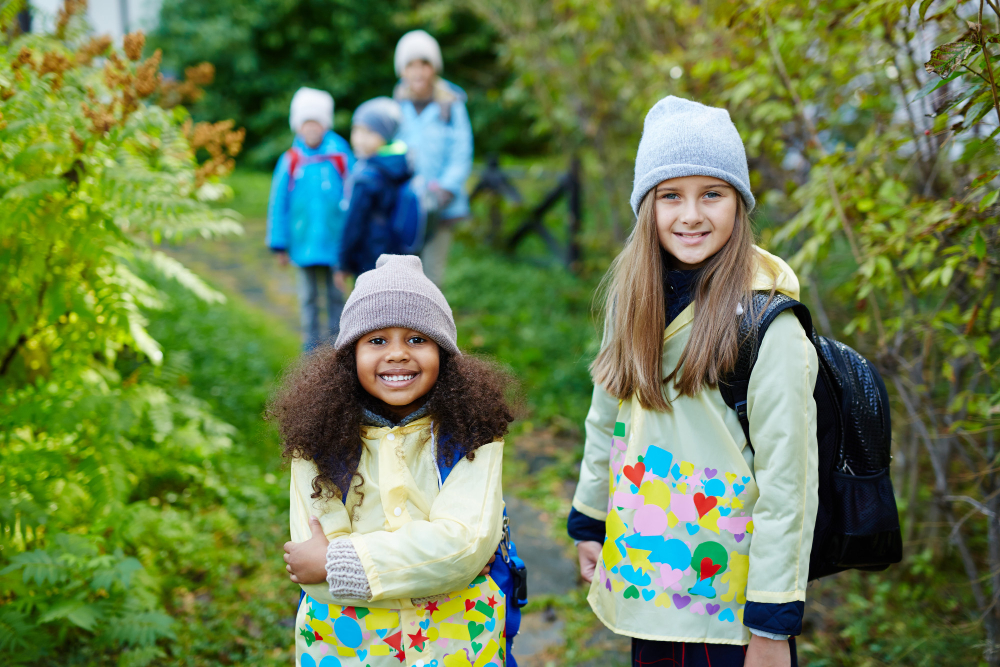
Collective punishment in schools teaches the wrong lesson
Imagine you’re at work, focused on your tasks, when your boss announces that no one can leave until two distracted coworkers finish their work. You’d be outraged, right? Yet, this exact approach—punishing an entire group for the actions of a few—is sometimes still used in elementary classrooms. In a recent article, Blair questions the pedagogical…
-

A teacher’s perspective on collective punishment
In this powerful TikTok video, Mr Trayvon reflects on his own past use of collective punishment in the classroom—and why he no longer believes it serves students. With candour and humility, he acknowledges the harm these practices cause, particularly to children already carrying the weight of trauma, neurodivergence, or social marginalisation. His shift away from…
-
Collective punishment–fair or farce?
The practice of collective punishment in schools sparks strong opinions among educators, parents, and students alike. While some argue it helps maintain control and sends a message about group accountability, critics point out that it unfairly penalizes uninvolved individuals and damages trust within the classroom. This article dives into the debate, exploring: The piece concludes…
-

How children evaluate collective and targeted punishment
A recent study explores how children perceive fairness in different forms of punishment. The research, conducted with children of varying ages, compares their reactions to collective punishment (where an entire group is punished for the actions of a few) versus targeted punishment (where only the individuals responsible face consequences). The findings reveal that children overwhelmingly view collective punishment as…
-

New research highlights the harmful effects of collective punishment on group relations
A study published in Political Psychology examines how collective punishment—punishing an entire group for the actions of a few—impacts intergroup relations. Researchers Mete Sefa Uysal, Sami Çoksan, and Thomas Kessler found that collective punishment: These findings, based on experiments in Turkey and Germany with over 2,000 participants, reveal that collective punishment not only fails to resolve conflicts…