

Racism
Racism is not only personal prejudice. It is the institutional pattern that decides whose children are protected, whose behaviour is criminalised, whose families are believed, whose pain is minimised, and whose exclusion is treated as normal. In education, racism shows up when schools claim neutrality while racialised, Indigenous, immigrant, and culturally marginalised children carry disproportionate harm.
-

CBC covers SD8’s elimination of Indigenous Education teachers
Earlier this week we wrote about School District 8’s decision to cut all Indigenous Education teacher positions from its elementary and middle schools, replacing them with support workers — a role with no instructional authority and no capacity to lead the cultural programming these teachers built over years. CBC’s Amber Wang has now published a…
-
Save Indigenous Education teachers in SD8
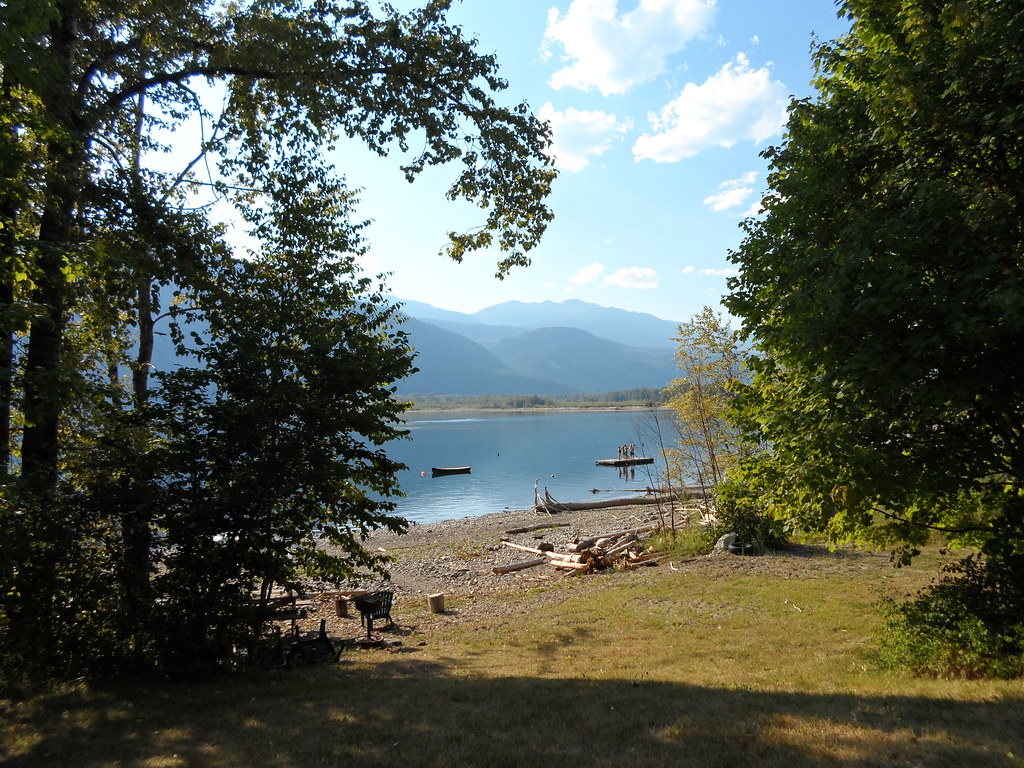
Kootenay Lake School District is moving toward a staffing change in Indigenous Education that families say will remove teacher-led Indigenous Education from elementary and middle schools and replace the teacher with Indigenous Support Worker positions. On paper, this may look like a staffing model change. One role is removed. Other roles are added. A budget…
-

How BC education policy discourse positions institutional refusal as neutral fact
This is a methodological critique examining how dominant policy analysis systematically erases the institutional practices that produce educational exclusion while appearing rigorous, neutral, and evidence-based. Understanding this analytical apparatus matters because it shapes what counts as legitimate evidence in meetings, what research administrators cite to justify program decisions, and what policy recommendations achieve political traction.…
-

Discipline outcomes and statistics in BC school districts: what the statistics reveal about institutional protection
Schools are quick to label children as dysregulated when they struggle to process harm, respond slowly under stress, or push back against systems that have failed them. These labels carry consequences. What is less often examined is how institutions respond when they behave in the same way. A note I support parents making complaints when…
-

The return of functioning labels: How austerity turns advocacy into competition
A parent recently posted about profound autism, describing the experience of having her son’s reality erased when people say that “profound autism” doesn’t exist. Her frustration is legitimate—parents of children with intensive, lifelong support needs face profound institutional abandonment, and “profound autism” names a reality that deserves recognition and resources. But her post also illustrates…
-

Justice and dignity too expensive for BC NDP
In 2018, experts told BC exactly how to fix special education funding. The government has spent five years “consulting” instead. Meanwhile, your child sits in hallways. The 192% problem nobody wants to fund Between 2015 and 2024, autism designations in BC schools exploded by 192%. Total student enrolment? Up just 11.6%. The province knows this. They…
-

When delay becomes policy: British Columbia’s strategic abandonment of disabled students
In 2018, an independent panel reviewed how British Columbia funds kindergarten through grade twelve education and recommended a prevalence model for special education funding, a shift that would allocate resources based on statistical prevalence of disability within the general student population rather than on individual diagnostic designation. The proposal threatened to expose what the existing system carefully…
-

District exclusion reasons
A review of exclusion records from New Westminster (SD40) and Southeast Kootenay (SD5) reveals a consistent pattern: the stated reasons for exclusion drift toward biography, circumstance, and administrative decisions rather than the educational factors that legitimately shape access to full-time schooling. The records describe personality traits, incidental details, and complex life contexts, while offering limited…
-
The Cowichan case, land-title hysteria, and the unfinished work of justice in public education
I have been reflecting on the public reaction to the Cowichan case findings, and the deeper I look, the more I notice similar patterns emerging across conversations about reconciliation and disability justice in public schools: the tendency to get stuck in the T part of “Truth and Reconciliation” and to only have the T be…
-

Data tracking in the residential school system
The Canadian Residential School system (circa 1870s–1990s) was a network of church-run boarding schools funded by the government to forcibly assimilate Indigenous children. In theory, such a large system might have been guided by careful data collection – tracking student health, education outcomes, and well-being. In reality, government officials prioritized ideological goals and cost-saving “optics” over…