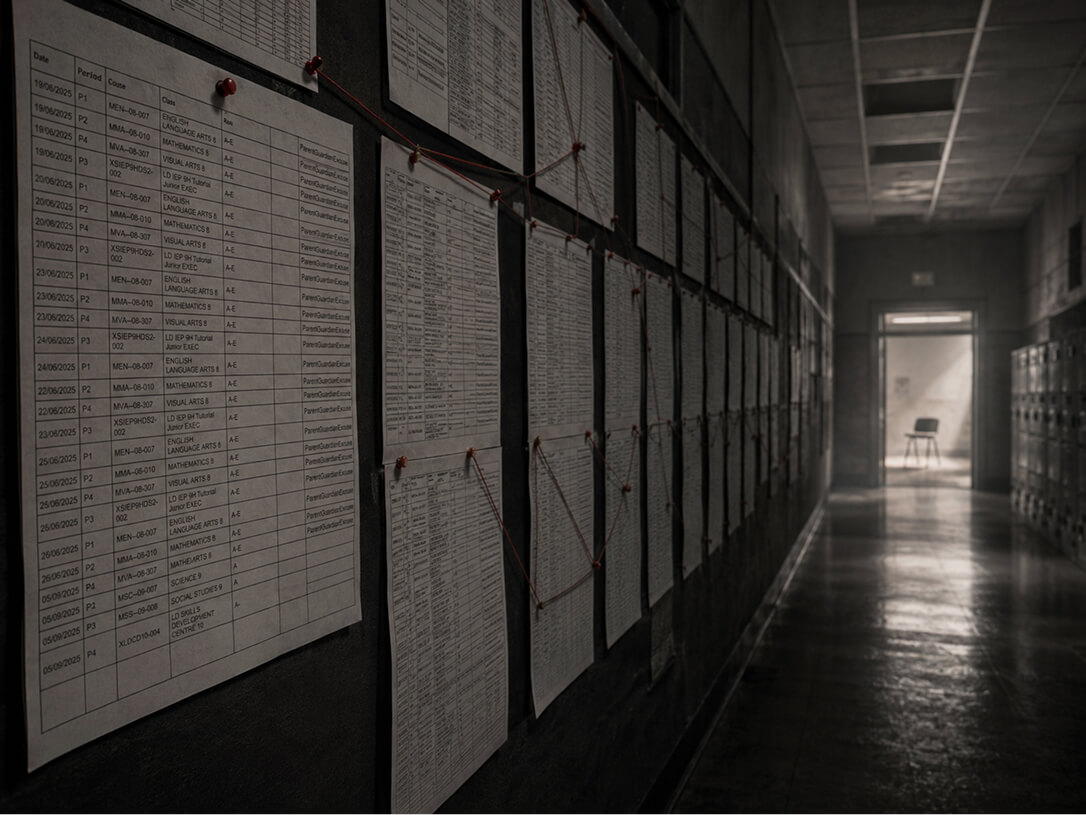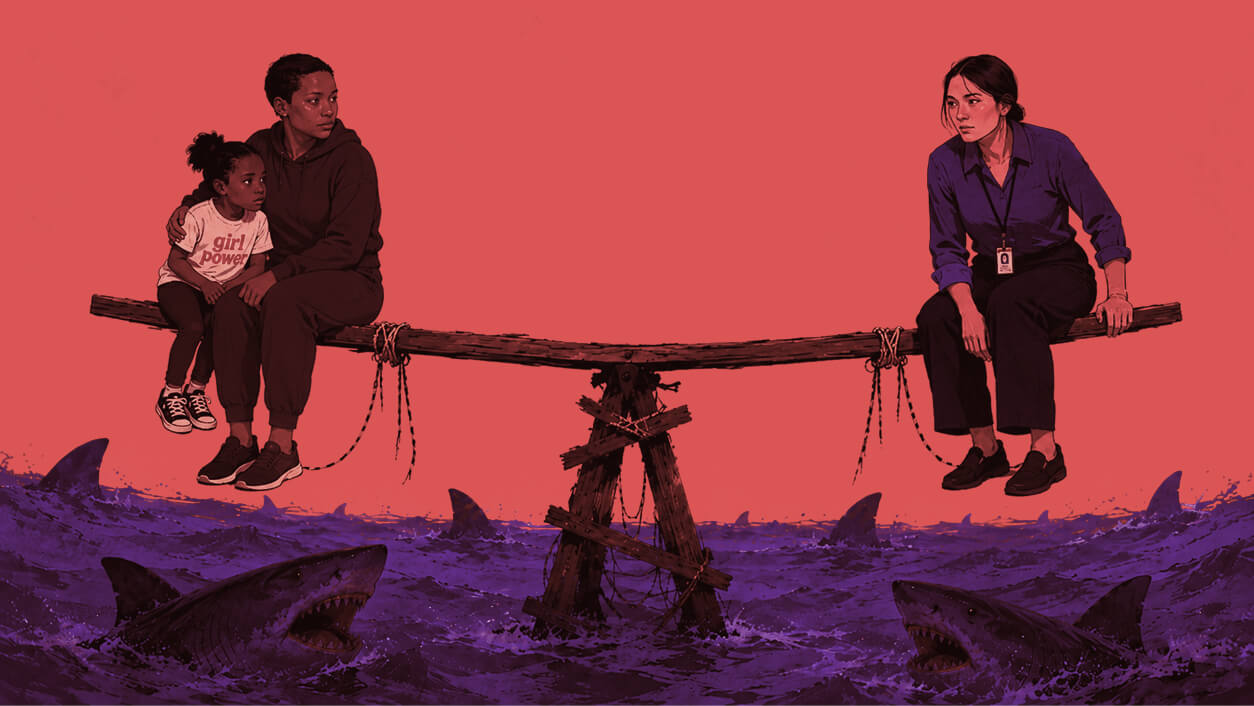
Schools are quick to label children as dysregulated when they struggle to process harm, respond slowly under stress, or push back against systems that have failed them. These labels carry consequences. What is less often examined is how institutions respond when they behave in the same way.
A note
I support parents making complaints when their child has been harmed or traumatised by school staff. Complaint processes matter. They are often the only formal mechanism families have to name harm, seek acknowledgment, and prevent recurrence.
But processes do not become protective simply because they exist.
Introduction
This article critically examines how the Teacher Regulation Branch (TRB) complaint process in British Columbia actually functions—and why, despite claims of accountability and transparency, it routinely operates to protect the profession rather than children.
The problem is not that complaints are impossible to file.
The problem is what happens after they are filed.
The promise of accountability — and the reality behind it
Each year, the Teacher Regulation Branch publishes statistics on:
- Complaints received
- Investigations ordered
- Consent resolution agreements
- Citations issued
- Hearing decisions rendered
These figures are presented as evidence that British Columbia takes professional misconduct seriously and holds educators accountable when harm occurs.
On paper, the system looks transparent and rigorous.
In practice, it measures bureaucratic motion, not meaningful accountability.
The statistics track files opened and files closed. They do not track:
- Whether harm was meaningfully addressed
- Whether families experienced the outcome as just
- Whether children were protected while investigations dragged on
For many families, the complaint process itself becomes a second injury: protracted, opaque, emotionally draining, and ending in outcomes so minimal they feel indistinguishable from dismissal. Our family experienced our complaint being dismissed by the Ombudsperson while our active TRB complaint is in process.
What the numbers measure — and what they obscure
Complaint volumes without context
- Q1: 62 complaints
- Q2: 107 complaints
- Q3: 43 complaints
- Q4: 81 complaints
These numbers tell us nothing about:
- The nature or severity of the harm
- Whether complaints were dismissed, investigated, or sanctioned
- Whether timelines were reasonable or prolonged
- Whether children remained exposed to the educator during the process
Sexual abuse, physical injury, emotional abuse, discrimination, improper restraint, and administrative misconduct are all collapsed into a single category: complaints.
Harm disappears into aggregation.
Who files complaints — and who never makes it through the door
Complaints may be initiated by parents, administrators, colleagues, or the Commissioner. The data does not disclose:
- Which complaints come from families
- Which are Commissioner-initiated (often following criminal charges)
- Which families disengage due to exhaustion, language barriers, disability advocacy overload, or poverty
Sustaining a complaint requires:
- Time
- Emotional capacity
- Bureaucratic literacy
- Stability under prolonged uncertainty
Families of disabled children, racialised children, and children living in poverty may be disproportionately filtered out long before accountability becomes possible.
The system rewards endurance, not truth.
The timeline problem: accountability delayed beyond relevance
“Ongoing” as an outcome
In real cases, families are often told that investigations may conclude within months—only to experience year-long or multi-year delays with no updated timelines, no procedural explanation, and no meaningful communication.
Our complaint has been going on for more than a year and TRB refuses to give a timeline. Meaningful complaint processes provide timeline assurances.
During this period:
- Educators typically remain employed and in good standing
- Interim measures are rare and reserved for extreme, often criminal cases
- Families receive minimal information about progress or delay
For children, this means living with unresolved harm while the system moves at institutional speed.
A family may file a complaint when their child is in elementary school and receive an outcome after the child has moved on—without resolution, closure, or assurance of safety for others. We have to live knowing that the staff member is likely doing the same thing she did to my child to other children.
Delay is not a flaw in the system.
It is how the system is designed.
Consent resolution agreements: accountability negotiated away
Consent resolution agreements are negotiated settlements between the TRB and the educator. They dominate outcomes.
Families are not parties to these negotiations.
They cannot observe them, influence them, or challenge them.
Why families experience them as betrayal
Typical outcomes include:
- Written reprimands
- Short suspensions (days or weeks)
- Mandatory training or supervision
Examples families encounter:
- Physical injury to a disabled child → brief suspension
- Public humiliation → reprimand
- Improper seclusion or restraint → training requirement
The educator’s career continues.
The child’s trauma does not end.
Families are notified only after decisions are final, with no right of appeal and no mechanism to assess whether the outcome is proportionate to the harm.
A hierarchy of harm: what “counts” as disciplinable
Harm the system takes seriously
- Sexual abuse
- Criminal physical violence (sort of…)
Harm routinely minimised or dismissed
- Emotional abuse
- Racism and discrimination
- Disability-related harm
- Degradation, humiliation, and coercive practices
Common outcomes include:
- “Unprofessional but not disciplinable”
- “Poor judgment” with no sanctions
- Training substituted for consequences
This reveals a hierarchy of harm—one that systematically devalues the experiences of disabled and marginalised children.
-

A one-day suspension for this?
According to the consent resolution agreement published by the BC Commissioner for Teacher Regulation, secondary school teacher Todd Erin Graham engaged in multiple forms of misconduct over the 2022–23 school year. These included racially and culturally demeaning comments to an Indigenous student, public…
What families actually receive at the end
For most complainants, the process ends with:
- Confirmation that misconduct occurred
- Minimal professional consequence
- No remedy, compensation, or assurance of prevention
- No visibility into whether conditions are enforced
Certificate cancellations are vanishingly rare and almost always tied to criminal convictions.
The message families receive is clear:
The harm mattered enough to document, but not enough to meaningfully disrupt the profession.
Strategic considerations for families considering a complaint
Before filing with the TRB, families should ask:
What is my primary goal?
- Immediate protection?
TRB timelines mean educators often continue teaching for years. - Acknowledgment of harm?
TRB language centres professional standards, not child trauma. - Remedy or compensation?
The TRB offers none. Other legal pathways are required. - Permanent impact on teacher?
The online registry provides information about current certificate holders and disciplinary action. Consent resolutions become a permanent record.
Do I have the capacity?
The process is long, opaque, and emotionally taxing. It is designed for institutional endurance—not family wellbeing.
What the statistics actually reveal
In 2025:
- 293 complaints
- 183 investigations
- 5 citations
- 46 consent resolution agreements
- 1 hearing decision
This is not evidence of rare misconduct.
It is evidence of procedural gatekeeping, negotiated accountability, and thresholds so high that most child-harm never produces consequences families would recognise as justice.
Conclusion: accountability performed, not delivered
The Teacher Regulation Branch statistics measure:
- Processes initiated
- Files closed
- Agreements signed
They do not measure:
- Children protection
- Proportional accountability
- Family trust renewed
- Prevention of future harm
For many families, the complaint process becomes a second injury—confirming that the harm occurred, while demonstrating that the system was never designed to meaningfully respond to it.
Understanding this reality allows families to make informed, strategic choices—and prevents the devastating discovery, years later, that accountability was promised, but delay was the only outcome ever guaranteed.
By the standards routinely applied to children—particularly disabled children—the Teacher Regulation Branch would itself meet the criteria for a dysregulated system. It demonstrates delayed response to harm, poor impulse control when confronted with risk to the profession, avoidance of difficult accountability conversations, and a reliance on containment strategies rather than repair.
When children behave this way, they are disciplined, excluded, or subjected to intervention plans. When institutions behave this way, it is called “process.”
-

The truth shall set us free: healing from institutional violence in BC public schools
Healing doesn’t begin with massages or mindset shifts. It begins with telling the truth about what was done to us—about what it means to watch your child collapse under institutional betrayal, to be praised for your composure while they take away his lifeline.…