Falling behind has arithmetic, legible only to those who have lived it. You were doing exactly what you always do — the same volume, the same effort, the same sustained output — but the baseline shifted, and “the same” no longer covered both the present and the correction. The deficit compounds because returning to zero requires a categorically different quantity of energy than maintaining zero ever did, and that energy disappears from everyone’s accounting of what you owe.
You might do ninety-five percent of it well. The five percent is what gets noticed. The sustained effort underneath is simply the baseline expectation — unremarkable by definition, invisible by design.
This is where the judgment enters.
-

Happy Mother’s Day, bitches
Mother’s Day for the mothers who are done being good: maternal rage, institutional failure, and why being reasonable was never enough.
What sticks and what disappears
Sara Ahmed writes about the way emotions accumulate on surfaces — how objects, bodies, and signs become sticky through repeated contact with feeling, how the residue of prior encounters shapes what a thing is allowed to mean.
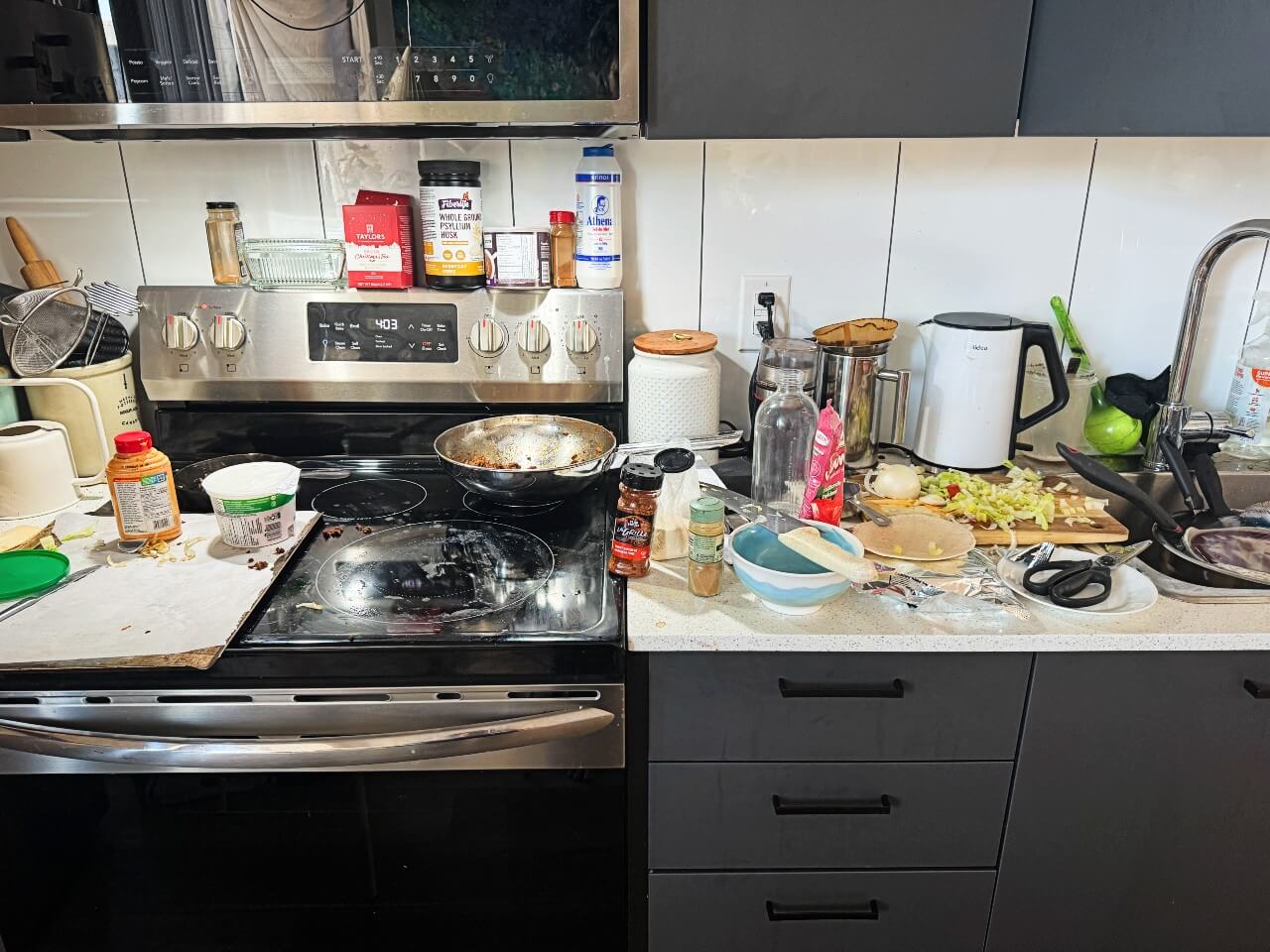
The dishes left in the sink are evidence. They have acquired, through cultural repetition, a stickiness that pulls toward a particular story about the woman who left them there: that she is overwhelmed, disorganised, failing at the basic requirements of domestic life. The actual labour she performed that day — the phone call to the school, the complaint letter drafted and revised, the child held through a crisis at midnight, the accommodation request filed with a board that will take six months to deny it — evaporates from every visible surface. It cannot stick. It vanishes.
The dishes remain.
The labour capitalism calls motherhood
Silvia Federici’s central argument in Revolution at Point Zero is that reproductive labour — the work of sustaining human life, of feeding, clothing, soothing, cleaning, maintaining, and making daily life possible — has been systematically devalued under capitalism because recognising it as labour would expose how much capitalist production depends on work that is unwaged. The home is not outside the economy; it is one of the places where workers are produced and reproduced, day after day and generation after generation. Women’s domestic and caregiving work is cast as love, instinct, duty, and motherhood rather than labour, not because it is unskilled or incidental, but because naming it as work would make its extraction visible.
The distinction is structural. It means this work is treated as natural, as flowing from biological disposition rather than skilled, continuous, exhausting effort. And when the work breaks down, the failure is treated as moral — as evidence that a mother is disorganised, inattentive, or not trying hard enough — rather than as the predictable consequence of being asked to run an under-resourced operation without support, acknowledgement, or relief.
Arlie Hochschild named The Second Shift in 1989: the unpaid housework and childcare that still fell disproportionately to women after paid work ended.
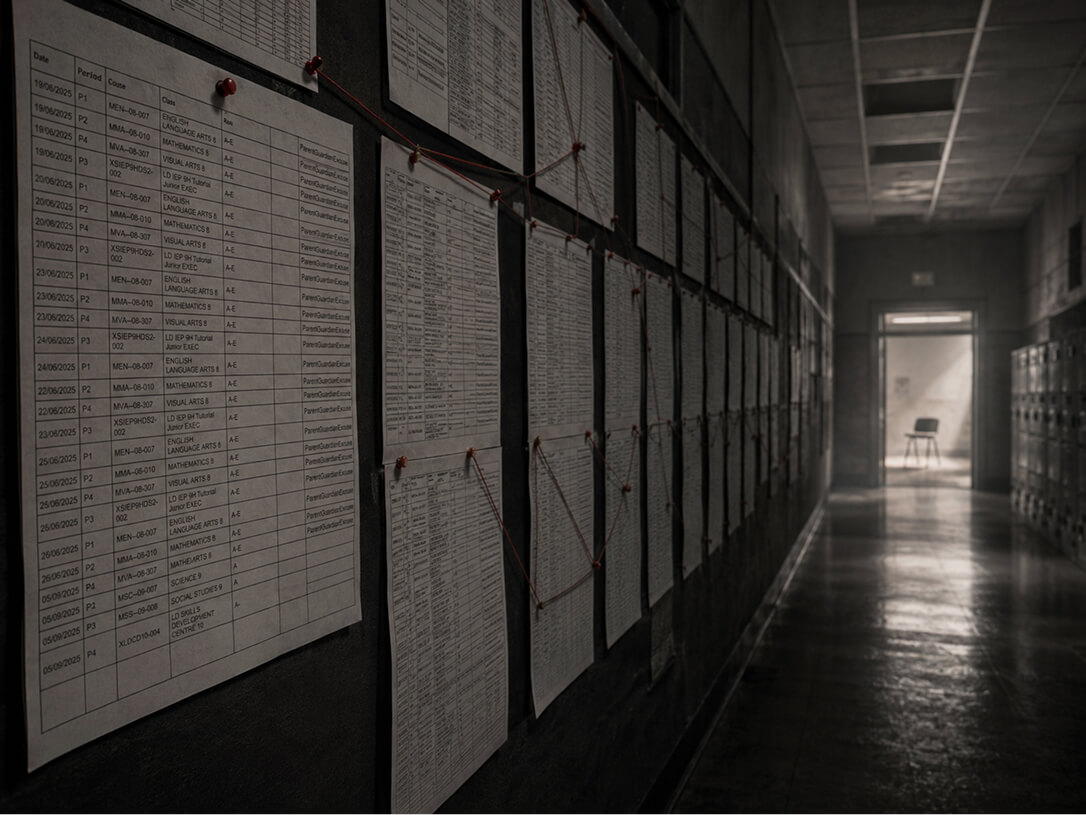
But for many mothers, especially mothers of disabled children, there is another layer of work that remains badly under-recognised: the advocacy shift. It is the labour of fighting institutions that are supposed to serve your children and have instead become sources of harm — the meetings, emails, complaint records, follow-up notes, legal reading, crisis debriefs, and constant translation of a child’s needs into forms the system may still refuse to act on.
The advocacy shift
For the mother of a disabled child in a public school system that systematically excludes, restricts, and fails to accommodate, that third shift is structural. It is the FOI requests and the human rights complaints and the meeting preparation and the debrief notes and the lawyers’ emails reviewed at midnight and the documentation of every incident in case it becomes evidence — which it always does eventually, which is why you document everything, which is why you are always, already, half a load behind on something else.
This metaphor chose me: a hammer. Softness requires a margin, and I have been operating without one for a long time. The hammer lands where it needs to land. Most of it lands unseen. Occasionally I appear somewhere public and drive a nail with confidence and people look at it — the essay, the complaint, the legal argument — and register surprise, because they have also seen the bags of garbage and recycling in the bathroom waiting to go out, and the dishes on the counter waiting to go in, and the coat my kid left our on the playground on Tuesday, and the hammer confounds them.
Triage mistaken for contradiction
They are seeing triage and reading it as contradiction. They are working from a model in which capacity is fixed and evenly distributed — when the garbage is full, you take it out or when the dishwasher is clean you unload it — in which a person who can do the hard thing should also be able to do the easy thing.
They have been exempt from the calculation that produces the garbage bags in the bathroom: the garbage is full, the dog will destroy the bag before I can take it out, the bathroom has a closed door, the bathroom solution costs nothing and solves both problems. Well, it smells, but tired women have to compromise.
It is the same logic by which I buy toothbrushes bulk, and a constant supply of thrift-store coats, because the cost of running out is too high and the supply is unpredictable and you learn, eventually, to build in redundancy wherever you can.
These are shortcuts, and they work.
The judgment model reads them as evidence of deficit. They are evidence of sophisticated triage under conditions the people doing the judging have never been required to navigate.
Oh, it would be nice to not to have acclimate to garbage smell in the bathroom.
The coat story
The coat story is the one that stays with me. My children run hot, have always run hot, strip their jackets the moment they begin to move, prefer bare arms in weather that startles other parents.
After the separation, the jackets migrated — to their father’s house, to the coat room at school during Covid, to somewhere out of reach on any given morning. I bought coats when I saw them — in multiples, because the margin for error was zero and the support was also zero.
A teacher told me, once, in that register of concern that is indistinguishable from threat, that it would be hard for my children to succeed if they arrived without the right supplies. That they needed a coat. One coat-less morning. One indictment.
The focus was always doggedly on independence dogma — children need to learn to look after their things. So staff couldn’t possibly offer the accommodation of helping coats return home.
At the end of the year, the school returned a garbage bag full of coats. They had been in the coat room the entire time — present and visible — but the labour of identification only ran in one direction: every other child had to claim theirs first, until what remained was ours. My children’s coats were returned by elimination. They were last in a queue that only reached them once everyone else had already been served.
The bag full of coats and the negotiations with a child whose body rejects constriction — all of it outside the frame. Ahmed would say the coat had become sticky with the wrong meaning, had accumulated the residue of a story about maternal failure, and that story was more available, more legible, more satisfying to the institutional imagination than the actual story: a mother running a complex logistics operation across two households with insufficient infrastructure and zero acknowledgment.
The surfaces that testify
Some spaces can be judged. The refrigerator interior, when the super and a repairman have to come through. The dishes. The coat a child left at school. These surfaces carry testimony you never intended to give.
The car trunk escapes judgement. It accumulates honestly — the umbrellas, the spare coat, the bags you keep meaning to carry in, the thing picked up for someone and waiting to be delivered. You tidy it before the mechanic visit, twice a year, and otherwise it holds the actual texture of your life in motion: the preparations, the contingencies, the tasks half-completed, the loads in transit. The trunk is the archive of everything you are managing that has yet to resolve into a surface anyone can see.
Running life out of the trunk
The women I am thinking about today are running their lives out of the trunk. They are half a load behind because one of their loads is a child who was harmed by an institution, and they have been absorbing that harm and fighting its source simultaneously, for years, while also working, while also showing up, while also taking the garbage bag to the bathroom before the dog gets into it.
Federici argues that the refusal to name reproductive labour as labour is a strategy — that the invisibility is functional, that it serves an economy depending on the extraction of care work without compensation or recognition.
The public school system’s extraction is more specific: it takes the capacity of the mothers most likely to resist it — the mothers who know the law, who file the complaints, who document the patterns, who contest every denial — and returns that capacity as deficit, as evidence of the dysfunction it has always already assumed.
The advocacy costs are enormous and they are paid entirely in the currency of ordinary life: the dishes, the coats, the trunk, the meals abandoned, the friendships that thinned, the rest deferred indefinitely.
And then the system that created those costs points at them and says: see.
Softness without a margin
I went to the beach this week to look for a humpback whale with a friend. We sat and watched the water and the whale may or may not have appeared — that is the nature of looking for something you cannot summon — and it was, improbably, life-affirming. I went to nurseries along Marine Drive with my mother and we looked at plants and it was frivolous and it had a point and the point was the afternoon itself, the being-with, the errand that was also time.
Being a load behind makes you feel like frivolity is forfeited. Like every action must justify itself. How can you be soft, how can anything be purposeless, when the load on the counter is still there? The hammer becomes the only available identity — because softness requires a margi.
What the load behind proves
This is an insistence: the load behind is evidence of what you were doing instead, which was the harder thing, the necessary thing, the thing that fell to you alone.
The dishes will still be there.
-

Why the evolving understanding of childhood terrifies systems built on scarcity
Children now arrive at school shaped by homes that honour physiology over performance, autonomy over obedience, and co-regulation over fear, and this shift grows from a decade of relational neuroscience, trauma literacy, sensory understanding, and disability justice that families have absorbed far more…