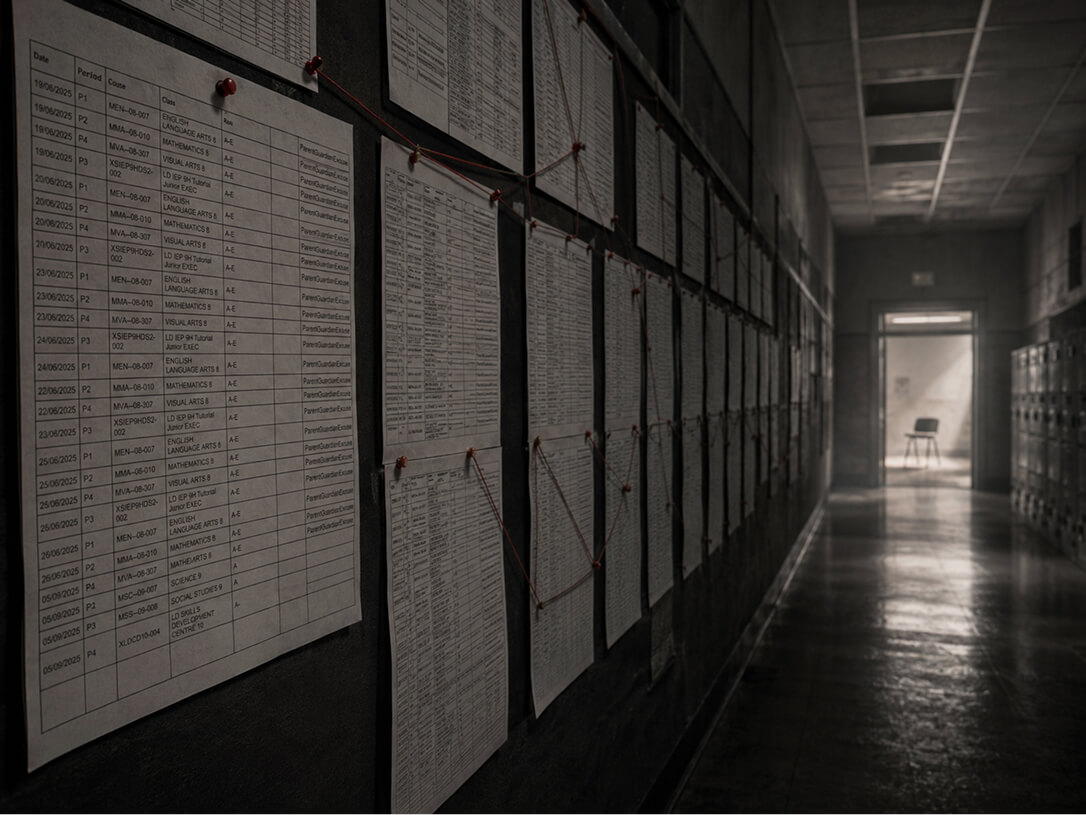
This entry draws from Kim Block’s Part 2(A): Duty to Accommodate – Discrimination Test, which explains that under human rights law, discrimination is evaluated by effect, not intention—and that adverse impact does not need to be catastrophic to be real. Many families are told that their child’s struggles are too mild, too quiet, too manageable to warrant concern. But harm comes in many forms, and it is the presence of a barrier—not the intensity of suffering—that triggers legal obligations.
Key takeaways
- Harm does not need to reach crisis to count
A student does not need to be suspended, hospitalized, or publicly melting down in order to be harmed. Withdrawing from participation, masking distress, losing confidence, missing class time, or quietly suffering all qualify as adverse impact under the discrimination test. - Subtle signs of harm still matter
Sleep disruption, stomach aches, declining motivation, social withdrawal, or refusal to attend school are meaningful indicators that a child’s educational experience may be inequitable. These signs of distress are especially common among disabled students who internalise their struggles. - Schools are responsible for preventing cumulative impact
Small harms—when repeated or left unaddressed—can accumulate into deeper exclusion. A pattern of dismissal or neglect, even when no single incident appears dramatic, may still constitute discrimination under Section 8 of the Human Rights Code.
Learn more
Part 2(A): Duty to Accommodate – Discrimination Test
by Kim Block, Speaking Up BC
-

Debility versus disability: what the system cannot acknowledge
My son Robin took to bed two weeks before March break. He had been…