

Institutional Harm
When harm is built into policy and procedure—not an accident, but an outcome.
-

When back to school means staying in bed
Children will soon be going back to school… well, some children. Stores are already filled with lunch kits, backpacks, and brightly coloured displays of school supplies. Parents are checking whether indoor shoes still fit. Social media will soon fill with first-day photographs: children standing beside front doors, holding signs with their grade and what they…
-
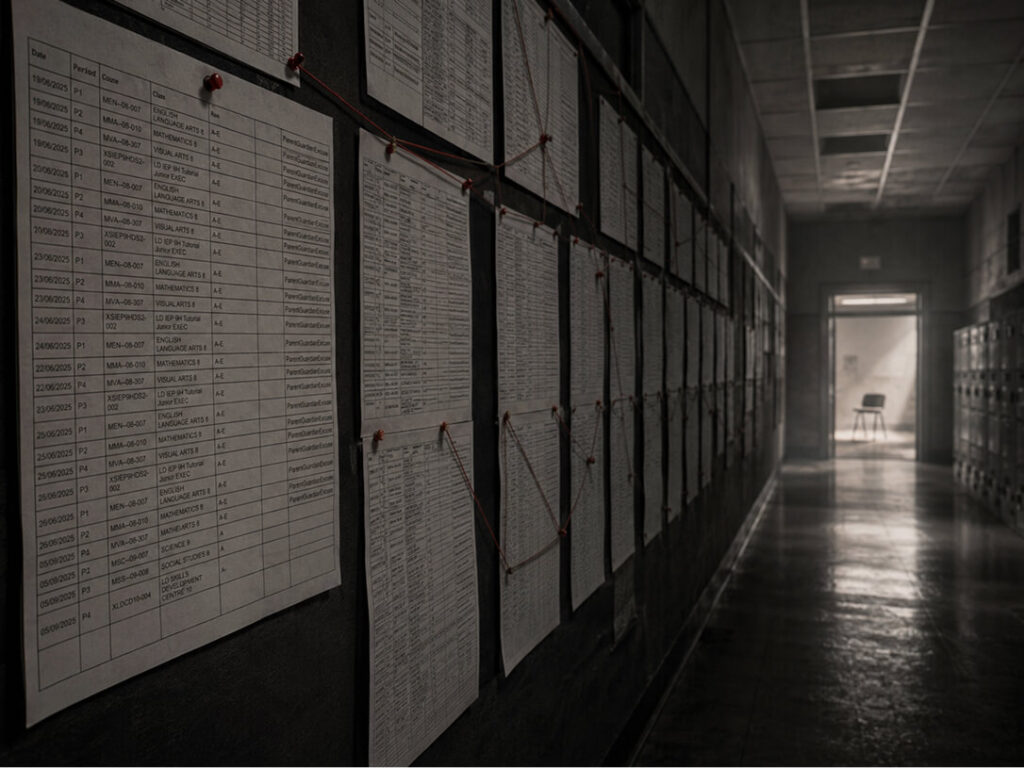
ParentGuardianExcuse: no excuse for exclusion in BC schools
The reason column in my son’s permanent record is mostly blank. When a reason survives, it’s ParentGuardianExcuse.
-

Condition 15: the ethical teacher and the collapse of collective punishment in BC schools
In Milgram’s experiment, 65 percent of people kept shocking a stranger on command. In the variation no one teaches — two authorities, one of them saying stop — the number fell to zero. One dissenting voice in the room stops the cruelty.
-

Be pleasant so others won’t get upset
What a twelve-year mortality study measured, and what it accidentally wrote down: the code of conduct every district hands a mother on her way into the room. You learn it in your hands before you learn it anywhere else. At the table you fold them in your lap, you soften your face into the shape…
-

Too many tongues: how schools turn caregiver testimony into threat
How schools turn caregiver testimony into threat — and why the monstrous advocate is made by the institution that fears her memory.
-

I’m a seventh grade failure
Institutional capture refers to the process by which individuals — parents, children, advocates, even dissenting professionals — are absorbed into the operational logic of an institution to the point where they begin reproducing its framework, its language, and its priorities, without necessarily endorsing them or recognising what is happening. It is distinct from agreement. You do…
-

Children are not pawns: disability, private schools, and budget cost-containment
Public money should not be subsidising private advantage while public schools are told to make do with less. That is the clean version of the argument. It is intuitive, politically useful, and often true. When governments claim there is not enough money for education assistants, specialist support, safe buildings, accessible classrooms, or meaningful inclusion, it…
-
Happy belated PDA Day
I have written about Pathological Demand Avoidance (PDA) quite a bit over the past year, so for PDA Day / PDA Action Week I thought I would do a small review of the themes I keep returning to. It’s not wilful behaviour, usually Schools often read demand avoidance as refusal, manipulation, defiance, escape, or “not…
-
Half a load behind: a postscript for Mother’s Day
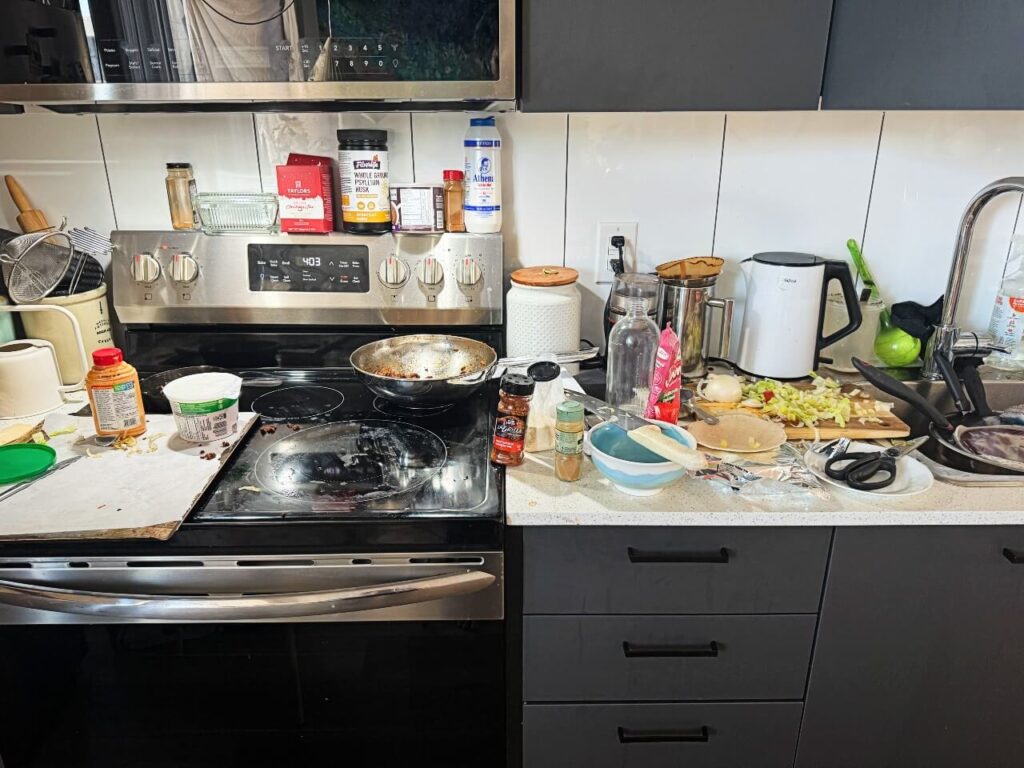
Falling behind has arithmetic, legible only to those who have lived it. You were doing exactly what you always do — the same volume, the same effort, the same sustained output — but the baseline shifted, and “the same” no longer covered both the present and the correction. The deficit compounds because returning to zero…
-

The compliance trap: why IEP goals fail PDA students
Every IEP written for a PDA student begins with the same quiet betrayal. The team gathers — parents, teacher, learning support, maybe an administrator — and the goals are drafted in language that sounds like care: manage responsibilities with support, self-advocate before becoming overwhelmed, organise materials and meet deadlines. The phrases are familiar because they…
-

Happy Mother’s Day, bitches
Mother’s Day for the mothers who are done being good: maternal rage, institutional failure, and why being reasonable was never enough.
-

Bad medicine: ABA is a poison in the bloodstream of public education
The evidence is no longer merely emerging. It is converging. A national study of privately insured autistic youth in the United States matched 17,120 autistic children and youth who received applied behaviour analysis with 17,120 autistic children and youth who did not. The study found that ABA receipt was associated with 30% higher odds of mental…
-

The BC NDP is balancing the budget on mothers’ backs
For years, families have been told that schools are inclusive, that supports are needs-based, that ministries are working together, and that children will not be left behind—a cascade of institutional reassurance designed to function as substitute for material reality, the kind of language Sara Ahmed describes as non-performative, words that announce commitment precisely because they…
-

BC schools are failing disabled students: an absence analysis
This analysis is based on a provincial FOI request to the BC Ministry of Education, file ECC-2025-52461, which was shared recently, bc BCEdAccess. The data covers absence rates, absence reasons, enrolment, and mid-year exits for BC public school students, broken down by inclusive education designation, across the 2022/23 and 2023/24 school years. This analysis focuses on…
-

Slack off and succeed — the grey rock method for institutional advocacy
Schools feed on your emotional participation. Grey rock is the refusal to be raw material. Stop justifying. Stay flat. Reclaim your evenings.
-

The system we navigate is a one-way ticket to involuntary care
You think you are attending meetings. You think you are asking for support. You think you are building a case for your child. You are building a case. Just not the one you think. You enter as a credible narrator You arrive with timelines, with emails, with documentation so meticulous it could pass peer review…
-

Sooke School District (SD62) secondary schools: a neurodiversity-informed policy critique
The Sooke School District secondary code of conduct opens with the steady, reassuring cadence of a district reading its own values back to itself: schools are “places for safe, purposeful learning,” conduct is “a shared responsibility of students, staff, parents / guardians and the broader community,” and every member carries an obligation to “support learning,”…
-

When the complaint becomes the problem
The Canary Collective has published a piece Risk Assessment and Liability Management: The Hidden Function of Complaints that describes the process by which a parent raising legitimate concerns about their child’s education is transformed, through careful documentation and strategic delay, into a risk to be managed rather than a voice to be heard. The article…
-

The cost of defending scarcity: moral injury and the exhaustion economy
The BC education system spends extraordinary resources defending scarcity while positioning that defence as fiscal responsibility, generating an exhaustion infrastructure that operates across every population the system touches—teachers, families, disabled children, administrators, support staff—all labouring to maintain stories that protect individual dignity within conditions designed to make moral action impossible. A recent analysis on Fund…
-

Exclusion is economically irrational and the hidden costs of refusing accommodation
BC schools spend more money refusing accommodation than providing it. Learn when hiring a lawyer becomes the only fiscally rational choice for your family.