

Advocacy and resistance
Advocacy, organising and resistance names the work families and communities do to challenge school harm and build collective power. It includes parent-led advocacy, public pressure, evidence-gathering, storytelling, campaigns, coalition work, and the refusal to let institutional narratives define children’s suffering as normal, inevitable, or deserved.
-
Drawn and quartered: Sibling trauma, institutional containment, and the erasure of care for families with multiples
When you are the parent of twins—especially autistic/ADHD twins—you learn very quickly that the education system can’t hold both of them at once. Support is rationed. Attention is rationed. Empathy is rationed. The school system does not say this aloud, of course. It claims to treat every child as an individual. But as soon as…
-

IEP goals that don’t mean ‘don’t be autistic’
Too many IEPs include goals like “will self-regulate” or “will self-advocate”—goals that sound supportive, but often mean “will not disrupt,” “will not need help,” or “will not act autistic at school.” This post explores how seemingly neutral language can become a tool for erasure, and offers concrete, neurodiversity-affirming alternatives that centre support, access, and dignity—so…
-

Language to start a revolution
Our library of tips offers a concise, alphabetically organised toolkit for recognising and challenging the systemic forces that shape student experiences in British Columbia’s public schools.
-
Maybe tomorrow: reflections on goal post shifting and the economics of access
There were accommodations on paper and endless lip-service meetings. But none of it happened in the classroom. And every time we did what was asked—another intake, another form, another plan—the goalpost moved again. We weren’t asking for miracles. We were asking to be seen as disabled. And instead, we were told to be more positive,…
-

Revoking recess as a form of collective punishment
Rules intended for safety become instruments of collective punishment when they erase unstructured play from the school day, compounding distress for children who rely on movement, predictability and sensory regulation. this post examines the disproportionate impact on neurodivergent learners and proposes targeted interventions that preserve every child’s right to play and learn.
-

“Too much”: on allergy, autism, and the systemic erasure of care
There is a quiet solidarity among parents whose children are considered too much for school. Some of us carry medical kits. Others carry binders of psychological assessments. But all of us carry the same invisible burden: a system that treats our children’s needs as optional—and our vigilance as overreaction. This is the story of two…
-
Right to no discrimination
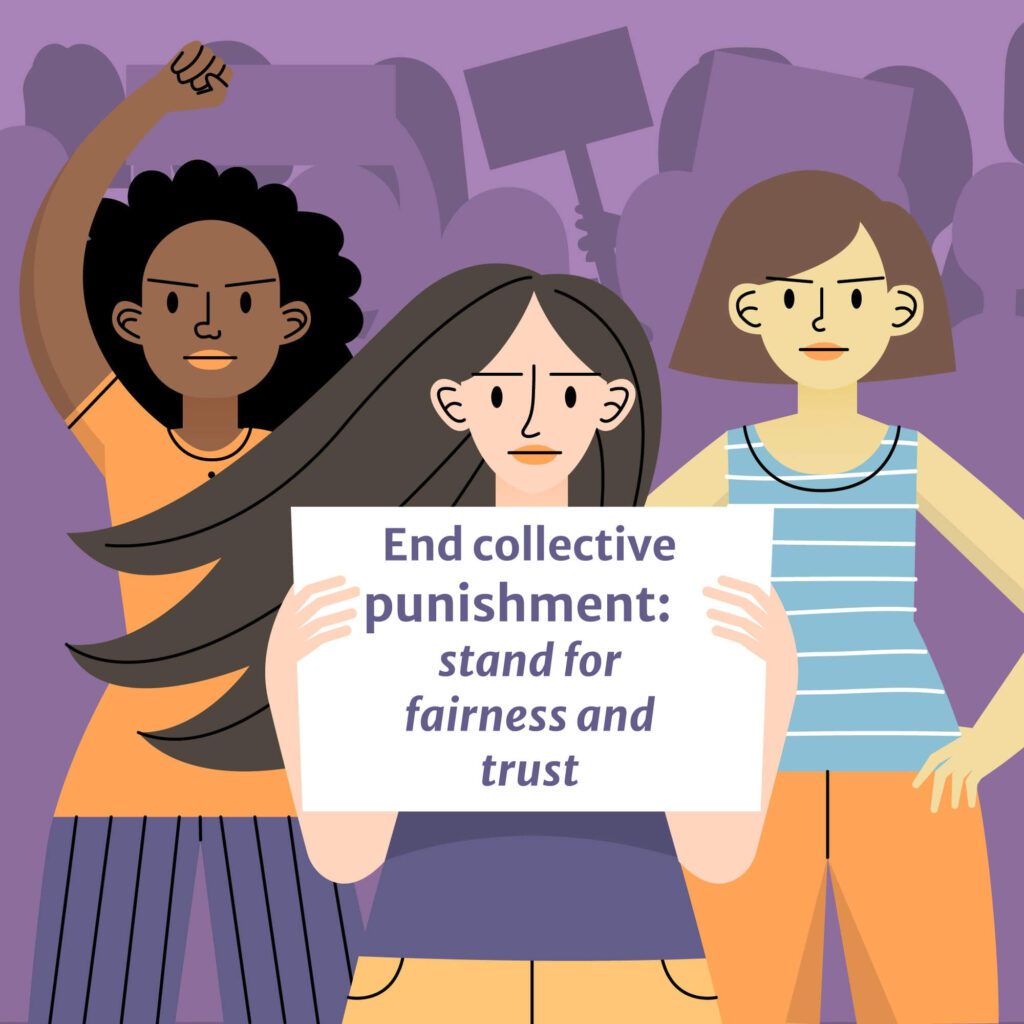
Every child has the right to learn and belong at school without being treated unfairly because of who they are. In British Columbia (B.C.), this Right to No Discrimination means public schools must welcome all students on equal terms, regardless of their race, Indigeneity, colour, ancestry, place of birth, religion, family background, sex, sexual orientation, gender identity, disability,…
-

How narcissism and PDA collide in the wreckage of trust
Some children refuse control because control has always felt like violence. Because control has worn the face of love and left behind a residue of shame. Because adults said, “this is for your own good” while ignoring tears, violating autonomy, and insisting that compliance was safety. For these children, especially those with a PDA profile,…
-

When energy returns: on finding purpose, refusing silence, and recovering from institutional harm
When I could barely rise from the couch, I believed my exhaustion was depression. Now I see it was the cumulative harm of years spent silencing myself in hostile institutions, suppressing truth to protect my neurodivergent children. The body remembers this violence; it registers as a weight on the chest, a fatigue that resists all…
-
Introducing the school finder: making it easier to act
If you’ve had more than enough of your child coming home crying due to collective punishment, we have a solution: today, we are launching a new tool designed to help families, advocates, and educators challenge collective punishment in British Columbia schools. The school finder makes it easy to search for your child’s school and take immediate action.…
-

Don’t get stuck in ‘working it out’ purgatory
Time is money, as they say—but in the world of school advocacy, it’s mostly mothers paying the bill. They spend their work breaks writing emails. Their nights gathering documents. Their weekends holding their children together after another week of being failed. They do this unpaid, unsupported, and unseen. The cost isn’t just measured in hours—it’s…
-

What spoons can’t explain
The spoon theory was a revelation once. A metaphor for invisible disability. A way to say: I don’t have limitless energy. Every action costs. But like all metaphors, it eventually failed me. It suggests I have a drawer of spoons to begin with—something measurable, something I can manage. Something that implies I am in control.…
-

The ABCs of engineered scarcity
A learning module for educators, caregivers, and community members resisting austerity logic in public systems. Engineered scarcity operates like a slow haemorrhage, draining public education of the resources it owes every child while masking that attrition behind soothing administrative dialects; this primer sets out to rupture that façade by naming, in alphabetical precision, the tactics…
-

The price of being the one who says the hard thing
There is a moment that plays out in a thousand variations—at school pickup, on the playground, during track and field events—when a parent turns to you, warm and casual, and says, “How are things?”, and for the briefest fraction of a second, you forget the rules and answer honestly. You begin to speak—not with rehearsed…
-

Why school advocacy is a women’s issue
This site exists because public education systems harm children—and then gaslight the people who try to stop it. Those people are not randomly distributed. They are overwhelmingly women. Advocacy is a women’s issue not because women are naturally better at it, or more available, or more nurturing. Advocacy is a women’s issue because institutions depend…
-
Why we built the BC School Districts collective punishment database
When we began writing about collective punishment in schools, we searched for district policies—something public, something clear. What we found instead were Reddit threads and Facebook comments. And where formal documentation did exist, it was buried in long policy PDFs filled with abstract values—fairness, accountability, safe and caring schools—but almost nothing concrete about what happens…
-

Engineered famine in public education
In British Columbia schools today, we are not facing a behaviour crisis—we are facing a famine of care. This essay weaves together personal memory, systemic critique, and deep empathy for teachers and families alike to ask why our schools are starving the very relationships that children need to learn and thrive. It calls for an…
-

A landmark case for educational justice in BC
The May 2025 decision from the BC Human Rights Tribunal in Parent obo Student v. BC Ministry of Education and another, 2025 BCHRT 112 carries profound implications for families fighting systemic discrimination in education—particularly those challenging collective punishment, exclusion, and partial-day attendance programs imposed on disabled students. While the complaint against the Ministry was dismissed, the Tribunal…
-

This broke me: a parent’s experience of school advocacy
Parenting is not a monolith. Neither is disability. Every family walks a different path, shaped by bodies, resources, identities, and institutions. This piece reflects one perspective—mine—as a disabled parent navigating systemic harm, health collapse, and the fierce love that remains. It is not universal. But it is real. The cost Parenting disabled children is not…
-
Rethinking accessibility leadership, training, and labour in BC public education
In accessibility work, most transformative insights come directly from disabled people. Lived experience is primary data; manuals and metrics are, at best, secondary literature. In schools, teachers are experts in pedagogy, yet few are trained in disability or neurodivergence. That absence is not incidental—it is engineered, and the consequences are everywhere. The current failure—and promise—of…