

Advocacy and resistance
Advocacy, organising and resistance names the work families and communities do to challenge school harm and build collective power. It includes parent-led advocacy, public pressure, evidence-gathering, storytelling, campaigns, coalition work, and the refusal to let institutional narratives define children’s suffering as normal, inevitable, or deserved.
-

Care and support for children with disabilities within the family
Children thrive when their caregivers thrive. The Special Rapporteur reminds us that the well-being of children with disabilities is bound to the well-being of their families—especially mothers, who carry most of the invisible labour. When schools fail to support families, they create conditions that push children toward exclusion or even institutionalisation. Families are often forced…
-
Coerced care, gendered neglect, and the reframing of family collapse
It began with daily incidents that were anything but small. My son repeatedly hugged my daughter against her will, pressing into her space while she pulled away, asking for it to stop. She reported that when she turned to supervision aides for help, they told her it was fine because they were siblings. Staff framed…
-

Advocacy in BC schools: a comprehensive guide for parents
When your child experiences harm in a British Columbia public school—when they are excluded, punished unjustly, denied accommodations, or subjected to practices that violate their dignity—you enter a landscape designed to exhaust rather than resolve, to defer rather than repair, to protect institutional reputation rather than protect children. This guide maps that terrain, naming the…
-
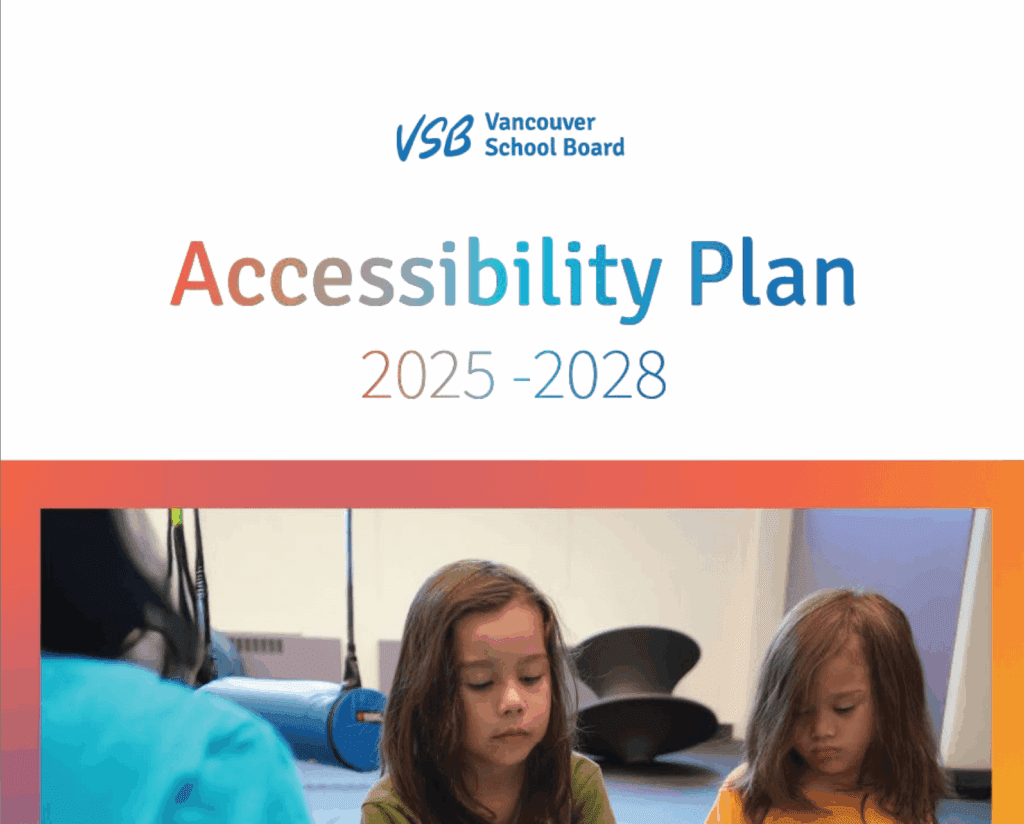
Side-by-side comparison of the VSB plan and a meaningful accessibility plan
The Vancouver School Board has released an accessibility plan that presents itself as a generous gesture toward inclusion, offering aspirational statements about equity, belonging, and shared responsibility, yet the document carries a softness that obscures the lived gravity of disabled students’ experiences and the profound emotional labour that families expend while navigating systems shaped by…
-

Serpentine Heights Elementary (SD36): a neurodiversity-informed policy critique
Serpentine Heights presents its Code of Conduct as an affirmation of safety, inclusion, and communal care. The opening commitments describe a school that values belonging, co-constructed routines, and dignity for every learner, offering a vision of education rooted in relational safety and shared citizenship (p. 1) . This framing gestures toward a caring culture, one…
-

Nobody is going to thank you
Nobody tells you that you can pour every last scrap of yourself into advocacy and still feel your bond with your child begin to strain. There is a familiar story passed among parents—one in which you step in, do a little advocacy, and watch as the pieces fall into place. The children grow, the challenges…
-

They keep moving the goalposts while our kids pay the price
It began with a phone call that felt like a lifeline. A new teacher was coming, they said, and maybe this would be the one to understand. We clung to that hope. We paid for another assessment, scheduled more therapy, spent weekends in waiting rooms and weekdays in meetings where the promise of change hovered…
-

Our goals are not the same: ableism in bc public school
I want my children supported to grow and learn; schools uphold ableism by demanding they mask compliance or feign helplessness for support.
-
Why outspoken mothers face retaliation for advocacy in BC schools
Some of our articles speak in a more academic voice, especially when we are naming systems that silence or harm within BC schools. This is a sister essay to Epistemic silencing of disabled children’s primary caregivers, written as a more accessible entry point for readers who are newer to the topic or looking for clarity…
-
The orange shirt I folded
I was folding laundry late one night, brain running on the kind of background grief that rarely quiets, when my hand closed around the orange shirt. I moved to set it aside—automatically, instinctively—because I remembered September was coming, school would be starting, and Orange Shirt Day would follow quickly after. That shirt would be needed…
-

A thousand cranes, a thousand truths
When I was a little girl, I folded cranes. Hundreds of tiny, meticulous, brightly patterned creatures, each creased into being by the stubborn, lonely determination of a child who could sense that the world was coming undone and wanted, somehow, to hold it together. I folded them from the paper margins of my workbook, from…
-

Procedural policing of pain: what happens if I keen?
Keening—the sad, piercing wails often heard at a funeral for a child—is a human expression, older than the rules we follow or the schools we enter. It is what happens when grief overwhelms language, when memory floods muscle, when there is nothing left but pain. It is not shouting. It is not rage directed at…
-

7 signs your child (or you) is being positioned as the problem to preserve the group
When a parent becomes too precise, too prepared, or too emotionally honest, the school system may cast them—or their child—as the problem. This essay outlines seven signs that scapegoating is being used to preserve group harmony at the cost of justice, with particular attention to how this dynamic unfolds in British Columbia public schools.
-
The paperwork trap: when doing everything right becomes your downfall
When parents follow every rule, cite every policy, and document every meeting in the British Columbia public school system, they are often framed as adversaries, not allies. This essay explores how procedural knowledge becomes a liability, how the IEP process punishes fluency as threat, and why the most thorough advocates are the ones most likely…
-

The compliance economy
In their article Of Sinners and Scapegoats: The Economics of Collective Punishment, J. Shahar Dillbary and Thomas J. Miceli argue that collective punishment emerges not merely as a failure of precision or fairness, but as a deliberate mechanism for preserving internal group cohesion. The scapegoat, must be non-random, visible, and different, and their suffering must be…
-
The threat of clarity: women who know too much
Why confident, justice-oriented women are punished in public systems The woman who knew too much She is articulate, principled, professional, and polished—measured in her cadence, practiced in her facilitation , and fully aware of the power her clarity holds. She enters each room equipped with documents, timelines, policies, and annotated proof of harm, accompanied not…
-

The goodwill ledger: how schools calculate inclusion allotments
Schools in British Columbia keep an invisible ledger—one that tracks not just budgets, but emotions, tone, and perceived worthiness. Families who ask too clearly, too often, or on behalf of more than one child are quickly marked as overdrawn. This essay continues the meditation from Of Sinners and Scapegoats, tracing how goodwill becomes a currency,…
-

Maternal grief, public ritual, and the refusal to behave at the IEP table
I have walked into these rooms again and again—across years, with new principals, new case managers, additional complaints filed, subsequent appeals launched, IEPs dusted off and redrafted in the same language that failed last time. The faces change but the ritual remains. Seven professionals already seated, already laughing, already casually shaking off their last meeting…
-
Looking in the mirror is hard: maternal rage and institutional cowardice
I searched for literature that affirms what I know in my body—that maternal rage can be righteous, grounded, and deeply linked to the betrayal of public institutions. But what I found instead was an avalanche of studies examining how maternal anger harms children. The field catalogues the psychological effects of maternal yelling, tracks the correlations…
-
Shattered pathways of parent advocacy in BC’s public schools
It’s time to riot in the streets. We have tried everything else and our children are still being hurt. The existing systems of appeal and escalation are ineffective, more focused on preserving the institution than delivering justice. It’s time to end the engineered scarcity in our public education system. The maze of ineffective complaint avenues…