
Educational harm
The emotional, cognitive, and academic consequences of exclusion, burnout, unsupported needs, and systemic discrimination in school settings.
-
Performative accessibility in British Columbia public education
Too often, accessibility in schools is performance, not practice. Symbolic gestures and endless buzzwords cannot replace the courage to name harm, take responsibility, and commit to structural change. Until then, access plans remain brochures—and inclusion a stage set.
-

Comparison of Provincial and Territorial rules on collective punishment in schools
Across Canada, policies on student discipline vary widely—but only one province, Nova Scotia, has taken the decisive step of explicitly banning collective punishment in schools. In April 2025, Nova Scotia revised its Provincial School Code of Conduct Policy to require individualised responses to student behaviour, affirming that group-based discipline is not just ineffective but unjust.…
-

Grievability and legitimacy in BC Schools
Disabled children are being pushed out of public education—and their families are picking up the pieces. This post examines who is seen as worthy of support, what it costs when systems abandon care, and why the quiet exodus from schools is not a choice, but a failure of justice.
-
The politics of politeness: how tone-policing silences parent advocates
When a parent dares to speak plainly about harm—especially when that harm is systemic, ongoing, and inflicted upon a disabled child—they are swiftly met with a familiar response: watch your tone.
-

Balancing budgets by denying disabled kids support
In British Columbia, we are told that the education system is improving. Budgets are rising. Inclusion is a stated priority. And yet, for families whose children require consistent, sustained support—especially those who are disabled or living with complex trauma—the lived experience is defined by absence, delay, and denial. There is a growing chasm between the…
-
We did everything right, but we were failed
Introducing Robin’s story and the cost of manufactured scarcity In British Columbia, the promise of public education is being quietly dismantled. Not with headlines, not with declarations—but with slow erosion, strategic omission, and institutional neglect.
-
You’re not wrong: reflections on motherhood and advocacy
This piece is for the mothers who have become unrecognisable to themselves in the crucible of advocacy—those who perform calm while their bodies tremble with rage, who write polite emails through tears, who scream in the car and smile in the meeting. It is for the women whose clarity was framed as aggression, whose persistence…
-
The ABCs of regressive punishment
Discipline in schools is rarely neutral. For neurodivergent students, it often takes the form of quiet harm—masked as structure, delivered as shame. From exclusion and forced apologies to behaviour charts and the denial of recess, regressive punishment practices remain embedded in our classrooms. They don’t teach accountability. They teach fear, isolation, and the high cost…
-
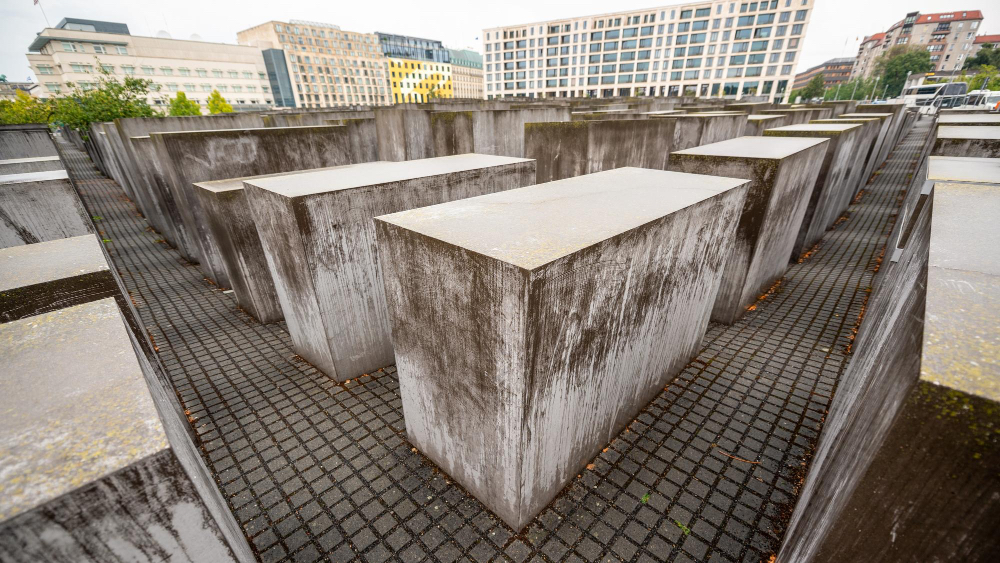
The history of collective punishment
Collective punishment emerged in a time when people were not understood as individuals, but as extensions of the family, the clan, the village. Responsibility was held in common. Honour was shared. So was shame. In such systems, if one person broke a social norm or committed a crime, the entire group was held accountable. Not…
-

Vancouver School District (SD39) district code of conduct: a neurodiversity-informed critique
The Vancouver School Board’s District Student Code of Conduct (AP 350) is an expansive and methodically constructed document. It commits to fostering safe, inclusive, and nurturing schools; it recognises systemic discrimination, promotes restorative practices, and articulates a detailed suspension framework with multiple levels of review. The document outlines procedural guidance for school leaders, provides template…
-

Erased voices: mothers and the schoolhouse
Imagine a mother pleading at a school meeting, desperate for support for her child, only to be met with suspicion. In today’s BC schools, some mothers say they’ve been branded “too emotional” or even unfit for fighting for their kids. Instead of solutions, educators have been known to shift blame onto parents: a BC resource…
-
Collective punishment: a focal point of injustice
Collective punishment, the practice of disciplining a whole group for the misdeeds of one or a few, is widely recognised as unjust and counterproductive. Children know it’s wrong Even children intuitively grasp its unfairness. In one famous case, an 11-year-old student in the UK bluntly told her teacher that “collective punishment… is not fair on the…
-

Vernon School District (SD22) progressive discipline and suspension guidelines: a neurodiversity-informed critique
The SD22 progressive discipline and suspension guidelines begin with a clear statement of intent: to maintain a safe, caring, and healthy environment for all members of the school community. They emphasise functional assessment, procedural safeguards, privacy protections under FIPPA, and the possibility of restorative or reparative responses. Formal consequences are structured to follow only when…
-
A neurodiversity-affirming critique of the BC Ministry’s guide to school conduct
The BC Ministry of Education’s guide presents itself as a blueprint for positive school climates. Yet beneath its conciliatory language, it reinforces behavioural conformity and institutional authority over student autonomy. It fails to address the structural and sensory barriers faced by neurodivergent students, and in doing so, undermines its own claims to safety and care.…
-

Building safer schools through restorative justice and neurodiversity-informed practices
When children are dysregulated the response from educators is too often punitive. For neurodivergent students in particular, the cost of these responses is high: shame, trauma, social exclusion, and a deep erosion of trust. But it doesn’t have to be this way. Restorative justice offers a path forward. Not as a one-time circle or a…
-

There’s no such thing as unexpected behaviour
This piece was hard to write. It holds my grief. It documents not only what happened to my child, but how systems made it worse by pretending to be surprised. I share it because too many families are made to carry this alone. Every time I see the phrase unexpected behaviour in a school document, a safety…
-
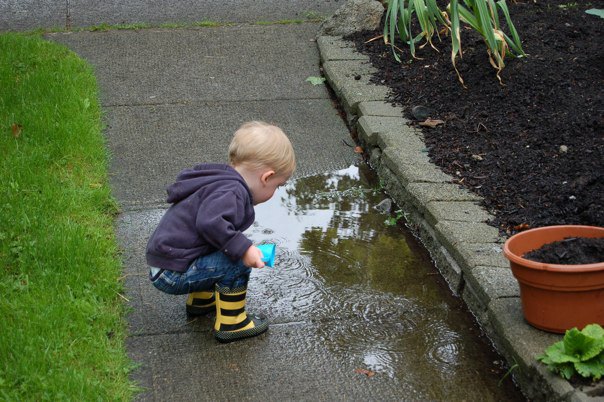
The cost of masking: What we lose when children perform wellness
This evening, I walked my son down the street toward the place where his father was waiting to pick him up. It was an ordinary hand-off on an ordinary day, except I carried that soft, watchful question I always carry now, held quietly in my chest until the timing feels right. I asked if he…
-

Barriers in the Vancouver school system: a parent’s perspective
For families raising neurodivergent children, navigating the school system can feel like surviving a labyrinth built to exhaust you. What should be a place of growth becomes a terrain of harm and dismissal. Beneath the polished language of equity and inclusion lies a set of invisible barricades—attitudinal, communicative, spatial, systemic, and technological—that quietly erode trust…
-

“Urgent: Third Request” — what to do when schools ignore your emails
You write the email. You name the problem. You describe, in detail, what your child is experiencing and what they need to be able to participate. You’re respectful, clear, and solution-focused. And then—you wait. For many families, especially those raising disabled or neurodivergent children, this scenario is far too familiar. The moment you speak up—especially…
-

Real leaders lead by example
In May 2025, the Vancouver School Board (VSB) quietly enacted wage cuts that stripped contracted workers—specifically bus drivers and special education attendants—of their living wage top-ups. At the same time, VSB senior leadership quietly accepted significant raises. This decision will result in a 25% wage reduction, with drivers earning $23/hour and attendants only $20/hour [CTV…