

Educational harm
The emotional, cognitive, and academic consequences of exclusion, burnout, unsupported needs, and systemic discrimination in school settings.
-

Rot at the root: Why POPARD must be dismantled from the top down
When I first objected to the strategies POPARD proposed, I tried—truly—to assume good intent: that if I just gave them the right information, the clearest language, the most generous interpretation of their mandate, they would course-correct and stop pushing reward charts onto an already-traumatised child. I wrote careful emails, cited the psychologist’s diagnosis, offered specific…
-
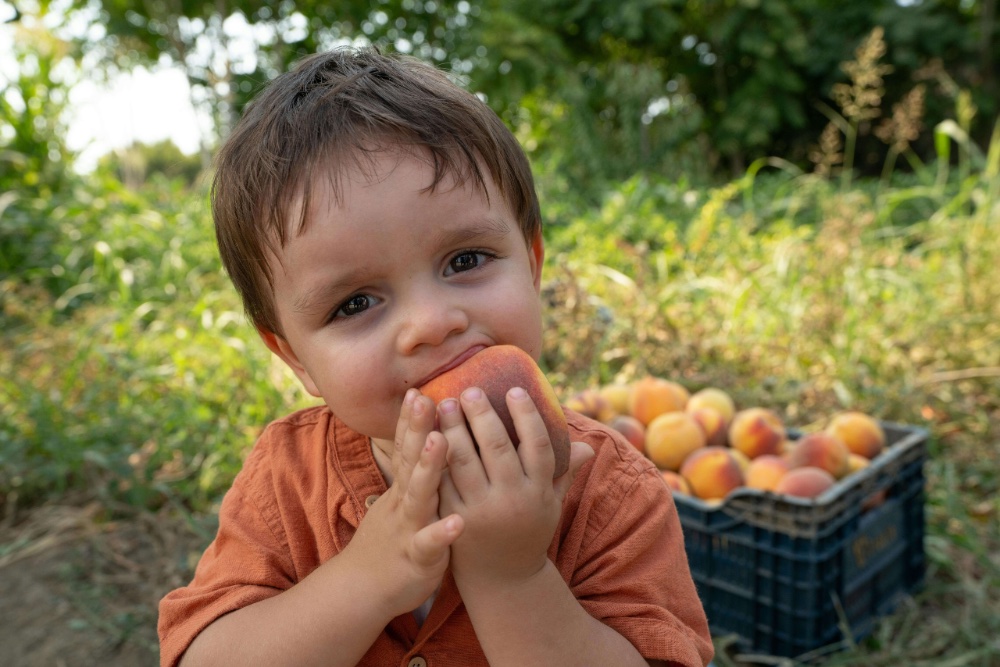
He doesn’t go from zero to sixty
“He’s not a car,” I said, exasperated, after someone described Robin as going from zero to sixty. The withering look I received in return was pure disgust—as though I had interrupted a sacred adult ritual, as though I may as well have had a huge boil in the middle of my forehead, oozing pus. But…
-
Reconciliation demands that we put collective punishment aside
Collective punishment in residential schools did more than punish children—it shattered the bonds between parents and children. For many parents who survived, the fear, shame, and trauma they endured complicated their ability to nurture trust in their own parenting. Emotional disconnection and disrupted parenting Adults who attended residential schools often struggle to form secure attachments…
-
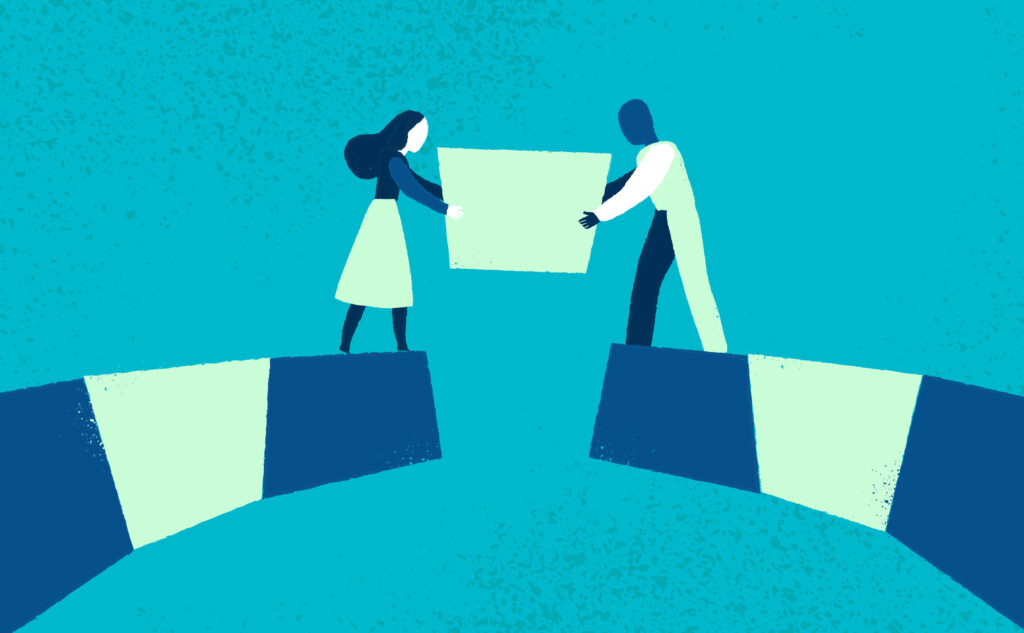
Support is a bridge
What happens when schools pretend the bridge is whole. The appearance of help “She gets check-ins from the area counsellor once a week.”“We’ve made sure the classroom teacher is aware of her IEP.”“We’re doing everything we can within the current resources.” These are the phrases they recite—softly, professionally, as though reassurance were a substitute for…
-
Data tracking in the residential school system
The Canadian Residential School system (circa 1870s–1990s) was a network of church-run boarding schools funded by the government to forcibly assimilate Indigenous children. In theory, such a large system might have been guided by careful data collection – tracking student health, education outcomes, and well-being. In reality, government officials prioritized ideological goals and cost-saving “optics” over…
-

The space between my brain and the page
My parents never sent me to kindergarten, so when I started first grade, it was a bit mysterious to me. I had been living on the side of a mountain, chasing garter snakes, and picking wild strawberries. While the class attempted to learn the alphabet, my parents had already been reading chapter books to me…
-
Collective punishment: unjust in schools, unjust everywhere
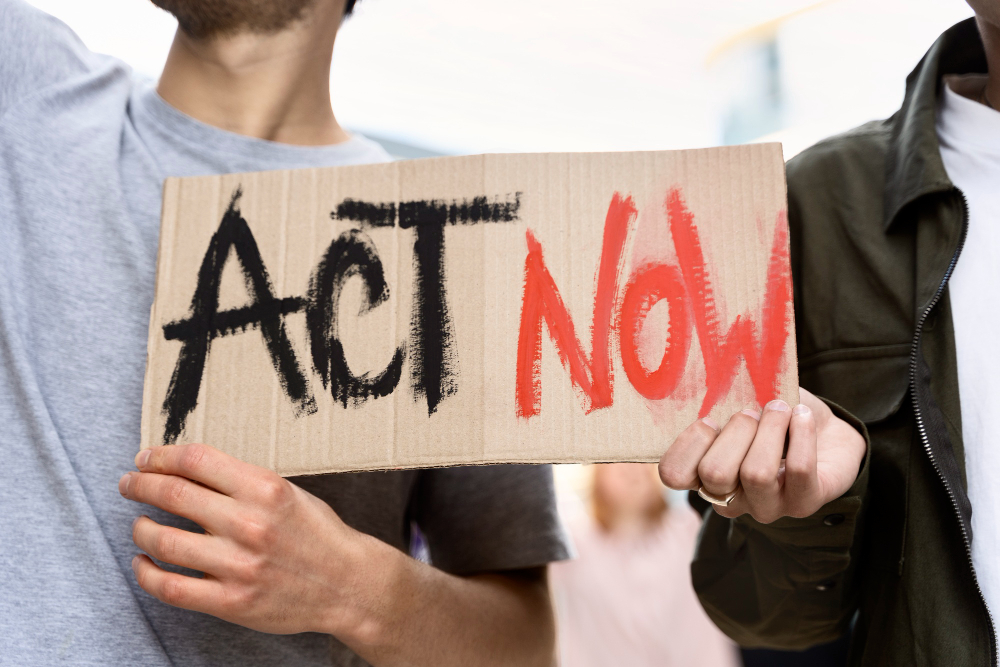
Collective punishment—punishing a group for the actions of an individual—is widely recognised as a violation of human rights. It is condemned in international law, yet it persists in various forms worldwide. From China’s persecution of human rights defenders’ families to Israel’s blockade of Gaza and the Taliban’s illogical governance, collective punishment disproportionately harms innocent people.…
-
The stories we carry: how schoolyard legends and classroom fear shape us
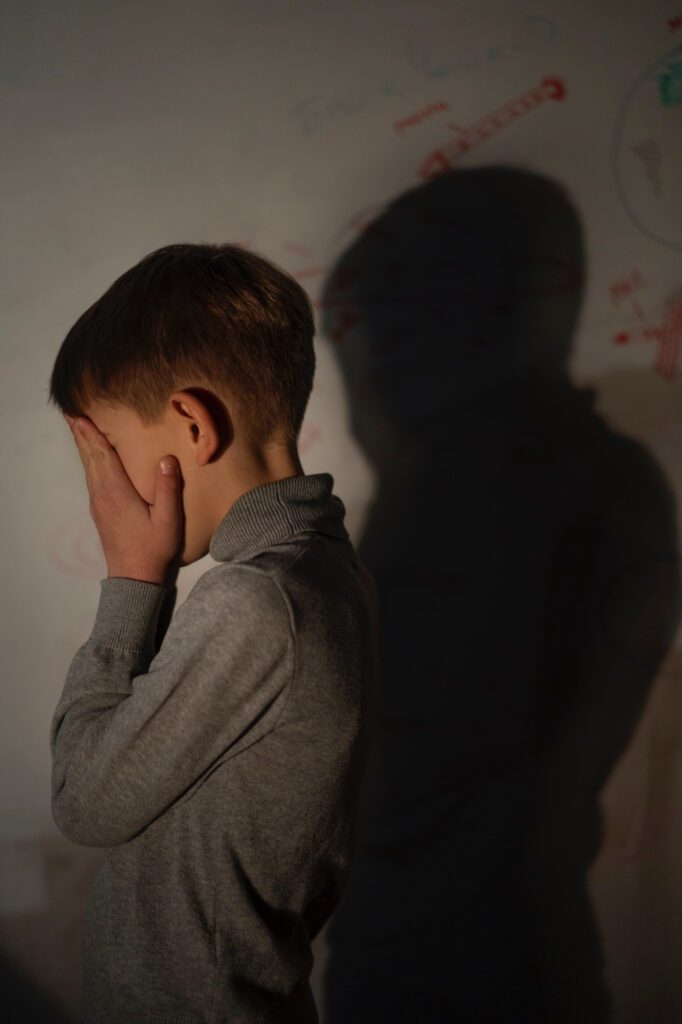
When I was in grade three, I attended an alternative school that felt like a sun-dappled meadow. We painted. We played outside. We had a math teacher who made learning feel like a game, not a test. There was room to breathe. I remember it as freedom. Then, in grade four, everything changed. My new…
-

Parenting through gaslighting and grief
In the early days, our relationship was luminous, almost feverishly bright with attention and agreement and what I understood then as love—its intensity, its precision, the way it seemed to reach for every part of me, even the parts I kept hidden, even the ones I feared were too strange or fragile to show. I…
-
Maternal scream: embodied rage in a system that punishes and smiles
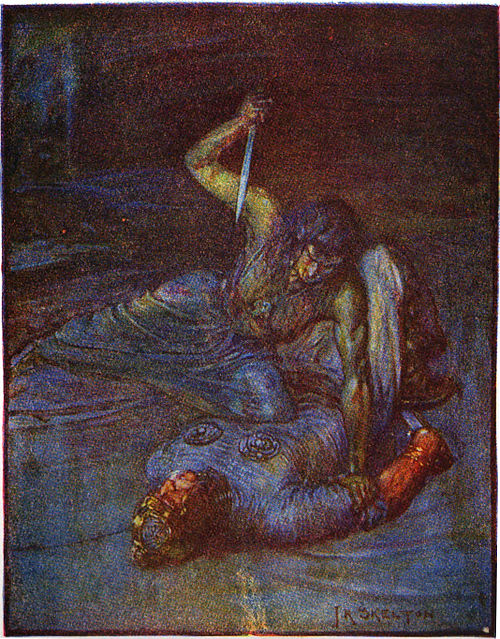
This rage didn’t appear in a vacuum. It was not spontaneous. It is the inevitable consequence of a system that harms children while demanding that mothers smile back. It is what happens when a process is engineered to fail your child and then punishes you for noticing. They built the conditions. You simply refused to…
-

Calling the exclusion line
Every morning, when we dial the school’s sick line, we enact a ritual that ought to acknowledge more than a fever or a stomach ache. In theory, this system exists to safeguard children who cannot attend school due to illness. In practice, it masks the institutional harms that shape our decisions, erasing critical context from…
-
Shut it down: Why POPARD cannot be trusted to support neurodivergent children
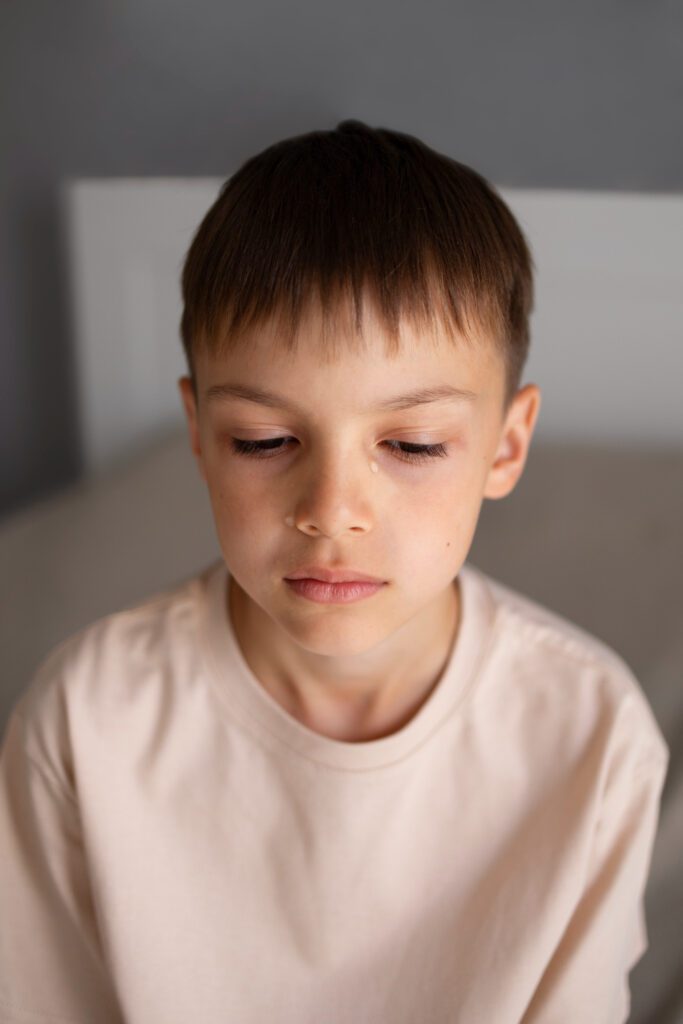
We asked for help.We got a behaviour chart. We invited experts into our child’s life, hoping they would help school staff understand his anxiety, his trauma responses, his fiercely sensitive nervous system. We asked for relational strategies grounded in respect and attunement. We shared research. We named his diagnosis. We explained, in plain terms, what…
-

How regressive school policies limit inclusion
On the first day of school, it all looked so promising that it seemed almost too good to be true—the hallway bulletin boards overflowed with vibrant slogans about kindness, leadership, and community belonging, while the principal’s welcome message spoke in glowing terms about student voice, shared responsibility, and the promise of a positive school culture…
-
Restraint and isolation in British Columbia schools
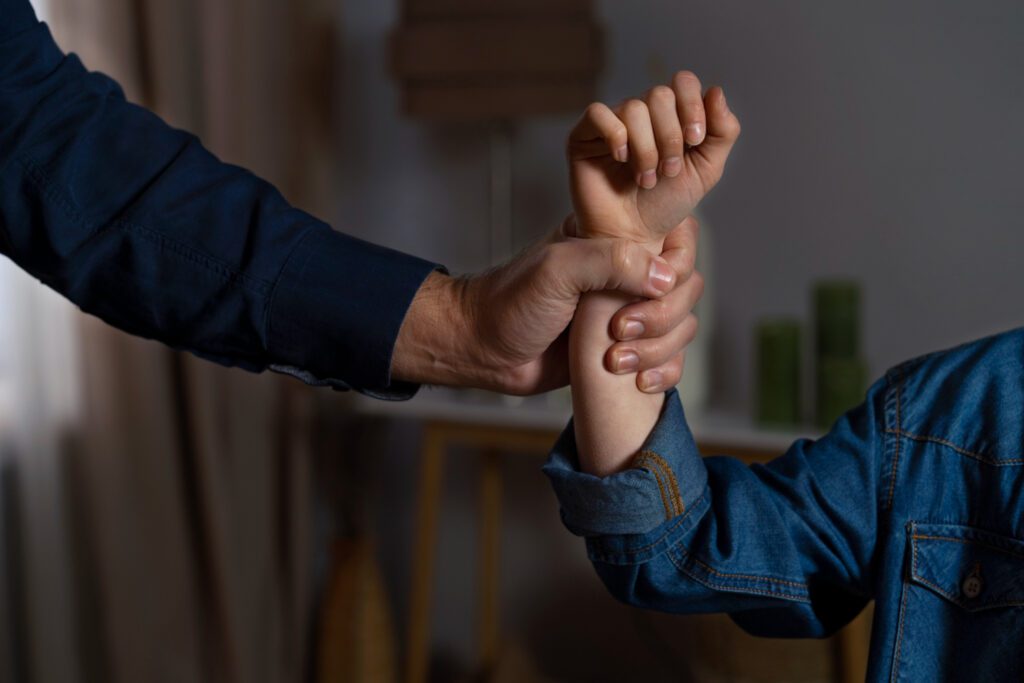
Physical restraint and isolation—sometimes termed “seclusion”—remain legally unregulated in British Columbia schools, even as provincial guidelines seek to limit their use to moments of extreme risk. Physical restraint is defined as any method of restricting a student’s freedom of movement to maintain safety, while seclusion involves involuntary confinement in a space from which the student…
-
How classroom values become ableist barriers
There is no such thing as a neutral rule. Every expectation reflects a theory of the child: what is normal, what is ideal, what is possible. And in most classrooms, these theories are wrong. I was given a list of behavioural values from my child’s class—Division 3. It included items like: stay in the group,…
-
Profound loss amplifies calls for better training
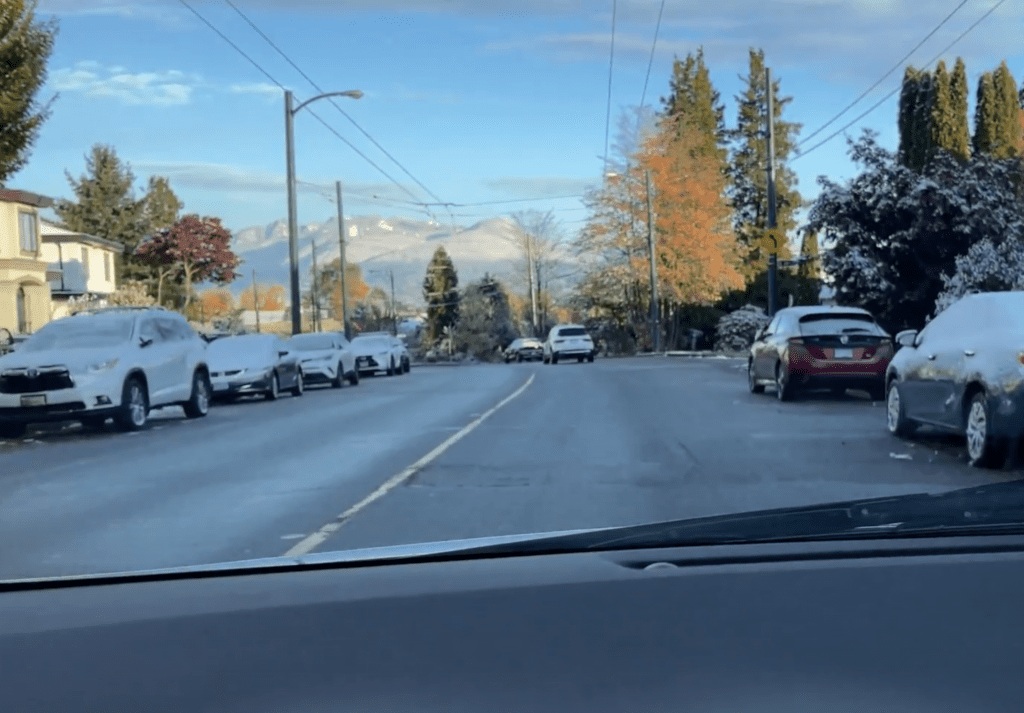
I was in the car with my children when I first heard the story of Chase, the 15-year-old boy who was shot and killed by police, in Surrey. It’s deeply distressing to hear this, knowing full well that my kids are recalibrating their worldview. Kids can be shot. My children sometimes process auditory information more…
-
What policy says about collective punishment in schools
Collective punishment is never explicitly mentioned in the School Act or BC education policies, but it is made very clear that the system is meant to be fair, accountable, and respectful. The School act states the discipline in schools must be “similar to that of a kind, firm and judicious parent” (Section 76(3)). I consider…
-
When autistic girls fawn and schools look away
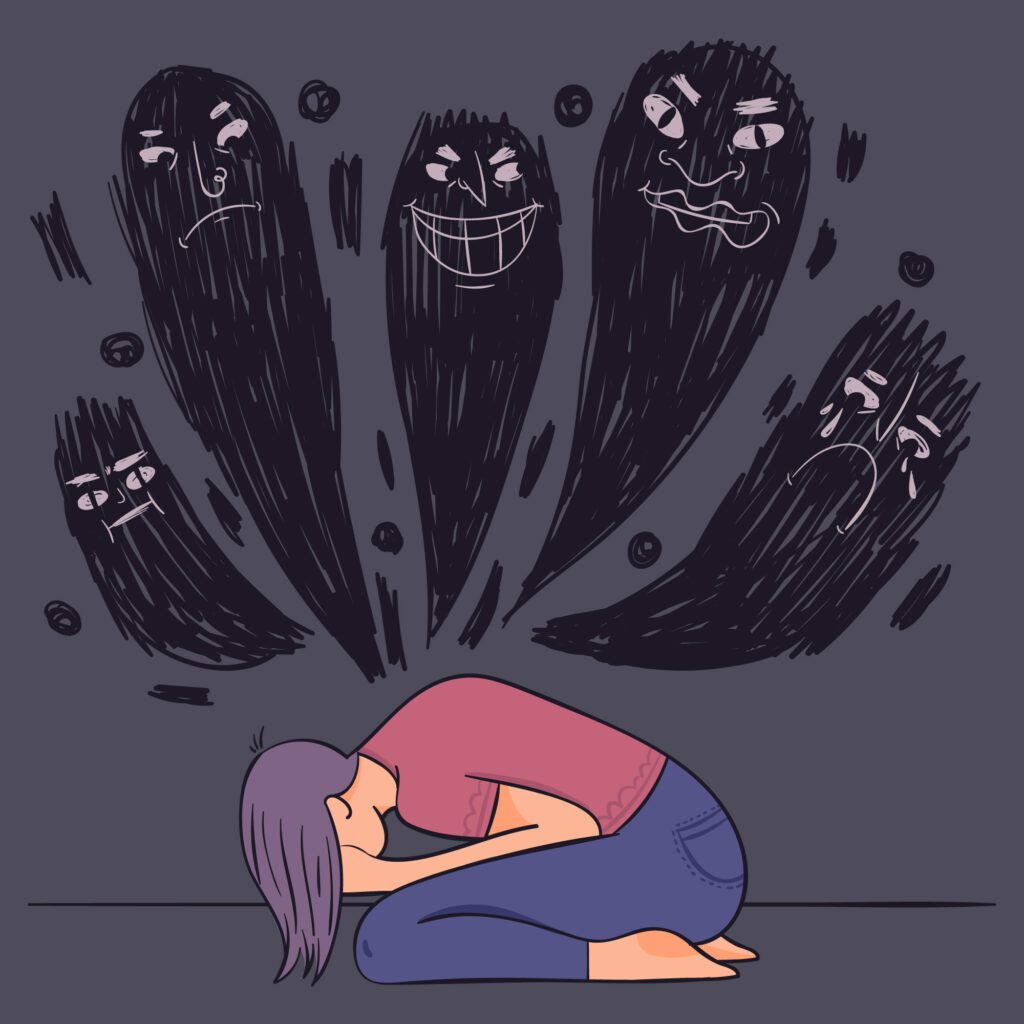
They told her to be polite while she was being harmed. Now they call her difficult for saying no. Jeannie never screamed—never yelled or stormed out or flipped a desk or tore paper into confetti; instead, she froze, and in that freezing, she vanished from their view. No one interrupted the boy when he joked…
-
Teacher Misconduct Case
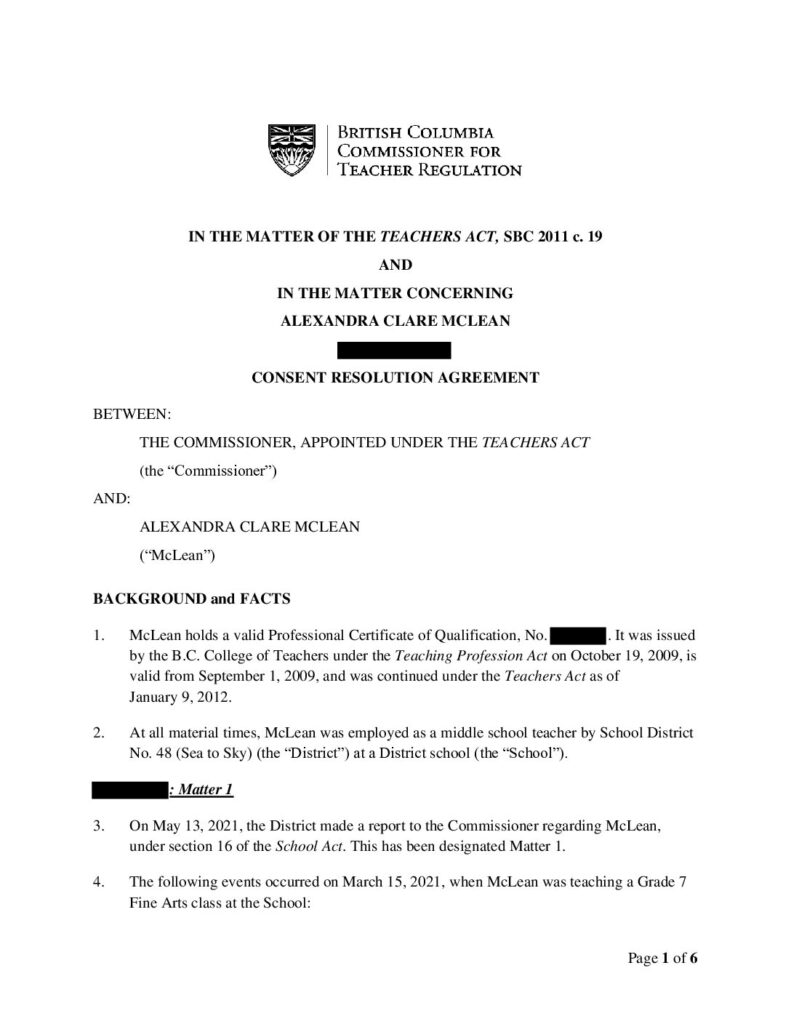
A recent case involving Alexandra Clare McLean, a BC teacher disciplined for yelling, humiliating, and physically handling students, highlights the urgent need for stronger accountability in schools. Despite multiple suspensions, warnings, and training, McLean’s harmful behaviour continued. This case reflects the broader issue of harmful disciplinary tactics like collective punishment. Both create fear, shame, and…
-
What families learn from the inside of exclusion
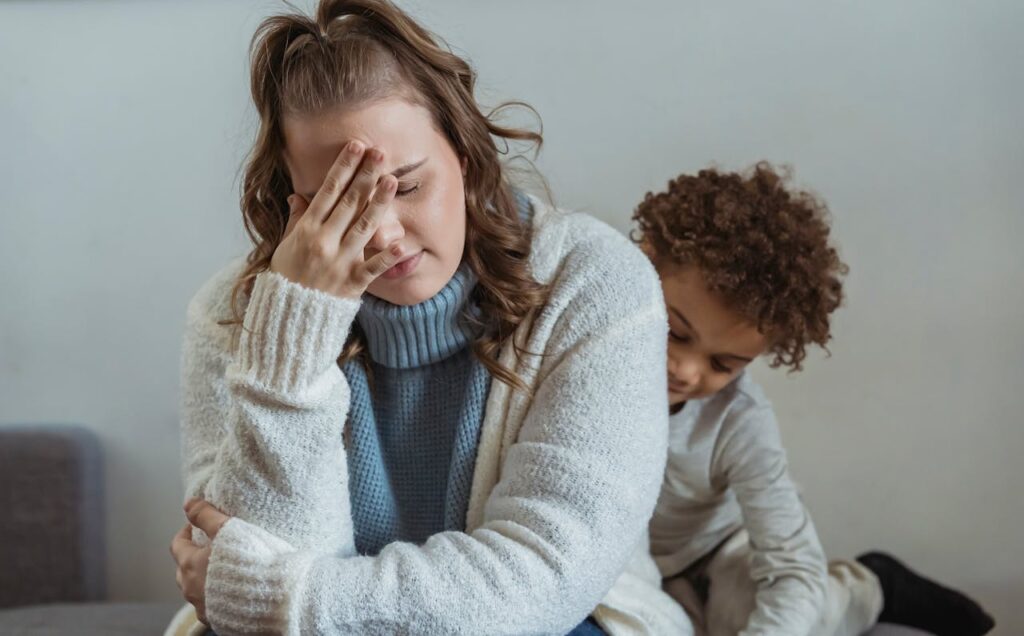
We weren’t trained for this. We were not briefed, warned, or prepared. We entered the public school system, bright-eyed and bushy-tailed, like most parents do—with trust, with hope, and with a belief, however weathered, in the promise that schools would try to do right by our children. What we didn’t understand was how quickly that…