

Frameworks and tools
This category includes both the institutional tools commonly used in schools — like PBIS, Zones of Regulation, behaviour charts, and safety plans — and the counter-tools developed by families, advocates, and allies. It explores how frameworks shape power, perception, and participation: whose needs are centred, whose behaviours are corrected, and whose values are embedded in the system. From state-sanctioned protocols to radical alternatives, these are the mechanisms through which control is asserted or challenged — and the blueprints we use to navigate, disrupt, or remake the rules.
-

How FESL enables ongoing exclusion of disabled children
In 2020, the British Columbia Ministry of Education and Child Care brought into force the Framework for Enhancing Student Learning, a policy architecture ostensibly designed to guide the province’s approach to continuous improvement in public education, with particular attention to improving equity for Indigenous students, children and youth in care, and students with disabilities or diverse…
-
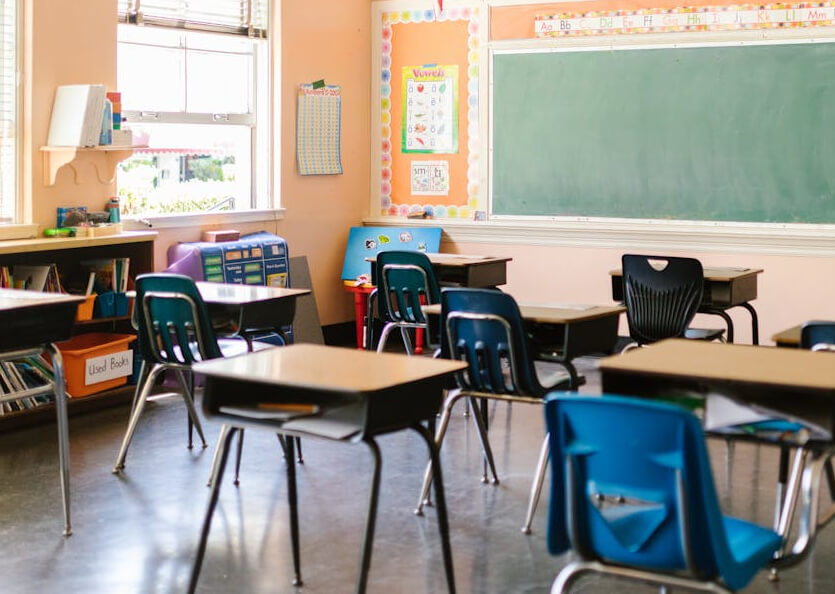
The affective architecture of room clears
Room clears should be rare. In adequately resourced classrooms with sufficient staffing, with educational assistants trained in co-regulation, with adults who understand that compliance is not wellness and frozen silence is not calm, most crises could be prevented or held without architectural intervention. But British Columbia schools operate under manufactured scarcity, austerity politics disguised as…
-

Justice and dignity too expensive for BC NDP
In 2018, experts told BC exactly how to fix special education funding. The government has spent five years “consulting” instead. Meanwhile, your child sits in hallways. The 192% problem nobody wants to fund Between 2015 and 2024, autism designations in BC schools exploded by 192%. Total student enrolment? Up just 11.6%. The province knows this. They…
-

When delay becomes policy: British Columbia’s strategic abandonment of disabled students
In 2018, an independent panel reviewed how British Columbia funds kindergarten through grade twelve education and recommended a prevalence model for special education funding, a shift that would allocate resources based on statistical prevalence of disability within the general student population rather than on individual diagnostic designation. The proposal threatened to expose what the existing system carefully…
-

Teachers deserve compensation commensurate with the complexity of their labour
The research confirms what every parent already knows: teaching requires orchestrating dozens of simultaneous human variables inside conditions designed to foreclose success, and the work demands relentless cognitive precision, emotional attunement, and adaptive improvisation across every minute of every day. A classroom contains children processing information at radically different speeds, carrying wildly disparate skill foundations,…
-

Positive behavioural interventions and supports: a behaviourist rebrand
Positive behavioural interventions and supports circulates through British Columbia’s public schools with a gentle, polished confidence, offering administrators the comfort of matrices and fidelity tools, offering families soothing language about positivity and predictability, and presenting itself as an enlightened evolution of schoolwide discipline, yet what I see each time I study its structure is the…
-
The behaviourist spine of BC’s urgent-response systems
In Urgent behaviour intervention teams in major BC school districts I shared research which identified the intervention teams in many of the larger districts in BC, describing their processes and roles, mostly in the language that they describe their services. This essay attempts to analyse those systems through a disability-justice lens, revealing how roles, processes,…
-

What research says about school conduct codes and disabled students
This explainer summarises what a small but influential group of scholars have shown about school discipline policies, student codes of conduct, and how these frameworks disproportionately harm disabled and neurodivergent students. It draws especially on the work of Catherine K. Voulgarides, Russell J. Skiba, Daniel J. Losen, David Osher, and Edward Fergus. Where possible, citations…
-

New science on punishment and rewards
A growing body of research from 2023–2025 offers a transformative account of how children learn, regulate, and respond to school environments, because these studies converge on a striking and deeply consequential insight: children learn through stability, safety, and relational reward, while punitive systems generate emotional distress, behavioural escalation, and institutional inefficiency, particularly for neurodivergent and disabled students…
-
Neural evidence exposes the steep cost of sacrificing vulnerable children to punitive myths
Neural evidence from Altered Neural Responses to Punishment Learning in Conduct Disorder offers a precise account of how punitive school discipline collides with the neurodevelopmental profiles of vulnerable children, because the study shows that punishment learning relies on the anterior insula’s capacity to transform discomfort into behavioural adjustment, and this capacity expresses irregular patterns in the children…
-

A guide to avoiding the most common mistakes in inclusive-education policy reform
Across British Columbia, school districts are refreshing handbooks, conduct codes, safety plans, and “inclusive education” frameworks—possibly in the shadow of the Ombudsperson’s systemic investigation into exclusion. These documents signal responsiveness, yet many still recreate the same structural conditions that generate exclusion in the first place. For example, Cariboo-Chilcotin School District 27’s Inclusive Education Parent Handbook,…
-
Surrey parents launch classroom crisis tracking tool
In Surrey, British Columbia, a new parent-led initiative is bringing long-needed visibility to a silent crisis in public education: classroom evacuations when a student experiences distress. The Surrey District Parents Advisory Council (DPAC), in partnership with the Surrey Teachers’ Association and CUPE 728, has launched a tool to track these classroom clearings, documenting how often…
-

The cost of partial inclusion in schools
I have returned to writing after a long silence—one imposed less by choice than by survival. The move was necessary, a matter of financial gravity after years of lost income entwined with the harm my children endured within an ableist school system. Leaving our home felt like surrendering a life I had fought to sustain,…
-

25 ways AI can encourage critical thinking and make your classroom more accessible
Educators have spent the last two years debating whether artificial intelligence belongs in the classroom, as though it were still possible to close the door on the tidal shift already transforming how children read, write, and think. Large language models (LLMs) are not a novelty—they are a new infrastructure for thought, capable of flexing around…
-

No accidents left to excuse
When I first read the Canary Collective’s Systemic Abuse in Education: Breaking the Cycle and Kim Block’s companion essay Is this Systemic Oppression or Systemic Abuse?, I did not feel revelation so much as recognition. I have called what happens to disabled and neurodivergent children in British Columbia’s schools abuse for years, because the word fits the scale…
-
Institutional responses to complaint
I have been reading Sara Ahmed’s Complaint! and it almost feels as though I have been working backwards. I wish I had the insights in this book before my children entered kindergarten. Perhaps, I would have been spared years of confusion, exhaustion, and grief, and perhaps my children would have been spared some of the deepest harms…
-
Side-by-side comparison of the VSB plan and a meaningful accessibility plan
The Vancouver School Board has released an accessibility plan that presents itself as a generous gesture toward inclusion, offering aspirational statements about equity, belonging, and shared responsibility, yet the document carries a softness that obscures the lived gravity of disabled students’ experiences and the profound emotional labour that families expend while navigating systems shaped by…
-

Serpentine Heights Elementary (SD36): a neurodiversity-informed policy critique
Serpentine Heights presents its Code of Conduct as an affirmation of safety, inclusion, and communal care. The opening commitments describe a school that values belonging, co-constructed routines, and dignity for every learner, offering a vision of education rooted in relational safety and shared citizenship (p. 1) . This framing gestures toward a caring culture, one…
-
Interpersonal neurobiology as a neurodiversity-affirming framework
Interpersonal neurobiology (IPNB) offers a generative way to understand children’s nervous systems, because it treats development as an emergent, relational process shaped through safety, attunement, and repair, and this orientation produces a worldview in which difference is interpreted through physiology and experience rather than compliance or performance. IPNB proceeds from the understanding that minds evolve…
-

Fuck your independence dogma
How schools use ‘self-reliance’ to justify abandoning disabled kids. They told me my daughter needed to build her tolerance for the classroom without support. They waxed endlessly about how she wouldn’t want support in high school—ignoring that my daughter had been very clear that she does, in fact, want support. They said it with that…