In Surrey, British Columbia, a new parent-led initiative is bringing long-needed visibility to a silent crisis in public education: classroom evacuations when a student experiences distress. The Surrey District Parents Advisory Council (DPAC), in partnership with the Surrey Teachers’ Association and CUPE 728, has launched a tool to track these classroom clearings, documenting how often they occur and why.
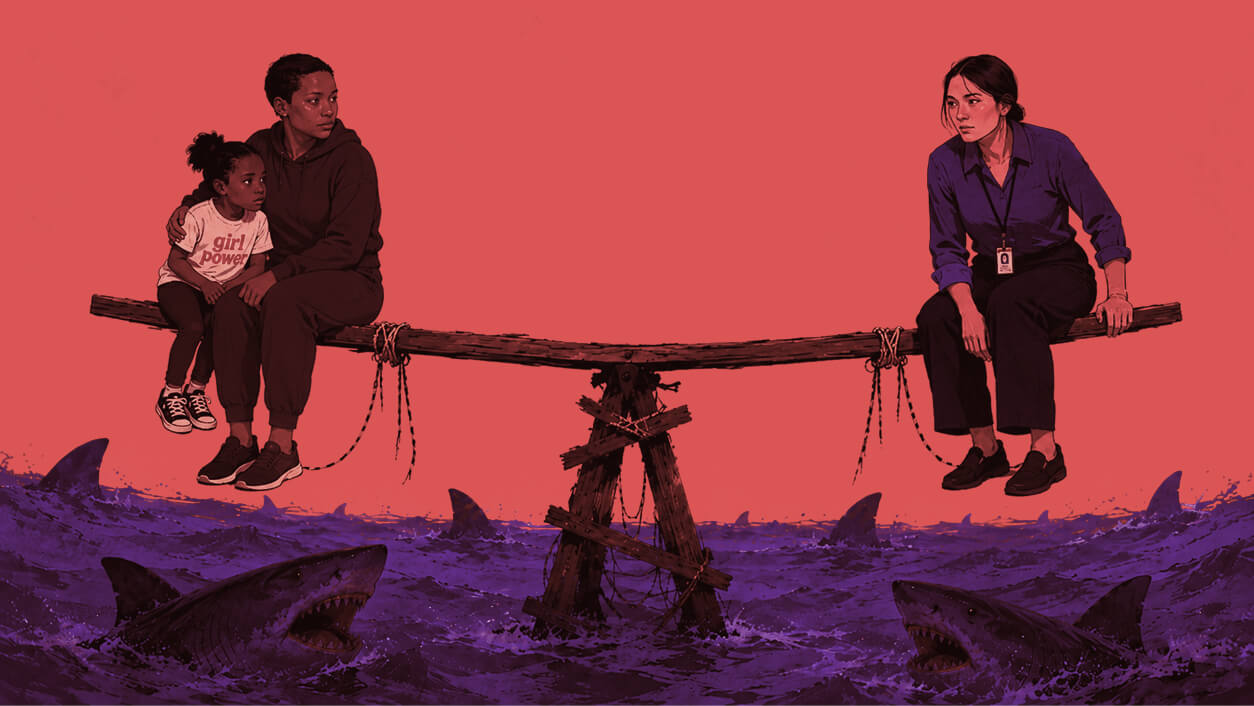
The initiative arises from a simple but urgent reality. Many students with complex needs attend school without an education assistant. Teachers, already stretched thin, are left to manage crises alone. The absence of support endangers the student in distress and ripples through the entire classroom, leaving peers frightened and learning disrupted.
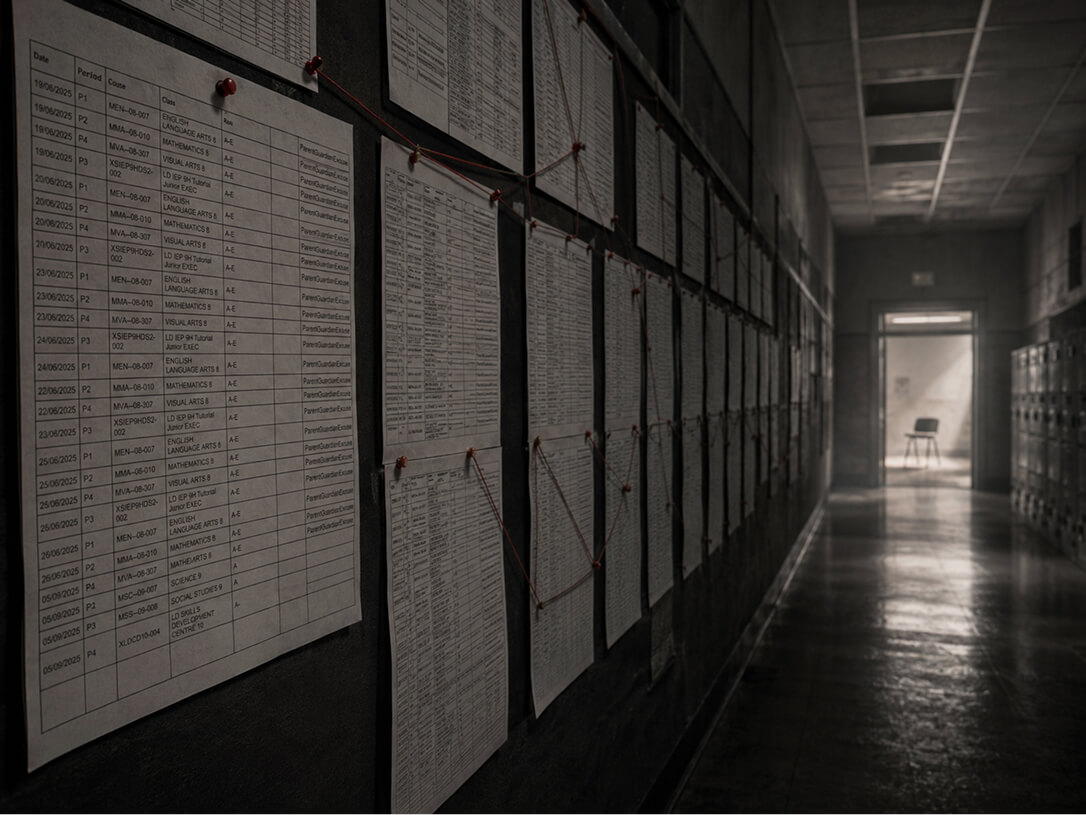
The new reporting tool aims to fill a glaring gap in provincial data. School boards currently lack precise information on how often classrooms are cleared, even though such incidents—marked by yelling, crying, thrown objects, or overturned furniture—are familiar to educators. Formal tracking could shift these events from anecdote to accountability, compelling decision-makers to confront the consequences of chronic underfunding.
As a mother whose child was the impetus for many classroom clearings in kindergarten, I know this need for transparency intimately. My son experienced those years without adequate support, and the impact has echoed through his life ever since. Today, he lies in bed while his peers gather in classrooms, a living testament to what happens when the system treats harm as acceptable collateral.
The Surrey School District has stated that it does not collect data on classroom clearings and considers them rare, citing privacy concerns. Families and advocates, however, understand that invisibility protects systems, not children. The shared goal is clear: classrooms where disabled and non-disabled students alike can learn in safety, supported by adequate staffing and compassion.
For those following the provincial conversation about educational harm and austerity, Surrey’s initiative represents an act of collective truth-telling. When institutions refuse to count something, communities find ways to count it themselves.
Read the original CBC report by Michelle Gomez here.
Related posts
Since publishing this piece, I have absorbed an immense volume of community wisdom, professional insight, and lived experience from families who understand the emotional, political, and historical weight that classroom crisis tracking carries, and this flow of information has expanded my understanding of the tool’s implications, illuminated areas where my early perspective required greater depth, and inspired further writing that situates the tracker within a wider landscape of privacy, disability justice, and institutional accountability.
This evolving conversation has offered a generous education about the conditions that shape data collection, the ways families experience risk, and the long histories that frame any attempt to bring visibility to harm, and I hold this growth with gratitude and seriousness as I continue to write about the complex, interdependent responsibilities of parents, educators, unions, and districts.
Readers will find that subsequent posts engage these questions with greater nuance, and I invite engagement with the full series for a more comprehensive view of the ethical, practical, and relational dimensions surrounding crisis tracking in BC schools.
-
PEI’s education minister just told you exactly how data suppression works
A motion passed unanimously in the PEI legislature this month, calling on the province to track student absences caused by bullying. Green MLA Karla Bernard brought it forward after years of families reporting that their children are…
-

Children are not pawns: disability, private schools, and budget cost-containment
Public money should not be subsidising private advantage while public schools are told to make do with less. That is the clean version of the argument. It is intuitive, politically useful, and often true. When…
-

Tara Carman tracks absences district by district
CBC’s Tara Carman released another investigation this week, this one examining absence patterns across British Columbia’s largest school districts, finding that excused absences have tripled in Vancouver secondary schools between October 2018 and October 2025,…
-

Where Surrey’s $6.3 million went
I recently reviewed the provincial budget tables and buried within Table 17 (2024/25 Amended Annual Budgeted Operating Expenditures of Program 1.10 Inclusive Education by Object) and Table 26 (2024/25 Actual Operating Expenses of Program 1.10…
-

What districts refuse to count, they refuse to see
Canary Collective makes explicit what current FESL reporting renders invisible: the exclusionary practices that shape access to learning but disappear from accountability structures because districts are not required to document them publicly.
-

Scapegoats for austerity: BC education funding excludes disabled children
BC education funding scapegoats disabled children, using collective punishment and performative inclusion to divide parents and maintain austerity.
-

The optimal funding model for inclusive education
Inclusive education does not fail because children are too complex. It fails because funding systems reward denial, privatise enforcement, and treat disability as an exceptional cost rather than a predictable feature of human populations. A…
-
What districts hide when they count
Enrolment data is meant to be the most transparent artefact a public education system produces. It records how many students are present, where they are placed, and how populations change over time. These figures determine…
-

The question they refused to ask: adequate funding and the architecture of denial in BC schools
Between 2017 and 2020, BC reviewed education funding. The question asked: designation or prevalence? The question refused: what would adequate funding cost?
-
How public schools tax disabled families twice
My son has been home for nine months. The school asks periodically about return timelines, performing care through language. They say they would like to see him back at school. Meanwhile, his nervous system tells…
-
VSB’s FESL report: the aesthetics of performative accessibility
An analysis of how VSB’s FESL report performs inclusion through language and process while avoiding measurement, accountability, and material change.
-
Surrey FESL report shows why FESL is designed to fail
Surrey School District’s 2025-26 Enhancing Student Learning Report spans 42 pages across two documents, presenting what appears at first glance as a model of comprehensive educational accountability—extensive data visualisations tracking student outcomes across multiple measures,…
-
What Arrow Lakes reveals about BC’s FESL
School District 10, Arrow Lakes, is often described, including by itself, as a best‑case scenario for public education in British Columbia. It is small, rural, relational, and values‑driven. It knows its learners. It emphasises inclusion,…
-

From trauma to topology: the grotesque work of quantifying institutional denial
When institutional harm accumulates in childhood—in objects confiscated, spaces denied, bodies excluded—the evidence lives first in memory and affect. The saucer eyes of a humiliated or frightened child. The sting in the sobs of a…
-

How FESL enables ongoing exclusion of disabled children
In 2020, the British Columbia Ministry of Education and Child Care brought into force the Framework for Enhancing Student Learning, a policy architecture ostensibly designed to guide the province’s approach to continuous improvement in public education,…
-
The affective architecture of room clears
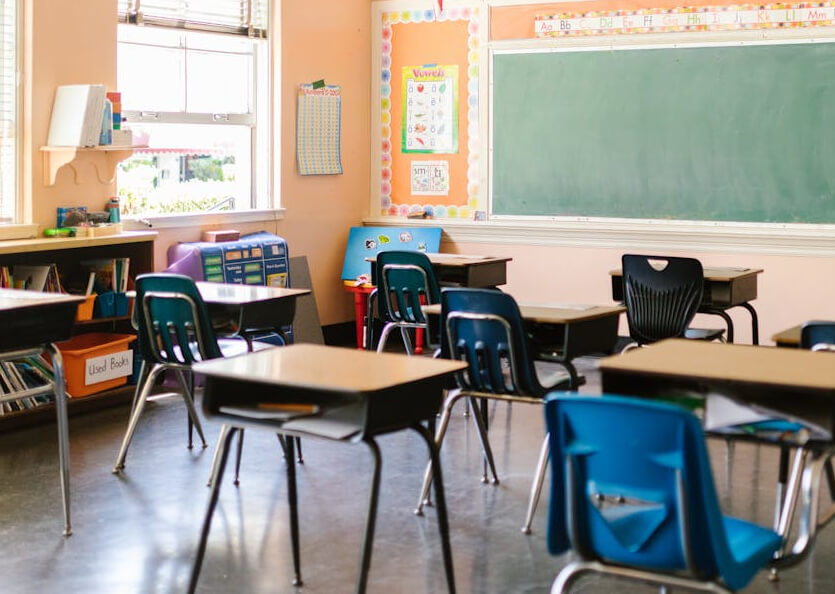
Room clears should be rare. In adequately resourced classrooms with sufficient staffing, with educational assistants trained in co-regulation, with adults who understand that compliance is not wellness and frozen silence is not calm, most crises…
-

The architecture of absence data in Canada
A CBC investigation maps the landscape of what we choose to measure and what we choose to obscure, revealing a system where the simple act of knowing why children disappear from classrooms becomes an exercise in bureaucratic…
-
Government funding for education fails to keep pace with known needs
The Education and Childcare Estimate Notes 2025 reveal a province experiencing an enormous rise in disability designations while preparing the minister with polished assurances that gesture toward progress, equity, and commitment, and this dual presentation…
-

Why the SD23 suspensions report matters for exclusion analysis
While I was looking for more disclosures from school districts to the Ombudsperson, I stumbled on this older document that summarises suspensions in School District 23. The document offers a valuable complement to the exclusion…
-

Why disabled kids are missing more school than peers
Tara Carman recently wrote an article about rising absences from school and suggested that the trend may be linked to a growing mental health crisis: Why are so many kids calling in sick for school?…