

Frameworks and tools
This category includes both the institutional tools commonly used in schools — like PBIS, Zones of Regulation, behaviour charts, and safety plans — and the counter-tools developed by families, advocates, and allies. It explores how frameworks shape power, perception, and participation: whose needs are centred, whose behaviours are corrected, and whose values are embedded in the system. From state-sanctioned protocols to radical alternatives, these are the mechanisms through which control is asserted or challenged — and the blueprints we use to navigate, disrupt, or remake the rules.
-
A summer reading list for education leaders
The Canary Collective went upstream this week, and the gloves came off. In “Delay, Distract, and Deny”, Wren takes the old public-health parable about pulling bodies from a river and turns it into an indictment: while families stand waist-deep in the current keeping disabled children afloat, almost no one walks up the bank to ask who…
-
The compliance trap: why IEP goals fail PDA students
Every IEP written for a PDA student begins with the same quiet betrayal. The team gathers — parents, teacher, learning support, maybe an administrator — and the goals are drafted in language that sounds like care: manage responsibilities with support, self-advocate before becoming overwhelmed, organise materials and meet deadlines. The phrases are familiar because they…
-

Advocacy is too hard and schools expect too much
The BC Ministry of Education directs families to file complaints through their school district’s K12 system when schools violate policy, deny accommodations, or harm disabled children through exclusionary discipline. The process presents itself as accessible redress, a pathway families can navigate while managing the daily crisis of a child being room cleared, partially scheduled, or…
-

When improvement tolerates death: why schools must stop the line
Education systems insist they are engaged in continuous improvement. They invoke cycles, frameworks, data dashboards, and action plans to demonstrate seriousness and care. But children are killing themselves in every district, every year. Disabled children are being excluded, isolated, placed in hallways, sent home early, or left to deteriorate while plans are written. The question…
-

Ministry regulations on physical restraint and seclusion in BC schools
Physical restraint and seclusion are permitted in British Columbia schools under the Ministry of Education and Childcare guidelines—despite being widely described as last-resort safety measures. When schools restrain or isolate disabled children, districts often cite the Provincial Guidelines on Physical Restraint and Seclusion in School Settings (2015) to claim compliance. Parents are told the intervention…
-

Inclusive schooling solutions
I have spent years documenting institutional harm. Documentation feels natural to me, perhaps because my professional background as solution architect and business analyst. Professionally, I’m used to solving problems, but in education, not having classroom experience, I feel very clear that I can say what works for my kid, but I can’t say what works…
-

25 things you can ask for on your child’s IEP
Individualised Education Plans (IEPs) in BC carry significant weight even though they are not legally binding contracts. Schools have policy obligations to follow them, they serve as evidence in Human Rights Tribunal complaints, and they document what your child needs to access their education. The language matters. The framing matters. What gets written shapes what…
-

Midwifery and inclusive education: how holistic models become public infrastructure
Midwifery offers something rare in policy discourse: a concrete, recent example of how a holistic, person-centred model of care moved from the margins into stable public funding without diluting its philosophy or abandoning its core practices. The model succeeded because practitioners organised collectively, defined clear boundaries around safe practice, and presented government with a credible,…
-

Scapegoats for austerity: BC education funding excludes disabled children
BC education funding scapegoats disabled children, using collective punishment and performative inclusion to divide parents and maintain austerity.
-

The cost of saying ‘change costs nothing’
Long before it became common sense, the spherical shape of the Earth was already known. Astronomers, mathematicians, and navigators across multiple ancient cultures—within the Hellenic world, in ancient India, in Islamic scholarship—had measured the Earth’s curvature, calculated its circumference with remarkable accuracy, and built navigational systems that depended on that knowledge. This was not speculative…
-

The optimal funding model for inclusive education
Inclusive education does not fail because children are too complex. It fails because funding systems reward denial, privatise enforcement, and treat disability as an exceptional cost rather than a predictable feature of human populations. A functional model already exists. It is not radical. It is aligned with what inclusive education actually requires, rather than with…
-
A school advocacy vocabulary
What families experience in schools is often described as a series of unfortunate incidents: a meltdown here, a missed accommodation there, a relationship breakdown framed as “complex family dynamics.” But these events are not random, isolated, or accidental. They are patterned. They recur across schools, districts, and provinces. They follow recognisable logics, deploy familiar language,…
-
Manitoba’s “positive behaviour agreements” and BC’s PBIS infrastructure
Jillian Enright identifies the central contradiction in Manitoba Education Minister Tracy Schmidt’s 2025 announcement of “positive, student-centred approaches” grounded in what the province calls positive behaviour agreements: these agreements present themselves as collaborative documents created between students and staff, yet the power imbalance renders genuine collaboration structurally impossible, leaving students to validate pre-determined behavioural expectations…
-
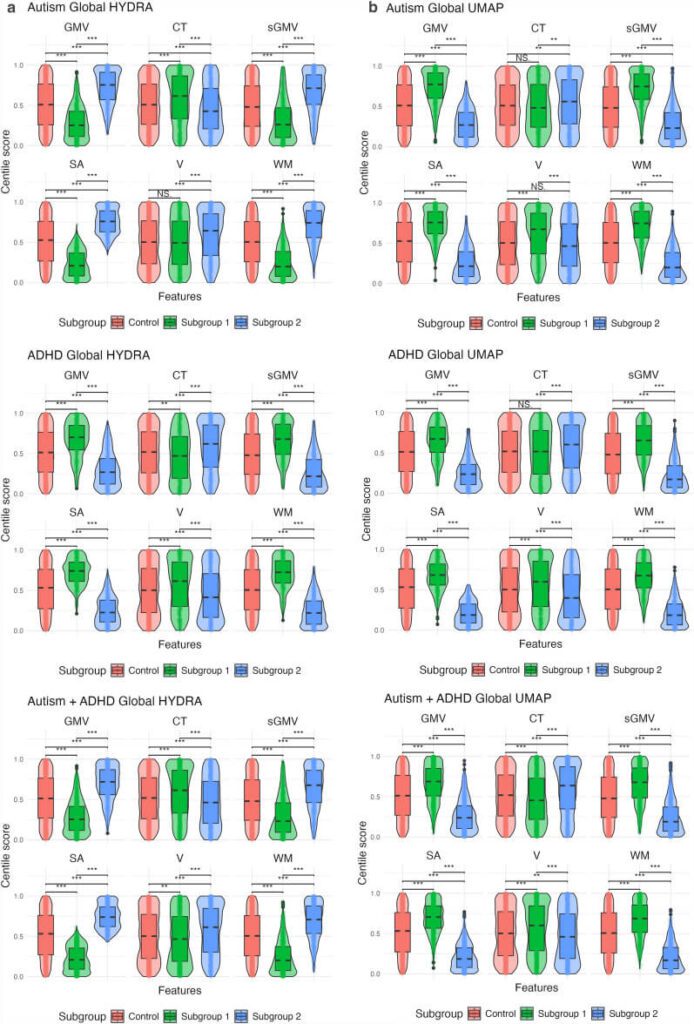
Subgrouping autism and ADHD based on structural MRI population modelling centiles
A June 2025 neuroimaging study examining brain structure patterns across individuals with autism, ADHD, and combined diagnoses, published in Molecular Autism by Pecci-Terroba and colleagues applies population modelling to cluster participants based on centile scores for cortical thickness, surface area, and grey matter volume, using HYDRA—a semi-supervised machine learning algorithm that identifies subgroups based on…
-

The return of functioning labels: How austerity turns advocacy into competition
A parent recently posted about profound autism, describing the experience of having her son’s reality erased when people say that “profound autism” doesn’t exist. Her frustration is legitimate—parents of children with intensive, lifelong support needs face profound institutional abandonment, and “profound autism” names a reality that deserves recognition and resources. But her post also illustrates…
-

Why I won’t stop in 2026
The principal used collective punishment against my child almost two years ago, and yet I remain unreconciled to what she did. People suggest moving on, starting fresh, forgiving. Schools are obsessed with ‘fresh starts,’ framing each September as reset opportunity, as though institutional harm dissolves at arbitrary calendar boundaries. My daughter carries what happened in…
-
On acceptable levels of harming children
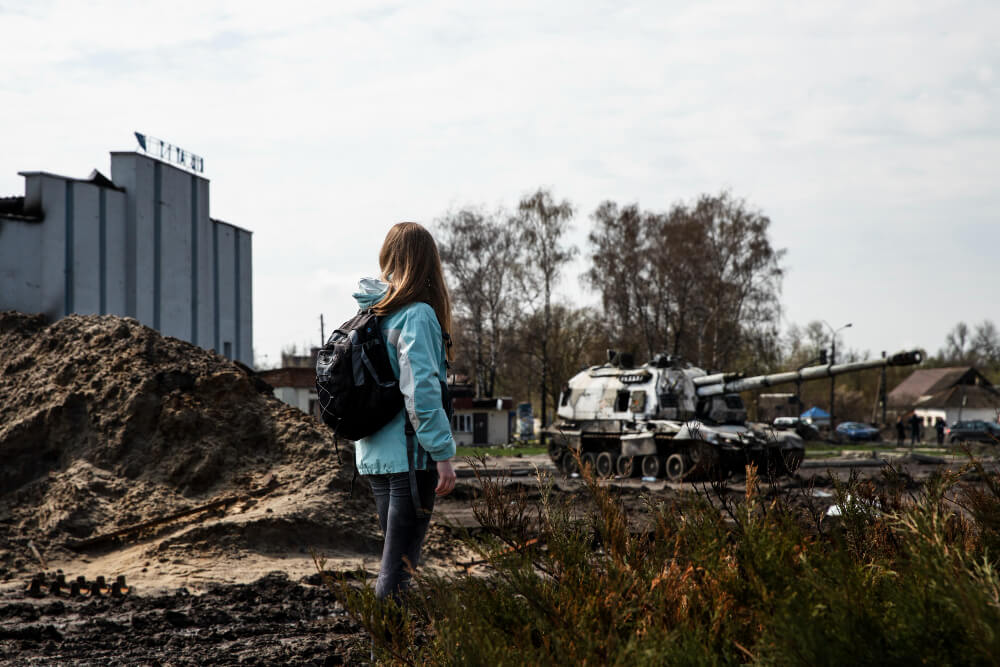
2024 marked the highest number of grave violations against children in armed conflict since monitoring began, and BC simultaneously experienced record complaints to the Human Rights Tribunal for education discrimination—both phenomena share infrastructure: scarcity ideology masquerading as resource constraint, bureaucratic mechanisms that document harm while enabling its continuation, systems that ask what amount of violence…
-
The principal’s casualness reveals authorisation to harm
When a principal cancelled my daughter’s volleyball game with bureaucratic ease, her comfort while causing harm revealed systematic institutional authorisation.
-
From trauma to topology: the grotesque work of quantifying institutional denial
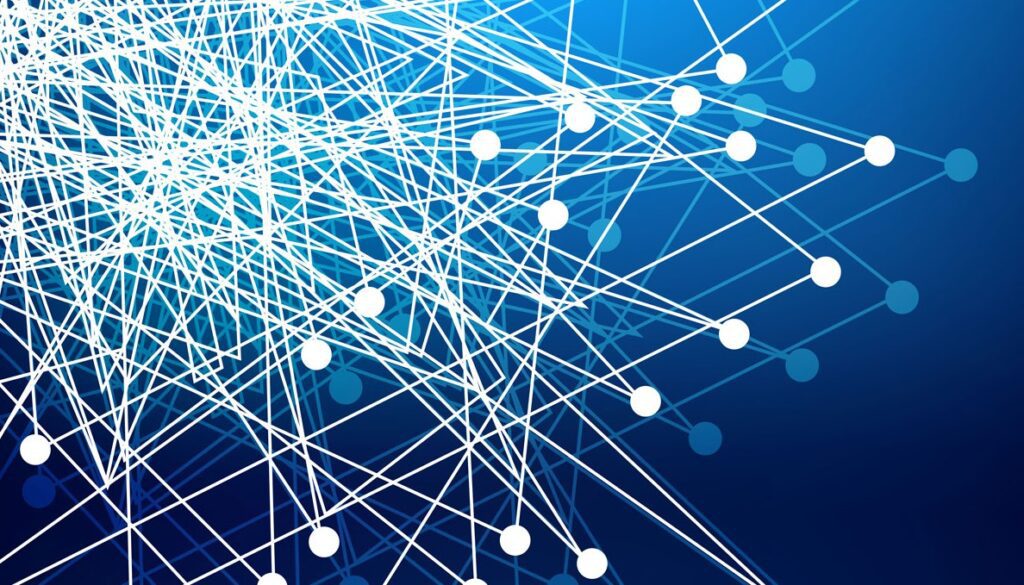
When institutional harm accumulates in childhood—in objects confiscated, spaces denied, bodies excluded—the evidence lives first in memory and affect. The saucer eyes of a humiliated or frightened child. The sting in the sobs of a child who just wants to be with her friends at the volleyball game. The physical weight of a garbage bag…
-

A multi-lens analysis of accommodation denial in BC Schools
When the school handed me a garbage bag filled with jackets at the end of the year, it was evidence of a failed executive function accommodation. When I was handed a box containing hundreds of dollars of fidgets, it was evidence of a regulation accommodation that had been denied. There’s a lot of reasons an…