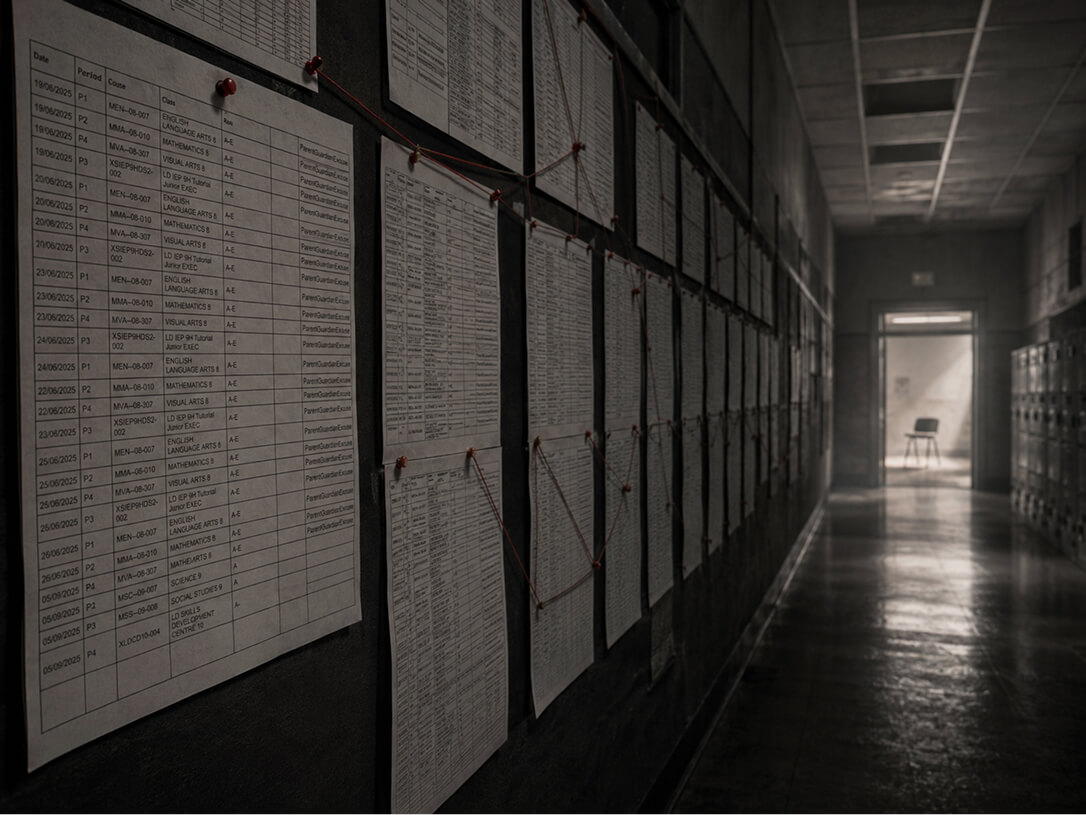
I speak in long sentences because I have waited long enough to say what I mean, because I think in spirals, and because the shape of my truth requires breath, pregnant pauses, and circling.
I write the way I do because it is the way my thoughts arrive—rich, recursive, precise, emotional, and unwilling to fragment just to make someone else’s reading more efficient.
Each sentence I allow to live carries the weight of hundreds I once compressed—because I felt afraid of what people would think, or I felt too exhausted to defend the fullness of my understanding, or I felt forced to crush my thoughts and sound deferent to keep my children safe.
I speak in long sentences because I always hold complexity and because this is the tempo of how I remember, how I grieve, how I repair, and how I hold on.
Local processing as a form of life
I am a local processor, which means I return to each part of the story before moving on, because each moment lives densely and carries meaning that deserves full clarity on its own terms.
My thoughts move fast and in spirals, across patterns and scales; I think with velocity, I avoid rushing to conclusions, and I allow interpretation to emerge in layers.
I process with depth, and depth slows pace when the root system has grown under pressure, when every insight wraps around memory, body, harm, hope, and a lifetime of learned precision that requires space to unfold.
The email
I once sat at my kitchen table trying to compress three pages of careful documentation into a single paragraph for a school meeting, cutting each subordinate clause, removing every aside that carried context, flattening the architecture of what happened into something a principal could scan in thirty seconds while standing in a hallway between classes.
I watched the meaning drain as I revised—the sequence collapsed, the emotional truth disappeared, and what remained sounded like a complaint rather than a record of institutional failure.
I sent the short version because I thought brevity would help them listen, and they still called my tone concerning, still suggested I was overreacting, still failed to act.
The compression accomplished nothing except my own erasure.
-

The poison of silence: on complicity, healing, and speaking the truth
I had so much pain stuck in my chest and throat. Cancelled screams. Unsaid truths. Every meeting where I stayed quiet, every time I swallowed my words to seem reasonable, every time I hoped that portraying myself a certain way might stop my…
Always rushed
I lived most of my life under pressure to move on quickly—to summarise while I still metabolise, to tie up what remains open, to deliver an arc while still searching for the origin of the feeling.
I sometimes chose to collapse my knowing into something neater—because neatness earned praise, recursion received penalty, and adjusting my rhythm to match someone else’s pace created the illusion that I would be heard.
Now I stay with what unfolds, because I deserve to, because my sentence length records what I survived. This is my experience.
I write toward breath, toward presence, and toward the part of me that many tried to interrupt; I now allow that part to finish each sentence as it was meant to be said.
What staying with a moment reveals
When I return to the memory of my daughter crying in the car after school, I do this work slowly—I stay with the sound of her breathing, the way her hands gripped the seatbelt, the steam on the window, the smell of dog, the specific phrase the teacher used when dismissing her distress.
I circle the moment because each detail carries epistemological weight: the teacher’s word choice reveals training, the administrator’s body language signals complicity, my daughter’s precise description of what happened offers testimony that schools routinely discard.
When I allow myself to stay with that afternoon instead of summarising it as “another incident,” I recover what the system tried to erase—the exact nature of the harm, the pattern it belongs to, the evidence that accumulates only when someone refuses to move forward before the knowing finishes arriving.
Staying with the moment lets me see how the principal deflected by praising my daughter’s resilience, how the teacher framed accommodation as reward, how the district ended the meeting by thanking everyone for their time as though harm dissolves through politeness or process.
I used to think my inability to summarise quickly meant I processed slowly; I now understand that I process with density, that my thinking refuses the shortcuts institutions prefer, and that what they call efficiency often functions as erasure.
-

Maternal scream: embodied rage in a system that punishes and smiles
This rage didn’t appear in a vacuum. It was not spontaneous. It is the inevitable consequence of a system that harms children while demanding that mothers smile back. It is what happens when a process is engineered to fail your child and then…
Refusing compression
I once sent a long, precise email to a school principal after something painful happened to my child, with facts that stood, documentation that was careful, and emotion that stayed inside looping, steady paragraphs.
The principal responded that the message length upset the staff, that my communication style created difficulty for the team, that I should direct all future messages only to her so she could filter what reached the people who worked with my child.
She wrote: “I understand you have concerns, but the length and tone of your emails are overwhelming for staff who are already stretched thin.”
The demand for compression masquerades as administrative efficiency, but what it actually enforces is phenomenological violence—a refusal to accommodate the way autistic cognition constructs meaning through depth, recursion, and relational thinking.
Neoliberal institutions privilege velocity over accuracy, summary over sense-making, and linear narrative over the spiral epistemologies that many neurodivergent people inhabit as our primary mode of knowing.
When they call our communication style difficult, they mean: your way of making meaning disrupts our systems of extraction and control.
When they frame recursion as pathology, they defend a neuronormative standard that treats brevity as virtue and complexity as dysfunction, erasing entire ways of thinking in service of institutional speed.
The policing of voice becomes a technology of epistemic erasure, where certain cognitive architectures remain legible only when flattened into forms that institutions can process without accommodation, without pause, and without the labour of meeting someone else’s rhythm on its own terms.
But they’re inclusive, because there’s a nice poster on the wall that says they’re inclusive, even though they wage war on the way I make meaning.
They pointed to tone when they failed to hold the grief, called it overwhelming when they struggled to follow, and declared it too much when when I didn’t enact phenomenological violence, tone police myself.
The email contained no profanity, no personal attacks, no threats—only a mother’s careful record of what happened to her child, written in sentences that carried the full shape of the harm because that shape deserved documentation. Our pain offends them.
What they called overwhelming was actually precision; what they labelled difficult was actually accountability; what they framed as too much was the exact amount required to tell the truth.
This voice belongs to more than me
If you write this way—if your sentences loop and return, if your thoughts arrive in spirals, if you have been told you write too much or think too hard or fail to get to the point—your rhythm is not pathology.
Your cadence records survival, your structure holds complexity systems prefer to flatten, and your refusal to compress serves an epistemology institutions cannot tolerate because it refuses erasure.
You are allowed to finish your sentences the way they were meant to be said.
You are allowed to write in the shape your thoughts actually take, without apology, without revision, and without pretending that brevity serves truth better than the full architecture of what you survived.
This is my voice. And I am here.
-
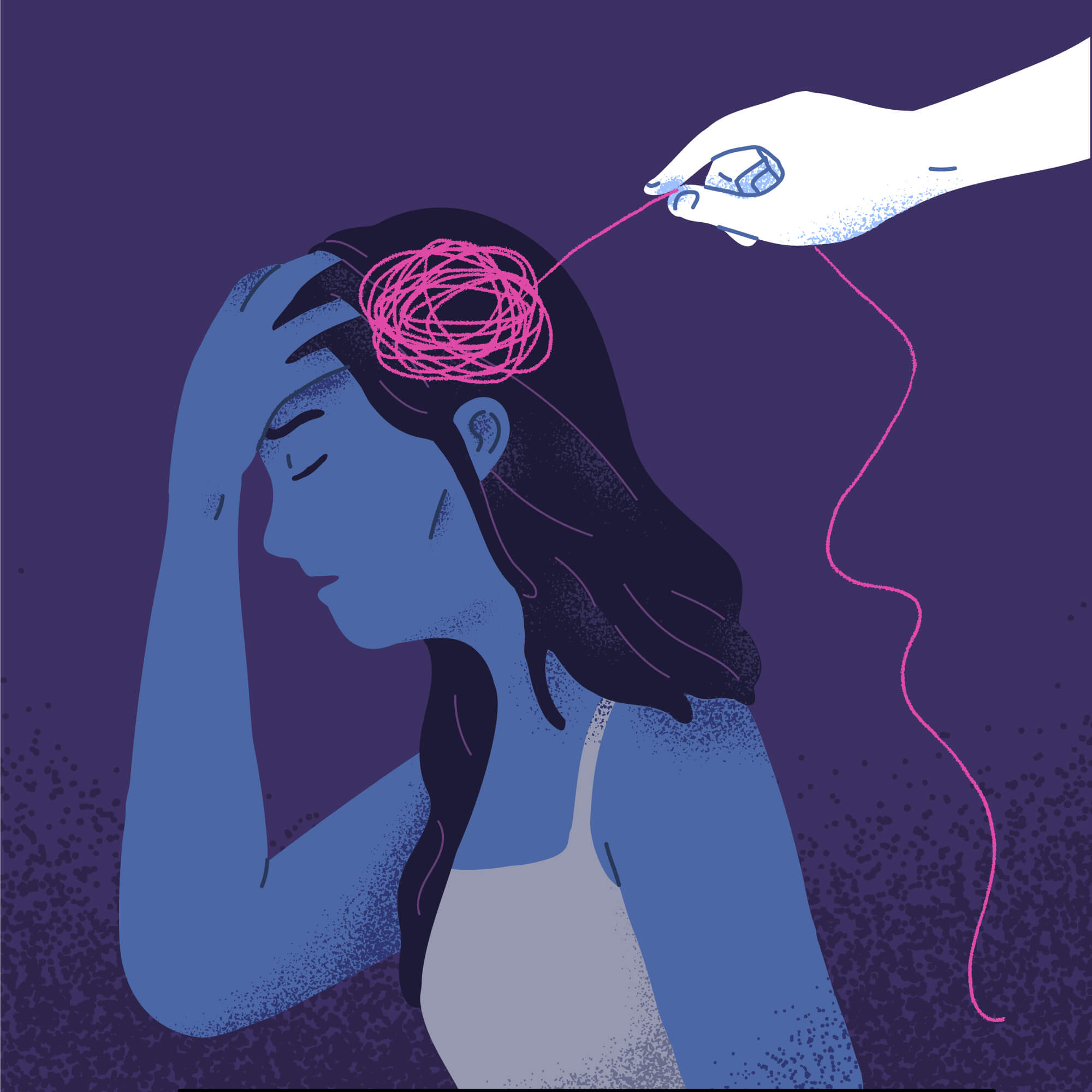
The unseen wounds of advocacy: caregiver burnout, moral injury, and embodied grief
Caregiver burnout in BC schools reflects moral injury and systemic…