

Autism
Posts tagged with autism centre autistic perspectives and lived experience in education. We address how school systems respond to autistic students—through inclusion, exclusion, accommodation, or erasure—and examine how ableism, behavioural norms, and compliance culture shape those responses. Topics include diagnostic access, IEP design, sensory and communication supports, masking, burnout, and the urgent need for neurodiversity-affirming practices
-
My Ollie is missing a lot of school
My Ollie has barely left his room since he came home exhausted from school one day last spring. He slept twenty-three hours a day for months. He barely spoke for months and had difficulty with basic hygiene. School chronically withdrew the supports he needed and pushed him to mask and comply until his nervous system…
-

The masking tax: how autistic girls absorb bullying invisibly in BC schools
Autistic girls in B.C. schools often develop sophisticated masking or camouflaging strategies to hide their autism in order to fit in and avoid bullying. In the short term this can make them appear “fine” – leading teachers and administrators to assume no support is needed – but the “masking tax” is high. Decades of invisible stress and exclusion build up as girls…
-

Exclusion is economically irrational and the hidden costs of refusing accommodation
BC schools spend more money refusing accommodation than providing it. Learn when hiring a lawyer becomes the only fiscally rational choice for your family.
-

The business process trap
I’m a business analyst by trade, so I naturally wanted to understand how things work in schools, but resist the temptation to let schools draw you in!!! School districts speak a language designed to obscure accountability, using administrative complexity as armour against obligation, converting urgent need into bureaucratic procedure, and replacing immediate legal duty with…
-

POPARD’s PDA doublespeak
I noticed that POPARD is advertising another workshop on Pathological Demand Avoidance (PDA) in April 2026, titled Pathological Demand Avoidance (PDA): What We Know & What We Are Learning. The description is familiar: PDA is framed as a “growing topic of interest,” something “some clinicians and researchers describe” as an autism profile. The language is cautious,…
-

When provincial bodies dismiss parental expertise: POPARD, sticker charts, and the refusal of heterogeneity
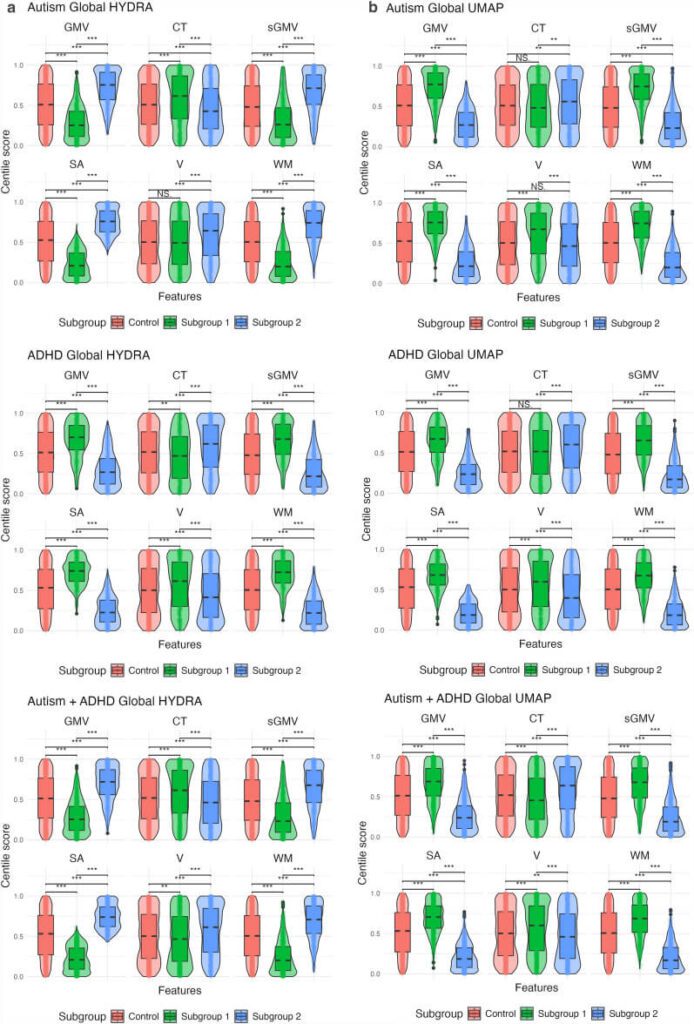
In the previous essay, I examined neuroimaging research demonstrating that autism and ADHD are not internally homogeneous diagnostic categories but rather contain multiple neurologically distinct subgroups, often with opposite patterns of brain structure alterations relative to controls. The Pecci-Terroba study reveals what categorical intervention logic refuses to accommodate: diagnosis alone cannot determine whether a specific…
-
Subgrouping autism and ADHD based on structural MRI population modelling centiles
A June 2025 neuroimaging study examining brain structure patterns across individuals with autism, ADHD, and combined diagnoses, published in Molecular Autism by Pecci-Terroba and colleagues applies population modelling to cluster participants based on centile scores for cortical thickness, surface area, and grey matter volume, using HYDRA—a semi-supervised machine learning algorithm that identifies subgroups based on…
-

Truth is never negative: on becoming the voice a system tried to silence
I have come to understand that my role in this landscape exists because every public system that touches disabled children in British Columbia carries a quiet, shared expectation: families will smooth the rough edges, soften the evidence, dilute the language, and narrate harm as misunderstanding or miscommunication rather than what it is—the predictable outcome of…
-

Finding my voice here
I speak in long sentences because I have waited long enough to say what I mean, because I think in spirals, and because the shape of my truth requires breath, pregnant pauses, and circling. I write the way I do because it is the way my thoughts arrive—rich, recursive, precise, emotional, and unwilling to fragment…
-

Three contexts, one experience: why autism debates fracture
The fracture happens before anyone finishes speaking. One person describes autism as neurological difference observable through brain imaging and cognitive testing; another person describes autism as diagnostic category that unlocks resources within rationed systems; a third person describes autism as lived experience of navigating a world built around neurotypical assumptions about communication, sensory processing, and…
-

The return of functioning labels: How austerity turns advocacy into competition
A parent recently posted about profound autism, describing the experience of having her son’s reality erased when people say that “profound autism” doesn’t exist. Her frustration is legitimate—parents of children with intensive, lifelong support needs face profound institutional abandonment, and “profound autism” names a reality that deserves recognition and resources. But her post also illustrates…
-

Autism and bullying in BC schools
Autistic and ADHD children face bullying at astonishing rates. Large-scale studies report that nearly half to two-thirds of autistic students have been bullied, with some surveys finding 44–67% victimized[1] – far above the ~20–40% typical rate in general populations. For example, one meta-analysis found 67% of autistic youth experienced some form of school bullying[1]. Youth with ADHD…
-

Justice and dignity too expensive for BC NDP
In 2018, experts told BC exactly how to fix special education funding. The government has spent five years “consulting” instead. Meanwhile, your child sits in hallways. The 192% problem nobody wants to fund Between 2015 and 2024, autism designations in BC schools exploded by 192%. Total student enrolment? Up just 11.6%. The province knows this. They…
-

When delay becomes policy: British Columbia’s strategic abandonment of disabled students
In 2018, an independent panel reviewed how British Columbia funds kindergarten through grade twelve education and recommended a prevalence model for special education funding, a shift that would allocate resources based on statistical prevalence of disability within the general student population rather than on individual diagnostic designation. The proposal threatened to expose what the existing system carefully…
-

Why the evolving understanding of childhood terrifies systems built on scarcity
Children now arrive at school shaped by homes that honour physiology over performance, autonomy over obedience, and co-regulation over fear, and this shift grows from a decade of relational neuroscience, trauma literacy, sensory understanding, and disability justice that families have absorbed far more quickly than schools, which leaves discipline ideology standing on crumbling ground because…
-
On euphemisms, PDA, and the rebranding of autism
When I look back on the early years of coming to terms with autism in our family, I understand the urge to rebrand it. The word autism lands hard at first. It sounds clinical, final, filled with sadness, injury, bad smells, and bleak prospects. In that first stage of reckoning—when your mind keeps circling what you imagined…
-

Coerced care, gendered neglect, and the reframing of family collapse
It began with daily incidents that were anything but small. My son repeatedly hugged my daughter against her will, pressing into her space while she pulled away, asking for it to stop. She reported that when she turned to supervision aides for help, they told her it was fine because they were siblings. Staff framed…
-

Fuck your independence dogma
How schools use ‘self-reliance’ to justify abandoning disabled kids. They told me my daughter needed to build her tolerance for the classroom without support. They waxed endlessly about how she wouldn’t want support in high school—ignoring that my daughter had been very clear that she does, in fact, want support. They said it with that…
-
No good news on government K-12 page
The BC k-12 portal promises inclusion, yet broken links and missing disability guidance reveal gaps in safety and access.
-

This isn’t a unique case, is it?
My children’s father said in a meeting: “Surely you’ve dealt with this before and you have a solution? This isn’t a unique case, is it?” The question hung in the air, simple and devastating, exposing in one breath the entire pretence on which school leadership rests. The question matters because it cuts through bureaucratic delay…