

Absence
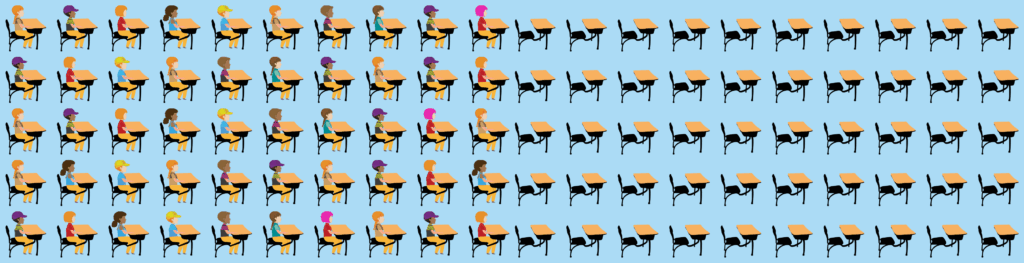
In a disability justice framework, absence refers not only to a student’s physical non-attendance at school, but to the conditions that make presence unsafe, inaccessible, or harmful. Absence may occur when families keep children home because the school environment fails to meet their needs—emotionally, physically, or psychologically—even when the child is technically “able” to attend.
This includes situations where students experience anxiety, somatic symptoms (such as stomachaches or headaches), or distress because their disabilities are unsupported, accommodations are denied, or safety plans are inadequate. In these cases, absence is not a lack of engagement or parental neglect; it is a protective response to systemic barriers, unmet obligations, and institutional failure. Parents—often mothers—become de facto risk assessors, weighing attendance against the likelihood of harm.
From a disability justice lens, absence is therefore a signal, not a violation. It points to exclusion, misallocation of support, or environments that prioritize compliance over care. Treating absence as an individual problem obscures the structural causes that drive families away from school buildings and shifts responsibility away from institutions that are legally and ethically required to provide safe, inclusive education. Addressing absence, then, requires changing school conditions—not disciplining families for refusing to expose their children to harm.
-

When back to school means staying in bed
Children will soon be going back to school… well, some children. Stores are already filled with lunch kits, backpacks, and brightly coloured displays of school supplies. Parents are checking whether indoor shoes still fit. Social media will soon fill with first-day photographs: children standing beside front doors, holding signs with their grade and what they…
-
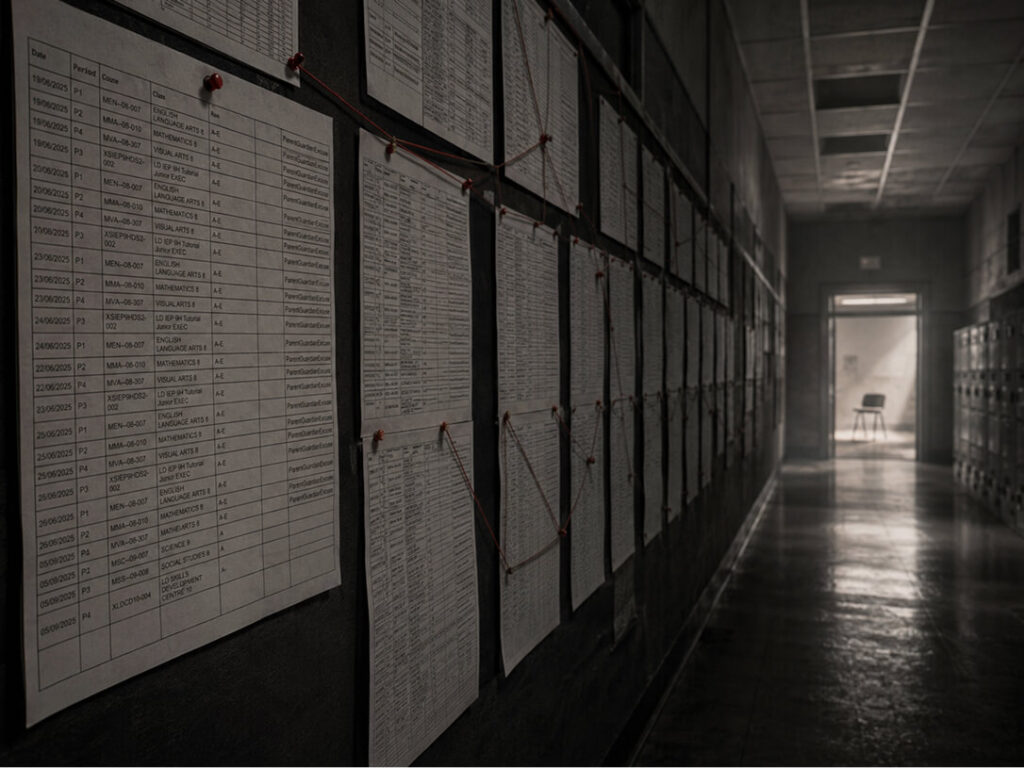
ParentGuardianExcuse: no excuse for exclusion in BC schools
The reason column in my son’s permanent record is mostly blank. When a reason survives, it’s ParentGuardianExcuse.
-
PEI’s education minister just told you exactly how data suppression works
A motion passed unanimously in the PEI legislature this month, calling on the province to track student absences caused by bullying. Green MLA Karla Bernard brought it forward after years of families reporting that their children are staying home — and the system recording nothing about why. Education Minister Robin Croucher’s response is a masterclass in the…
-

My Ollie is missing a lot of school
My Ollie has barely left his room since he came home exhausted from school one day last spring. He slept twenty-three hours a day for months. He barely spoke for months and had difficulty with basic hygiene. School chronically withdrew the supports he needed and pushed him to mask and comply until his nervous system…
-

BC schools are failing disabled students: an absence analysis
This analysis is based on a provincial FOI request to the BC Ministry of Education, file ECC-2025-52461, which was shared recently, bc BCEdAccess. The data covers absence rates, absence reasons, enrolment, and mid-year exits for BC public school students, broken down by inclusive education designation, across the 2022/23 and 2023/24 school years. This analysis focuses on…
-
An initial look at new provincial absence data
A new dataset on student absences in BC public schools has recently been released by BCEdAccess, based on a provincial FOI request. It brings together absence rates, reasons, and enrolment across the 2022/23 and 2023/24 school years, broken down by inclusive education designation. We plan to examine this data in more detail. For now, we…
-

Tara Carman tracks absences district by district
CBC’s Tara Carman released another investigation this week, this one examining absence patterns across British Columbia’s largest school districts, finding that excused absences have tripled in Vancouver secondary schools between October 2018 and October 2025, that chronic absence rates have quadrupled in Burnaby, that the numbers climb steadily across Central Okanagan and Surrey despite marginal…
-

What districts hide when they count
Enrolment data is meant to be the most transparent artefact a public education system produces. It records how many students are present, where they are placed, and how populations change over time. These figures determine staffing, funding, capital planning, and programme viability. They are the numerical infrastructure that underwrites every district claim about equity, inclusion,…
-

The architecture of absence data in Canada
A CBC investigation maps the landscape of what we choose to measure and what we choose to obscure, revealing a system where the simple act of knowing why children disappear from classrooms becomes an exercise in bureaucratic endurance calibrated toward opacity rather than understanding. The cost of transparency The investigation documents a routine that families, journalists, and…